Live free or die: maybe New Hampshire can do better against Hepatitis A, noro

Last month, two employees at the Contoocook Covered Bridge Restaurant in New Hampshire contracted hepatitis A within about two weeks of each other. Their diagnoses prompted public warnings from the state and more than 1,000 vaccinations administered to those caddyshack.pool.poop-1who had recently been to the restaurant or the American Legion in Contoocook.

Although the kitchen passed every inspection before and after the hepatitis A cases in its workers, manager Jeremy Frost said business has plunged and shows no sign of recovery.

“It’s dropped down dramatically,” Frost said. “Overall if you average together, it’s 50 percent that we’re down.”

Restaurant owner Donna Walter said, “We have to say something so surrounding people know we are still a safe place.”

People will know you are a safe place when you publicly promote your food safety standards, and look into Hepatitis A vaccines for all employees.

And in a typical case of blame-the-person, after at least 21 folks got sick with norovirus at Pawtuckaway State Park in NH, officials said “swimming and camping at the park is safe as long as people practice good hygiene.”

Fairytale.

Boil berries? Hepatitis A outbreak spreads to Ireland; tracking global trail of frozen berries

It’s enough to turn me even more off frozen berries.

On July 19, Ireland said to boil frozen berries after 10 people were confirmed with the same strain of Hepatitis A linked to 448 illnesses in Italy.

According to the Irish Times, the outbreak of hepatitis A related to frozen berries has been monitored by the European Centre for frozen-berriesDisease Control since January, and it issued an assessment report on July 10th asking other EU countries “to raise awareness of a possible increase” in hepatitis A cases. In the report, the centre referred to three Irish people infected, “between 30 and 40 years of age, residents in three different geographic regions with no known links to each other.”

The chief executive of the FSAI, Prof Alan Reilly, said the decision was taken to only issue a warning July 19 because of the jump in cases this week. “You have to make a judgment call on when to inform the public.”

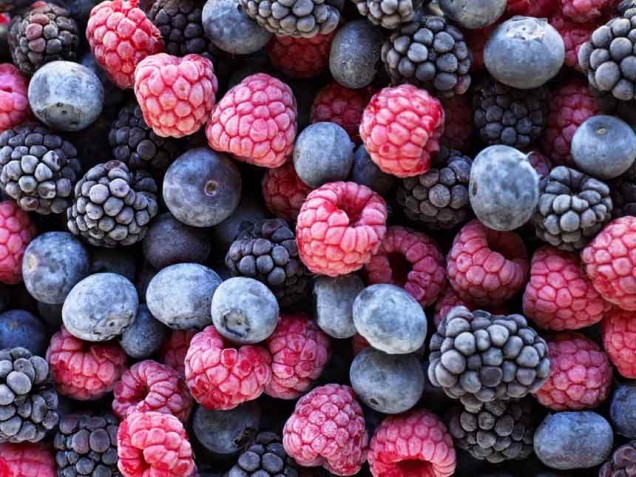
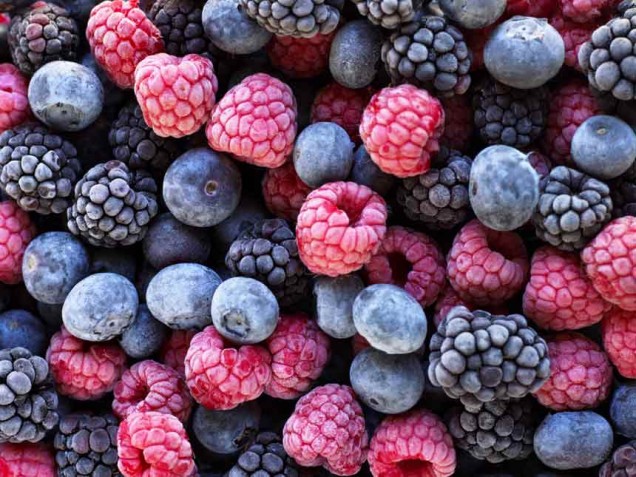
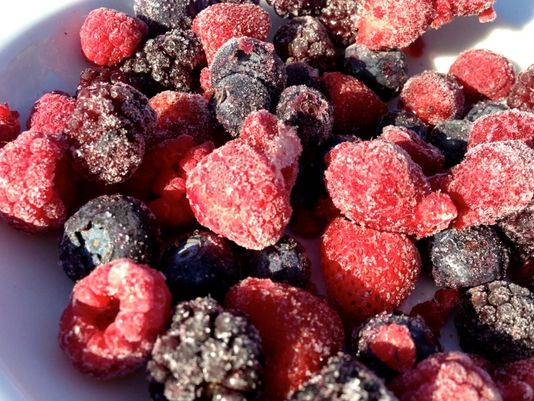
The Italians – 448 sick — fingered mixed berries (redcurrant, blackberries, raspberries, blueberries) and a dealer that received consignments of berries from different countries (mix made in Italy, with raw material from Bulgaria, Canada, Poland, and Serbia).

The Nords – 103 sick  fingered frozen strawberries as the likely cause but could not exclude other frozen berries. The origin of the berries is still being investigated.

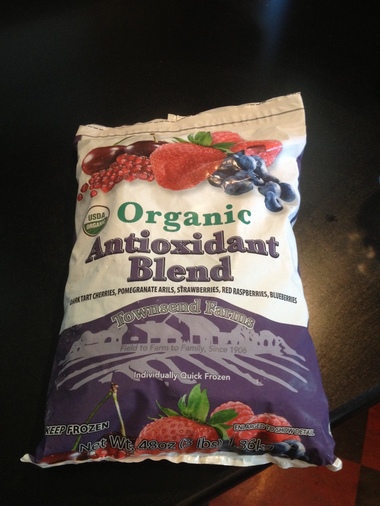
The Americans – 151 sick — fingered a common shipment of pomegranate seeds from a company in Turkey, Goknur Foodstuffs Import Export Trading, and will detain shipments of pomegranate seeds from Goknur arriving into the U.S. Those pomegranate melon.berriesseeds were used by Townsend Farms to make the Townsend Farms and Harris Teeter Organic Antioxidant Blends and by Scenic Fruit Company to make the Woodstock Frozen Organic Pomegranate Kernels.

The srains of Hepatitis A in the Nordic and American outbreaks appear to be different from each other and from the Italian-Ireland outbreak.

On 20 June in Italy a shipment of Romanian blueberries was discovered to be contaminated with hepatitis A. “The responsible agency in Romania looked at the suppliers and then claimed that the blueberry export from Romania was completely in agreement with the European standard. The manager of one of these agencies was of the opinion that the contamination with hepatitis possibly had taken place in Italy.”

Russia found norovirus in frozen raspberries originating in Poland.

Water contaminated with human sewage, or night soil as the source in all these outbreaks?

Almost 600 sick from Hepatitis A in frozen berries in 3 outbreaks

It’s enough to turn me off frozen berries – he says while experimenting with a batch of gluten-free crepes filled with previously frozen berries.

As the case count for Hepatitis A linked to Townsend Farms Organic Antioxidant Blend reaches 136, outbreaks in Northern frozen-berriesItaly and Northern Europe have sickened 352 and 103 respectively. All linked to frozen mixed berries.

Is there a connection?

Maybe probably not, other than human shit Hepatitis A is everywhere, vaccines work, people in various countries don’t wash their hands and global trade in the smallest of ingredients complicates outbreak investigations.

The Italians fingered mixed berries (redcurrant, blackberries, raspberries, blueberries) and a dealer that received consignments of berries from different countries (mix made in Italy, with raw material from Bulgaria, Canada, Poland, and Serbia).

The Nords fingered frozen strawberries as the likely cause but could not exclude other frozen berries. The origin of the berries is still being investigated.

On Wednesday, Swedish supermarket chain Ica announced it was removing all frozen strawberries and some frozen mixed berries from its shelves. The berries come from Morocco and Egypt.

The Americans fingered a common shipment of pomegranate seeds from a company in Turkey, Goknur Foodstuffs Import Export Trading, and will detain shipments of pomegranate seeds
berry.blend.hep.afrom Goknur arriving into the U.S. Those pomegranate seeds were used by Townsend Farms to make the Townsend Farms and Harris Teeter Organic Antioxidant Blends and by Scenic Fruit Company to make the Woodstock Frozen Organic Pomegranate Kernels.

The Italians say the genotype and the sequence of the Hepatitis A virus isolated in the Italian outbreak is different from the U.S. and Nordic outbreaks.

Keep on investigating, investigators.

And know thy suppliers.

Maybe I’ll go for the gluten-free buckwheat pancakes instead and cook the berries in the batter. But there’s still that cross-contamination factor in the kitchen.

1970s Pinto redux; Townsend Farms passes health inspections after Hepatitis A outbreak

It’s the Pinto argument, and segments of the food industry still haven’t learned, 40 years later.

The Pinto automobile – my high school friend Dave had a similar Vega – met all government standards, but still had had tendency to explode when hit from behind; like a Sherman tank.

Decades of risk communication research have shown in various fields that meeting government standards is about the worst thing you can say to car-explosion-signconsumers to build trust.

Which is why it’s so baffling that so many commodities so many years later insist on government inspection as some sort of meaningful standard.

It’s a cop-out.

Lynne Terry of The Oregonian says that Townsend Farms, the producer of frozen berries linked to a Hepatitis A outbreak that has sickened 97 or 99, has passed inspections by county and state health types.

Which they would, if the source of the Hepatitis A is pomegranate seeds from Turkey or somewhere.

It’s that missing food safety ingredient – source food from safer sources.

And don’t rely on inspections or external audits.

Does any company really want to bet their brand on someone else?

87 now sick; Townsend Farms has said nothing about its food safety procedures

As the frozen berry Hepatitis A outbreak reached 87 confirmed sick people, a former U.S. Department of Agriculture Inspection contract organic inspector said berry.blend.hep.athe outbreak was preventable.

Most are.

“I was a contract inspector under the USDA’s national organic programs for five years from 1998 until 2003,” said Mischa Popoff. And he fingers uncomposted manure rather than failures in human handwashing.

Hepatitis A in Italy? We’ll see

Food safety friend of the blog, Luca Bucchini, offers an Italian perspective on the ongoing Hepatitis A outbreaks:

You are responsible for the control of infectious diseases in the Italian Region of Trentino-Alto Adige.

In your position you know that Hepatitis A is a highly infectious disease, due to a small picornavirus RNA, often asymptomatic in children under 5 years, but which causes in older individuals jaundice, fever, weakness, and abdominal frozen.berry.hep.1.jun.13pain. The symptoms last for a week or two, sometimes months. In 15% of cases, the symptoms last more than a year.
In adults over 50 years (and in those who have liver problems) the risk of death is important (to 1.8%). It is often transmitted by foods (strawberries, shellfish, etc.), or water, given the resistance of the virus in the environment, via the classic fecal-oral route (which means eating foods which has come in contact with contaminated feces). You also know that an epidemiological difficulty is the long incubation period (28-30 days).

Back to your office. No cases have been reported in 2011 and even in 2012 from the entire Trentino. But, between January and April 2013, reports for 15 cases have come in. May’s not over, and a further 11 cases have been reported. Because you know that for every case reported to your attention, there are may be 10 unreported cases (if you can apply in Italy CDC’s estimate for underreporting of hepatits A http://www.cdc.gov/hepatitis/statistics/2009surveillance/Commentary.htm), the cases could be many more.

So, reasonably you suspect that there is a problem and work to uncover what is making people form Trentino ill with hepatitis A.

You ask the Istituto Superiore di Sanità, Italy’s National Institute of Health, whether the problem concerns Trentino, or also other parts of Italy. A surveillance system, SEIEVA http://www.iss.it/seieva/?lang=1&id=37&tipo=4 collects this type of data. It is not know what the Institute told you, but we can assume that they may have told you that, of the 16 regions (out of 20) that have sent updated data, comparing the period September 2012-April 2013 to the corresponding period one year earlier, cases of Hepatitis A shot to 417 cases (from 167 a year earlier), an increase of 70%.

There is probably a significant ongoing epidemic of hepatitis A in Italy, potentially with hundreds of cases.

Is this an aggressive epidemiological investigation? We do not know what Trentinian and Italian authorities did till May 2013; no action is documented in the report of the European Centre for Disease Control (ECDC) and the European Food Safety Authority (EFSA) http://www.efsa.europa.eu/en/supporting/doc/439e.pdf .

On May 8, however, Germany, through the systems dedicated to these epidemic alerts, reported seven cases of hepatitis A in Germans who had been skiing in Trentino and had probably contracted the virus there in mid-March. Following this report, the Netherlands and Poland also reported similar cases, for a total of 15: after the winter holiday in Trentino, they had returned home and became ill with hepatitis A.

According to the European document, only then Italy took notice of the situation in Trentino and of the 70% increase nationwide.

On May 23, the Ministry of Health finally alerted all regions, asking the notification of cases within 48 hours, instead of the usual and cumbersome passive system.

Is the conclusion that, in order to find out that in Northern Italy there is an outbreak of hepatitis A, Italians  need to wait for a few Germans skiing here, get hepatitis A and then seek advice from their own health care system?

The problem is related to lack of resources; also, and there are details that are not known and which may explain delays. But certainly there is also a cultural problem.

The Americans may have reported the news differently. There is a similar ongoing Hepatitis A otubreak in the U.S

(http://www.cdc.gov/hepatitis/Outbreaks/2013/A1b-03-31/index.html ) and they may be connected through a common source for ingredients in frozen berries https://barfblog.com/2013/06/30-sick-hepatitis-a-outbreak-linked-to-frozen-berries-in-us-same-source-as-eu-outbreaks/):

The U.S. Food and Drug Administration and the Centers for Disease Control and Prevention (CDC) and state and local officials are Investigating a multi-state outbreak of Hepatitis A illnesses potentially associated with a frozen food sorenne.strawberry.13blend. We are moving quickly to learn as much as possible and prevent additional people from becoming ill. We recognize that people will be concerned about this outbreak, and we will continue to provide updates and advice.

The full text is here http://www.fda.gov/Food/RecallsOutbreaksEmergencies/Outbreaks/ucm354698.htm. Let’s focus on the part that in bold.

The urgency is evident: we know that there is a cause (a contaminated food), we must identify it (and have done so already in fact), remove it from the market and tell consumers to throw it away if they have it in their homes, so nobody’s going to get ill anymore. We know that you are worried, but you should know that we are moving at top speed.

Too much adrenaline? It’s the American approach.

Instead let’s hear the Italian bell:

In April 2013 two international outbreaks of Hepatitis A have been reported, the first involving patients in the North-European countries (clusters allegedly linked to the consumption of frozen berries from extra-EU countries), the second of tourists returning from Egypt . In recent months, moreover, a significant increase compared to previous years of cases of hepatitis A in Italy was noted. In light of the increase of cases in our country and of the two epidemics that are involving other European countries, the Ministry of Health has prepared the Circular 23 May 2013 (http://www.trovanorme.salute.gov.it/renderNormsanPdf?anno=0&codLeg=46074&parte=1%20&serie=) to strengthen surveillance of hepatitis A virus and initiate investigations aimed at identifying both the existence of possible autochthonous cases related to the outbreak and, where appropriate, the potential sources of infection.

The Germans warned Italy in early May. On the 23th, Italy is strengthening the surveillance system. We, Italians, wonder if there are “possible” related cases in Italy (which sounds a little like saying that in Trentino they have served contaminated products exclusively to German, Polish and Dutch tourists). If there are really Italian cases related to the outbreaks, we might then ask “where appropriate”, of course, if a cause – potentially – exists. Caution prevails, perhaps resignation or, if you will, a wise detachment.

As the Ecclesiastes say, “the sun rises and the sun goes down” (or, if you will, hepatitis A comes and goes again) “Is there any thing whereof it may be said, See, this is new?”

In short, no urgency, a cause still to be found to prevent diseases, but above all prudence.

Potentially, possibly, maybe, and even if.

In reality, however, there seems to be a point of concern. Authorities know about the suspected foods (frozen berries, known to spread viruses if not fully cooked, and in 2013 this is not new) including lots and brands. Italy has sent an alert about these products to the EU, making clear (https://webgate.ec.europa.eu/rasff-window/portal/index.cfm?event=notificationDetail&NOTIF_REFERENCE=2013.0756): mix frozen berries from Italy, with raw material from Canada, Serbia, Bulgaria and Poland, via Switzerland that is, it may well be a product made in Italy by an Italian company, but it is not our good Italian food. Same goes for the other alert (to use the words of the Ministry, “extra-EU imports”).

As Americans and northern Europeans import contaminated fruit from countries, where agricultural workers have no access to proper sanitation facilities (and thus, for example, collect the fruit with unwashed hands after using the bathroom), and get sometimes sick, now it’s up to us. Stigmatizing extra-EU imports is however in line with the current anti-import attitude.

Probably, however, the ordinary citizen would like to know the brand of the suspected products, so she, while keeping the brand in mind for future purchases, an throw away the product before eating it, and potentially getting sick.

On this point, as it is customary, in a strange game of different actors (blaming an individual official is superficial), the silence is absolute (NB: update June 6th at 13:26. I was informed that the Autonomous Province of Bolzano, on its site http://www.provincia.bz.it/usp/service/321.asp?archiv_action=4&archiv_article_id=427075  – I do not know how often visited by consumers across Italy – reported on May 31 the details of the suspected food. Well done to the Province, but what about the rest of the Italians? ilfattoalimentare reports from that a cheesecake and a third product sold at Coop may be involved http://www.ilfattoalimentare.it/allerta-alimentare-frutti-di-bosco-surgelati-contaminati-da-virus-epatite-a-ritirati-dal-mercato.html).

When you hear that in America or in Germany there is an outbreak with hundreds of people sick, and so you think you have the luxury to get concerned about the theoretical risks of GMOs, do not console yourself thinking that those things do not happen to us Italians. Perhaps media and risk communicators just let you free not to worry about foodborne disease.

PS: it should be clear that I hold in great esteem many officials from the local health authorities, of the Ministry of Health, and of ISS, particulary knowing the conditions in which they have to operate. This article is not addressed to them, the problem is political and cultural.

79 now sick; Hepatitis A outbreak continues to grow

Whenever I buy a house in some new town, the first thing I do is plant berries. Strawberries, raspberries, blackberries, even got some loganberries in Brisbane. They take a couple of years to come in to full production, but after that, easy peasy.

My grandfather had maybe a 30-foot-by-10-food patch of raspberries on his raspberryfront yard, and that produced an endless supply. Guess I got hooked.

So it’s more than disconcerting that the multistate outbreak of Hepatitis A linked to frozen berries continues to spread, with 79 people now confirmed as sick.

The U.S. Centers for Disease Control reports that based on epidemiologic investigation of 55 cases:

• 35 (64%) ill people are women;

• ages range from 2 – 84 years;

• illness onset dates range from 3/16/2013 – 6/1/2013

• 30 (55%) ill people have been hospitalized, and no deaths have been reported;

• 40 (73%) of 55 ill people interviewed reported eating “Townsend Farms Organic Antioxidant Blend” frozen berry and pomegranate mix; and,

• 40 persons reported purchasing this product from Costco markets; however, the product was also sold at Harris Teeter stores. No cases have been

sorenne.strawberry.13identified that bought the product at Harris Teeter at this time.

Preliminary laboratory studies of specimens from two states suggest the outbreak strain of hepatitis A virus (HAV) is genotype 1B. This strain is rarely seen in the Americas but circulates in the North Africa and Middle East regions.

This genotype was identified in a 2013 outbreak in Europe linked to frozen berries and another 2012 outbreak in British Columbia related to a frozen berry blend with pomegranate seeds from Egypt. However, there is no evidence at this time that these outbreaks are related.

According to the label, the “Townsend Farms Organic Antioxidant Blend” frozen berry and pomegranate mix associated with illness contained products originating from the U.S., Argentina, Chile, and Turkey.

To their credit, Costco is offering to refund the cost of hepatitis A vaccinations or provide the vaccination free of charge at a Costco pharmacy to customers who consumed the recalled frozen berries.

Craig Wilson, Costco’s vice president of quality insurance, food safety and merchandise services, said the company used membership records and receipts to contact customers who purchased the recalled berries since February.

“If anyone has a concern, they should get to their personal health care provider,” Wilson said.

Wilson said he could not confirm that 100 percent of purchasers of the product were contacted, but the company made multiple attempts to inform berry.blend.hep.amembers of the recall and the potential need for vaccinations.

“Wednesday afternoon I sent out another message to 250,000 folks to remind them about the recall,” he said.

Bill Marler, a Seattle-based lawyer, recently filed a class-action lawsuit against Townsend Farms in California. He said his office has been contacted by approximately 400 people who received vaccinations as a result of purchasing the frozen berries, and only about half of those were contacted by Costco.

Elizabeth Weise of USA Today noted the outbreak has seemingly spared children, probably because of routine vaccinations against hepatitis A since 2006.

“The very, very small number of children involved in this outbreak probably reflects the high vaccination coverage as the result of the routine immunization,” said John Ward, who directs the viral hepatitis program at CDC.

The one child who did become ill, a 2-year-old, was not vaccinated, Ward said.

The hepatitis A vaccine is given to children twice, first between 6 and 12 months and then six months later, said CDC’s Trudy Murphy, a hepatitis expert. The vaccine became available in 1996. In 2006 CDC recommended that all children be vaccinated against the virus.

Sorenne’s got that vaccine. So do me and Amy.

Widespread vaccination is having an impact. In 1995 there were 31,582 hepatitis A cases in the United States. In 2010, the most recent year for which numbers are available, there were 1,670, according to CDC.

49 now sick; Fingering pomegranate, keeping hepatitis A out of frozen berries starts at the farm

State-sponsored jazz got something right: food safety for produce starts at the farm.

Nancy Shute of NPR reports the Centers for Disease Control and Prevention that at least 49 people in seven states have gotten Hepatitis A from eating organic frozen berries.

Hepatitis A in frozen berries is not a new problem — though most recorded outbreaks have been small. Way back in the 1980s people got the same virus raspberryfrom frozen raspberries used to make mousse in Scotland. A 2003 outbreak in New Zealand was traced to a single blueberry farm. Finland banned serving uncooked berries in institutional settings after multiple outbreaks in the late 1990s.

Canada also has a hepatitis A outbreak caused by frozen berries. One last year in British Columbia came from a frozen berry blend with pomegranate seeds from Egypt.

Pomegranate seeds are also in the berry blend fingered in the new outbreak. According to the label, the berries were a cosmopolitan bunch — from the U.S., Argentina, Chile and Turkey. The manufacturer, Townsend Farms Inc. of Fairview, Ore., issued a recall notice yesterday. The berries were sold through Costco and Harris Teeter stores.

Growers and processors should be screening workers for symptoms of hepatitis A, says Juan Silva, a professor of food technology at Mississippi State strawberryUniversity. He says they also should be requiring good hygiene either through hand-washing or wearing gloves.

“You need constant training and awareness for supervisors and employees that they can cause this kind of problem,” Silva says. “Try to make them realize that they are responsible for the safety of people who eat the food.”

Cooking or pasteurizing food is one of the only reliable ways to kill the hepatitis A virus, Silva says. So you’ll probably be safe if you’re planning to make pie or cobbler.

But antimicrobial rinses haven’t proven to kill enough germs on fresh fruit to be worth their while. Irradiation kills bacteria, but it’s much harder to zap viruses, so that’s not a sure bet, either. And freezing food doesn’t kill the germs, alas. That’s how scientists keep the bacteria they study frisky.

“There’s no post-harvest intervention as of now that’s capable of eliminating the virus,” Silva told The Salt. “That’s why prevention is key.”

So what’s a smoothie lover to do?

No one’s suggesting getting vaccinated just to make smoothies, but as more and more people gain protection from the vaccine, outbreaks like these will pose less of a risk.

34 now sick with Hepatitis A; Townsend Farms finally recalls organic frozen berry mix

Townsend Farms of Oregon has ordered a recall of a frozen berry product linked to a Hepatitis A outbreak in five Western states that has now sickened at least 34 people.

Lynne Terry of The Oregonian reports that Townsend Farms sold 332,000 packages of its Organic Antioxidant Blend through Costco stores nationwide. It also shipped to an East Coast chain, Harris Teeter, which sold the product under its own label.

So far, 34 people in Arizona, California, Colorado, New Mexico and Nevada have been infected in the outbreak. Hepatitis A, which attacks the liver, can be berry.blend.hep.aprevented with a vaccine within two weeks of exposure. Immune globulin shots can also prevent or stem the severity of the disease.

Health officials expect more cases: The virus can incubate in the body for up to 50 days before symptoms appear. They include fever, loss of appetite, vomiting, diarrhea, nausea and fatigue.

Costco sold the potentially contaminated berries from February through May in 3 lb. bags. They have sequential best-by codes from T012415 through T053115. Distribution in Harris Teeter stores was limited to April 19 to May 7. Harris Teeter Organic Antioxidant Berry Blend was sold in 10 oz. bags with best by codes of T041615E and T041615C.

Costco pulled the product from its shelves on Wednesday and Thursday, said Craig Wilson, the company’s food safety manager. He said members who purchased the product got a call on Thursday and again this weekend. But one man who purchased the blend said he was not contacted.

State and federal officials suspect the outbreak was caused by pomegranate seeds from Turkey, not the berries in the mix.

Food and Drug Administration officials are investigating Townsend Farms’ processing plant in Fairview, where the blend was manufactured. Bill Gaar, the company’s attorney, said the FDA started the testing process on Monday by collecting samples.

Gaar said there was no indication that the blend was contaminated by pickers, food handlers or during processing. Besides the pomegranate seeds from Turkey, the blend contained cherries, blueberries, raspberries and strawberries from Oregon, Washington, Argentina and Chile.

The source of the fruit helped epidemiologists pinpoint the likely culprit. The strain of hepatitis A in the outbreak is not found in North or South America but is relatively common in North Africa and Middle East, according to the Centers for Disease Control and Prevention.

Last April, eight people were infected in British Columbia in a hepatitis A outbreak associated with frozen berries, and again this spring, more than 70 people developed the liver disease in Denmark, Norway, Sweden and Finland in a hepatitis A outbreak traced to frozen berries. Scandinavian officials suspect pomegranate seeds from Egypt in the Nordic outbreak. And also this spring, 15 people from Germany Poland and the Netherlands became infected with hepatitis A after eating frozen berries in Italy.

800 Degrees pizzeria customers flock to get hepatitis A vaccine

Health officials vaccinated hundreds of people against hepatitis A Saturday during a free drive-thru clinic organized after a worker at a local restaurant tested positive for the highly contagious virus.

Anyone who ate or drank at 800 Degrees Three Fires restaurant on Illinois Road between May 18 and May 26 was urged to receive the vaccine as a precaution. Aside from the worker, no other cases have been detected, said hepatitis.AJohn Silcox, a spokesman for the Fort Wayne-Allen County Health Department.

On Saturday afternoon, dozens of cars slowly snaked through a parking lot to one of three stations where vaccinations were given. After filling out the necessary paperwork, drivers and passengers received a single shot to the arm while sitting in their cars.

During the busiest times, the wait peaked at close to an hour, Silcox said.

“We’ve definitely seen quite a bit of traffic,” he said. “We do ask for people to be patient with us and understanding.”

Mona Dewart, 58, said she waited about 45 minutes for a shot, passing the time reading a newspaper and playing games on her cellphone. The errand was an inconvenience, but for her it was better than potentially falling ill.

“I’m surprised that they had such a service like this,” she said of the clinic. “It certainly beats everybody scrambling to try to get into the physician’s office in the next few days.”

Fifty to 75 Health Department employees and volunteers helped with the clinic, Silcox said, adding that it was too early to estimate the cost of the effort.

He said 581 vaccinations had been administered by 5:30 p.m., and the clinic was scheduled to stay open until 8 p.m. Health officials have said they expect to vaccinate a total of 1,000 to 1,200 people this weekend.