UK retail group fined £8700 over food hygiene offences

Food had to be removed from a village shop on four occasions and destroyed after safety inspectors found it posed a risk to public health. McColls store in Lytham Road, Warton, came under suspicion after customer complained milk bought there caused him to vomit repeatedly.

Altogether 465 items of food and drink, including many high risk items such as sandwiches, cheese and yoghurt had to be seized and thrown away, because they were being stored McColls store in Lytham Road, Wartonat the wrong temperature in chiller units.
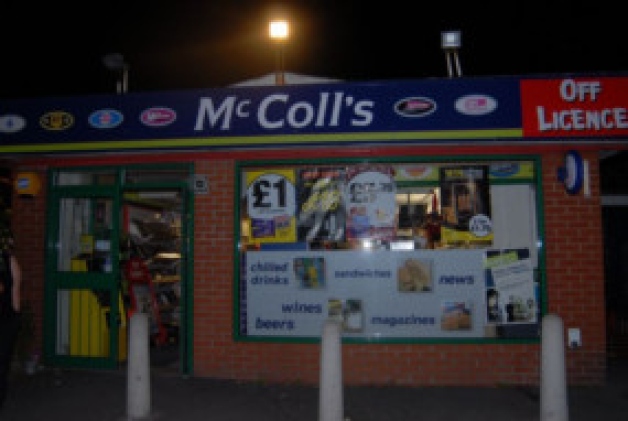
McColls Retail Group Limited, based in Brentwood, Essex, pleaded guilty to 12 food hygiene offences.

The company was fined £7,600 with £1,140 costs and £120 victims’ surcharge by District Judge James Hatton sitting at Blackpool Magistrates’ Court who commented: “There was substantial risk to health had anyone consumed these items.”

Clare Holmes, prosecuting for Fylde Borough Council, said on June 18 last year environmental health officers visited the Warton shop following a customer’s complaint milk bought there had made him repeatedly vomit.

Food in the chillers such as cream cakes and pies was being kept at too high a temperature. A packet of ham was found to be “blown” with the packaging extending. The food was immediately removed from sale and staff agreed to stop deliveries of high risk food. But the next day when inspectors returned, they found there had been another delivery and that food had to be removed.

On June 21 inspectors again went to the shop following another complaint from a member of the public the chillers were not working properly. Again food being stored had to be removed, as it did also on August 1 because it was at too high a temperature.

Richard Orridge, for the company, said it owned 1,300 shops and had a good food safety record. 

£18000 fine and costs; food firm which supplied UK primary schools had ‘filthy conditions’

Boston Magistrates heard on March 24 that Food for Thought GB Ltd admitted 12 different food hygiene charges involving raw meat being stored next to cooked ready-to-eat ham, dirty cups being supplied to a school, dirty plastic bowls and colanders, dirty and mould-stained Unknowncutting boards, dirty floors, flaking paint and dirty walls, dirty cleaning cloths and inadequate labelling of food.

They were fined £13,800 and ordered to pay £4,300 costs.

Magistrates reduced the potential fine by 30 per cent in recognition of the guilty pleas. A victim surcharge of £130 was also made.

Environmental Health Officers from Boston Borough Council visited the premises at Unit B8, Boston Trade Park, Norfolk Street, following an alert from colleagues at South Holland District Council.

There were concerns about the cleanliness of equipment supplied to a school in the South Holland area by Food 4 Thought GB Ltd.

A visit to the unit on October 4 found poor standards of hygiene, controls and management.

Caroline Clark and Moira Clark, both company directors who were on site at that time, agreed that the standards were not acceptable for premises producing food for vulnerable school children and agreed to deep clean the premises over the weekend.

On October 8 a re-inspection was undertaken and the environmental health officer noted that although a deep clean had been carried out there were still outstanding detailed cleaning issues to be addressed before the premises could be considered to be of an acceptable standard.

Magistrates expressed surprise that someone with even a basic knowledge of food hygiene had not identified issues before the visit.

$25K fine; Australian Woolworths supermarket fined for food safety breach

Woolworths Noranda in Western Australia was issued with a fine of $25,672.40 on 28 February 2014 for offences dating back to 23 September 2013 involving the in-house bakery.

WA Today reports that further investigation of the site found that metal from equipment was discovered in baked goods that were intended for woolworthssale.

A spokesperson for the supermarket giant told WA Today that it has since rectified the issue.

“We have replaced the equipment in the store to ensure there can be no further incidents of this type.”

Sri Lanka initiates food safety program during festive season

The Consumer Affairs Authority (CAA) of Sri Lanka has commenced a special program to ensure the safety of the food consumers getting during the forthcoming New Year festive season. The CAA will continue the program untill April 10.

During this period the CAA’s district representatives including officials from the Colombo headquarters will intensively engage in the inspection New Yearof retail shops and warehouses.

According to the CAA, the program is implemented with the objectives of making vendors aware of fraudulent groups who misuse the CAA’s name to collect money, ensure that traders follow regulations prescribed by the CAA Act, paying special attention to mobile vendors and special new-year sales, preventing outdated and adulterated consumer goods from entering the market, and to prevent hoarding of essential consumer items. 

NYC reforms restaurant inspection system following outcry

Less than a year after New York City’s letter grading system underwent a massive rehaul, the Department of Health and the City Council have announced further changes to the system.

City Council Speaker Melissa Mark-Viverito and the DOH announced that restaurants will see a nearly 25 per cent reduction in fines associated with inspections by the agency, bringing fines back down to jake.gyllenhaal.rest.inspection.disclosurewhere they were before the grading system was adopted. Piggybacking on previous revisions, violations will be given fixed penalties, leaving out room for discretionary figures calculated by inspectors.

To further reduce violations during inspections, restaurants can “request a consultative, ungraded and penalty-free inspection to receive tailored advice about maintaining the best food safety practices at their establishment.” Restaurant owners had been hiring consultants to spot problem areas and ideally prevent fines during official inspections from the agency.

Docs say, steer clear of roadside food in India

Eating a plate of pani puri from your street-corner bhaiya, or a plate of cold fruit salad to beat the heat may not be such a good idea this season as a host of gastrointestinal and pani.puristomach infections are already making the rounds in Bangalore.

Viruses, bacteria and other microorganisms might just be lurking in those tasty concoctions that we all feel so tempted to get our hands on, and if infected, you may have to make several trips to doctors as acute gastroenteritis (GE) could get you.

Grand jury green lights color-coded inspection system for Orange County eateries

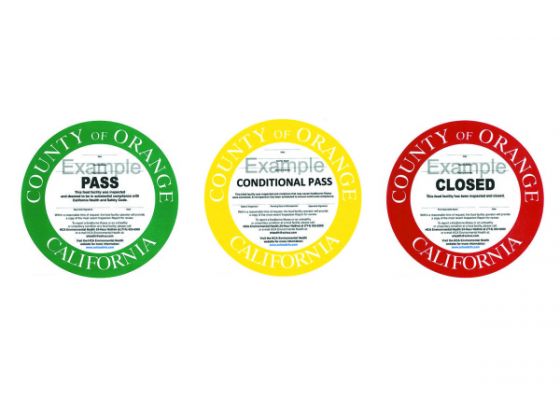
Eleven years after Toronto came up with the red-yellow-green restaurant inspection grading system, an Orange County, California, grand jury on Thursday recommended the county adopt a health inspection system with green, yellow and red placards, instead of letter grades, to inform customers whether food-service establishments are complying with the health code.

The county is the only one among its neighbors without a letter-grade system, and Thursday’s report was the latest attempt to give consumers OC.color.gradeseasily recognizable information. Previous tries here met opposition from the restaurant industry, but this time may be different, officials say.

The Board of Supervisors has three months to respond to the recommendations.

“I’m not trying to put restaurants out of business,” said Supervisor John Moorlach, who recommended a similar system in 2008, “but I want to make sure they’re doing their best to get a good green tag in the window.”

Patrons can get a copy of the restaurant’s latest inspection report online (ocfoodinfo.com) or if they ask for it at the restaurant, but hardly anybody does, said Russ Bendel, the owner of Vine Restaurant in San Clemente.

Colored signs “definitely will help guests choose where they want to go if they have multiple options,” he said.

The grand jury recommends using the same three categories as today, but coloring them like traffic signals. This is “a more practical approach” than letter grades, the report says, without the “disruption and burden” and expense.

“Improving the visibility of the current unremarkable graphic to a more distinctive image is an overdue step forward,” the report says.

It criticized other counties for “operating without any conformity” in their letter grades – for weighing certain infractions differently.

NYC’s Crocodile Lounge shut down after inspectors find rats and mice

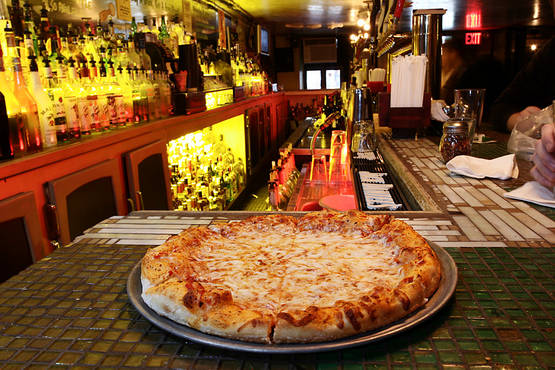
The Crocodile Lounge bar — known for offering free personal pizzas with each drink — was shut down by the Health Department this week after inspectors found rats, mice and other violations, according to online records.

Inspectors shuttered Crocodile Lounge at 325 E. 14th St. on Wednesday after issuing 51 violation points for food that was not protected from crocodile.lounge.nyccontamination, dirty wiping cloths, improper plumbing and conditions that attracted vermin, plus evidence of live rats and mice, records show.

Crocodile Lounge posted a note on its Facebook page saying it had closed because of a broken pipe.

Fancy food ain’t safe food; Thomas Keller’s Per Se has a ‘grade pending’

According to a recent inspection by the new York City Department of Health on Feb. 19, Per Se has enough violations to warrant a C grade. Currently, the restaurant has a ‘Grade Pending’ health rating, which will be subject to two more follow-up inspections for an improved grade. 

Eater reports that during the restaurant’s previous inspection, the restaurant received five critical violations, a few of which were likely related to the restaurant’s sous vide stations.

This time, Per Se was hit with 42 violation points, although the DOH reveals that this is the third time Keller’s restaurant has received more than 40 violation points. The restaurant per.sereceived five critical sanitary violation points for not holding hot food at or above 140 degrees, holding cold food items above 41 degrees, not providing a hand-washing facility near the food preparation area, an employee eating, drinking, or smoking in a food preparation area, and not providing clean wiping cloths for staff.

Sheep heads illegally on sale in London supermarket

Six sheep heads found illegally on sale in a supermarket in Edmonton, northern London, have been seized after Enfield Council discovered them during a routine inspection.

The grisly-looking skulls, which were believed to be more than four years old, were found with their teeth still attached last night by its Food Safety Team and immediately removed from sale.

The heads have the potential to carry scrapie and the supermarket had no documentation as to where and when they were bought, which the council called ‘incredibly concerning’.

It said the matter was ‘now subject to further investigation’, with Cabinet Member for Environment, Cllr Chris Bond, adding: “There are very good reasons why we have strict sheep.head.sale.UKcontrols in place regarding food safety associated with meat and its incredibly irresponsible of this trader to flout these regulations.

“We take this sort of behaviour incredibly seriously and take a very dim view of people who simply cannot be bothered to take the proper legal precautions to protect the public from exposure to a potentially fatal disease.

“The business in question had no records of when and where they purchased these heads, which is incredibly concerning because anyone buying and ultimately eating them, doesn’t have the faintest idea of what they are eating.

“It is a legal requirement for all businesses to ensure they have documentation for all food they are supplied with and that reputable suppliers are used.”