UK takeaway “festooned” in mouse droppings shut down

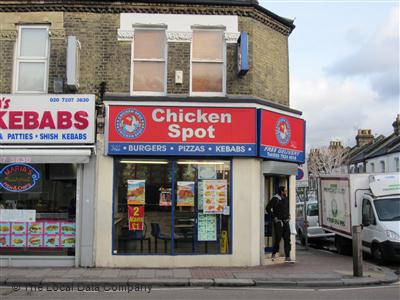
The Chicken Spot restaurant in Battersea has been shut down by food safety inspectors because of a serious rodent infestation.

The council’s consumer protection spokesman said: “What the inspectors were confronted with at this takeaway was simply unacceptable.

“Its kitchen, food storage areas and food preparation areas were filthy and festooned in mouse droppings. It is difficult to think of anywhere that would have been more unsuitable chicken.spot.batterseato be preparing and cooking food.

“Anyone who owns or runs a food business in Wandsworth should be under no illusions about the sanctions they will face if they do not observe the very highest standards of cleanliness and hygiene.

“In this case, the owner’s sloppy and unacceptable practices have cost it a good deal of lost revenue and also caused significant damage to its reputation. Other food businesses should take careful note of these consequences.” 

Restaurant grades in Hamilton (the one in Canada)

The next time you walk into a Hamilton restaurant, have a look at the front door or window. There’s a new, more colourful food safety inspection disclosure program being rolled out throughout the city this year.

Before 2014, restaurants would receive a green certificate to hang in their window if they passed a health inspection. However, the city had no way of indicating to the public if rest.inspection.hamilton.feb.14there were health or cleanliness issues inside short of pulling down that certificate — something most customers wouldn’t notice.

Now, whenever a public health inspector visits a restaurant for an inspection, it receives one of three certificates, depending on cleanliness and safety: green for a pass, yellow for a conditional pass and red for a fail, which means the business must close.

Similar systems have existed in the GTA and Halton regions for years, and Hamilton has been playing catch up. As part of the new program, the city has launched a website where people can check a restaurant’s health and safety inspection records.

These measures were taken to create a more effective way of disclosing food safety to the public, says Richard MacDonald, the city food safety manager.

The city performs between 400 to 450 health inspections in restaurants a month, broken down between high, medium and low risk establishments.

The city’s new colour coded system was first implemented on Jan. 1, and since it was ushered in, inspectors have issued 16 yellow cards for critical infractions and three red cards for closures – which is about average in the city, MacDonald says.

The three red cards were handed out to companies that had no hot water, because of frozen or burst pipes during January’s intense cold.

In 2012, 231 green pass cards were removed from restaurants, compared to 192 in 2013.

MacDonald says that according to inspector feedback, restaurant operators are heeding the new system. “They’re paying attention,” he said. “They don’t want to be wearing their reputation on the front door,” he said.

Calgary restaurant fined $25,000 for unsanitary conditions

A Calgary restaurant and its owner were fined a total of $25,000 on Tuesday for numerous violations under the Public Health Act over the past four years, including high-risk meats and vegetables stored at room temperature, and filthy equipment and work conditions.

Provincial court Judge Allan Fradsham meted out $12,500 in penalties each to a numbered company that operates Peking Garden Restaurant on Varsity Drive N.W. and its Peking Garden Restaurantowner, Ann Pat.

Alberta Health Services lawyer Ivan Bernardo said charges against other directors were withdrawn following guilty pleas to 11 counts each by Ann Pat on behalf of herself and the company.

“We think $25,000 of fines sends out the right message to the community,” Bernardo said later outside court.

Among the worst violations were frozen meat thawing on the floor under a sink; greasy containers, dirty sinks and washrooms; food debris littered on the ground outside the back door and crows seen landing on the garbage; high risk food such as jellyfish, chicken, beef, rice and meat dumplings allowed to thaw at room temperature; clean dishes exposed to dirty water; numerous staff wearing dirty aprons; a box of meat on the floor in the walk-in cooler in a pond of water; a large amount of fruit flies in the dry storage area; and a tin of meat dripping juice onto the freezer floor.

Human tooth found in Chinese takeaway in Ireland

A dirty fingernail in baby food and a human tooth in a Chinese takeaway are just some of the foreign objects found in food purchased by Irish consumers last year.

According to the Food Safety Authority of Ireland (FSAI), the contamination of food with foreign objects was ‘frequently reported by consumers’. These objects included metal fragments, glass fragments and plastic.

However, some of the more unusual items, aside from the fingernail and human tooth, were meat inside a chocolate yoghurt, a chicken’s head inside a pack of frozen chicken’s 3dnailart03wings and live insects in a packet of dates.

The FSAI pointed out that the number of food-related complaints made to its food safety advice line jumped by more than 12% last year compared to the year before.

It noted that the line dealt with over 13,000 queries in 2013, but almost 3,000 of these were complaints by consumers about food or food premises – a 12.5% increase on the number of complaints handled in 2012.

Of these complaints, almost 1,200 related to unfit food, 566 related to suspect food poisoning and 587 related to hygiene standards.

All complaints received were investigated by environmental health officers.

Meanwhile other calls to the advice line included requests for information on food labeling, food legislation and training staff.

The FSAI also noted that just 33 calls in 2013 related to the horsemeat scandal, however an alert issued about a hepatitis A outbreak associated with imported frozen berries, received 267 queries.

“It is the responsibility of food businesses across the country to ensure that they provide food which does not compromise the health of anyone who eats it,” commented Edel Smyth of the FSAI.

£4,000 fine for UK takeaway

Oldham Council has successfully prosecuted an Oldham takeaway following a food hygiene inspection – where a live rat was discovered behind a freezer.

Poor standards were found at Sweet Palace during the routine inspection by the council’s Environmental Health Team on August 19, 2013.

A dead oriental cockroach was squashed in the middle of the floor in the food preparation room. Mouse droppings were identified at the premises on Waterloo Street, in Glodwick, and there was no hand wash basin or Sweet Palace (3) 19.08.13antibacterial surface cleaner. Staff were also not wearing protective clothing and no food safety management system was in place.

The food outlet was closed immediately following the inspection and it was allowed to re-open the following day, after pest proofing and a deep clean.

Inspections have been carried out since and conditions have dramatically improved.

The owner, Nadeem Hussain, was successfully prosecuted by the local authority under the Food Hygiene (England) Regulations 2006 at Manchester Minshull Street Crown Court on Monday, February 24.

Mr Hussain, aged 41, pleaded guilty to eight food safety offences at Oldham Magistrates Court on Tuesday, January 14.

Magistrates then referred the case to Manchester Minshull Street Crown Court where Mr Hussain was sentenced and ordered to pay a £4,000 fine, and £1,650 towards the council’s costs.

He was also told to pay a minimum of £100 a week to pay off the fine or he could face prison.

23 sick with Salmonella linked to Minn restaurant

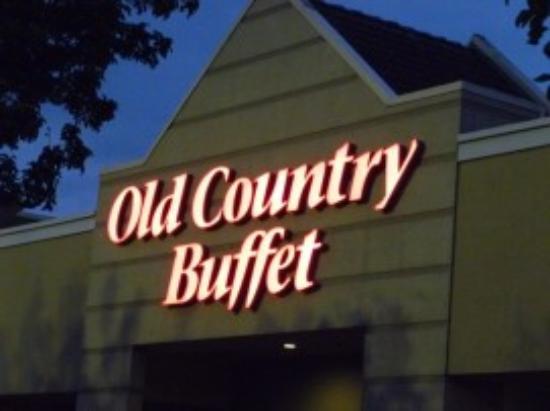
A salmonella outbreak at an Old Country Buffet in Maple Grove sickened 23 people, causing one diner to be hospitalized for about two weeks, according to the Minnesota Department of Health.

The outbreak affected people who ate at the restaurant in late January, particularly on Jan. 25, said Doug Schultz, a health department spokesman. old-country-buffetSick diners were of a broad age range and one middle-aged diner was hospitalized.

The health department didn’t give out further details. An investigation is ongoing.

£11,000 fine for UK Chinese restaurant owner

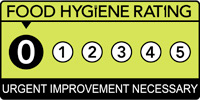
Kams Palace Ltd admitted five offences under the Food Hygiene Regulations and two offences under Health and Safety legislation.

The prosecution at Fareham Magistrates’ Court follows a routine food hygiene inspection in February last year.

Officers from Fareham Borough Council visited Kams Palace in Bridge Road and found poor standards of cleanliness in the kitchen and storage fhrs_0_en-GBareas.

The council says many food safety hazards were found including poor stock control, food stored in dirty containers, dirty equipment and evidence of mice.

No evidence of food hygiene training for the employees was available.

Kams Palace Ltd was fined £11,000 and ordered to pay full costs to the council.

Following the inspection the company has re-trained staff in food hygiene and the hygiene procedures and cleanliness have improved.

New Zealand council alarm at food stall risk

Food stalls at the Chinese Lantern Festival, Pasifika, Diwali and other major events will be nearly unregulated for food safety under a major law reform, says Auckland Council, which is concerned about the potential for large-scale food poisoning.

Council officials say legislation before Parliament which introduces new food safety regulations would exempt small vendors serving tens of sorenne.hockey.feb.14thousands of meals at large events.

They made the comments as submissions resumed on the long-awaited Food Bill, which was first introduced to Parliament in 2010.

The bill stalled amid speculation that it would put an end to sausage sizzles and cake stalls, introduce crippling costs for small horticultural producers, and give multinational corporations more control over New Zealand’s food sources.

The Government amended the bill in 2012 to address some of these problems and ensure that small-scale sellers such as farmers’ markets and fundraising stalls would not be captured by the law change.

Auckland Council said it supported most of the changes, but it was worried small vendors would be exempted from controls on food safety at large events such as the Chinese Lantern Festival, attended by more than 100,000 people.

Environmental health team leader Alan Ahmu told a select committee yesterday that officials were not concerned about school fairs or fund-raisers.

Wait, what? Little kids are one of the more vulnerable populations for foodborne illness.

I spent 16 hours this weekend becoming a level 1 coach for ice hockey in Australia, building on the 32 or so hours in Canada, at least 5 years behind the bench, and decades of experience, all because parents expect the best for their kids.

So why wouldn’t they expect the best for their kids at school?

Instead of moaning about why certain groups or people should be exempt from food safety rules, make it mandatory, and figure out the best way to folklorama.infosheet.10provide information to people (hint – it won’t be found in government).
If a minimal level of competency is required to coach hockey, a minimal level of competency should be required to make food for other people.

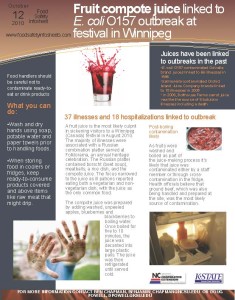
Investigating the potential benefits of on-site food safety training for Folklorama, a temporary food service event

Mancini, Roberto1; Murray, Leigh2; Chapman, Benjamin J.3; Powell, Douglas A.4

Source: Journal of Food Protection®, Volume 75, Number 10, October 2012 , pp. 1829-1834(6)

Abstract:

Folklorama in Winnipeg, Manitoba, Canada, is a 14-day temporary food service event that explores the many different cultural realms of food, food preparation, and entertainment. In 2010, the Russian pavilion at Folklorama was implicated in a foodborne outbreak of Escherichia coli O157 that caused 37 illnesses and 18 hospitalizations. The ethnic nature and diversity of foods prepared within each pavilion presents a unique problem for food inspectors, as each culture prepares food in their own very unique way. The Manitoba Department of Health and Folklorama Board of Directors realized a need to implement a food safety information delivery program that would be more effective than a 2-h food safety course delivered via PowerPoint slides. The food operators and event coordinators of five randomly chosen pavilions selling potentially hazardous food were trained on-site, in their work environment, focusing on critical control points specific to their menu. A control group (five pavilions) did not receive on-site food safety training and were assessed concurrently. Public health inspections for all 10 pavilions were performed by Certified Public Health Inspectors employed with Manitoba Health. Critical infractions were assessed by means of standardized food protection inspection reports. The results suggest no statistically significant difference in food inspection scores between the trained and control groups. However, it was found that inspection report results increased for both the control and trained groups from the first inspection to the second, implying that public health inspections are necessary in correcting unsafe food safety practices. The results further show that in this case, the 2-h food safety course delivered via slides was sufficient to pass public health inspections. Further evaluations of alternative food safety training approaches are warranted.

Milwaukee may begin posting inspection grades on restaurant doors

Old Milwaukee, like the discount beer you are in Ontario, like lost episodes of Laverne and Shirley, you have now decided to join the 21st century and post restaurant inspection grades on doors.

But not without some angst.

Milwaukee Common Council President Michael Murphy wants to give restaurants a grade for hygiene and post it on the front door.

Murphy is working on an ordinance that would direct the city’s health department to set up a grading system, and while the legislative details waynes.world.lavernehaven’t been hashed out, he plans to fill those in over the next three weeks.

“This is something I’ve been pushing for years,” Murphy said. “The whole point is to encourage restaurant owners to stay clean and let the marketplace dictate the response. So many foodborne pathogens have made people sick, it’s incumbent upon government to help businesses to do a better job.”

The city’s health department has been evaluating best practices for grading.

We can help with that:

Filion, K. and Powell, D.A. 2009. The use of restaurant inspection disclosure systems as a means of communicating food safety information. Journal of Foodservice 20: 287-297.

The World Health Organization estimates that up to 30% of individuals in developed countries become ill from food or water each year. Up to 70% of these illnesses are estimated to be linked to food prepared at foodservice establishments. Consumer confidence in the safety of food prepared in restaurants is fragile, varying significantly from year to year, with many consumers attributing foodborne illness to foodservice. One of the key drivers of restaurant choice is consumer perception of the hygiene of a restaurant. Restaurant hygiene information is something consumers desire, and when available, may use to make dining decisions.

Filion, K. and Powell, D.A. 2011. Designing a national restaurant inspection disclosure system for New Zealand. Journal of Food Protection 74(11): 1869-1874
.

The World Health Organization estimates that up to 30% of individuals in developed countries become ill from contaminated food or water each year, and up to 70% of these illnesses are estimated to be linked to food service facilities. The aim of restaurant inspections is to reduce foodborne outbreaks and enhance consumer confidence in food service. Inspection disclosure systems have been developed as tools for consumers and incentives for food service operators. Disclosure systems are common in developed countries but are inconsistently used, possibly because previous research has not determined the best format for disclosing inspection results. This study was conducted to develop a consistent, compelling, and trusted inspection disclosure system for New Zealand. Existing international and national disclosure systems were evaluated. Two cards, a letter grade (A, B, C, or F) and a gauge (speedometer style), were designed to represent a restaurant’s inspection result and were provided to 371 premises in six districts for 3 months. Operators (n = 269) and consumers (n = 991) were interviewed to determine which card design best communicated inspection results. Less than half of the consumers noticed cards before entering the premises; these data indicated that the letter attracted more initial attention (78%) than the gauge (45%). Fifty-eight percent (38) of the operators with the gauge preferred the letter; and 79% (47) of the operators with letter preferred the letter. Eighty-eight percent (133) of the consumers in gauge districts preferred the letter, and 72% (161) of those in letter districts preferring the letter. Based on these data, the letter method was recommended for a national disclosure system for New Zealand.

A rat map that shows NYC’s restaurant rodent takeover

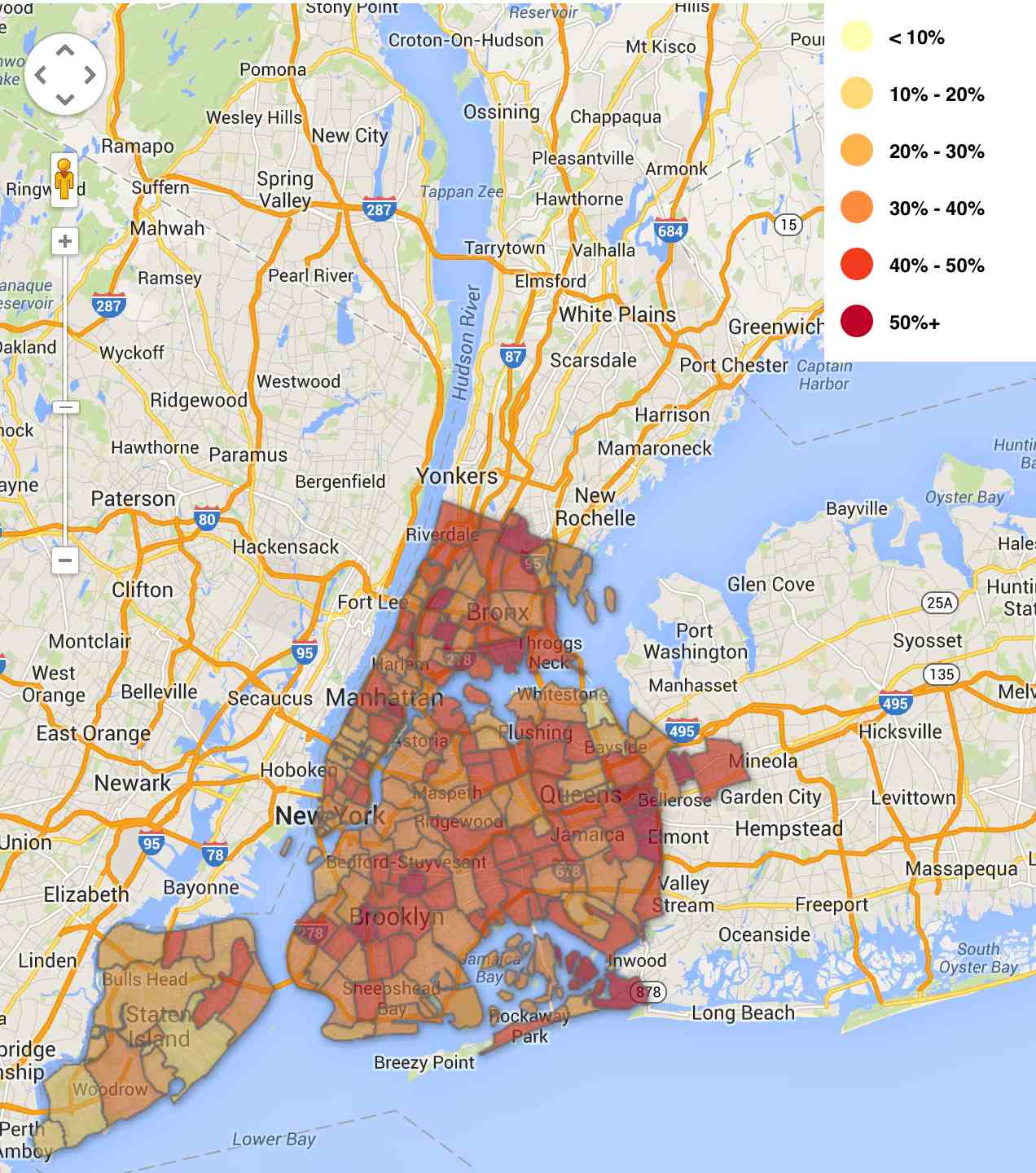
Continuing with the New York City theme, Steven Melendez has created a colorful map of rats in the Big Apple.

As Nell Casey at Gothamist explains, Melendez created the map with restaurant inspection data starting from January 1st, 2013. The number of restaurants cited for “evidence of mice or live mice,” or “evidence of rats or live rats,” was compared to the total number of restaurants in each zip code to find the percentages in the color-coded map.

rats.map.nyc.feb.14