There’s no problem here; UK tourist sues over Salmonella ‘nightmare holiday’ in Bulgaria

Catherine Lowe, aged 26, came down with Salmonella poisoning during a stay at a hotel in Bulgaria.

The healthcare assistant needed to be hooked up to a drip at a local medical centre when her symptoms left her dangerously dehydrated, and she still suffers from irritable bowel syndrome two years on.
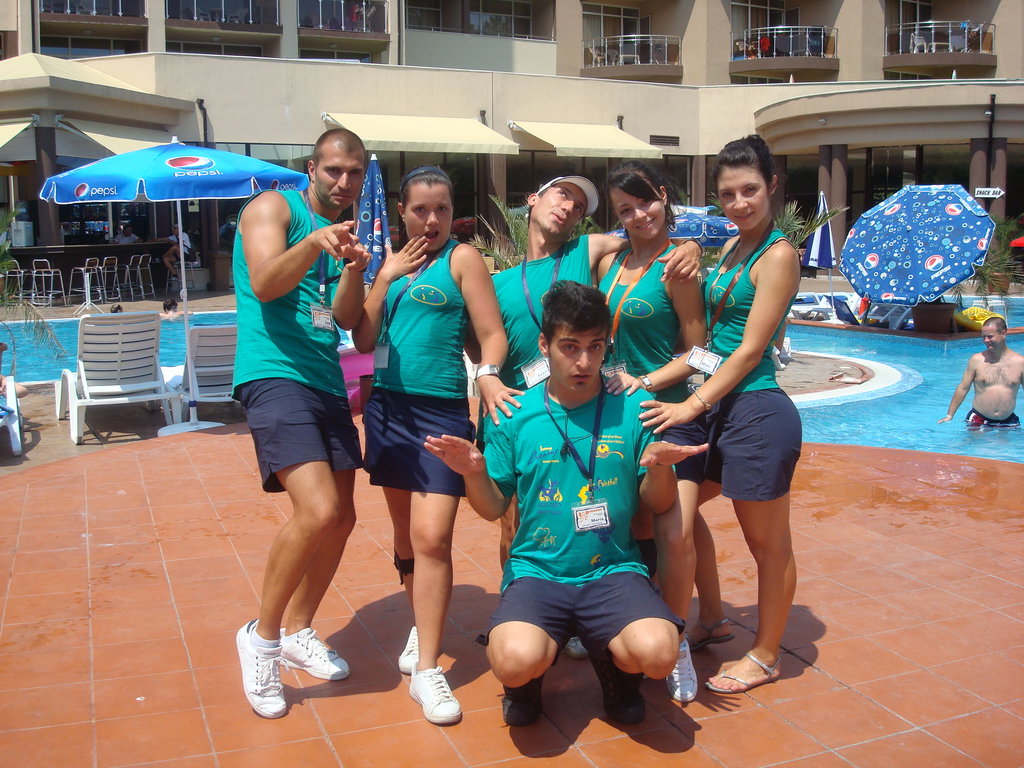
Laguna-Park-Hotel-inCatherine says the trip was a ‘complete nightmare’.

Her solicitors have issued court proceedings against holiday company Thomas Cook as part of efforts to win compensation.

Catherine fell ill six days into her 10-day holiday at the Laguna Park resort in June 2012.

She suffered severe diarrhoea and stomach pains, and was given treatment at a Bulgarian clinic, but still felt unwell when she returned home to Worsbrough, Barnsley.

Her GP quickly diagnosed salmonella food poisoning.

“I was appalled by the conditions at the Laguna Park Hotel,” said Catherine.

“I was looking forward to visiting Bulgaria.

Meals meant to be served hot were ‘undercooked at best’, she says.

“I witnessed chefs at the restaurant sometimes handling raw meat with the same utensils they used on other foods,” she said.

“When I tried to complain to hotel staff about the conditions in the restaurant and the general hygiene of the hotel they were extremely rude and would not accept that there was a problem.”

Over £17Kin fines; mouldy food and filthy conditions at The Thali Indian restaurant shock UK hygiene inspectors

Conditions at a filthy East Yorkshire restaurant have been described as some of the worst that hygiene inspectors had ever seen.

Inspectors visiting The Thali Indian restaurant in Pocklington found mouldy food on counters, no soap for workers to wash their hands and raw and cooked meat kept next to each other.

The Thali Indian restaurant in PocklingtonPoppadums were kept next to rubbish bins and shish kebabs were on a sink connected to an extractor fan.

Owners Syed Muthekin and Mohammed Shofi Ahmed appeared before Beverley Magistrates’ Court on Wednesday to admit seven offences of failing to comply with food hygiene regulations.

They were each fined £8,933.

Prosecutor for East Riding Council Tom Spencer said: “The sink was obstructed by a cooked chicken, while shish kebabs were in contact with the sink hanging from the extractor fan.

“There was no soap or hand dryer for workers to wash their hands and the taps were dirty.”

The inspector also discovered temperature records had not been kept up-to-date, cooked and raw meat had been cross-contaminated and cooked rice was left at a highly dangerous temperature.

Paul Bellotti, the council’s head of housing, transportation and public protection, said: “This restaurant scored zero. They continued to show a complete disregard for their responsibilities.”

Mouse infestation closes birthplace of the cronut

New York City residents and tourists are apparently not alone in their love of Cronuts, those croissant-and-doughnut hybrids that have people lined up for blocks before dawn outside a SoHo bakery.

Online video showing a mouse running around in the Dominique Ansel Bakery on Spring Street, which shot to fame after its eponymous chef cronut21-300x300created the pastry, led health officials to temporarily shut the shop on Friday.

The closing was reported on Friday on the website Gothamist, which noted that the bakery had been open earlier in the day.

Inspectors from the city’s health department found a severe mouse infestation at the bakery requiring professional pest control, and the bakery cannot reopen until inspectors determine the problem has been fixed, an agency statement said.

‘Name-and-shame is a good thing because it gives the public vital information’ South Australia frustrated by legal process

A filthy, cockroach-infested St Peters restaurant fined more than $100,000 has not been added to the State Government’s name-and-shame register, despite being convicted almost two months ago.

On February 12, Imperial Peking admitted to 31 counts of breaching the state’s food safety code, after cockroaches were found on benches, walls, floors and cooking equipment.

The Eastern Health Authority (EHA) – which prosecuted the restaurant – said it should not have to jump through hoops to get convicted businesses Imperial Pekingadded to the register.

EHA chief executive Michael Livori said it the process to get convicted businesses on the register was long-winded and bureaucratic, including having to wait for the sentencing magistrate to publish remarks.

“It should be automatic or the process could be streamlined,” Mr Livori said.

“We shouldn’t have to fill in numerous forms and have to provide A, B and C to get a company on the register.

“Do I think the Department of Health could look to improve the time frame? I would answer, ‘yes’.”

An SA Health spokeswoman said it could not add premises to the register until the legal process had been completed, including waiting for the 28-day appeal window to lapse.

And it was all avoidable: seven businesses in Ireland closed over food hygiene

Seven food businesses were closed across the country last month for breaches of food safety legislation, the Food Safety Authority of Ireland has confirmed.

Professor Alan Reilly, chief executive of the FSAI, stated that there is absolutely no excuse for food businesses to put consumers’ health at risk fsaithrough negligent practices.

“While most food businesses follow high standards and are compliant with food safety legislation, we continue to encounter cases where consumers’ health is jeopardised through a failure to comply with food safety and hygiene requirements. These breaches are avoidable,” he said.

One restaurant and a take-away were served with closure orders under Irish legislation in March while three restaurants, a take-away and a butcher were served with closure orders under European regulations. In addition, one fish processor was served with a prohibition order by the Sea-Fisheries Protection Authority.

Closure orders are issued if it is deemed that there is or there is likely to be a grave and immediate danger to public health or where an improvement order has not been complied with.

Of course food safety is your top priority; dancing rats at Manhattan Dunkin’ Donuts

Oh iPhone cameras and youtube.com; how do I love thee?

And Dunkin’ Donuts, you’re no Tim Hortons.

Two videos uploaded to YouTube on Tuesday show rats crawling around a New York City Dunkin’ Donuts location in the Garmnet District.

In the first video, uploaded by user ‘Pjayone’, a rat is seen making its way from the top of a display rack, touching croissants, bagels and other Dunkin' Donutsbaked goods in open tubs.

The second video shows yet another rat crawling up a window curtain at the same location on 37th Street and 8th Avenue.

In an email to Gothamist, the YouTube user explains that this is a normal occurrence  at the location.

‘At two-thirty [in the morning] every [day] the workers load the shelves with the morning’s wares. Shortly thereafter like clockwork the rats come out and party.’

‘My phone ran out of power, or I would’ve filmed the outright nine deep rat assault which followed the action above,’ he added.

‘The items in the video that are being besieged upon by the rats were to be sold for that mornings breakfast rush.’

The location captured in the video has an ‘A’ rating from the city’s health department, despite getting a citation for vermin-related issues in November 2013.

The citation called the facility ‘not vermin proof. Harboarge or conditions conductive to attracting vermin to the premises and/or allowed vermin to exist.’

When contacted by Gothamist, the location manager said simply: ‘We don’t have an issue like that.’

Dunkin’ Donuts’ corporate offices issued their own statement, saying ‘food safety is a top priority’.

‘We have stringent food safety and quality standards, and we take great pride in the food and beverages we serve to our guests every day.

Possible foodborne illness at Minn. Lion’s Club

The Minnesota Department of Health is, according to the Brainerd Dispatch, investigating possible foodborne illnesses after some people got sick after a Nisswa Lion’s Club meeting.

The March 24 Lion’s club meeting was conducted at the Nisswa Community Center. Food was served by the regular caterer, Red, White and Blue Catering of Paul Bunyan BrainerdNisswa, said Lion’s club president Duane Blanck.

The investigation is ongoing, said Doug Schultz, of the Communications Department at the Minnesota Department of Health.

“We don’t have much yet,” he said.

Schultz said the department received a complaint that some people who ate at the meeting have experienced symptoms of a possible foodborne illness.

The exact number of those sick was not available Monday, though Schultz said 35 people ate at the buffet-style meal. The Department of Health doesn’t have the complete list of food items yet.

Most juice outlets in Kochi function by flouting food safety norms

Locating a juice shop in the city fully complying with the guidelines prescribed by the Commissioner of Food Safety may be a Herculean task this summer.

With shops mushrooming in every nook and cranny in Kochi, Indian Food Safety officials seem groping in the dark on how to curb the violations.

Even though reports on use of contaminated ice have come down gradually, they admitted that the majority of the shops store ice in thermocol boxes against the FRUITS_JUICE-2_1814515fprescribed rules. As per the guidelines, ice should not be stored in polystyrene boxes, but in freezers or ice boxes.

Many juice shop owners now claim that they use water supplied in cans by private manufacturers of bottled drinking water. But there is little check on whether these suppliers meet the safety standards.

Use of low quality milk, especially that brought from outside the State, is also rampant in juice shops offering milk shakes.

The Food Safety Department has no clues on whether the shops were storing milk in freezers well beyond the expiry period.

Worst food safety failures in NSW grocery stores

Rodents, bugs, filth and expired food have caused nearly 300 supermarkets, greengrocers and delis to be slapped with fines over the past six years, data from the New South Wales Food Authority shows.

The IGA Plus Liquor store in East Lindfield is the biggest repeat offender, receiving 11 fines totaling $5,280 for breaching food safety rules since 2009.

Despite being penalised two years ago for displaying food for sale past use-by dates, it committed the offence again. In August, it received three fines for peddling expired feta animal.house.double.secret.probationcheese, quince paste and steak.

An analysis of nearly 600 penalty notices issued to grocery retailers across the state since mid-2008 revealed one in 10 notices related to the selling of expired food.

Others concerned the failure to eradicate bug infestations and stop rodent activity, the failure to display potentially hazardous food under temperature control, filthy premises and grimy equipment, and the mislabelling of products. Most received prior warnings.

An employee at IGA East Lindfield, who refused to be named, said a Ku-ring-gai Council food inspector had fined them on ”very little things that shouldn’t be an offence,” such as running out of paper towels for the staff’s hand basin.

The fines for selling expired food were unfair, he said.

Since 2008, the state’s councils and the NSW Food Authority collected $400,000 in fines from transgressing supermarkets, groceries and delis. Fairfield Council holds the lion’s share at $45,650, followed by Willoughby Council ($29,150) and Blacktown Council ($18,920).

However, the compliance rate for all food businesses in the three council areas hovered between 89 per cent and 93 per cent in the past financial year.

Among the supermarket giants, 14 Coles stores were hit with 17 fines and eight Woolworths stores received 10 fines. The most recent fine was against the Pemulwuy Woolworths, which displayed barbecue chicken pieces outside the safe temperature zone.

Gavin Buckett, a food safety auditor of 12 years and founder of the consultancy firm Gourmet Guardian, said Woolworths and Coles had better training systems, signage with work instructions and systems to prevent recalled items being sold.

He said smaller businesses were more likely to source products from unaudited overseas suppliers without applying rigorous quality checks.

‘Why do we have to wash our hands? We wear gloves’ bad inspection forces Wisconsin McDonald’s to close, give refunds

A McDonald’s at 3131 Mayfair Road in Wauwatosa was, according to the Journal Sentinel, closed briefly two weeks ago because of issues with handwashing, and the restaurant was forced to give customers refunds at the counter, public records from the city showed.

The restaurant closed March 12 for several hours while a hand sink was being repaired. There were none working in the kitchen for washing hands or in the rest of the restaurant,handwash_south_park(2)except in the bathrooms. Restaurants in Wisconsin are required to have sinks designated solely for washing hands.

The inspection yielded several other violations, including dirty utensils, accumulations of food debris and grease, wiping rags in sanitizer buckets that didn’t have any sanitizer in them and a lack of basic knowledge about food safety.

According to the inspection report, one employee said, “Why do we have to wash our hands? We wear gloves.”

The inspector also instructed staff to throw out undated foods from the refrigerators.

Owner Deborah Allen said in a statement, “Nothing is more important to me than operating a safe and clean restaurant. We follow rigorous standards for food safety and quality, and we take great pride in the food and beverages we serve to our customers every day. We take these matters very seriously, and took immediate action to make the appropriate corrections.”

The inspection report is available at the Journal Sentinel’s restaurant inspection page, jsonline.com/data, which houses restaurant inspection data from the four-county Milwaukee area and is updated monthly. Wauwatosa is not included with other cities and towns in the four-county database because the city has said it is not able to release its database. Instead, the city provides inspection reports weekly.

jon.stewart.handwashing.2002