Do I have (duck) egg on my face; listeria in fried duck thingies in France

I make mistakes when I blog, trying to combine speed with accuracy. Usually they are corrected without much fuss; but when it involves language, and especially French, it gets dramatic.

My friend in France sends me stories about food-related recalls and outbreaks on a daily basis, usually from a French media source. Amy the French professor toiling away downstairs has her own work to do so I try not to bug her.

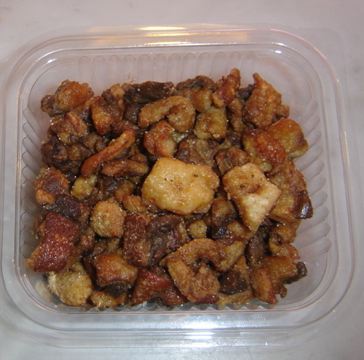
Lately I’ve been using goggle translate – oh, that’s google, I have a habit of writing goggle –to get the jist of the story and then blog it without bugging the French prof.

So when google translate suggested duck cracklings, I went with eggs, knowing I had a great picture of farm-fresh duck eggs from my colleague Kate. Turns out it was fritons or grattons or grillon, which was translated as cracklings, that showed up positive for listeria at Intermarche Figeac. They are, according to my French friend, small pieces of duck, fried with the fat of the duck (right, exactly as shown).

The French prof says she will use this as a translation anecdote for her students next semester and why humans are better than goggle – google.
 

Language a ‘risk factor’ for listeria in Australia

Focusing on the language needs of expectant mothers and enhancing food safety in hospitals could reduce cases of foodborne illness caused by listeria.

Australian researchers report in the current Epidemiology and Infection that of 136 cases of listeriosis in Australia between Nov. 2001 and Dec. 2004, 40 per cent of cases with prior hospitalization were exposed to high-risk foods during hospitalization; consumption of camembert cheese was an additional risk factor.

Of the 19 perinatal cases — defined as illness in a pregnant woman, fetal loss, or illness in a baby aged less than 3 months with isolation of L. monocytogenes from at least one of the maternofetal pair — living in a household where a language other than English (LOTE) was spoken was the primary risk factor associated with listeriosis.

The numbers are small, but the researchers have identified a persistent problem – providing information is nice, but what if the target can’t read or understand (in this case) English?

“The Food Standards Australia and New Zealand (FSANZ) website only provides a brochure on listeriosis and food in English. Languages used in State and Territory brochures vary widely with some only including English while others provide up to 14 languages other than English.

“This study identified that listeriosis prevention messages need to be disseminated in multiple languages and primary-care practitioners should ensure that patients from households speaking a LOTE receive counselling on listeriosis prevention.”

Which sounds nice, but since hospitals are serving high-risk foods to others at risk, maybe the medical community is a limited source of information. And just because a brochure is in another language doesn’t mean anyone will read it or act upon the information. That requires far more rigorous evaluation in terms of information needs, delivery, messages and accuracy. The morons at Toronto Sick Kids hospital told moms-to-be that cold-cuts and raw fish were OK (they’re not).

As the authors conclude,

“The effectiveness of the implementation of the new food safety programs for food service to vulnerable persons should be carefully evaluated to ensure optimal protection of this group.”

A national case-control study of risk factors for listeriosis in Australia
30.apr.10
Epidemiology and Infection (2011), 139: 437-445
C.B. Dalton, T.D. Merritt, L.E. Unicomb, M.D. Kirk, R.J. Stafford, K. Lalor and the OzFoodNet Working Group
http://journals.cambridge.org/action/displayAbstract?fromPage=online&aid=8013904
Abstract
Listeriosis is a foodborne disease associated with significant mortality. This study attempts to identify risk factors for sporadic listeriosis in Australia. Information on underlying illnesses was obtained from cases’ treating doctors and other risk factors were elicited from the patient or a surrogate. We attempted to recruit two controls per case matched on age and primary underlying immune condition. Between November 2001 and December 2004 we recruited 136 cases and 97 controls. Of perinatal cases, living in a household where a language other than English was spoken was the main risk factor associated with listeriosis (OR 11·3, 95% CI 1·5–undefined). Of non-perinatal cases we identified the following risk factors for listeriosis: prior hospitalization (OR 4·3, 95% CI 1·0–18·3), use of gastric acid inhibitors (OR 9·4, 95% CI 2·4–37·4), and consumption of camembert (OR 4·7, 95% CI 1·1–20·6). Forty percent of cases with prior hospitalization were exposed to high-risk foods during hospitalization.

 

Are all Jimmy John’s ingredients made this way?

Alfalfa sprouts grown in Illinois have sickened at least 112 people in 18 states with salmonella since Nov. 2010, and many of those sick ate the sprouts on Jimmy John’s sandwiches.

On Jan. 3, 2011, in a separate outbreak, health officials fingered clover sprouts produced by Sprouters Northwest, Inc. of Kent, Wash. as the source of a separate salmonella outbreak that has sickened three in Oregon and four in Washington. Once again, the vehicle in at least some of the illnesses was Jimmy John’s sandwiches with sprouts.

In mid-Jan. 2011, John Liautaud, the owner of the Jimmy John’s sandwich shop chain, said his restaurants will be replacing alfalfa sprouts with allegedly easier-cleaned clover sprouts, effective immediately.

Mr. Liautaud, perhaps you should inspect your suppliers. The U.S. Food and Drug Administration did that at the Sprouter’s Northwest facility and found:

• failure to take necessary precautions to protect against contamination of food and food contact surfaces with microorganisms and foreign substances;
• failure to clean food-contact surfaces as frequently as necessary to protect against contamination of food;
• failure to clean non-food-contact surfaces of equipment as frequently as necessary to protect against contamination;
• effective measures not being taken to protect against contamination of food on the premises by pests;
• failure to properly store equipment, remove litter and waste, and cut weeds or grass that may constitute an attractant, breeding place or harborage area for pests, within the immediate vicinity of the plant, building, or structures;
• failure to maintain buildings, fixtures, or other physical structures in a sanitary condition;
• failure to hold raw materials in bulk or suitable containers so as to protect against contamination; and,
• failure to maintain buildings and physical facilities in repair sufficient to prevent food from becoming adulterated.

The original table of North American raw sprout-related outbreaks is available at http://bites.ksu.edu/sprout-associated-outbreaks-north-america-1990-2009.
 

Patrick Elias recovered nicely from 2005 Hep A illness, scores goal in 2011 NHL All-Star game

The NHL All-Star game is usually a goalie nightmare with no backchecking, multiple odd-man rushes and a bunch of goals. The 2011 game, being played right now here in Raleigh is no different. The score currently sits at 10-9 (but will probably be higher before I finish this post).

I took in a bunch of the festivities this weekend including last night’s skills competition, and the fanfest (which Jack loved).

One of the current all-stars, Patrick Elias of the New Jersey Devils has a personal food safety link. In 2005 while playing in Russia (during the NHL lockout season), Elias contracted Hep A that resulted in a 20-day hospital stay, a loss of 30 lbs and he missed a portion of the following season.

Check out one of the old school (and not very effective as I found out) infosheets detailing Elias’ illness.


248 arrested in China for food safety in 2010

The Xinhua News Agency reports a total of 248 people were arrested in China last year for involvement in food safety cases.

The country dealt with 130,000 cases involving food safety last year, including 115 criminal cases, according to a statement of the National Food Safety Regulating Work Office.

The cases touched upon such areas as production of edible agricultural produce, food production, food circulation, catering services and food exports and imports.

"No major incident occurred last year, and the overall food safety situation maintained stable," said the statement.

Last year also saw a nationwide crackdown on "gutter oil", usually made from discarded kitchen waste that has been refined, after media reports that it was commonly used by small restaurants.

A total of 191 officials were punished for failing to do their duty in food safety enforcement, with 26 of them fired, it said.

Salmonella tastes better in an expensive kitchen

I enjoy watching House Hunters on HGTV every now and then. I tend to get mad at people on that show because they base their decisions on the dumbest parameters.

Today I witnessed the latest dumb decision made by a couple in Lee’s Summit, MO (where I happened to be yesterday at my roommate’s parents house). They choose a $275,000 house because of the “huge kitchen and amazing garage,” while their two little girls share an 8 x 10 bedroom with two doll-sized closets in it.

As the family settles in, the food safety mistakes make an appearance as they make cookies in said huge kitchen. The two-and-a-half and one-and-a-half year olds help with the baking and eat a spoonful of raw cookie dough. Raw cookie dough contains the risk of Salmonella contamination, which is especially dangerous for the little ones. I admit that I have eaten it before, but not as a child and not after I learned about the risks involved.

The best part? Dad is a doctor.
 

Luxury hotel infested with flies because dyslexic chef couldn’t read use-by dates on food, owners fined

I used a variation of the headline in today’s Daily Mail, but it would appear there were additional food safety issues at this fancy-pants hotel.

The luxurious Mellington Hall Hotel, in Wales, describes itself as a ‘hidden gem’ nestling in 280 acres of beautiful parkland and serving only the finest food and drink.

But when environmental health inspectors arrived they found a ‘significant fly infestation’, mouldy strawberries and cream past its use-by date.

The Victorian gothic mansion, which boasts on its website that it offers ‘a combination of the finest food and drink savoured in elegantly furnished surroundings with an attentive and knowledgeable staff to make your meal with us unforgettable’, was closed immediately and deep-cleaned following the inspection last July.

But after a second visit this month also found mouldy food, it emerged that the chef was dyslexic and had been unable to read the use-by dates.

Lance Thomas and his wife Vanessa, with whom he runs the hotel near Church Stoke, Powys, Wales, were fined a total of £6,750 at Welshpool magistrates for the breaches of hygiene. They have now adopted a colour-coded system so that the unnamed chef can identify the food that is going off.

Court also heard health-types found trays of cooked meat and vegetables on the floor of the chiller, flies landing on food preparation surfaces and on open food left uncovered in the kitchen, and unwrapped brie on top of moldy strawberries.
 

2 exams, 1 cup; poop used to get out of an exam

When I was in high school and university I hated exams. That’s about as unique of a character trait for a student as liking My Chemical Romance is for an emo fan.

Exams might suck and I definitely had thoughts of faking a Ferris Bueller-style illness or creating a minor traffic accident to get out of one but I never followed through.

I obvious wasn’t thinking creatively.

According to the Hunterdon County Democrat, a 16-year-old exam avoider has taken things to a new level.

According to police, the teen was in class at North Hunterdon on Monday and asked to use the bathroom. The boy then took a carry-out style coffee mug with a screw-on cap with him to the nurses’ office bathroom. The boy defecated in the mug, screwed the cap on, and returned to the classroom where he unscrewed the lid, and “this caused a disruption in the classroom,” police said.

The student is facing disorderly conduct charges. Probably don’t want to use that cup again.
 

Is your in-laws’ cooking a food safety failure

The occasional relative will welcome my help in the kitchen. That’s Amy’s aunt Jean (right) as we prepped dinner in Minnesota a couple of weeks ago. We talked food safety and I complimented her on stringent thermometer use.

But many dinners with family or friends can be food safety nightmares. Cross-contamination is rampant, temperature control inadequate, and the source of ingredients suspect.

Someone called Grossed Out wrote the Toronto Sun to say her mother-in-law does not wash her hands.

“During our Christmas visit, she and I went grocery shopping. We returned and prepared the leftovers. She "re-mashed" the potatoes with her bare hands — without ever washing her hands. … Is there any way to bring this to her attention without hurting her feelings?”

Columnist Amy Dickinson responds,

“This is extremely unappetizing, not to mention unhealthy. If your mother-in-law handled uncooked chicken or shellfish and then plunged her unwashed hands directly into a bowl of mashed potatoes, for instance, this could cross-contaminate foods and spread foodborne illness.

“If you were pregnant and contracted Listeria from these unsanitary practices, it could be disastrous. …

“Try saying: ‘Mom, I’m very concerned about hand washing in the kitchen and I notice you’re pretty casual about it. Can you help me out here? I feel like I can’t eat comfortably unless the cook washes her hands often.’"

Other suggestions?
 

Go to city hall next time: cholera crashes wedding in Dominican

In an impressive display of microorganisms ignoring political borders, rhetoric and social class, a south Asian strain of cholera suspected to have originated with Nepalese United Nations peacekeepers stationed in central Haiti is thought to have contaminated lobsters collected served at a lavish wedding at a luxury resort in the Dominican Republic and sickened many guests.

Dozens of international guests at a family celebration – some reports said it was a wedding – were stricken with vomiting and diarrhea after eating apparently contaminated lobster.

Dominican health officials said that at least 37 of the 500 guests at Casa de Campo, a five-star complex in the Dominican Republic, had tested positive for cholera, including Fernando Hazoury, whose family owns a separate luxury resort, and guests from Spain, Mexico and the U.S.

The health minister, Bautista Rojas, said lobsters for last Saturday’s wedding came from Pedernales, a town bordering Haiti, where about 3,800 have died and 189,000 fallen ill since October.

Venezuelan Health Minister Eugenia Sader said Friday that 111 people went to the hospital to be checked for cholera after attending the wedding.

Authorities were still trying to locate the rest of the 452 Venezuelans who traveled to the Dominican Republic for the January 22 wedding.