“We’d never tested the sand before,” Beth said. “Other cities say they don’t test either. There’s no requirement.”
The results showed high levels of E. coli bacteria. Since then, a similar problem was discovered at Maddux Park. The sand play areas at both parks are being replaced with water features, officials said, and the renovations should be done by mid-January.
The sand features at all the other Redwood City parks were tested, and just Maddux came up with an E. coli problem. The source of contamination was feline feces in one case and human feces in the other.
Between August and November 2010, there were 231 laboratory-confirmed reports of S. Bareilly in the United Kingdom. A case–control study showed that consumption of bean sprouts was significantly associated with illness. The investigation concluded that raising public awareness to ensure the correct preparation of raw bean sprouts during cooking was the principal means of preventing further cases.
Bean sprouts follow a complex path from farm to table that includes growing, harvesting, processing and shipping of mung bean seeds, followed by sprouting (normally at temperatures of 20-30 ºC with high humidity) and distribution of the finished product. Seeds may arrive already contaminated or contamination may occur at any point of production and distribution. As in previous outbreaks, this investigation concluded that the seeds were likely to have been contaminated, as investigations at suppliers found little potential for cross contamination of sprouted seeds.
Based on the experience of this investigation, the methodology used for routine microbiological quality control testing of bean sprouts may not be sensitive to low levels of Salmonella contamination. This may have implications for future testing protocols.?The bean sprouts implicated in this investigation were not ready to eat products and would be safe to eat if the instructions for correct preparation (washing and cooking until piping hot) were followed.
Leslie Nielsen is still dead, but the food safety wonks in Washington are keeping the fans in stiches.
The U.S. Senate’s slapstick effort to pass food safety legislation is not going to result in fewer sick people. But it does set a tone, like restaurant inspection grades, that food safety is important, that elected officials may, sorta, be paying attention. And if it gets food safety on The Daily Show, then great.
For those who need reminding, food safety is not at the top of the legislative agenda.
“A food safety bill that has burned up precious days of the Senate’s lame-duck session appears headed back to the chamber because Democrats violated a constitutional provision requiring that tax provisions originate in the House. … The debacle could prove to be a major embarrassment for Senate Democrats, who sought Tuesday to make the relatively unknown bill a major political issue by sending out numerous news releases trumpeting its passage.” John Stanton, Roll Call
"The bipartisan bill, which would overhaul the nation’s food safety system, still has to go back to the House, so there’s plenty of time to screw it up. … staff members for the leading Democratic and Republican senators on the health committee actually got together and worked things out the way they used to do in olden days. Most of the negotiators were women, and while I am certainly not saying that made a difference, I am, sort of, just saying.
“Oh, my gosh! It’s so important,” said Senator Scott Brown of Massachusetts, his voice dripping with sarcasm. “I’m glad I rushed back from our break to work on food safety.” Gail Collins, The New York Times
Recalls of basil in Canada and nutmeg in the U.S. again highlight the food safety risks associated with spices and fresh herbs.
Country Herbs is warning the public not to consume the Country Herbs brand and Longo’s brand Thai Basil because the products may be contaminated with salmonella. These products have been distributed in Ontario.
And in response to a recall commenced by its supplier (Mincing Overseas Spice Company, Dayton, New Jersey), Frontier Natural Products Co-op, is voluntarily recalling two products manufactured with non-organic nutmeg that were sold under the Frontier brand and under the Whole Foods Market brand that contain nutmeg supplied by Mincing Overseas Spice Company.
No one is known to be barfing from either of these recalls.
Carrefour has conducted self-checks on these cheeses sold under the brand cutting Carrefour Selection, and discovered E. coli.
These products were sold between October 29 and November 30, 2010, and to date, no consumer complaints have been reported.
This bacterium can cause in the week following its consumption, severe gastroenteritis, which may be followed by severe renal complications in young children.
That makes it sound like it’s E. coli O157:H7 or some other shiga-toxin producing E. coli.
Customers who ate sandwiches at the popular eatery near UCLA on Nov. 18, 21, 23 or 24 are urged to receive an immune globulin shot or a hepatitis A vaccine shot no later than 14 days from the date they visited the deli, the Los Angeles County Department of Public Health said in an alert issued Wednesday evening.
The water system in Östersund, in northern Sweden, has been found to contain an area with high levels of cryptosporidium which has left thousands of people ill and the city’s water undrinkable.
Östersund municipality is now considering how the area can be sealed off so that the parasite does not continue to reach the water treatment plant, it was revealed at the press conference (photo from The Local).
Those responsible at the municipality would not reveal if the area was found in water or on land.
The details of the tests were passed on to police and prosecutors this morning.
Nearly one in ten residents of Östersund has now been hit by a stomach bug caused by the parasite in the municipal water supply.
Two operating rooms at Östersund Hospital are today closed due to the rampaging stomache flu.
The infection has hit hospital staff – with almost 200 workers at home from work on Thursday, according to Sveriges Television (SVT). Hospital management expects an increasing number of sick staff over the next few days.
The hospital has 3000 liters of clean water driven in every day in order to secure water supplies.
The Toronto Star reports in tomorrow’s paper that while a March 2009 announcement by Maple Leaf Foods describing a "fair and early settlement" of an estimated $27 million to victims following their 2008 Listeria outbreak, no money has been paid out.
They have not paid out one penny to anyone,” said Walter Muller, who was awarded a small amount after he got sick from what he thinks was salami that was later part of a nationwide recall of cold cuts contaminated with Listeria monocytogenes in the summer of 2008.
The deadline for victims or their family members to submit a claim was in November 2009. The timeline for actually putting the cheque in the mail, on the other hand, keeps getting extended.
The Star reports that no money will be paid to any claimants until all claims are settled or arbitrated and detailed medical evidence can be collected and verified.
Laura Bruneau, president of the Bruneau Group who is handling the claims cites delays in scheduling doctor’s appointments as the problem “People are reporting to us that it can take anywhere from six to eight months to get an appointment to see their physicians.” Wow.
Lawsuits and settlements can take a while to resolve but unfortunately those affected by the pathogen are the big losers in the delays. Revisiting this outbreak over two years after it occured also demonstrates the need for food businesses to have a long-term recovery and crisis management strategy — it’s so much more than being open, transparent and available during the early days of the incident.
Guns N’ Roses was a terrible and terribly overrated band. But if the guitar antics of Slash can reduce rates of foodborne illness, why not; not much else seems to work.
As a consumer, am I supposed to have faith that FDA has checked out DeCoster’s operations, and even more faith that FDA may soon have more tools at their food safety disposal?
Sure, buy organic/natural/local/sustainable, but that’s got nothing to do with the kind of microbiologically safe food I’m looking for. Big egg farms don’t mean dirty egg farms.
Repeated outbreaks have shown that all food is not safe: there are good producers and bad producers, good retailers and bad retailers. As a consumer, I have no way of knowing.
Tell consumers about salmonella-testing programs meant to reduce risks; put a URL on egg cartons so those who are interested can use the Internet or even personal phones to see how the eggs were raised. Boring press releases in the absence of data only magnify consumer mistrust.
Food producers should truthfully market their microbial food safety programs, coupled with behavioral-based food safety systems that foster a positive food safety culture from farm-to-fork. The best producers and processors will go far beyond the lowest common denominator of government and should be rewarded in the marketplace.
Government has a role, but there are too many outbreaks and too many sick people. It’s time for producers, retailers and restaurants to market microbial food safety and compete using safety as a selling point.
Marketing food safety at retail has the additional benefit of enhancing a food safety culture within an organization – if we’re boasting about this stuff I guess we really better wash our hands and keep the poop out of food. Maintaining a food safety culture means that operators and staff know the risks associated with the products or meals they produce, know why managing the risks is important, and effectively manage those risks in a demonstrable way. In an organization with a good food safety culture, individuals are expected to enact practices that represent the shared value system and point out where others may fail. By using a variety of tools, consequences and incentives, businesses can demonstrate to their staff and customers that they are aware of current food safety issues, that they can learn from others’ mistakes, and that food safety is important within the organization.
“This legislation means that parents who tell their kids to eat their spinach can be assured that it won’t make them sick.” Senator Tom Harkin, a Democrat from Iowa who, as chairman of the Senate health committee, shepherded the legislation through months of negotiations.
“This is history folks, watch live on CSPAN.”
“Tallying the votes… the suspense is killing me.”
“The Senate has surpassed the number of votes needed to pass the most sweeping change to food safety laws in 7 decades.”
A variety of bloggers functioning as stenographers
"Size correlates directly with risk. When we have the kind of E. coli outbreaks we’ve got where it impacts many, many, many states and thousands of families, that’s risk. When we’ve got a producer that’s raising lettuce that’s looking at the guy who’s going to eat it right square in the eye, that’s a different level of risk entirely." Sen. JonTester
Most apt statements:
“Senate passes S. 510 Food Safety Modernization Act after Dierksen cafeteria offers imported steak tartare and raw spinach lunch special.”
Chris Clayton, blogger
"If this bill was on the books, it wouldn’t have changed anything about the recall. Our own standards are already higher." ConAgra Foods spokesman Jeff Mochal

 discovered at Maddux Park. The sand play areas at both parks are being replaced with water features, officials said, and the renovations should be done by mid-January.
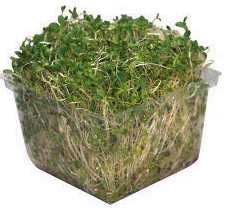 associated with illness. The investigation concluded that raising public awareness to ensure the correct preparation of raw bean sprouts during cooking was the principal means of preventing further cases.
 important, that elected officials may, sorta, be paying attention. And if it gets food safety on The Daily Show, then great.
 salmonella. These products have been distributed in Ontario.
 cutting Carrefour Selection, and discovered E. coli.
 vaccine shot no later than 14 days from the date they visited the deli, the Los Angeles County Department of Public Health said in an alert issued Wednesday evening.
 revealed at the press conference (photo from

 antics of Slash can reduce rates of foodborne illness, why not; not much else seems to work.
 at their food safety disposal?
 But, on to the nosestretchers: