Star rating system for Brisbane restaurants launched to protect diners

Brisbane goes it alone, as the Australian city launched a "score on the door" program – except that it’s an electronic door that is only available on-line.

My 2-year-old knows how to navigate the iPod touch. I don’t.

So for us old-timers, why not just actually post a score on the door, rather than expect us to hitch up the stagecoach and find the reading glasses.

Brisbane City Council announced its Eat safe program today, whereby businesses will be rated from two to five stars with those food businesses receiving a three and above encouraged to display their rating in their business’s window.

Those restaurants that receive a two, a poor rating, will be given the chance to fix their problems and change their rating but businesses scoring less than two are likely to be shut down.

79 per cent of Brisbane’s 5500 food businesses received the safe rating of three stars.

Less than half – 2182 businesses – have signed on to display the ratings, which is voluntary.

Rhetoric rules: food safety law battle accomplishes nothing

Tomorrow’s USA Today has competing food safety editorials and they both get it wrong.

The editorial board of USA Today says regulators lack enough authority to do what’s needed to protect the public, and they need recall authority.

No, regulators have lots of authority and continually mess up.

Tom Coburn, a medical doctor and a Republican senator from Oklahoma, says in this political nosestretcher that “America has the safest food supply in the world, and it has never been safer” and that “the so-called FDA Food Safety Modernization Act of 2010, which the Senate will vote on after Thanksgiving, only expands a disjointed, duplicative and ineffective food safety bureaucracy. “

Coburn says that “for the past 100 years, the free market, not the government, has been the primary driver of innovation and improved safety. Consumer choice is a far more effective accountability mechanism than government bureaucracies.”

Except consumers can’t choose safer food because no one will promote such food at retail. Coburn is having some wet dreams about Reagan trickle-down economics.

Market food safety at retail and consumers could actually choose. Otherwise, it just tastes like urine, trickling down …

Former Health Canada chief goes public after safely retiring

It’s not food safety, but it’s such an old and disappointing story that it’s worth repeating.

Again.

This time it’s the former head of Health Canada’s nutritional sciences bureau blasting the federal department Monday for failing to explain why it is approving health claims submitted by the food industry.

PepsiCo Canada had announced Monday that Health Canada has approved a new disease-reduction health claim for products containing oats. This means the company’s 11 Quaker oats products will soon carry labels on the front of their packaging trumpeting a relationship between oat fibres and reduced cholesterol.

Mary L’Abbe, the former director of Health Canada’s nutritional sciences bureau responsible for the approval of health claims, said the department now has a transparency problem because it is not releasing the evidence to support such claims.
Health Canada remains mum on the oats decision and has yet to publish evidence to support the plant sterol claim.

"With regards to transparency, I am still disappointed that the plant sterol claim was approved last May, yet the evidence to support such a claim has still not been posted — only a summary document," said L’Abbe, who left Health Canada in 2007 after 31 years.
"Health Canada’s lack of transparency in this matter is disappointing, and opposite that of the (U.S. Food and Drug Administration), which has published detailed scientific reviews of the evidence that was considered in approving or denying health claims in the U.S." L’Abbe said. "Hopefully they are planning to post the evidence that supports the oats claim."

Why didn’t L’Abbe say anything about this when she was in government? I know there’s the whole oath to the Queen thing required of Canadian bureaucrats, but government is not some abstract entity, it’s run by people who chose to make decisions.
 

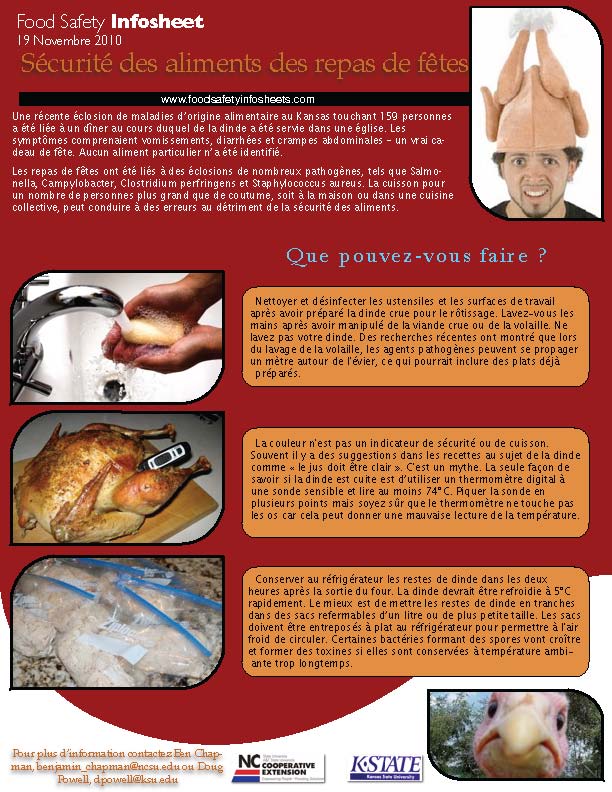
Sécurité des aliments des repas de fêtes

Une récente éclosion de maladies d’origine alimentaire au Kansas touchant 159 personnes a été liée à un dîner au cours duquel de la dinde a été servie dans une église. Les symptômes comprenaient vomissements, diarrhées et crampes abdominales – un vrai cadeau de fête. Aucun aliment particulier n’a été identifié.

Les repas de fêtes ont été liés à des éclosions de nombreux pathogènes, tels que Salmonella, Campylobacter, Clostridium perfringens et Staphylococcus aureus. La cuisson pour un nombre de personnes plus grand que de coutume, soit à la maison ou dans une cuisine collective, peut conduire à des erreurs au détriment de la sécurité des aliments.

Que pouvez-vous faire ?

Nettoyer et désinfecter les ustensiles et les surfaces de travail après avoir préparé la dinde crue pour le rôtissage. Lavez-vous les mains après avoir manipulé de la viande crue ou de la volaille. Ne lavez pas votre dinde. Des recherches récentes ont montré que lors du lavage de la volaille, les agents pathogènes peuvent se propager un mètre autour de l’évier, ce qui pourrait inclure des plats déjà préparés.

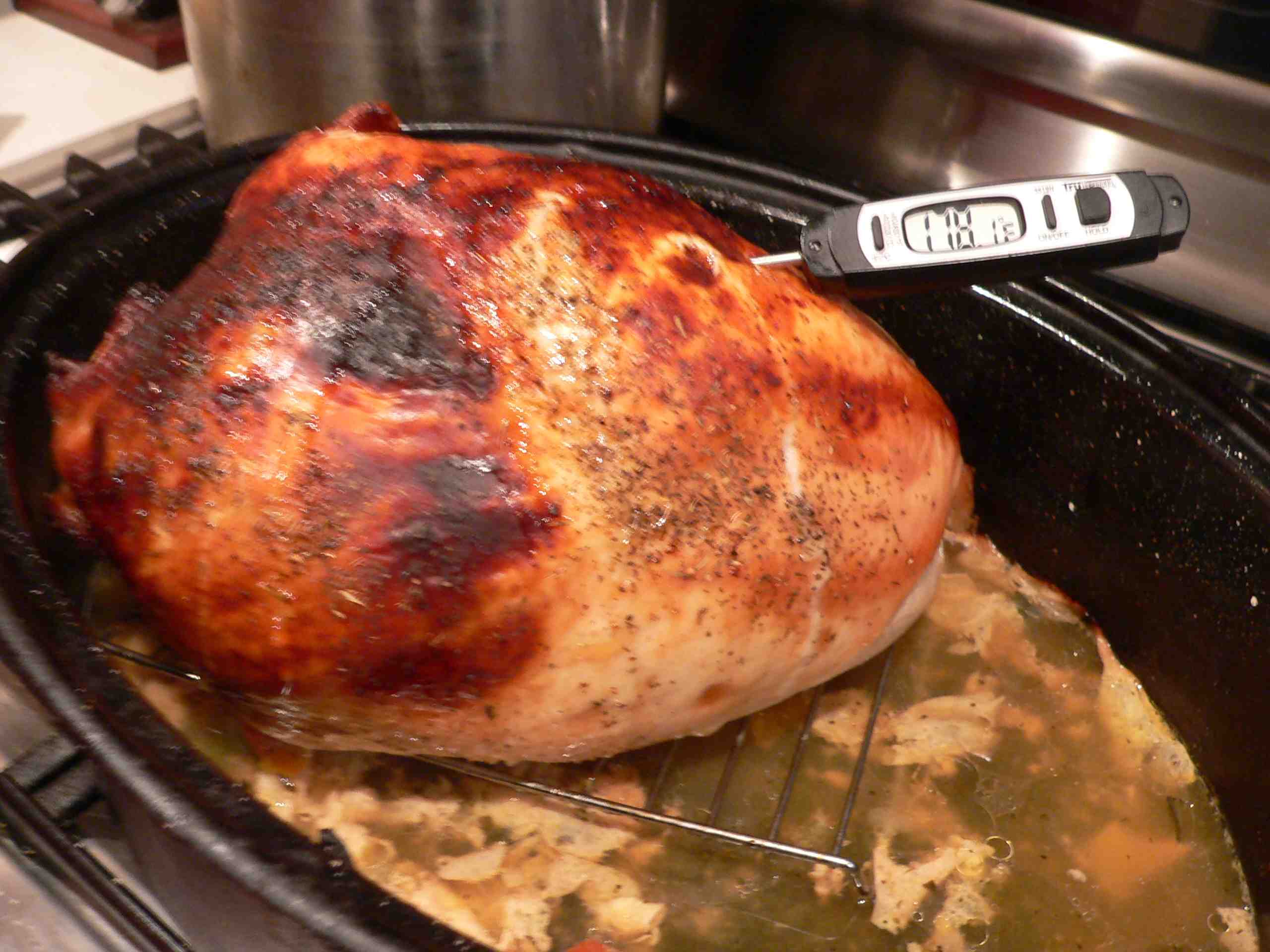
La couleur n’est pas un indicateur de sécurité ou de cuisson. Souvent il y a des suggestions dans les recettes au sujet de la dinde comme « le jus doit être clair ». C’est un mythe. La seule façon de savoir si la dinde est cuite est d’utiliser un thermomètre digital à une sonde sensible et lire au moins 74°C. Piquer la sonde en plusieurs points mais soyez sûr que le thermomètre ne touche pas les os car cela peut donner une mauvaise lecture de la température.

Conserver au réfrigérateur les restes de dinde dans les deux heures après la sortie du four. La dinde devrait être refroidie à 5°C rapidement. Le mieux est de mettre les restes de dinde en tranches dans des sacs refermables d’un litre ou de plus petite taille. Les sacs doivent être entreposés à plat au réfrigérateur pour permettre à l’air froid de circuler. Certaines bactéries formant des spores vont croître et former des toxines si elles sont conservées à température ambiante trop longtemps.

Pour plus d’information contactez Ben Chapman, benjamin_chapman@ncsu.edu ou Doug Powell, dpowell@ksu.edu
 

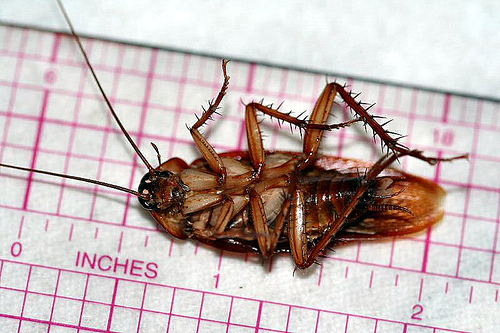
Dead cockroaches found in food safety log at Waterloo’s Chinese Canteen

The owner of the Chinese Canteen in Waterloo Road, London (the U.K. one, not Canada) has been ordered to pay nearly £5,000 after food safety inspectors found mouse droppings, dead cockroaches and dirty surfaces and utensils at the premises.

London SE1 reports that at one inspection environmental health officers from Southwark Council spotted two dead cockroaches squashed in the food safety log as well as seeing one crawling across a surface used for food preparation.

The owner of the Chinese Canteen pleaded guilty to seven separate food safety offences at Camberwell Green Magistrates Court on Friday 12 November.

George Colairo, proprietor of the restaurant since 1998, was ordered to pay £2,000 for the seven offences, in addition to nearly £3,000 for the full legal costs for Southwark Council.

In June of this year food safety inspectors from Southwark Council visited the premises, and discovered the mouse droppings and evidence of cockroaches.

Environmental health officers also spotted cooked meat on a shelf in a dirty sieve, with the run off liquid dripping into a bowl of open cooked noodles below.

They also saw cooked foods, such as cooked meat and prawn crackers, being kept in dirty, used cardboard boxes, food handlers not washing their hands as often as necessary or sanitising surfaces to protect food safety and food being left open in containers with no – or ill fitting – lids

After a warning to clean up the premises immediately they returned the next day to find none of the necessary action had taken place and the business was shut down.
 

Rodents have been here: Colorado school cafeteria inspections

Inspections of some Colorado school cafeterias in the last two years have turned up evidence of everything from rodents to fecal matter — issues that are considered "critical violations," according to local health departments.

Tom Butts of the Tri- County Health Department, told CBS4 school cafeterias, "in general they are some of our better operated facilities. They have lots of people watching them."

But that scrutiny doesn’t guarantee cleanliness.

At Denver’s South High School, a 2009 city inspection of the cafeteria revealed "evidence of rodents … in the facility. Rodent droppings are found in the dry storage along the walls on the floor."

South High School principal Steve Wera told CBS4 the problems have been addressed, adding, "We’ve made the appropriate changes. We can do better, we need to do better at this so I made sure we did."

Wera said since those problems were discovered the school brought in a new lunchroom manager and made other staff changes.

Whole Foods safety sucks but they care …

I bought a turkey yesterday for Thursday’s Thanksgiving food orgy – 15 pounds at $0.68 per pound at Dillions supermarket in Manhattan (Kansas).

We usually don’t go anywhere because the town is more serene with the students gone, and we host a dinner for various international stragglers with nowhere else to go.

At least I didn’t have to go to Whole Foods. Terrible food safety and so insufferable.

For the past couple of weeks, Whole Foods has been pushing their turkeys like some form of food porn crack, and repeating the following statements as mantra:

“No antibiotics — ever
No supplemental growth hormones*
No animal byproducts in feed

“*Federal regulations prohibit the use of hormones when raising poultry”

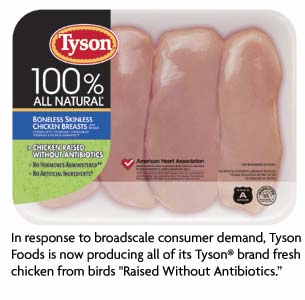
Whole Foods lets birds suffer if they are sick, and follows the law by not using hormones. Should sick animals be deprived antibiotics? Wouldn’t that go against animal welfare standards? I don’t see how this is the basis for an advertizing campaign. Federal regulators may want to have a look, seeing as they cracked down on Tyson’s BS claims that they didn’t use antibiotics in poultry production that no one else used.

Whole Foods does have a bunch of homespun tales about turkeys raised by farmers the way our grandparents did it. Apparently society has learned nothing about food production over the past 60 years.

Whole Foods also has a thing against modern technology like freezing, and says it only sells fresh birds – big cross-contamination problem

I bought fresh birds a couple of times in the 1990s, and concluded they were overpriced and sucked. Same with fresh pasta. Some things are meant to be preserved using technology.

But this marketing is aimed directly at the consumers’ pocketbook.

“It just makes sense that the more care and time that goes into raising the turkeys, the more they will cost.”

Good for you if people will pay.

The Chicago Tribune reports that Whole Foods is also piloting a new humane meat-rating system in the South and scheduled for national expansion early next year. If the six-step, color-coded labeling system works as planned, it could allow American consumers at many supermarket chains unprecedented levels of specificity when it comes to choosing meat to match their principles.
I’d really like to be able to choose meat and other foods by levels of microbial contamination. American retailers will market anything to make a buck, but why not reward those producers, processors and retailers who consistently deliver food that doesn’t make people barf.

“Developed by the Global Animal Partnership, a nonprofit group made up of farmers, scientists, retailers, sustainability experts and animal welfare advocates, the rating system aims to address growing consumer concerns over the way animals are raised for food. It could also, not coincidentally, boost sales for certified farmers and participating stores, likely to include another unidentified major national retailer and restaurant group in the coming year, according to the nonprofit.

“Its six-step approach establishes baseline standards for all meat sold in the store, while offering producers an opportunity to achieve higher ratings as their animal welfare standards improve based on the program’s benchmarks.

“So, for example, the highest rating (5+, colored green) would go to a chicken that, among other things, had been bred, hatched and raised on a single farm, lived year-round on pasture covered with at least 75 percent vegetation and had legs that were healthy enough to support it by the time it reached market weight.
“And the lowest rating (1, colored yellow) would reflect adherence to several dozen baseline provisions about feed, antibiotics and treatment, but also a provision that the animal must not have been caged or crowded.”

The Whole Foods folks could have learned something from those studying restaurant inspection disclosure and the use of colors or grading schemes. I also expect absolutely no verification that the system communicates to shoppers what was intended.

"We get an enormous amount of questions from customers who want to know everything about the meat and animals, really detailed questions," said Anne Malleau, global animal production and welfare coordinator for Whole Foods Market. But the program is also aimed at customers who don’t want the gory details so much as assurances that their "food has been humanely produced," Malleau said.

Although the company has no set formula for pricing GAP levels, it did share some examples from an Atlanta-area store that started rolling out the program in 2009. Grain-fed rib-eye steak rated a Step 1 costs $14.99 lb., while local grass-fed rib-eye, rated Step 4, costs $15.99 lb. And Canadian bone-in pork chops rated Step 1 cost $6.99 lb., while local bone-in pork chops rated Step 4 cost $7.99 lb.

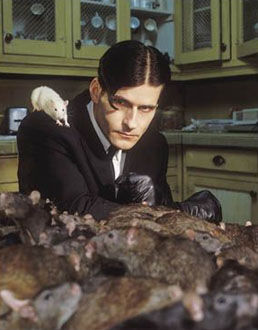
Who pays that? And relying on auditors? You have heard of Peanut Corporation of America and DeCoster eggs and dozens of other outbreaks. Anne, who used to go to the University of Guelph and even hang out with the folks in my lab (above, right, exactly as shown) I want microbiologically safe food. That’s something I’d pay for.


‘Food safety in Canada is an accident;’ imports, retailers face scrutiny

“Food safety in Canada, believe it or not, is an accident. It really is,” says Rick Holley, a University of Manitoba food-safety expert and an adviser to the Canadian Food Inspection Agency.

That’s how Toronto’s Globe and Mail newspaper kicks off a week-long series on the global marketplace for food, and how Canada has yet to come to terms with the regulatory, economic and technological challenges of global food, by reporter Steven Chase.

Last year, Canada imported more than 33 million litres of apple juice from China; 11.8 million kilograms of pickles and relish from India and 4.9 million kilograms of cashews from Vietnam, all part of a two-decade-long surge that has made imported food – often from developing countries – a significant component of the Canadian diet. All of it is grown or processed far beyond the reach of Canada’s food inspection system, which – contrary to what consumers might expect – is still struggling to catch up to the reality of a global food market.

Critics say Canada’s ability to safeguard its citizens from the risks of both domestic and imported food is falling behind – charges levelled even as efforts are under way at the Canadian Food Inspection Agency to update practices for the 21st-century global marketplace.

Today, foreign food makes up 15 to 20 per cent of this country’s diet.

Importers are not currently required by Ottawa to provide documentation that traces a primary food product to its origin. Some food retailers and importers may, however, already collect this information for their own commercial purposes.

Chief Food Safety Officer Brian Evans says CFIA intends to propose that importers be required to document the origin of all “ single entity products” – as opposed to multi-ingredient goods – they bring into Canada. These would include fish, eggs, leafy greens, salads, fresh fruits and vegetables. We would like to have country of origin traceability requirements as part of the first set of regulations going forward. We would like to see that in 18 to 24 months.”

However, he said, the timing and final details of such a plan is up to the government.

Roughly about 1 to 2 per cent of foreign food imports that enter Canada are inspected. The agency heavily inspects some products such as meat and also pays closer attention to goods that have a history of carrying food-borne illness – such as fish or leafy greens or eggs.

The CFIA argues that the absence of big problems shows the system works. In any given day, Dr. Evans says, about 100-million meals are eaten in Canada – which works out to about 36.5 billion meals at year. And what’s going wrong? There are about 250 to 300 recalls of food each year following inspections or consumer complaints. Canadians also suffer an estimated 11- million cases of acute gastroenteritis each year – a relatively minor amount – and one that federal authorities suggest is largely due to food preparation mistakes or bad hygiene rather than substandard imports.

However, the University of Manitoba’s Dr. Holley says a push for traceability is not a priority when there are other problems with food safety, including a lack of comprehensive information on what is making Canadians sick. “It’s like putting a sunroof on a car that has bald tires.”

While regulators waffle over how to improve food safety, some of the world’s largest grocery sellers have been using their market muscle to force suppliers to clean up or risk being punted from retail’s most sought-after shelves.

Leading the run are the same corporate giants critics blame for jeopardizing food safety amidst their globe-spanning pursuit of abundant cheap food. But no one is arguing about the impact grocery heavyweights are having on safety in the global supply chain, where their border-transcending clout eclipses the reach of public regulators.

Wal-Mart, the world’s largest grocer, cut through a highly political debate over tainted hamburger meat in the U.S. this year by forcing suppliers to conduct specialized tests for E. coli and salmonella.

In Canada, Loblaws became the first national retailer to insist private-label suppliers comply with safety standards under the Global Food Safety Initiative, an alliance started by eight of the world’s largest food retailers.

Jorgen Schlundt, the recently departed director of food safety at the World Health Organization, worries big retailers view food safety as a marketing tool. “There is a huge difference between what consumers … think is important and what is really important,” Dr. Schlundt said. “It is extremely important that the science that standards are built upon and the standards themselves are not made by industry – not made by the people who are supposed to be monitored by government,” he said.

I’d rather those standards were publicly available and marketed at retail so consumers – who probably know a lot more about food safety than Dr. Schlundt thinks they do – could support those producers and processors that consistently provide microbiologically safe food – and can prove it.

UK supermarket chain wants cameras in abattoirs to control cruelty

In early 2008, the Humane Society of the United States released video documenting animal abuse at Hallmark/Westland Meat Packing Co. of Chino, Calif., secretly shot by an undercover employee.

That $100-million-a-year company does not exist anymore – brought down by someone using an over-the-counter video recording device.
In April 2009, Cargill Beef announced it had implemented a third-party video-auditing system that would operate 24 hours a day at its U.S. beef plants to enhance the company’s animal welfare protection systems. All of Cargill’s U.S. plants were expected to have the program in place by the end of 2009.

In Feb. 2010, Cargill announced it would expand its remote video auditing program to monitor food-safety procedures within processing plants.

Last week, a new undercover video investigation by a national animal welfare group claimed to show disturbing conditions at a Texas farm operated by the country’s largest egg producer and distributor.

?The Humane Society of the United States said that one of their investigators documented a range of filthy, unsanitary conditions while working at a Cal-Maine Foods operation in Texas over a five-week period this fall. A five-minute video produced by the group shows hens confined in overcrowded cages with rotting corpses, dead and injured birds trapped in cages, eggs covered in feces, and escaped hens floating in manure pits.?

The images are a stark contrast to the clean white birds and eggs featured in the video on the Cal-Maine corporate website.

On Nov, 19, 2010, The Independent reported that Morrisons became the first U.K. supermarket to promise to install CCTV at its abattoirs to reassure the public. The RSPCA called for other chains to follow suit. The supermarket said CCTV images from its Colne and Turriff abattoirs would be stored for 30 days and made available to the Food Standards Agency (FSA). Spokesman Martyn Fletcher said: "Our customers want to know that animals are treated well through the slaughtering process and we believe installing CCTV cameras is the best way to demonstrate we have the highest possible standards."

Slaughterhouse cruelty has been under the spotlight after Animal Aid captured breaches of welfare laws at six out of seven randomly selected abattoirs – including one supplying organic meat, where pigs were kicked in the face.

September’s footage from F Drury & Sons reinforces the suspicion many, if not most, of the 370 abattoirs in England and Wales break the rules.

Speaking on behalf of F Drury & Sons, the Association of Independent Meat Suppliers said the 20-second rule had been designed for religious slaughter when animals are not stunned. "The likelihood of a stunned animal being conscious is extremely small," said its veterinary officer Stephen Lomax. "This is not an animal welfare issue."

He blamed government vets for not alerting owners to the "deplorable" abuse found elsewhere. He said: "There’s no excuse for all the self-serving arguments the FSA gives about these vets [monitoring abattoirs] not having enough time. They spend a great deal of time phoning their boyfriends, reading the newspaper or filling in useless forms. The system has failed."

The FSA initially denied illegality at F Drury & Sons, but changed its mind when challenged.

Companies would protect their brand and build trust with the buying public by having their own video to supplement claims of humane handling and food safety.
 

A sackful of dead pheasant is not the best night for a restaurant inspection

Eater.com reports that Daniel Boulud held an annual $1,000 a head fall game dinner last night as a fundraiser for the upcoming competition of Bocuse d’Or.

He, chef Gavin Kaysen, and Ariane Daguin, the founder of D’Artagnan, served up woodpigeon and chestnut ballotine, Juniper scented grouse pâté, and a whole foret of game.

Boulud appeared slightly stressed as he revealed at the beginning of dinner that a city Health Inspector was on the premises to discern the restaurant’s letter grade. It took the chef away from most of the festivities, as the DOH goon stayed all dinner long. As Josh Stein noted, "… a night when Daguin brings a sackful of dead pheasant is not the best night for a restaurant inspection."