Effective communication: Lewis Black and the nanny state

As the U.S. Senate votes on a food safety bill this morning, and with the monotonous repetition of food safety rules for Thanksgiving, Lewis Black provides his own risk communication advice on The Daily Show for those who want to regulate smoking, airport screening, toys in fast-food meals, and banning circumcision.

The Daily Show With Jon Stewart Mon – Thurs 11p / 10c
Back in Black – Nanny State
www.thedailyshow.com
Daily Show Full Episodes Political Humor Rally to Restore Sanity

Health officials confirm E. coli in cheese samples

The New Mexico Department of Health has confirmed an outbreak strain of E. coli O157:H7 in an intact sample of cheese sold at Costco stores.

The Alamogordo Daily News and Associated Press say the outbreak strain had been isolated at other laboratories in already opened packages of cheese, but this is the first confirmation from an intact cheese sample.

The findings confirm what scientists have found in the past: 60-days don’t mean much when the cheese is made from unpasteurized or raw milk (see abstract below; thanks Carl).

The Bravo Farms Dutch Style Raw Milk Gouda Cheese was offered for sale and for in-store tasting between Oct. 5 and Nov. 1 at Costco stores in Arizona, Colorado, New Mexico, Nevada and the San Diego, Calif., area.

Health officials say at least 37 people from five states have become sick with E. coli since mid-October. Cases in New Mexico include a 41-year-old man, a 7-year-old girl from Bernalillo County and a 4-year-old boy from Valencia County who are all recovering. Arizona has 19 cases reported, Colorado has 10, California has 3 and Nevada has two. Nationally there have been 15 reported hospitalizations, one case of hemolytic uremic syndrome and no deaths.

People who have any of the cheese should not eat it. People should return the cheese to the place of purchase or dispose of it in a closed plastic bag placed in a sealed trash can. This will prevent people or animals from eating it.

Survival of a five-strain cocktail of Escherichia coli O157:H7 during the 60-day aging period of cheddar cheese made from unpasteurized milk

May 2006

Journal of Food Protection, Volume 69, Number 5 pp. 990-998(9)

Schlesser, J.E.; Gerdes, R.; Ravishankar, S.; Madsen, K.; Mowbray, J.; Teo, A.Y.L.

Abstract:
The U.S. Food and Drug Administration Standard of Identity for Cheddar cheeses requires pasteurization of the milk, or as an alternative treatment, a minimum 60-day aging at ‰¥2°C for cheeses made from unpasteurized milk, to reduce the number of viable pathogens that may be present to an acceptable risk. The objective of this study was to investigate the adequacy of the 60-day minimum aging to reduce the numbers of viable pathogens and evaluate milk subpasteurization heat treatment as a process to improve the safety of Cheddar cheeses made from unpasteurized milk. Cheddar cheese was made from unpasteurized milk inoculated with 101 to 105 CFU/ml of a five-strain cocktail of acid-tolerant Escherichia coli O157:H7. Samples were collected during the cheese manufacturing process. After pressing, the cheese blocks were packaged into plastic bags, vacuum sealed, and aged at 7°C. After 1 week, the cheese blocks were cut into smaller-size uniform pieces and then vacuum sealed in clear plastic pouches. Samples were plated and enumerated for E. coli O157:H7. Populations of E. coli O157:H7 increased during the cheese-making operations. Population of E. coli O157:H7 in cheese aged for 60 and 120 days at 7°C decreased less than 1 and 2 log, respectively. These studies confirm previous reports that show 60-day aging is inadequate to eliminate E. coli O157:H7 during cheese ripening. Subpasteurization heat-treatment runs were conducted at 148°F (64.4°C) for 17.5 s on milk inoculated with E. coli O157:H7 at 105 CFU/ml. These heat-treatment runs resulted in a 5-log E. coli O157: H7 reduction.

Calls from fake health inspectors in NC a fraud scam

My buddy Larry Michael with the NC Dept of Environment and Natural Resources, Food Protection Branch is quoted in an AP story as warning restaurant operators in NC to be wary of someone posing as health inspector and calling for business information.

Officials say someone is calling restaurants claiming to be a health inspector or other government official with new inspection procedures. They give the restaurants a code and tell them to provide the information when they get an automated call or when an inspector visits.

Larry says that the business information is being used to create dummy accounts for online shopping and auction sites.

This scam has beeen reported all over the U.S. and Canada. Back in June officials in Washington state also reported the information phishing:

The first caller tells the restaurant that it will receive an automated call providing a numeric confirmation code. A second caller, claiming to be a health inspector, requests the code and seeks to set up an in-person restaurant inspection. The caller threatens fines if the restaurant doesn’t cooperate.

Cheese and food safety risk

I’d never heard of Fairway cause I’m not much of a New Yorker, but it is apparently “one of Manhattan’s culinary meccas.”

Coincidentally, a barfblog.com reader e-mailed to say she was “shopping at her local Fairway and noticed a sign lauding both the flavor and the safety of raw milk cheese — also trashing pasteurization a little. I spoke to the cheese supervisor about the danger of misleading people and he was quite pleasant about it, considering.”
I don’t have a picture of the sign, nor access to a local Fairway (in Manhattan, Kansas) but the stagecoach has been delivering fancier cheeses to some of the bigger retailers in the area, so I went out to ask a few questions.

This matters because, as the U.S. Centers for Disease Control reported last week, the number of people sick with E. coli O157:H7 from consuming Bravo Farms Dutch Style Gouda Cheese – made from unpasteurized milk and offered through a Costco cheese sampler in several states—has risen to 37, including 15 hospitalizations.

As part of the investigation, the U.S. Food and Drug Administration sampled other cheeses sold through Costco and found a different strain of E. coli O157:H7 in an unopened package of Mauri Gorgonzola cheese. No one’s sick that anyone knows of from this cheese, but bugs can be anywehere.

So what’s a shopper to do?

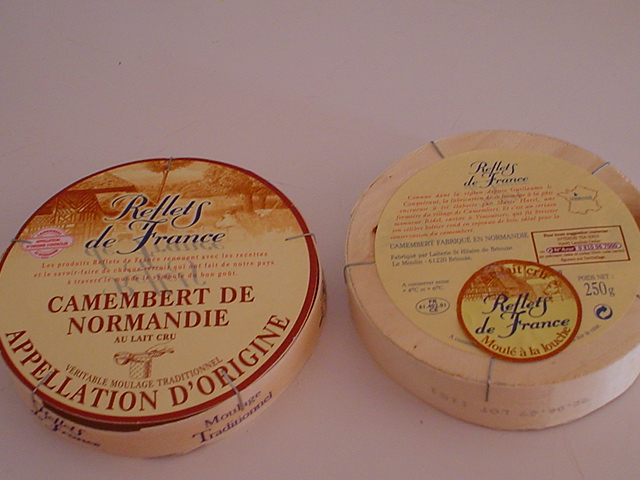
Contamination with dangerous microorganisms, especially listeria and E. coli O157:H7, can happen in cheese in made from raw or pasteurized milk. Based on consumption levels, I’m guessing there’s a higher level of outbreaks in cheese made from raw milk, but that would require a lot of analysis on consumption data. Regardless, it was enough for two of France’s top lait cru Camembert producers, Lactalis and Isigny-Sainte-Mère, to announce in June 2007 they were switching to cheese made exclusively with heat-treated micro-filtered milk (not quite pasteurized but still an affront to purists).

At the time, Lactilis’ spokesperson, Luc Morelon said, “I don’t want to risk sending any more children to hospital. It’s as simple as that."

Cheese made from raw milk – domestic and imported – is available in the U.S., including supermarkets in Manhattan (Kansas), but FDA stipulates such cheese must be aged for at least 60 days. The idea is acid and salt help destroy dangerous bugs.
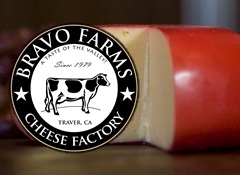
But even the 60-day rule has come under question.

In July, 2008, Mansel Griffith of the University of Guelph, one of several experts who reviewed the status of raw milk cheese for the Canadian province of Quebec, told the Globe and Mail the 60-day limit had become arbitrary, since it is no longer a guarantee of destroying pathogens. Still, he believes raw-milk cheese continues to pose health-safety issues over potential pathogens.

John Sheehan, director of FDA’s division of plant and dairy food safety, told the N.Y. Times a year ago the 60-day aging requirement is no longer thought to be effective, and is currently under review.

Today I found out several raw milk cheeses were available at the local supermarket, but take a magnifying glass: I know I’m getting old, but even with my reading glasses I could barely make out the ingredients contained raw milk and that the cheese had been aged 60 days.

Some clarity would help.

Regulations help butter tart producers reduce food safety risks

Some of my fondest childhood memories are going to the farmers’ market and eating.

But mainly eating.

Where I grew up (Port Hope, Ontario – that’s in Canada), there was a small tailgate farmers market Saturday mornings in the parking lot adjacent to Valu-Mart, but the real event was a trip to either the St. Lawrence Market in Toronto or the Peterborough market on Landsdowne St.

Regardless of the locale, the trip involved getting up at close to 5am, driving in a usually freezing car, walking around waiting for my mom to figure out which tomatoes or peppers looked better and then carrying bushel baskets for her.
 
I wish I had an iPod back then. That part of the experience would have been better.
 
I hated walking (what seemed to be aimlessly) around the market; but I always went because there was a promise of baked goods. I’d beg my mom for a couple of dollars and blow it on sugar, flour and butter treats. The sugar high made it all worth it.
 
I never really wondered whether the stuff I bought would make me sick. I didn’t think a whole lot about food safety and regulation until years later. I figured that if someone could sell it, they must know what they are doing, and I didn’t have to worry about it. I didn’t know (or care) whether the butter tarts (a Canadian, and probably British delecacy; right, exactly as shown) were made in someone’s home. I just wanted them to taste good (and justify the trip). Food safety is all about trust, and I had lots of it.
 
Folks who want to make food in their home or garage and sell it to moody, overweight, Star Wars-loving teenagers at farmers markets are part of a growing business segment, coined as the cottage food industry (although I’m sure they also see other buyers for their products).
By many accounts, the cottage food industry is growing in North America and county extension agents I serve as a resource to have fielded an increased number of questions of how to break into the food industry in the past year. The poor economy is definitely a factor as is the opportunity to be part of and market to a local food movement.
 
Twenty U.S. states allow certain foods to be processed in the home and sold for consumption – but it’s a patchwork of approaches on how the businesses are regulated. In some states, the entire process is deregulated for certain exempt products. These products usually are limited to direct-selling (at a farmers’ market or roadside stand) of baked goods, jams and jellies.
 
In Michigan, as was reported in the Detroit Free Press today, a new law has been enacted that allows for home-based food production. In the absence of inspection, the law requires each item to have a label saying it was produced in an uninspected home kitchen, listing the food’s ingredients and any known allergens, and including the producer’s name and address.
The loudest opponents of this approach are often the larger businesses who are competing with them and pay for licensing and inspection – and sometimes the regulators.
 
What makes me nervous about the exempt/deregulation path and slapping a label on it is that there isn’t someone there initially to ask the questions about what folks are doing that qualifies them for the exemption. This discussion can trigger a conversation about risks and find that the producer isn’t really addressing all the things necessary to protect their customers. Or that their recipe is unsafe.
Exemption makes it so the entrepreneur has to start from scratch and be the food safety expert – sometimes with no real direction. While this might be a great wish, it’s not fair to the businesses and can lead to public health issues.
 
North Carolina is one of the 20 states that allow home-based food production, but before a producer can start selling, an initial inspection of the kitchen is required and all processes evaluated. My colleagues at the North Carolina Department of Agriculture & Consumer Services say that they have seen a significant increase in requests for inspection of home-based food facilities over previous years and have recently dedicated staff to just address new requests. I like this approach. While inspection is just a snapshot it makes me more comfortable that someone is checking to make sure the entrepreneur is awake when it comes to food safety and can refer them to other experts to help them. It helps me trust in the safety of my butter tarts (which I still try to buy when I hit a farmers’ market).

Reuasable shopping bags and risk ranking

Senator Chuck ‘Chuckles’ Schumer, a New York Democrat, sent a letter on Sunday to the U.S. Food and Drug Administration, urging the agency to investigate the issue of lead in those trendy reusable shopping bags – available for sale at most retailers.

I’m sure the Senate has other food-related matters it could be dealing with; I’m sure the FDA has some things to do; and I never understood why a consumer had to buy a new plastic container to recycle or compost, or a lead-lined bag to go shopping.

Everyone’s got priorities. And someone’s making a buck off it.

So as Chapman has written, the lead stuff isn’t much of a food safety priority.

Risk rankings are risky because inevitably, someone will get pissed.

But, as noted in the N.Y. Times on Sunday, “there is no evidence that these bags pose an immediate threat to the public, and none of the bags sold by New York City’s best-known grocery stores have been implicated.”

USA Today today reported that Publix Super Markets and Winn-Dixie are asking suppliers to make reusable bags with less lead, according to Schumer. Wegmans Food Market in September said it was halting sales of some bags.

“They say plastic bags are bad; now they say these are bad. What’s worse?” asked Jen Bluestein, who was walking out of Trader Joe’s on the Upper West Side with a reusable bag under her arm on Sunday.

“Green is a trend and people go with trends,” Ms. Bluestein said. “People get them as fashion statements and they have, like, 50 of them. I don’t think people know the real facts.”

Whose facts are real?

Catherine Paykin, standing by the meat counter at Fairway said,
“I wasn’t planning on throwing it out, so that’s a positive thing. As long as I use it and don’t throw it away, that will be my plan.”

Sure, but wash it now and then. And if buying meat, wrap it in plastic and throw the plastic bag out.
 

Fancy dining for dogs in UK

barfblog.com has covered public health aspects of dogs hanging out in places where people eat and shop.

But not this kind of dogggy dining.

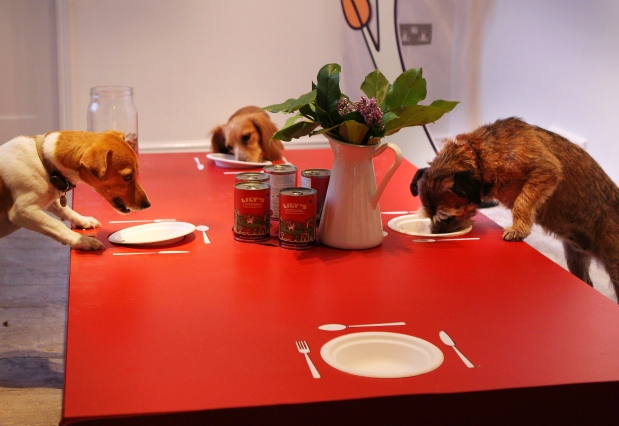
Opening for two months to help raise money for the Charity Dogs Trust – Lily’s Kitchen Diner is open for doggy dining, relaxing with a book and tummy rubs (right).

Below, left, is what goes on in the backrooms.
 

How clean was the cloth used to clean tables in your restaurant

A reader asked Katie Fairbank of the Dallas Morning News, "Why do restaurants use those filthy rags to clean off your table

Fairbank says there have been plenty of times that I’ve watched a disgusted lunch companion wipe down a table right after it was swiped clean with a sopping wet dish towel.

"I am one of those people," said restaurant legend Gene Street. "I carry my little thing with Clorox wipes around in my car. When I go into a restaurant, I wipe it all down – especially the salt and pepper, since everyone touches their nose or their mouth and then touches them. Can you imagine what could be on those?"

The state and cities have regulations on exactly what restaurants need to do to clean tables. If that rag really is "filthy," the restaurant is not up to code, and the inspectors would like to know about it.

"There are a lot of viruses out there that can be transmitted from a surface," said Chauncy Williams, sanitarian supervisor for the city of Dallas. "Bacteria tend not to live long, but there are instances where a wet surface can help sustain it."

Dallas regulations require restaurants to have wiping cloths available to clean work areas, equipment, counters and customer tables. The cloths are always soaking wet, because they must be stored in a sanitizing solution. The solution itself must be tested periodically throughout the day to make sure it’s the right concentration. If it’s too strong, it could be too toxic. Too weak, and it doesn’t do the job.

Cafes, bars, restaurants and fast-food joints are also supposed to change the solution several times each day to make sure it hasn’t gotten dirty.

Norovirus and celebrity chef a risky mix

Norovirus has been found in shellfish from the Waitara region of New Zealand. Heston Blumenthal of the Fat Duck and host of a norovirus outbreak that sickened 529 patrons in the U.K. in 2009 is going to New Zealand to help prepare a $7,000-a-plate dinner in March 2011.

Careful with that raw shellfish.

Taranaki’s Medical Officer of Health Dr Greg Simmons, said,

"The issue with norovirus is that the infectious dose, in other words, the amount of viral particles you need to consume in order to develop an illness is quite low, so there is a potential risk there. That risk to me would be unacceptable, and I wouldn’t expect other people to expose themselves to that risk."

The virus was found during testing for a resource consent application by New Plymouth District Council, which wants to continue piping Waitara’s partially-treated sewerage into the sea.

One sample had moderate levels of human strains of norovirus – four others had low levels.

Dr Simmons ordered the council to erect signs on Waitara’s beach advising of the hazard.

Australian chef Neil Perry has enticed close friends Heston Blumenthal, the British star of TV cooking show Heston’s Feast, and American Thomas Keller, the creator of The French Laundry restaurant in California, to create a six-course degustation dinner on March 26 next year.

A seat at the table will set each couple back at least $7000 – which includes a three-night stay at the five-star resort near Napier.
 

225 now sick from salmonella in sprouts

A U.K. outbreak of Salmonella Bareilly infection associated with contaminated bean sprouts is ongoing, although fewer new cases of illness are now being recorded.

The Health Protection Agency’s Centre for Infections (CFI) in Colindale has identified 204 cases of S. Bareilly in England, Wales (5 of the cases) and Northern Ireland (3 of the cases) since the beginning of August – nearly six times the number that the CFI would normally expect to see in that timescale. Health Protection Scotland identified 21 cases in the same period.

That’s 225 confirmed sick people, up from 169 a month ago.

Dr Joe Kearney, a Director with the HPA’s Health Protection Services Division who is chairing an outbreak control team said,

“We made a possible association with bean sprouts comparatively early in the investigation so our colleagues in the Food Standards Agency were able to issue timely advice to the catering industry. This advice was repeated and strengthened as the evidence linking contaminated bean sprouts to the outbreak became stronger. At the same time, we have been active in getting information to the public through the news media. We are now seeing fewer cases of illness, which would tend to suggest that our advice is being heeded.”

Maybe. Maybe not. It does suggest an on-going problem with salmonella in sprouts.

The Food Standards Agency advice is:

* “Bean sprouts should be cooked until they are piping hot unless they are clearly labeled as ready-to-eat.

* “As a precautionary measure it is advised that even bean sprouts labeled as ready-to-eat should be thoroughly cooked if they are to be served to young children, elderly people, people with impaired immune systems and pregnant women.

* “People who prepare meals in catering establishments and in the home should keep raw bean sprouts separate and apart from other salad produce, including bean sprouts that are labeled as ready-to-eat, to avoid the risk of cross-contamination.

•”If this advice is followed bean sprouts will be safe to eat.”