E. coli O26 positive; Carrefour in France recalls frozen hamburger patties

Escherichia coli O26 H11 has been found in ground beef, prompting the large distribution group Carrefour to recall a batch of frozen hamburger patties sold under the brand name Carrefour Discount with a best-by date of June 18, 2011.

The frozen hamburger patties, sold in Carrefour, Carrefour Market, Carrefour City and Carrefour Contact, have a sanitation stamp IE 565 EC.

The Carrefour group explained in a press release that consumers who have purchased products with this stamp should not eat them and must return them to the store where they will be reimbursed.

That’s different from advice with other recalls in France, where consumers have been advised to simply cook the burgers until well-done. The new advice probably takes into account the risks of cross-contamination in any kind of kitchen. There was no explanation how the E. coli O26 was detected – whether it was through regular testing or part of a foodborne illness investigation.

Carrefour has set up this toll-free number (for France): 0805 909 809.
 

Waiter, there’s a roach on you: mall food courts overrun by roaches, rodents, mallrats

Australia is an Internet backwater.

In that context, the best thing about Australia is, McDonalds.

Every café and bakery and bookstore, they’ll provide 15 minutes of wi-fi if a purchase is made. Hotels will sell it to guests at $10/hour (I’m not making this up).

Not McDonalds – free wi-fi at many of their stores.

So I’ve been hanging out at a mall in Brisbane’s CBD (central business district) for the past few days, tapping McDonalds’ free wi-fi.

I never hang out at the mall.

Food courts and restaurants in shopping malls are particularly vulnerable to roach and rodent infestations because clothing stores, electronics outlets and other mall standbys aren’t subject to health regulations or inspections, and pests often sneak into malls by hiding in shipping and packaging boxes.

Kevin Chinnia, manager of Montgomery County’s health inspectors, told the Washington Examiner,

"Malls are a wide-open space, and it’s a lot more difficult to manage than if you have a stand-alone structure that you can monitor yourself.”

Virginia and Maryland health inspectors cited roughly three-quarters of all mall food vendors for violating critical health regulations during the past year, according to an analysis of health records at 12 local malls conducted by The Washington Examiner.

The Food and Drug Administration defines critical violations as those posing an "imminent health hazard" to diners. Such violations range from improper hand washing to serving contaminated food, and, depending on the severity of the infraction, can lead to a restaurant losing its food service license.

Local health officials spotted live rodents, rodent droppings or cockroaches — dead and alive, clinging to food preparation machines and even to workers — at more than 10 percent of mall eateries.
 

NYC’s Birdbath Bakery closed for filth and inadequate refrigeration on rickshaws

Who would name a food place the Birdbath Bakery?

Birds are factories for salmonella and campylobacter and I wouldn’t want them bathing around food.

If the goal is to be New York City’s most sustainable bakery, then why not. But sustainable is not the same as sanitary.

Grub Street New York reports inspection results indicate the bake shop couldn’t present a Food Protection Certificate, there was evidence of mice, and food-contact surfaces weren’t properly sanitized.

But an employee tells us that the main reason for the closure was that Birdbath had started transporting savory items (salads, pizzas, sandwiches) by rickshaw from City Bakery and didn’t have adequate refrigerators for keeping them at the Department’s required temperature of 41 degrees or below.
 

Rodents, roaches and rubbish in Sydney restaurants

Rodent droppings, cockroaches and a build-up of rubbish has led four central Sydney (that’s in Australia) restaurants to be prosecuted, fined, and named and shamed on a government register designed to prompt businesses to clean up their act.

The New South Wales Food Authority publishes lists of food outlets that have breached or are alleged to have breached state food safety laws.

NSW Primary Industries Minister Steve Whan said in a statement some of the offences included "unpalatable acts" such as food, waste and grease build-up, and the failure to eradicate and prevent pests.

In some cases, live cockroaches, rodent droppings, smears and hairs were observed throughout the premises.
 

Louisiana firm recalls meat products because of listeria contamination; people are sick

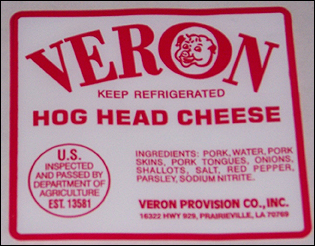
Veron Foods, LLC of Prairieville, La. is recalling approximately 500,000 pounds of “ready to eat” sausage and hog head cheese products that may be contaminated with Listeria monocytogenes, the Louisiana Department of Agriculture and Forestry’s Office of Animal Health and Food Safety announced.

The problem was discovered through a foodborne illness investigation that resulted in a product sample testing positive for Listeria monocytogenes. But just like the Canadian Food Inspection Agency and salmonella-tainted green onions, no one is saying who or how many got sick.
 

Mouse in the house at NYC Shake Shack

There were several empty tables around the garden at a Shake Shack in New York City the other night, and that, according to Grub Street New York, was because at least three mice kept emerging from the plants and approaching tables like beggars.

Three or four parties cluelessly sat down only to notice the furry fiends and either moved their tables away or scampered off with their tails between their legs. Of course, this isn’t anywhere near as scandalous as a chef caught tonguing toads; Shake Shack is located in a public park, after all, and mice have been spotted before.
 

There are a bunch of 20-something men in Ontario ill with salmonellosis; possibly linked to green onions?

 The Toronto Star reports today that the Ontario Ministry of Health and Long Term Care is investigating a spike in Salmonella Oranienberg-linked illnesses in and around Toronto. Twenty-five cases of Salmonella have been reported to health authorities since late July, up from the expected three in the same time frame. The Star suggests that these cases may be linked to a CFIA investigation of green onions. The inspection agency issued a warning about unwrapped green onions that were sold between July 31 and August 1 at a Highland Farms grocery store located at 4750 Dufferin St.

Loose green onions sold in such a small window could suggest either contamination at the store (an ill food handler?) or problems further upstream (transport, distributors, wholesalers or even back to the farm).

But probably not in-home or shopping practices.

Making the below advice from Dr. Arlene King, Ontario’s chief medical officer of health, pretty far out of context (although health authorities have been known to call situations like this "a teachable moment"; research disagrees that this tactic works).

“People need to remember to properly handle and prepare food,” said King.

The ministry recommends four basic steps to prevent foodborne illness — clean, separate, cook and chill.

The steps include thoroughly washing hands, surfaces and equipment, keeping raw and ready-to-eat foods separated, cooking at high temperatures, and properly refrigerating and defrosting food.

Yeah, I’m sure refrigeration and defrosting was really a key factor with the green onions. How about giving folks some advice on how to ask questions about the conditions their produce was grown and talking about what regulators and the industry is doing to make sure this type of stuff doesn’t happen.

Industry speaks: Restaurant letter grades are misleading

Rich Stytzer, state board member and immediate past president of the Westchester/Rockland Chapter of the New York Restaurant Association and vice president of Antun’s of Westchester Catering in Elmsford made the following points in Westfair Online. My comments follow.

“The New York State Restaurant Association (NYSRA) and its members believe food safety is of the utmost importance and take steps every day to educate members and workers about proper food handling techniques. NYSRA holds ServSafe training classes throughout the state to educate members, offers products and materials to train employees and has even lobbied in favor of mandatory foodhandler certifications to better protect its members, the industry and the customers.”

ServSafe is nice but does it really work? Is it as effective as those signs that say, ‘Employees Must Wash Hands?’ And if the industry wanted mandatory foodhandler certifications, it would already exist – for everyone, not just a manager.

“NYSRA’s concerns about this letter-grading legislation lie with the assumption that letter grades are associated with improved compliance by restaurants and will lead to a decline in foodborne illness.”

Those assumptions are full of holes. That’s why I argue restaurant inspection disclosure is really about improving the microbial food safety culture and awareness among patrons and staff. Citizens also have a right to information collected through the tax dollars.

“NYSRA believes educating operators, rather than fining or publicly humiliating them, is a better course of action.”

How, where and when will this ‘better education’ happen?

“The idea of using letter grades for restaurant inspections is not widely accepted as a means to improve cleanliness or as an inspection method at all. In 1993, the Food and Drug Administration removed scoring from the model food code citing problems with the system.”

No one said letter grades is an inspection method, and if they did, they were wrong. Grades are a tool to promote food safety issues and awareness.

“As recently as 2008, the FDA was asking for research to evaluate and assess scoring methodologies. The national trend among the majority of public health professionals generally has been to avoid the use of scores or grades, which are considered to be misleading and inaccurate.”

We’ve been doing the research. Got a reference for that statement about the majority of public health types, or are you just speaking on their behalf?

“In a 2004 study published by the Centers for Disease Control and Prevention, it was concluded after studying more than 167,000 restaurant inspection reports, that there was no difference in average letter grades given to restaurants experiencing outbreaks compared to those that were not.”

Like any study, there were limitations. Restaurant inspection disclosure is about enhancing the food safety conversation throughout the public and with food service staff. Our own research (in press) has found embarrassment to be a powerful motivator among restaurant managers.

For those still wondering, here’s a review paper discussing the pros and cons of disclosure systems.

Filion, K. and Powell, D.A. 2009. The use of restaurant inspection disclosure systems as a means of communicating food safety information. Journal of Foodservice 20: 287-297.

Abstract??The World Health Organization estimates that up to 30% of individuals in developed countries become ill from food or water each year. Up to 70% of these illnesses are estimated to be linked to food prepared at foodservice establishments. Consumer confidence in the safety of food prepared in restaurants is fragile, varying significantly from year to year, with many consumers attributing foodborne illness to foodservice. One of the key drivers of restaurant choice is consumer perception of the hygiene of a restaurant. Restaurant hygiene information is something consumers desire, and when available, may use to make dining decisions.

 

Stars for food safety ratings in Windsor, Ontario

Are stars better than grades or numbers or colors or smiley faces when posting the results of restaurant inspections?

That research has yet to be done, but Windsor (that’s in Ontario, Canada)

Dr. Allen Heimann, the medical officer of health, writes in the ironically named newspaper, the Windsor Star, that a five-star rating system was adopted last year and is intended to be representative of how closely food premises owners/operators follow food safety standards.

The results of this new program have been overwhelmingly positive. More than 95 per cent of food premises have either four or five stars.

If you don’t see a star sign posted, ask to see it. If it’s unavailable, you can choose to either purchase your food without knowing the rating, or search for the rating online first.

In fall 2010, the second phase of the SFC program will be in effect with the new website, which will allow you to search from home for any food premises and have instant access to its star rating and an inspection report.

Each report will list the concerns a health inspector had during their inspection, as well as an explanation of each.

Visit the SFC website at http://www.safefoodcounts.ca.