Do you feel lucky? Some food good long past expiration date

A new survey sponsored by ShelfLifeAdvice.com, a food storage reference website that estimates U.S. consumers unnecessarily discard billions of dollars of food a year, found that three in four U.S. consumers believe certain foods are unsafe to eat after the date on the packaging has passed.

But, according to Andy Miller of msnbc.com, experts say that if most foods are stored properly, they can be safe for days after the ‘use by’ date.

Ira Allen, a Food and Drug Administration spokesman, said the food date does not equate to safety, adding,

“If something is past its date, and stored properly, often it’s OK."

Michael Doyle, director of the University of Georgia’s Center for Food Safety, said foods that can last far beyond an expiration date with proper storage include flour, sugar, rice and cake mixes, adding.

“There’s no reason that dry goods wouldn’t be safe except if it becomes wet.’’
 

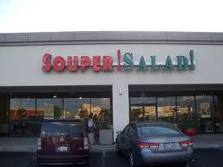
Dirty dining Vegas style: Souper Salad

This is the way to handle a bad restaurant inspection, especially with the television cameras rolling: take responsibility, fix things, and no whining.

KTNV reports the Souper Salad was issued with 29 demerits by the Southern Nevada Health District, primarily related to a salad bar that wasn’t keeping foods at the proper temperature.

When Contact 13 stopped at the restaurant, Souper Salad was right in the middle of a re-inspection. The manager, Jeff Brooks, took time to explain to us his concerns about the restaurant’s C grade. "It was definitely a concern and that’s why we took care of the steps as needed."

He says he had all the food at the salad bar thrown out, and that the salad bar was adjusted to the appropriate temperature. And in the end, Brooks says he stands by the quality of his restaurant. "Unfortunately sometimes these things happen. I do care about the type of food, the temperatures of the foods I feed to the public. I’m not one of these managers that doesn’t care about it."

We spoke with the Health District, which confirms, the restaurant was re-inspected. Souper Salad made the necessary changes to go from 29 demerits down to only 4, enough for an A grade. Looking into their history, this was actually their first C grade in 3 years.
 

Food handler at Siler City, NC Burger King diagnosed with hep A

Line-ups for post hepatatis A IgG shots are expected at Siler City, NC Burger King this weekend after a food handler who worked on August 2 and 3rd has tested positive for the virus.

The Chatham County Public Health Department issued a statement late Friday urging patrons of the restaurant, at 1712 E. 11th St., to be vaccinated for hepatitis A.

Immunizations will be offered for free at the health department, at 1000 S. 10th Ave., Sunday from noon to 5 p.m. and Monday and Tuesday between 8:30 a.m. and 6:30 p.m.

The vaccine can prevent infection up to 14 days after exposure, so those who ate at the Burger King should get an injection by Aug. 17, the health department said.

If I was running a food business, hep A would scare me the most. It often turns out like this: no illnesses linked to the food handler yet (and maybe the individual is the best handwasher out there) but there will still be hundreds of people lining up resulting in pretty bad PR.

Here’s an old food safety infosheet detailing a hep A outbreak at a McDonalds in Illinois last year.

South Carolina Splash Pad reopens after crypto case with new rules, guidelines

Wandering around Brisbane on a Saturday afternoon we came upon the splash park and beach at Southbank, close to downtown.

Sorenne did some impromptu playing, and I noticed at least three little kids running around naked. The lifeguard soon happened along and told the parents to at least put a diaper on the toddlers. I asked the lifeguard, was that to prevent little ones pooping in the splash park and he said, he didn’t know, it was just policy.

It’s a good policy.

WIS reports the Splash Pad at Drew Wellness Center is back open after being closed for nearly a month when a child was found sick with a case of the parasite cryptosporidium.

Since then, the city has revamped its procedures for keeping track of how the pad is maintained.

Ray Borders-Gray with the Drew Wellness Center, said,

"After what happened, we took a good hard look how we were doing business. The standard Operating Procedures for the Splash Pad is now written down, all staff have taken a look at it, the standards are now here on site, so if anyone has any questions about what should happen, when it should happen. …

"We are asking people to wear the proper swim attire. We want to make sure the little ones are in the diaper swim pants and we ask that people do not bring their pets to the Splash Pad."
 

Is food service in sporting stadiums, or anywhere, really doing everything to reduce risk of foodborne illness?

In the aftermath of the ESPN reports on less-than-desirable conditions at stadium and arena eateries across North American, spokesthingy John Althardt of Lucas Oil Stadium – that’s where Peyton Manning and the Indianapolis Colts play – told WIBC,

"Everything is being done to ensure that the events and the food service at Lucas Oil Stadium are all what we expect them to be, and we’ll continue to do so."

Are they really doing everything? Are they using new food messages and new media to really establish a culture of food safety amongst all employees? Are they posting food safety infosheets in common employee areas? Are they creating a system of rewards for good food safety behavior, telling sick employees to stay home from work, and that food accidentally mishandled is thrown out?

Walk the talk, Althardt.
 

Food safety surveys still suck; someone’s making money off crap

In the latest ridiculously expensive survey of Canadians, 77 per cent of Canadians said they were either "very" or "somewhat" concerned with the safety of the food they eat, up from 66 per cent in 2007,

The Ipsos Reid poll conducted for Postmedia News found 87 per cent agree that they trust food that comes from Canada more than food that comes from abroad, with 85 per cent of respondents saying they make an effort to buy locally-grown and produced food.

So, Canadians trust Maple Leaf and their listeria-laden cold cuts more than stuff from other places?

Debbie Field, executive director of the Toronto-based food advocacy group FoodShare, said,

"Even though it seems silly and a bit utopian to imagine small producers being safer, what people like me believe is that it’s true. You’ll always have some problem, you’ll always have contamination, you’ll always have some airborne illness. But if it’s kept local, its impact is much smaller.”

The only way to verify such claims is to assess

Nosestretcher alert: Illinois paper perpetuates stereotypes about local food

The reporters at the Rockford Register Star in Illinois probably meant well, with a feature about the important role of local food inspectors, but they sorta ruin it by beginning the story with:

If you haven’t grown it, cleaned it and cooked your food yourself, you’re eating at your own risk.

It is entirely possible to grow food, and clean it and cook it all by yourself – and completely mess things up and make people barf.

Back to the story, Winnebago County Health Department sanitarians Gail Goldman and Karen Hobbs and four colleagues work to cut the risk of foodborne illness by checking out more than 1,600 establishments such as restaurants, grocery stores, schools, hospitals, nursing homes, gas stations, concession stands and other places offering food and drinks for public consumption.

In 2009, the Health Department’s sanitarians performed 5,109 inspections the most important part of which, Goldman and Hobbs said, was education.

Hobbs said the last thing that made her think she has seen everything on the job was “a towel used to wipe a cutting board and then used to wipe a face. There was quite a bit of education going on that day.”

Not just a recall, an outbreak: 7 sick with typhoid from frozen mamey pulp in shakes or smoothies

Associated Press reported today a rare U.S. outbreak of typhoid fever has been linked to a frozen tropical fruit product used to make smoothies.

Seven cases have been confirmed — three in California and four in Nevada. Two more California cases are being investigated. Five people were hospitalized, according to the Centers for Disease Control and Prevention.

The CDC said five of the victims drank milkshakes or smoothies made with frozen mamey fruit pulp. Four of them used pulp sold by Goya Foods Inc. of Secaucus, N.J.

Mamey is a sweet, reddish tropical fruit grown mainly in Central and South America. It is also known as zapote or sapote. It is peeled and mashed to make pulp, the CDC said.

The company has recalled packages of the pulp, sold in mostly western states. That press release said “no illnesses have been reported to date in connection with Goya brand Mamey Pulp.”

Oops.

A sample from one package found in Las Vegas tested positive for the bacteria that causes typhoid, the Food and Drug Administration reported Wednesday.
 

2007 U.S. outbreak stats published; norovirus tops the list

I spoke to a room full of restaurant managers yesterday and shared stories about outbreaks. Stats are great, but I find that what helps me connect best with front-line staff are the stories of real people like Mason Jones and Stephanie Smith, and their families, who have to deal with the consequences of foodborne illness everyday. We see at least a couple of outbreaks reported publicly each week and while not each have tragic endings, there are thousands of people affected.
Earlier this week I saw Rob Tauxe from CDC talk about how through Pulsenet, CDC sees on average, around 25 clusters of foodborne illness pathogens every week. Many of those outbreaks go unsolved due to a lack of data and resources Today CDC released the 2007 Outbreaknet report detailing the trends on almost 1100 foodborne illness outbreaks that year.

A CDC press release states:

"Knowing more about what types of foods and foodborne agents have caused outbreaks can help guide public health and the food industry in developing measures to effectively control and prevent infections and help people stay healthy," said Chris Braden, acting director of the CDC’s Division of Foodborne, Waterborne and Environmental Diseases.

Despite health officials’ efforts, the cause of an outbreak—either the food or the foodborne agent responsible—often cannot be determined or confirmed. This most commonly is the case when the outbreak is small. Of 1,097 reported outbreaks in 2007, 497 (or 45 percent) confirmed that one foodborne agent was responsible and in an additional 12 outbreaks more than one foodborne agent was responsible. Thus, in more than half of the outbreaks, a foodborne agent was not identified. Norovirus was the most frequently confirmed foodborne agent (39 percent), followed by Salmonella (27 percent).
 

Although most foodborne illnesses are sporadic, investigations of those that occur as part of recognized outbreaks provide insights into the agents, food vehicles, and food handling practices that lead to foodborne illness. Unlike laboratory-based surveillance systems, in which the sources of illnesses are rarely reported, the investigation and reporting of outbreaks provides important epidemiologic information that can be used to inform food safety policy.
 
And they provide the concrete examples that are effective in changing behavior. Outbreaks suck, especially for those who are affected, but when they do happen, sharing the outcomes of the investigation can be powerful in reducing the chance that a similar event happens again to someone else.


Miami Dolphins Spitler stricken with salmonella

The Miami Herald reports that Dolphins linebacker Austin Spitler lost 18 pounds and missed a number of early training camp practices because he somehow contracted salmonella. Spitler, the seventh-round pick from Ohio State, said he spent two days in the hospital and was constantly ill.

“It was a bad deal,” he said.