Campy overestimates: FSA accused of undermining meat industry

Alex Black of FG Insight reports the UK Association of Independent Meat Suppliers (AIMS) has claimed the Food Standards Agency (FSA) ’appears to continue to undermine the meat processing sector’ with misleading campylobacter figures.
AIMS_LOGO_2008_002An article in The Meat Trades Journal quoted figures published on the Food Standards Agency website stated campylobacter was believed to cause 100 deaths a year.

However, AIMS pointed out the figure was an extract from a FSA funded paper which said ’We could not estimate deaths attributable to foodborne illness, due to the lack of reliable data sources on pathogen-specific mortality rates’.

AIMS head of policy, Norman Bagley, said: “Selectively quoting from its own commissioned report on its own website has once again undermined the excellent work and progress the industry has made on combating campylobacter.

“Stating that campylobacter causes 100 deaths a year is just not based on science and leads to continuing scary, misleading stories being carried in both the trade and consumer media, which once again, undermines our sector.

“This is far from helpful and needs to stop.”

A FSA spokesman said: “We explain on our website that the campylobacter deaths figure is a previous estimate, and that we are continuing to analyse the full impact that campylobacter has.

“We are determining which updated figures to use in the future.”

How Toxoplasma in humans turns aggressive

USDA’s AgResearch Magazine reports that Toxoplasma gondii is a parasite that has infected an estimated one-fourth of the world’s population—potentially more than 1 billion people—including about 50 million in the United States. This makes T. gondii the most widespread parasite in the world. This one-celled parasite, invisible to the naked eye, causes a human disease called “toxoplasmosis.” It can lead to serious health complications in people with weakened immune systems and in infants born to infected mothers. Prevention is key.

toxo.usdaarsT. gondiiinfection can happen in two ways. Cats are the only animals that shed the parasite’s egg-like sacks (cysts) in their feces—thus exposing humans and other animals to infection via contaminated soil, water, food, or litterboxes. Infection can also take place when people consume undercooked meat containing T. gondii. 

Agricultural Research Service (ARS) scientists and colleagues completed a study that provides clues about T. gondii’s virulence and spread. The study describes genetic mechanisms that help a mild-mannered T. gondii strain turn aggressive.

For the study, a consortium of international researchers, including zoologist Benjamin Rosenthal and parasitologist Jitender Dubey, both with the ARS Parasitic Diseases Laboratory in Beltsville, Maryland, contributed strains of T. gondii from more than a dozen countries spanning the Americas, Europe, Africa, and Asia. The researchers conducted a genomic analysis on each of 62 strains and identified several types of proteins, called “secretory pathogenicity determinants” (SPDs) that thwart the hosts’ immunity.

Secreting SPDs enables the parasite to influence and hinder host defenses. “These proteins enhance the parasite’s survival, which in turn affects disease severity in hosts,” says Rosenthal. “SPDs have diversified more in T. gondiithan in species closely related to T. gondii, so we are very curious to learn more about the functions they perform and their relationship to disease.”

The findings are helping researchers to identify the genetic basis for differences among strains of T. gondii, from mild strains found in U.S. farmlands to more virulent strains found in the jungles of Brazil and French Guyana. The researchers found that T. gondii strains could become more aggressive through environmental adaptation.

In healthy people, infection does not necessarily mean a person will become sick or develop symptoms. The study results provide valuable information about a subset of regulatory genes that enable the parasite to infect animals and humans. The findings will help researchers develop new treatments and methods to check the parasite’s ability to spread.


52 college students in Malaysia fall ill after cafeteria meal

A total of 52 students from the Gopeng Matriculation College suffered food poisoning after eating chicken at the cafeteria.

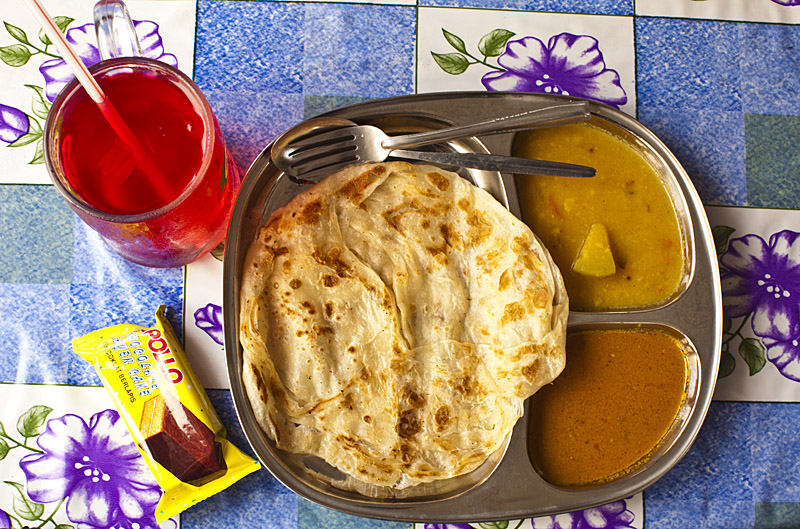
roti canai, school lunch, kuala lumpur, malaysia

roti canai, school lunch, kuala lumpur, malaysia

Perak Health Department director Datuk Dr Juita Ghazalie said some of the students started showing symptoms of vomiting, nausea, diarrhoea, dizziness, fever and abdominal pain early on Sunday.

“The students sought outpatient treatment at Kampar Hospital and nearby government and private clinics.

“All are in stable condition and under close observation,” she said here yesterday.

Dr Juita said stool samples, oral swabs of the food handlers and samples of the food had been taken and sent for analysis to find out the cause of any possible contamination.

She said the cafeteria was ordered closed with immediate effect, pending the results of the tests.

The cafeteria operator, who had only just taken over the contract to supply food, has been slapped with a RM1,000 fine under Regulation 34 of the Food Act.

On Wednesday, some 53 students at the Malay College Kuala Kangsar went down with food poisoning after having meals at the dining hall.

1300 sickened in 17 outbreaks: Korea has a school lunch Salmonella problem

More than 500 students at five middle and high schools in northern Seoul came down with salmonella poisoning last week, as did more than 200 students at schools in North Gyeongsang Province, Daegu and Busan.

korea.school.lunchIn total, 17 cases of mass salmonella poisoning had been reported across the nation as of Tuesday, with 1,284 people infected. That was a 34-percent increase compared to last summer and up 52 percent compared to the 2011-2015 average.

An editorial in The Korea Herald says the government’s 5.6 trillion-won ($5 billion) free school meals scheme has been found to be supplying improper lunches to many of the nation’s 6.14 million students.

A government task force inspected between April and July some 2,400 food suppliers and lunch operators and visited 274 of the nation’s 11,700 elementary, middle and high schools that provide students with hot lunches.

The team’s findings, released Tuesday, were disappointing and shocking. It has uncovered a total of 677 violations of the relevant law on the production, sale and consumption of foodstuffs used in school meals.

The findings suggest disregard for food safety and quality is rampant. The number of violations would have been much larger if the task force had visited more schools and inspected more companies.

In one case, a company in Hanam, Gyeonggi Province, washed moldy potatoes with hygienically inappropriate underground water and shuffled them with eco-friendly ones to supply them as organic products.

In another case, a company was found to have used frozen beef that had passed its expiration date by as many as 156 days.  

The investigation also laid bare corrupt practices between schools and food firms. Many schools were found to have awarded contracts to food suppliers in an opaque manner.

Four large food companies – Dongwon, Daesang, CJ Freshway and Pulmuone – are suspected of having provided kickbacks to nutritionists at 3,000 schools to win foodstuff supply contracts.

Many schools were found to lack the ability to inspect the quality of the ingredients provided by suppliers. And at many schools, monitoring of kitchen sanitation was lax.

In light of these and other problems, it would be strange if food poisoning did not occur at schools.

To enhance the quality and safety of school meals, stern punishments should be meted out to those who violate the relevant regulations.

It would be also necessary to encourage parents to keep tabs on school kitchen sanitation. Kitchen managers need to train food service workers to ensure that their kitchens are maintained safely and free from germs and bacteria.


NZ dad isn’t fazed at all by the outrage at his daughter’s first deer kill

John Edens of Stuff reports a proud father says he isn’t worried by critics upset at photographs of his eight-year-old daughter taking a bite out of a deer’s heart after her first successful hunt.

kid.deer.heart.2Johnny Yuile and his daughter went hunting on a friend’s bush block the Hawke’s Bay, earlier this month.

Yuile – a New Zealand police constable – said he has been hunting with his daughter since she was a toddler and when she was little he’d strap her to a front-pack during bush missions.

His daughter, using her dad’s Remington 7mm-08 rifle, shot a young stag from 40 metres.

He sent a couple of photographs online to a Facebook page, showing a smiling father and daughter beside the stag and his daughter taking a bite from the deer’s heart. For many people, tasting a freshly killed animal, whether it’s by taking a bite or drinking blood, is part of hunting.

Yuile said he hunts for meat for his family.

“She made tricky downhill shot using my shoulder as a leaning rest and shot with dads 7 mm-08 at about 40m. Then she took a bite from its warm quivering heart,” a Facebook post said.

The Facebook page quickly attracted “haters” who criticised Yuile for taking his daughter hunting at such a young age, branded the hunt “sadistic” and wrongly accused the pair of killing an animal for sport.

Yuile said the pair were hunting at a friend’s place.

Toilet anxiety: Panic about pooping in public

Debbie Schipp of news.om.au reports that a condition which makes people too petrified to poo in public means some Australians avoid going out because they fear not only using public toilets, but are also scared they won’t make it in time.

toilet.anxietyAt its most extreme, toilet anxiety, shy bladder and shy bowel syndromes can be so crippling that sufferers stay home rather than risk peeing or pooing in public toilets.

And the fear people might hear you doing a number two is worse than that of doing a number one (pee) researchers from Swineburne University found when they developed a scale aimed at assessing the anxiety people commonly experience when needing to use a public rest room.

Dr Simon Knowles is one of the study’s authors, and a clinical psychologist who specialises in gastrointestinal conditions and working with people with severe anxiety about using public toilets. His said both Paruresis (anxiety associated with urinating in public: shy bladder) and Parcopresis (anxiety related to having a bowel motion: shy bowel) can be so extreme people can struggle to socialise, study or even hold down a job because they only feel comfortable using their own toilet.

The study involving 334 adults reveals that shy bladder and shy bowel symptoms were both associated with increased stress, anxiety and depression.

“Those who experience toilet anxiety frequently worry about using a public toilet due to fears that others may hear or see them,” Dr Knowles said.

“Although the prevalence of toilet anxiety is not clear, it is suggested to be around six per cent to 35 per cent of the population may be affected to some degree.”

Dr Knowles developed his scale of toilet anxiety measure in an effort to better understand the causes of the condition, and tested it on the 300-plus people involved in the study.

Basically, the ‘how scared are you to poo scale’ will help experts to better judge whether general self consciousness has spiralled into full blown social anxiety. If it’s the latter, Dr Knowles says, you’re far from alone, and it’s treatable.

The results of the research were recently printed in the Journal of Cognitive Behaviour and more information and the survey are available at toiletanxiety.org

Serial pooper plagues Virginia park

Kids love climbing and playing at Fort Barnard Park in south Arlington, VA, but now they have to watch where they step.

fort.barnard.park.vaSome parents are disgusted after learning a “serial pooper” is targeting the playground.

“I have three kids, one is a cancer survivor. You run into something like that?” Andy Delafield, who takes his kids to Fort Barnard Park, said. “Oh my God. Just … ugh. Who would be sick enough to do something like that?”

Arlington County Parks and recreation officials say human poop has been found about four or five times in the last few months.

Whoever is responsible is covering the poop with a shirt or jacket.

Park workers believe it happens after hours in the dark. Each time it is reported, workers clean it up and disinfect the area.

UK pub fined £100,000 for mouse infestation

Daniel Woolfson of The Morning Advertiser reports that Mitchells & Butlers (M&B) was slapped with a £100,000 fine after environmental health officers uncovered an infestation of mice at one of its Birmingham pubs.

The  Railway Pub, Birmingham UKThe company, which owns the Harvester and Toby Carvery, pleaded guilty to three food safety offences at Birmingham Crown Court on Friday (19 August) after inspectors discovered rodent droppings and unhygienic kitchen conditions at the Railway, Hill Street.

It was ordered to pay £105,000 as well as £9,528 in costs and a £120 victim surcharge.

Councillor Barbara Dring, Birmingham City Council’s licensing and public protection committee chair, said: “People should be able to have confidence in the safety of the food served and cleanliness of any food business in Birmingham – regardless of whether it’s a pub or a posh restaurant.

“We want the city’s food businesses to thrive and, as such, our officers work closely with premises to ensure they achieve the necessary standards required to operate safely.”

The Railway’s kitchen was ordered to close on the spot after the inspection on February 18 last year but was allowed to reopen two days later when inspectors returned and found improvements to have been made.

Since then it has gone on to achieve a five-star food hygiene rating.

Earlier this summer M&B admitted a breach of duty to 280 customers who were stricken with norovirus after visiting an Exeter Toby Carvery pub in April 2015.

The Exeter Arms was closed after instances of the virus, which causes diarrhea and vomiting, were reported to management.

However, it continued to trade after closing for one day and more people fell ill.

Amandeep Dhillon, partner at law firm Irwin Mitchell, which was instructed by the customers to investigate the outbreak, said at the time it hoped by taking legal action important lessons would be learned when it came to dealing with outbreaks of illness in similar premises.

Gastro outbreak strikes Australia’s Fraser Coast

Australia’s Fraser Coast, including the town of Hervey Bay, is billed as Australia’s whale watching capital and the scallops are like no other, especially those apparently hepatitis A infected frozen scallops from the Philippines which has sickened 208 Hawaiians.

_DSC0022----Whalesong-with-Eliza Wheeler of the Fraser Coast Chronicle reports an outbreak of gastroenteritis has stricken dozens of people over the past week, inundating home doctors, and putting a strain on the region’s hospitals.

House Call Doctor’s Assistant Clinical Director Dr Ryan Harvey said this particularly aggressive bug had been making people sick across the state.

He said it appeared to be a far more virulent strain than in previous years.

“It is worse than what we have seen and causing worse illness. A lot of people who might otherwise have had an upset stomach are experiencing severe gastro,” Dr Harvey said.

He said there had been reports of a 15% increase in the number of people with gastroenteritis being admitted to hospitals.

Egypt investigates claims of hepatitis-A in strawberry exports

With 10 hepatitis A cases linked to frozen strawberries used by Tropical Smoothie Café in Virginia, and health officials saying the hep A strain has been associated with past outbreaks due to frozen strawberries from Egypt, the Egyptians are now investigating.

strawberry.harvest.egypeEgypt Independent cites Agriculture Ministry spokesman Edi Hawash as saying the U.S. has not officially informed Egypt of the claims, but the claims are being investigated anyway.

Agriculture Minister Essam Fayed has formed a committee, headed by the chairman of the Union of Egyptian Exporters, to investigate the issue, Hawash added.

He said that recent tests conducted on random samples of exported strawberries have shown no cases of the virus.

Hussein al-Hinnawi, the president of the Union of Producers and Exporters of Horticultural Crops, said he doubts that the reported hepatitis-A infections were caused by frozen Egyptian strawberries.

He said Egyptian strawberries are scrutinized at competent laboratories prior to export. Moreover, exporters have full awareness of good practice through the stages of production, transfer and export, Hinnawi said.

Egypt ranks first among Arab countries in the production and export of strawberries, exporting about 40,000,000 tons of fresh and frozen strawberries to 30 countries in Europe, America, Southeast Asia and the Gulf states, according to Al-Ahram.

Tropical Smoothie Cafe voluntarily withdrew all of the strawberries sourced from Egypt and found an alternate supply.