Guidance on study design for drugs to reduce STEC in cattle

The U.S. Food and Drug Administration has published guidance on study design and criteria that the Center for Veterinary Medicine (CVM) thinks are the most appropriate for the evaluation of the effectiveness of new animal drugs that are intended to reduce pathogenic Shiga toxin-producing Escherichia coli (STEC) in cattle.

cow-faceSection II discusses general considerations regarding the development of protocols, study conduct, animal welfare, substantial evidence of effectiveness, experimental parameters, nutritional content of experimental diets, and the assessment of drug concentrations in experimental diets. Section III discusses the studies and analyses CVM recommends for sponsors to substantiate the effectiveness of pathogenic STEC reduction drugs.

The guidance is not a comprehensive source of information on conducting clinical effectiveness studies. Alternative study designs for providing substantial evidence of effectiveness may be acceptable. Sponsors should contact CVM to discuss their development plan prior to initiating any studies. Sponsors and clinical investigators should consult the Code of Federal Regulations (21 CFR Parts 511 and 514) for information on the proper shipment, use, and disposition of investigational new animal drugs, as well as submission of the results of clinical investigations. This guidance does not address the evaluation of human food safety with respect to microbial food safety and/or concerns related to antimicrobial resistance. CVM encourages sponsors to discuss any related concerns in their project plan with CVM as early as possible in the development process.

FDA’s guidance documents, including this guidance, do not establish legally enforceable responsibilities. Instead, guidances describe the Agency’s current thinking on a topic and should be viewed only as recommendations, unless specific regulatory or statutory requirements are cited. The use of the word should in Agency’s guidances means that something is suggested or recommended, but not required.

98 sick: Shigella cases linked to San Jose restaurant

Officials said 11 people are hospitalized in intensive care after contracting Shigella at a San Jose restaurant, prompting the Santa Clara County Public Health Department to issue a warning.

french.dont.eat.poopThe patients ate at the Mariscos San Juan restaurant in downtown San Jose on either Friday or Saturday, according to authorities. The restaurant is now closed.

Officials also said the number of suspected cases of Shigella has now risen to 98.

Food is often contaminated with Shigella if it is prepared by someone whose hands are covered in fecal matter.

Time to revise the don’t eat poop mantra (or at least cook the poop).


15 sick: Wisconsin football team stricken with Cryptosporidium

Milton School District says they now have three confirmed cases of Cryptosporidium at the Milton High School.

north.dallas.fortyMilton football coach Bill O’Leary told 27 News Tuesday he has “lots” of sick kids on his team. Health officials are trying to get samples from those who are ill to either confirm or deny they have Cryptosporidium.

According to WKOW-TV, two community meals among the football players have led to the outbreak.

The health department and school are taking precautionary measures and the high school will be closed for 24 hours for disinfection.

The Kremlin of local government: Philly restaurant inspections stay secret for 30 days

Of the U.S.’s 10 largest cities, Philadelphia is the only one that does not allow the public to see restaurant inspection reports for 30 days, time in which diners could unknowingly patronize restaurants with serious hygiene problems.

No captionWith the exception of Phoenix, which takes 72 hours to process its reports, the remaining major cities – including New York, Chicago, and Los Angeles – publish restaurant inspections immediately, according to a survey by Philly.com.

Pittsburgh posts its reports immediately. So do the counties of Bucks, Montgomery, and Chester, the last of which posts its findings on the Pennsylvania Department of Agriculture database. That database includes most of the state, including many Delaware County municipalities, and it posts them without delay.

In New Jersey, Camden County posts results online within three to five business days; Burlington County does so at least as fast. Gloucester County’s website is updated monthly, with limited details.

The Philadelphia policy puzzles experts who wonder why the city would keep restaurant inspections private for so long.

“Give the restaurant a month to fix [the problems]?” asked Jim Chan, recently retired manager of Toronto’s DineSafe program.

“Is that fair to the public? Is that good health policy? No.”

“This seems like a strange protocol,” said Michael P. Doyle, director of the Center for Food Safety at the University of Georgia. “It certainly doesn’t help the customer.”

Andres Marin, professor of culinary arts at Community College of Philadelphia, said a weeklong delay might be acceptable to fix minor problems.

“But the question should be: What is the reason that we’re making these public?” Marin said. “We want to let the public know about the restaurant’s cleanliness and the way they’re handling the food. Withholding a report for 30 days makes no sense.”

sleeper1Philadelphia Public Health Department spokesman Jeff Moran said reports are kept under wraps so owners of food establishments can challenge a sanitarian’s findings.

How did the policy begin?

“My understanding is that this has been a long-standing policy, that it arose from [the] fact that [the] proprietor has [a] 30-day period to appeal an inspection,” city Health Commissioner James Buehler wrote via email Monday.

On Feb. 10, a city health employee inspected Joy Tsin Lau, a dim sum eatery with a banquet hall on Arch Street, and found improperly stored food, no soap in the employees’ restroom, and mouse droppings.

Her findings were kept secret. Seventeen days later, on Feb. 27, about 100 lawyers and law students were stricken with food poisoning after attending a banquet at the restaurant. Many were treated in city emergency rooms for what turned out to be norovirus, the leading cause of disease outbreaks from contaminated food in the United States, according to the Centers for Disease Control and Prevention. City inspectors do not test specifically for norovirus and other pathogens.

“No one would have gone there knowing about mouse droppings and the other sanitation violations,” said lawyer Richard Kim, who represents one of the sickened lawyers in a lawsuit against Joy Tsin Lau. “Nobody would have done that.”

Catherine Adams Hutt, a consultant for the National Restaurant Association, said the city’s 30-day policy was not responsible for sickening the lawyers.

“It doesn’t matter when an inspection report is posted,” Hutt said. “It’s the responsibility of the restaurant owner to correct the violations. There’s no excuse for a restaurant for food poisoning 17 days after an inspection.”

In a subsequent editorial, the disclosure this week by Philly.com that the city’s Health Department keeps its food-inspection reports secret for 30 days is the latest example of why the department is the Kremlin of local government.

Information is released on a need-to-know basis, if you can negotiate the maze set up to keep the public in the dark.

When it comes to food inspections, for instance, the department boasts of its transparency and posts online the full inspection reports on every institution it inspects, including the city’s 5,000 eat-in restaurants.

Now, Philly.com reveals that those reports are kept offline for 30 days, which happens to be just enough time for a restaurant to pass a reinspection.

Even if you do find the inspection reports (phila.gov/health/foodprotection) the department tells us too little by telling us too much. The raw reports are posted online, noting whether an establishment is in or out of compliance in 56 categories.

A regular member of the eating public would have trouble making sense of the reports, which are a jumble of bureaucratese.

One thing evident is that some restaurants are inspected again and again yet never can get their act together to pass an inspection.

Simpler public disclosure and enforcement with teeth would go a long way toward giving the public confidence – and that would benefit the entire food industry.

 

Public health types have better things to do: 8 sick from raw milk in Idaho

Idaho Public Health officials are investigating eight illnesses in southwest Idaho likely associated with drinking unpasteurized (raw) milk.

napoleon.raw.milkTo date, four Campylobacter and four E.coli O157:H7 cases have reported drinking raw milk produced by the Natural Farm Fresh Dairy of Kuna in the week prior to getting sick. The investigation is ongoing with Southwest and Central District Health departments, working in association with the Idaho State Department of Agriculture.

“If people have recently purchased raw milk from this dairy, we advise them not to drink it and to discard it,” says Dr. Leslie Tengelsen, State Public Health Veterinarian with the Idaho Department of Health and Welfare.

The Idaho State Department of Agriculture is working with Natural Farm Fresh Dairy to confirm if the raw milk from that facility was the source of the reported illnesses. The dairy is fully cooperating with the investigation and issued the following statement: “Natural Farm Fresh is committed to providing a safe and wholesome product to its customers. Effective immediately, we are voluntarily removing all raw milk products currently on the shelves in retail stores and we will discontinue further distribution of our raw milk until additional product testing is completed.”

Hold Australian restaurants accountable: Food ratings in one state, shot down in another

Sometimes I don’t understand this country called Australia.

western-australia-kangaroo-beachTen days ago, Canberra, the former sheep-farm now acting as the Washington, D.C. of Australia, decided to abandon any plans for restaurant inspection disclosure. I did a live radio interview with a Canberra station, in my goalie skates, during an (ice) hockey practice on Sunday that Australian Capital Territory chief health officer, Paul Kelly, decided he was too busy to do.

Must be nice to have a government job.

Yet the next day, the state of South Australia declared that its pubs, cafés and restaurants will be able to publicly display the food safety rating they receive during council inspections.

A successful trial period has laid the foundation for the new program called the Food Safety Rating Scheme. The rating will be based on the business’s scores for a variety of criteria gathered by council health inspectors.

“Since the scheme started, three, four and five star certificates have been awarded to more than 800 local restaurants, cafes and pubs based on how well they did in their regular council inspection, which is a great result,” said SA Health Director of Food and Controlled Drugs, Dr Fay Jenkins.

“Of the businesses inspected so far, 54 per cent received a certificate with a star rating, demonstrating appropriate food handling skills and a clean and safe food preparation environment.”

“If a business does not meet the national food safety standards they will not be awarded a star rating and appropriate actions will be taken to ensure the business rectifies any problems. In most cases issues are resolved very quickly,” said Dr Jenkins.

Since the South Australian pilot program began, five-star certificates have been awarded to 389 food businesses, four-star-certificates to 328 and three-star certificates to 168.

However, a business will not have any obligation to display their food safety rating because the new scheme is voluntary.

That’s just dumb.

And now, a pizzeria owner has threatened a disgruntled customer with legal action alleging they defamed his business in a negative online review.

Law graduate Julian Tully wrote on travel site TripAdvisor that dining at an Adelaide pizzeria was “the worst service and experience” and warned people to “stay away”.

Mr Tully and friends had attended a $40-a-head birthday banquet on October 10 and alleged they were treated “in a fashion I don’t think was possible”.

“For 7 people we got a tiny amount of food (waiting more than 50 minutes between portions) and when we tried to complain in a reasonable way we literally got told ‘we have had our fill’ and ‘we shouldn’t go out for dinner if we can’t afford it’,” he wrote in the October 11 review. “They then called the cops on us because we walked out. Avoid like the plague!”

Sounds like Australia.

Q Fever outbreak in Australia linked to goat dairy farm

Landline can now reveal at least 24 people have contracted Q fever during an ongoing outbreak on a Victorian goat dairy farm. While the farm owners and health authorities seem to have stemmed the flow of people falling ill, they have not been able to stop the spread of the disease among the animals. Prue Adams reports.

q.fever.goats.austPRUE ADAMS, REPORTER: There’s a picture perfect quality to this farmland near Ballarat. Lambs at foot, bluestone buildings and at this time of year, golden canola. It’s a region that also boasts one of the biggest dairy goat farms in the country. The only clue to an underlying problem here are the warnings on the front gate.

SANDY CAMERON, GOAT FARM OWNER: The first thing is we’ve had to restrict access to the property, signs up saying “Don’t Enter”. Of course, being in the country, people are fairly used to ignoring signs, so then we – you’ve actually got to try and enforce that.

(Present) When Landline caught up with the Camerons in 1997, they were only producing sheep milk and cheese. Later that year, they got into goats. And now, in addition to milking thousands of sheep, they also milk 5,000 goats twice daily. This is a big enterprise with three dairies and employing 100 staff. Four years ago, some of those employees started getting sick.

SANDY CAMERON: In 2011, we had a few people get Q fever, including our daughter, but we didn’t know it was Q fever. Even though they went to doctors, we didn’t know what was going on. It was late-2012 before one of the staff had it diagnosed as Q fever. In hindsight we realised it was during 2012 was the main incidence of staff being infected.

SIMON FIRESTONE, UNIVERSITY OF MELBOURNE: It was sounding very significant from the start. So historically in Victoria, the Health Department receives notifications of about 30 cases of Q fever a year, and in one week, they’d five notified associated with the one farm property. So, yeah, that was an outbreak. That was clearly an outbreak smacking us in the face.

PRUE ADAMS: In 2013, Dr Simon Firestone, a senior veterinary lecturer at Melbourne University, was one of several authorities notified.

SIMON FIRESTONE: It’s the largest farm-associated outbreak in Australia’s history. So we’ve had large abattoir-associated outbreaks and a large single outbreak where there were 25 cases previously at a saleyard in South Australia in 2004. But, yeah, at 24 cases, this is – this is the largest by far of any of the single farm-associated outbreaks and then, as with all of these, there would be cases that have gone undiagnosed.

Seek and ye shall find: Salmonella in UK raw milk cheese

The UK Food Standards Agency (FSA) has issued a statement to say that they have advised Barton Farm to stop selling raw drinking milk.

colbert.raw.milkTests carried out by the FSA and the local authority found samples containing levels of microorganisms that breach food safety regulations. The local authority North Devon District Council also found salmonella in a batch of cheese made with raw drinking milk by the company.

The affected batch of cheese has been withdrawn from sale and consumers alerted.

Barton Farm has issued the following notice on its website: “Due to more harassment from the Food Standards Agency, all sales of our raw drinking milk are currently suspended. All our own test results are clear. Online orders will be fulfilled once the licence has been renewed or a refund will be issued. We would like to thank everyone for their patience while we undergo yet another investigation. Someone definitely doesn’t want us to sell our raw milk.”

In response, the FSA has said that it rejects Barton Farm Dairy’s claim that the action is harassment.

224 sick with Salmonella in Vietnam

Banh my (Vietnamese bread) contaminated with Salmonella bacteria supplied by a bakery in this central province has been identified as the cause of the poisoning of 224 locals.

banh.myThe province’s food hygiene and safety department yesterday announced that banh my sold by Vuong Tien Thanh Bakery had been contaminated with the bacteria, forcing consumers to rush to hospitals last Wednesday.

Samples taken from the bakery and the contents of the victims’ stomachs tested positive for the bacteria.

Self-reported surveys still suck: Is anyone surprised US food service workers go when sick?

From the duh files:

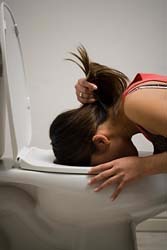
vomit.toiletA nationwide survey found out that most of the food workers in the U.S. still report for work even when sick.

Based on a poll conducted by the Center for Research and Public Policy for Alchemy Systems, the majority of food industry workers are most likely to show up for work even when sick with illnesses that will most likely make their customers ill as well.

Survey findings revealed that 51 percent of food workers report that they “always” or “frequently” report to work even while sick. These findings were more or less the same as the last time these surveys were conducted, and are part of a larger study to determine safety issues on major food and food production industries.