Promote microbiologically safe food? Report makes case for digital connection with consumers

People said I was crazy at Masters and Johnson … wait, that’s a Woody Allen movie.

But 10 years ago, whenever I asked for verification of something, my students would tell me in a sardonically hipster manner, Dr. professor, there’s this thing …(pregnant pause for effect or sneer) it’s called Google.

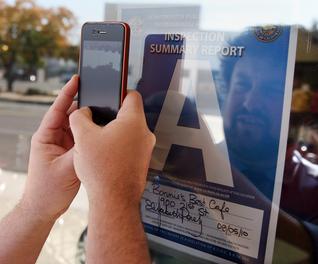
Today, people can use smartphones in New York City and Beijing to get animal.house.cucumberdetailed restaurant inspection reports for those that care.

Americans can get lots of information about their food already – sustainable, local, natural, organic, animal friendly, dolphin-free – but nothing about microbial safety.

And some companies are better.

They should brag.

The technology is already available for those who want to push their investment in food safety.

Unfortunately, most of what consumers see is rewards programs, and recall notices.

Tom Karst of The Packer writes that a new report, “Six Degrees of Digital Connection: Growing Grocery Sales in an Omnichannel World” concludes supermarkets may yield higher sales if they invest in digital connections with consumers.

Published by Barrington, Ill.-based Brick Meets Click, looks at the business case for investment in digital connections with shoppers.

Not a stirring endorsement, but in a study of more than 22,000 shoppers from six U.S. retail banners, there was a strong relationship between the number of digital connections and whether a customer is likely to be a primary shopper (who does a majority of grocery spending with that retailer). Digital connections include e-mail, websites, texting, social networks, mobile and online shopping.

I have no idea if the study is valid.

But if supermarkets can electronically connect with so many shoppers, that sounds like an opportunity to market food safety.

A lot of shoppers care about food safety.

China expands use of QR codes for restaurant food safety info

The Haidian district of Beijing has 7,533 restaurants that have recently publicized their food safety information by providing quick response (QR) codes that can be scanned using cell phones. Customers who text “a” to 10658081 or log on iot.10086.cn/ewm-sj/ can download the food safety qr.code.rest.inspection.gradeapp. By scanning the QR code on restaurants’ menus or business licenses, customers can check information about the restaurant, including whether food additives are used in dishes and whether the business has breached food safety regulations in the past.

1 dead 60 sick; Salmonella linked to egg pudding in milk tea in Philippines

The food poisoning incident that victimized almost 60 people in Iloilo City was caused by salmonella bacteria.

Dr. Glenn Alonsabe, chief epidemiologist of Department of Health (DoH-6), confirmed that samples taken from four victims have tested positive for milk.teasalmonella bacteria.

The initial results were verified by DoH’s Research Institute for Tropical Medicine (RITM) in Metro Manila.

It was last September 26 when people were admitted to different hospitals in Iloilo City. They all exhibited symptoms of food poisoning from drinking Dakasi milk tea.

Alonsabe said that the salmonella may have been from the added ingredient of egg pudding, which was the common ingredient of the specialty milk tea that was ordered by the victims, who now have been discharged and have recovered.

The incident also allegedly triggered the death of a 27-year-old man.

Safe because it’s organic? Link found between moose meat and Toxoplasma in unborn baby

A woman in Alaska who ate a medium-rare moose steak at week 26 of her pregnancy gave birth prematurely at 34 weeks because of a toxoplasmosis infection.

According to the Anchorage Daily News, Lauren Hamm’s 34-week moose-steaksprenatal checkup was only supposed to be 10 minutes.

But she left the hospital 96 hours later. Her son, born prematurely, didn’t leave the neonatal intensive care unit for another three weeks.

Doctors said the meat was infected with Toxoplasma gondii, a parasite that can be found in under-cooked game meat. It causes toxoplasmosis, an infection that brings mild flu-like symptoms, like swollen glands, in adults but can be deadly to an unborn child. Hamm’s story was published in the September issue of Alaska Medicine.

Doctors said Hamm had the infection and passed it on to her unborn baby, Bennett. He was born on Dec. 13, 2011, with a heart rate of 200 beats per minute, Hamm said. He had fluid around his organs and lesions on his eyes and brain. Hamm said 45 minutes after Bennett was born, his heart rate was still irregular. Doctors used a defibrillator and shocked his heart back into rhythm.

“I had a prayer in my heart that everything was going to be OK,” she said.

Her doctor, Nelson Isada, a perinatologist at Providence Alaska Medical Center, was the senior author of the article.

Hamm said Isada wondered why Bennett’s heart rate was so irregular, and he ran as many blood tests as he could on her newborn son. moose.alaskaAccording to the article, after Isada found the lesions on Bennett’s eyes, he started to piece together that the baby might have toxoplasmosis.

Isada later tested the moose meat from the family’s freezer and found that it tested positive for Toxoplasma gondii.

According to the article, humans can get Toxoplasma gondii in three ways: by eating under-cooked meat that contains the cysts where the parasite lives, by a mother during gestation, or ingesting the cysts while they are opening in foods, soil, water or a cat’s litter box.

He said women who are pregnant can eat moose meat but they should make sure the meat is cooked all the way through. They should also cook beef, lamb and veal roasts or steaks to 145 degrees and pork, ground meat and wild game to 160 degrees.

Hamm said her husband shot the moose on Joint Base Elmendorf-Richardson, and the family ate the steaks medium-rare, like they always do. She was 26 weeks pregnant.

She said she never considered it unsafe to eat moose meat, because it was organic.

Now, at 22 months old, baby Bennett’s lesions have healed and he is healthy.

E. coli concerns prompt Costco organic beef recall in Canada

The Canadian Food Inspection Agency (CFIA) and Costco Wholesale Canada Ltd. are warning the public not to consume the Kirkland Signature brand Organic Lean Ground Beef described below because it may be contaminated with pathogenic E. coli bacteria.

This product has been sold from Costco warehouses in BC, Alberta, kirkland.organic.beef.e.coliManitoba and Saskatchewan.

There have been no reported illnesses associated with the consumption of this product.

The importer, Costco Wholesale Canada Ltd., Ottawa, Ontario, is voluntarily recalling the affected product from the marketplace. The CFIA is monitoring the effectiveness of the recall.

The following Kirkland Signature brand product, Product of USA, is affected by this alert:

Affected products: Kirkland Signature, Organic Lean Ground Beef, Size: 1.8kg (3 x 600g), UPC: 4 00000 91873 0

More information

For more information, consumers and industry can contact:

Costco Wholesale Canada Ltd., at 1-800-463-3783; or,

CFIA by filling out the online feedback form.

Prevalence and counts of Salmonella and enterohemorrhagic Escherichia coli in raw, shelled runner peanuts

From the current issue of the Journal of Food Protection:

Three major outbreaks of salmonellosis linked to consumption of peanut butter during the last 6 years have underscored the need to investigate the potential sources of Salmonella contamination in the production process flow. We conducted a study to determine the prevalence and levels of Salmonella in raw peanuts. Composite samples (1,500 g, n = 8) raw, shelled runner peanutsof raw, shelled runner peanuts representing the crop years 2009, 2010, and 2011 were drawn from 10,162 retained 22-kg lot samples of raw peanuts that were negative for aflatoxin. Subsamples (350 g) were analyzed for the presence of Salmonella and enterohemorrhagic Escherichia coli. Salmonella was found in 68 (0.67%) of 10,162 samples. The highest prevalence rate (P < 0.05) was for 2009 (1.35%) compared with 2010 (0.36%) and 2011 (0.14%). Among four runner peanut market grades (Jumbo, Medium, No. 1, and Splits), Splits had the highest prevalence (1.46%; P < 0.05). There was no difference (P > 0.05) in the prevalence by region (Eastern versus Western). Salmonella counts in positive samples (most-probable-number [MPN] method) averaged 1.05 (range, 0.74 to 5.25) MPN per 350 g. Enterohemorrhagic E. coli was found in only three samples (0.030%). Typing of Salmonella isolates showed that the same strains found in Jumbo and Splits peanuts in 2009 were also isolated from Splits in 2011. Similarly, strains isolated in 2009 were also isolated in 2010 from different peanut grades. These results indicated the persistence of environmental sources throughout the years. For five samples, multiple isolates were obtained from the same sample that had different pulsed-field gel electrophoresis types. This multistrain contamination was primarily observed in Splits peanuts, in which the integrity of the kernel is usually compromised. The information from the study can be used to develop quantitative microbial risk assessments models.

Miksch, Robert R.; Leek, Jim; Myoda, Samuel, Nguyen; Truyen; Tenney, Kristina; Svidenko, Vladimir; Greeson, Kay; Samadpour, Mansour

Journal of Food Protection®, Number 10, October 2013, pp. 1668-1816 , pp. 1668-1675(8)

We’ve done it this way for years no one sick: Iowa edition

Hamburg and Farragut schools are taking precautions against salmonella and waiting for information from state health authorities regarding four students reportedly treated for the bacterial disease.

Hamburg School Superintendent Jay Lutt said it’s unknown whether the cases in his district are linked to the salmonella outbreak in 20 states belushi.cafeteriaconnected to Foster Farms. However, he says an investigation determined the illnesses are not linked to the district’s food provider.

“Even before I knew about that outbreak,” said Lutt, “I called the provider of our foods, which provides to all schools in southwest Iowa. In their 31 years of business, they have not had a case of salmonella. One thing we’re pretty certain is that it didn’t come from any of the food we bring in from their main supplier.”

8 sick; Salmonella strikes UK nursery

Several children who attend the same Dundee nursery have been hit by salmonella.

The Evening Telegraph reports eight children at Technotots Nursery in Brunel Road, Wester Gourdie Industrial Estate, were struck down with the bacteria last month.

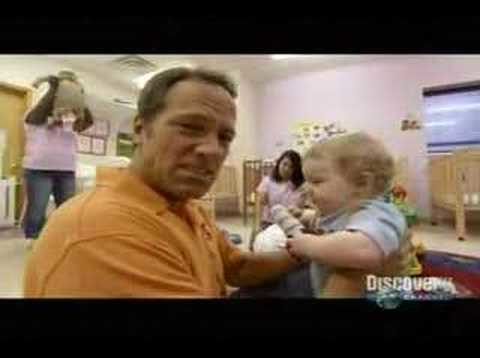
As yet the investigation has not revealed what caused the salmonella dirty.jobs.daycare.e.coliinfections but the owner of Technotots denies it originated in the nursery.

Angela McGoldrick, owner of Technotots Nursery, said: “It was a secondary infection and there was no point or service associated with the nursery, which means the salmonella has not originated from us but has come from elsewhere.

“The first case was on September 13. When it increased to two we took certain precautions and environmental health came into the scene.”

317 sick in Foster Farms Salmonella outbreak; just cook it still doesn’t cut it; skating, hockey, Thanksgiving turkey

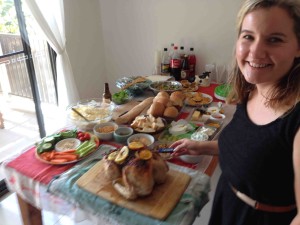
Amy, Sorenne and I began eight weeks of skating lessons at the local arena Satuday (I suck after seven years of no ice, thank you Kansas), started cooking the Canadian Thanksgiving feast at 3 a.m Sunday, and have had hockey on in the background since 4 a.m.

I try to be super-extra careful when cooking a big bird because of the potential for cross-contamination, and the potential of sickening a bunch therm.turkey.oct.13of what-would-become former friends.
But in some cases, extra care is not enough.

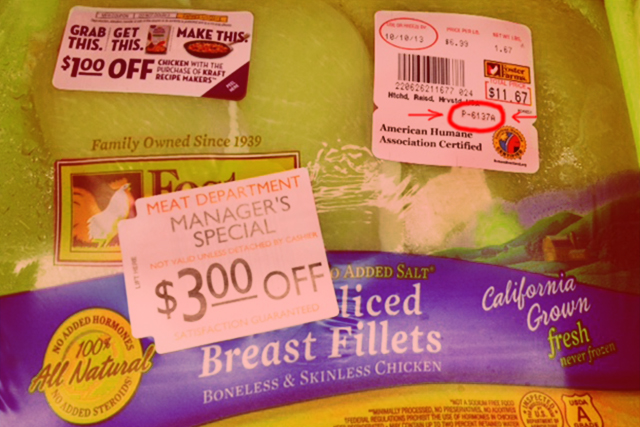
As the Salmonella Heidelberg outbreak linked to Foster Farms hits 317 sick, Costco has ordered a recall of nearly 40,000 pounds of rotisserie chickens after one tested positive for Salmonella on Friday.

That’s a cooked chicken. To paraphrase Bill Marler, if Costco can’t cook the poop out of a bird, why are consumers expected to?

Still, company types, many government types and other types, insist all will be well if the chicken is just cooked properly.

This is a terrible message, and not scientifically accurate.

Chapman at least got a few correct points in when he told Live Science cross-contamination can happen at any point in the cooking and handling process, starting at the grocery store, don’t wash the bird, and use a damn thermometer.

(I gave one to an IT friend here for the Thanksgiving food orgy.)

After threatening Monday to close three Foster Farms processing plants, the U.S. Department of Agriculture agreed on Thursday to allow the plants to continue operating with advanced, super-secret safety procedures.

Neither the company nor USDA will say what these procedures are. Doesn’t build confidence.

Which would be an additional reason the list of retailers recalling Fosters products is growing.

Lynne Terry of the Oregonian writes that Costco’s El Camino Real store in San Francisco, Calif., is pulling and products over Salmonella contamination. The recall includes nearly 8,800 Kirkland Signature Foster Farms rotisserie chickens and more than 310 units of Kirkland Farm rotisserie chicken soup, rotisserie chicken leg quarters and rotisserie chicken salad.

The products were sold to Costco customers at the El Camino Real store between Sept. 11 and Sept. 23, the notice said. The chickens were processed at three Foster Farms plants in central California.

Fred Meyer and QFC stores have withdrawn chicken from the same plants. They were sold under the brand names of Simple Truth Organic and Kroger Value. The voluntary withdrawal also includes deli chicken and rotisserie chickens.

Melinda Merrill, Fred Meyer spokeswoman, said the stores are still selling the Foster Farms labeled poultry that came from a plant that’s not been implicated in the outbreak.

This outbreak differs in that the variety of salmonella is especially virulent.

There are seven strains of salmonella Heidelberg involved in the outbreak. Several of them are antibiotic-resistant and “one of the strains that we’ve tested is resistant to seven antibiotics,” said Christopher Braden, director of the Centers for Disease Control and Prevention division of foodborne diseases.

Of the people infected, 42% have been hospitalized — an unusually high percentage, according to the CDC.

“That’s about twice what we would normally see for a salmonella outbreak,” Braden said. “We think that’s at least in part due to the fact that a number of these strains have resistance to one or more antibiotics.”

Thirteen percent of those sickened have salmonella septicemia, a serious, life-threatening, whole-body inflammation, Braden said. Normal for salmonella would be “just a few percent,” he said.

In a statement, Foster Farms CEO Ron Foster said “we have worked relentlessly to address these issues and will continue to do so as we work to regain consumer trust and confidence in the Foster Farms brand.”

Those comments do not bolster consumer confidence.

If you’ve got a good food safety system, brag about it. Because some companies are better.

 

Norovirus on a cruise ship: a first-person story

Cruise Law News has this first-person account of how nasty norovirus can be – this time on the Celebrity Summit cruise ship.

We too were on the Summit recently. We reported how dirty our Royal Suite was. They said they cleaned it, but the only evidence was that they used epoxy on the dining area parkay floor. The smell was horrendous.

I had allergic reaction tongue swelled, face, nose, eyelids and had hives on face and upper body. The doctor on call would not acknowledge this chicken_4 vomit cruiseand commenced to tell me that I was having an allergic reaction to blood pressure and cholesterol medications I have been on for years. He told me to stop taking these medications and he filled new prescriptions together with benedryl. They put in an IV to rehydrate me two times.

At the end of the cruise I was taken off the ship in a wheelchair. I had been sick the entire second week. Our butler was under orders to charge us for all the bottle water we needed. They clean the suite with a dirty rag and some kind of spray they use in all the rooms and hallways. It’s disgusting! You wouldn’t use someone else’s used tissue. How sanitary is that?

They charged our ship account $600 for the doctor and pills (that I didn’t use except for the benedryl). When we questioned the charge even though we had bought the travel insurance, the Concierge said we “must read the fine print.” Three days after my allergic reaction, my disabled husband got the norovirus. Through all of this the doctor refused to come to our suite. They said we needed to come to the doctor office.

This trip was from hell!