
Like most children, the students at Stone Corral Elementary School in Seville, Calif., here rejoice when the bell rings for recess and delight in christening a classroom pet.
But while growing up in this impoverished agricultural community of numbered roads and lush citrus orchards, young people have learned a harsh life lesson: “No tomes el agua!” — “Don’t drink the water!”
According to the New York Times, Seville, with a population of about 300, is one of dozens of predominantly Latino unincorporated communities in the Central Valley 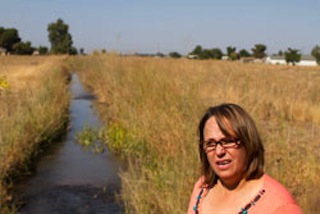 plagued for decades by contaminated drinking water. It is the grim result of more than half a century in which chemical fertilizers, animal wastes, pesticides and other substances have infiltrated aquifers, seeping into the groundwater and eventually into the tap. An estimated 20 percent of small public water systems in Tulare County are unable to meet safe nitrate levels, according to a United Nations representative.
In farmworker communities like Seville, a place of rusty rural mailboxes and backyard roosters where the average yearly income is $14,000, residents like Rebecca Quintana pay double for water: for the tap water they use to shower and wash clothes, and for the five-gallon bottles they must buy weekly for drinking, cooking and brushing their teeth.
It is a life teeming with worry: about children accidentally sipping contaminated water while cooling off with a garden hose, about not having enough clean water for an elderly parent’s medications, about finding a rock while cleaning the feeding tube of a severely disabled daughter, as Lorie Nieto did. She vowed never to use tap water again.
Chris Kemper, the school’s principal, budgets $100 to $500 a month for bottled water. He recalled his astonishment, upon his arrival four years ago, at encountering the “ghost” drinking fountains, shut off to protect students from “weird foggyish water,” as one sixth grader, Jacob Cabrera, put it. Mr. Kemper said he associated such conditions with third world countries. “I always picture it as a laptop a month for the school,” he said of the added cost of water.
Here in Tulare County, one of the country’s leading dairy producers, where animal waste lagoons penetrate the air and soil, most residents rely on groundwater as the source for drinking water. A study by the University of California, Davis, this year estimated that 254,000 people in the Tulare Basin and Salinas Valley, prime agricultural regions with about 2.6 million residents, were at risk for nitrate contamination of their drinking water. Nitrates have been linked to thyroid disease and make infants susceptible to “blue baby syndrome,” a potentially fatal condition that interferes with the blood’s capacity to carry oxygen.
.jpg) with consumers, producers, industry and our provincial and territorial partners to ensure that our food safety system remains one of the best in the world."
with consumers, producers, industry and our provincial and territorial partners to ensure that our food safety system remains one of the best in the world.".jpg) of encouragement and enforcement to foster a food safety culture; and use technology to be transparent — whether it’s live webcams in the facility or real-time test results on the website — to help restore the shattered trust with the buying public.
of encouragement and enforcement to foster a food safety culture; and use technology to be transparent — whether it’s live webcams in the facility or real-time test results on the website — to help restore the shattered trust with the buying public.(12).jpg) Standards good, extrapolations based on … who knows what, bad.
Standards good, extrapolations based on … who knows what, bad..jpg) drive the industry to do better. They are tough but achievable. And when fully implemented, they will prevent tens of thousands of Americans from getting sick."
drive the industry to do better. They are tough but achievable. And when fully implemented, they will prevent tens of thousands of Americans from getting sick." stating,
.jpg) and I think in this case, certainly it could always be worse and we try to make a better system as we move forward."
and I think in this case, certainly it could always be worse and we try to make a better system as we move forward." The USA Today today and the N.Y. Times on Friday both waded into the issue in advance of House hearing on the issue on Wednesday.
 Dr. Howard Hill, a veterinarian and a director of the National Pork Producers Council,
  generations, cattle producers have worked closely with veterinarians in the careful use of antibiotics to prevent, control and treat disease.”
 What’s worse is that sustainably-minded Michael Pollan is stiffing students for $25,000 to come and share his menu planner.
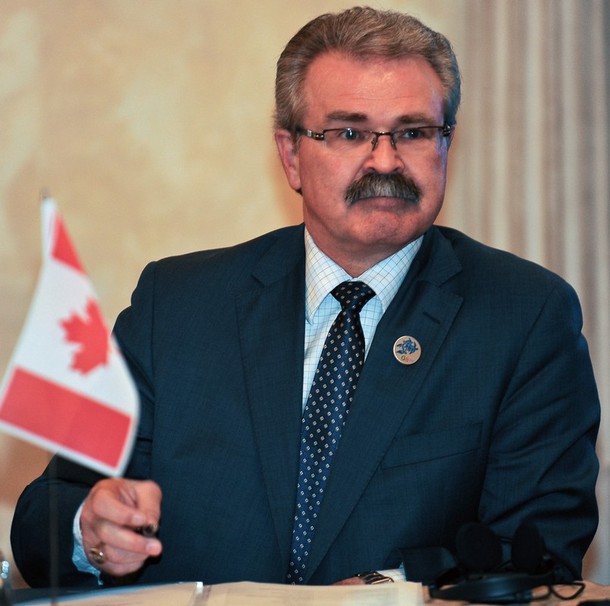 A: Well as you know, I’m not involved in the day to day operations, so I can’t speak to the stress of the front line operators.
 (2).jpg)
.jpg) Last week it was Monty Python and the Holy Grail. Young Katie wasn’t too impressed, and I’ll admit, the film has aged.
Last week it was Monty Python and the Holy Grail. Young Katie wasn’t too impressed, and I’ll admit, the film has aged. "What’s the point of bickering and arguing about who killed who, it’s time to move forward.”
.jpg)
 So it was hardly surprising to read this morning that the best and brightest in
  Jim just sent me this column about food, protectionism and hypocrisy.