
A Kansas State colleague was telling us about his travels during the winter break, including a visit to a daughter-in-law who is seriously committed to providing her young children – and his grandchildren – with raw or unpasteurized goat’s milk.
I said we’d update the table of outbreaks and he could provide it, as information, without the lectures, to his daughter, and possibly leverage the .jpg) future health of his grandchildren, although that kind of discussion wouldn’t go very far (even though several of the outbreaks involve raw goat’s milk).
future health of his grandchildren, although that kind of discussion wouldn’t go very far (even though several of the outbreaks involve raw goat’s milk).
Columnist Stephen Hume of the Vancouver Sun writes today that he doesn’t believe claims that pasteurizing milk destroys its nutritional value or that it’s a conspiracy of big agribusiness and big government to promote the interests of big pharma.
I see pasteurization of dairy products as a blessing. It prevents our return to a dreadful past in which diseases transmitted by raw milk afflicted hundreds of thousands every year. In fact, they still do in many parts of the world where people can’t get pasteurized dairy products. …
Raw milk advocates who trumpet the health benefits of unpasteurized products are in fact the beneficiaries of precisely the public health “conspiracy” to pasteurize that so many deride and vilify.
I’m all for personal choice, and there are lots of risky foods out there. Choice is the reason raw milk farmer Alice Jongerden in British Columbia can risk public health, waste tremendous public health resources that could be  better used elsewhere, and take up time in the Supreme Court of B.C. by asking judges to set aside a 2010 court order that prohibits her from producing and packaging unpasteurized dairy products.
I choose not to consume raw dairy because the pasteurized alternatives offer an easy disease control option, and I try not to inflict food poisoning risks on my children, who don’t have much of a choice.
An updated list of outbreaks related to raw and unpasteurized milk and products is available at:

.jpg) The source of the has not been identified. Through November 23, a total of 154 cases of salmonellosis were reported in South Dakota for the year. Of these 154 cases, 23 (15%) have been from BrownCounty. Statewide 31% of the Salmonella cases have been children 14 years and younger.
The source of the has not been identified. Through November 23, a total of 154 cases of salmonellosis were reported in South Dakota for the year. Of these 154 cases, 23 (15%) have been from BrownCounty. Statewide 31% of the Salmonella cases have been children 14 years and younger. .jpg) • information sharing between the school and the health authorities was poor;
• information sharing between the school and the health authorities was poor;
 Three children and one adult were transported to the hospital "for observation" and a dozen other victims had to be hospitalized.
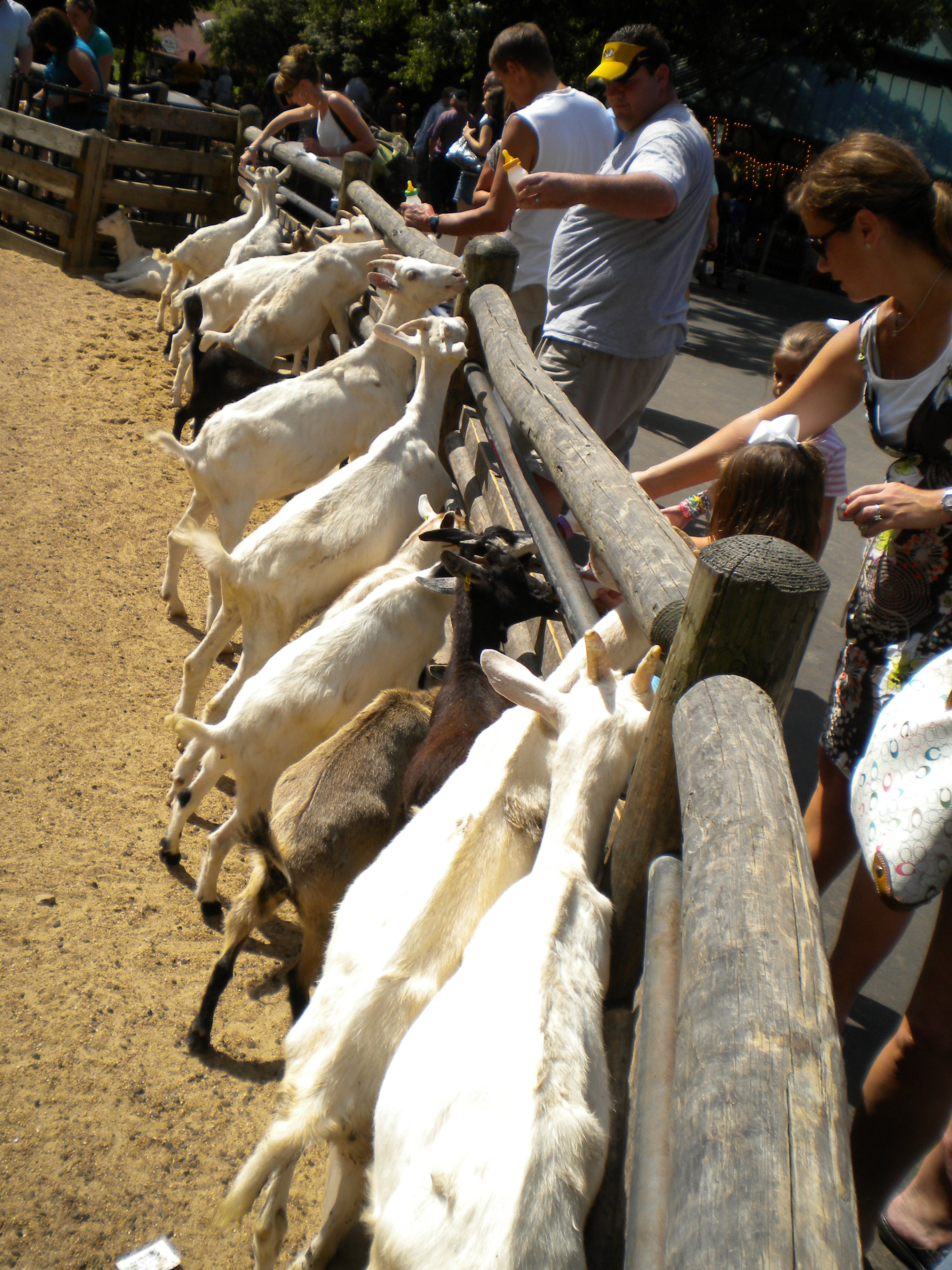 I find it physically impossible for me to get enough animal interaction. I suppose that means I must’ve chosen the right profession: Veterinary Medicine. I’m a frequent patron of Sunset Zoo here in Manhattan, Kansas, but during my last visit I was sad to learn that the petting zoo area was sectioned off from the public. Zoo patrons are still able to go up to the fence to pet the goats, but they can no longer walk amongst them in their enclosure. I have no idea if this change had to do with any of the recent petting zoo outbreaks, but I suppose it’s a step in the right direction for public health.
 The large number of sick kids resulted from a combination of poor food safety information and slow reporting by health officials. There are quite a lot of petting zoos that do things wrong, such as not providing access to handwashing stations after animal interaction. This past weekend I visited a petting zoo in St. Louis, and I was pleased to see some food safety signs posted outside the gate of the animal area and also by the handwashing station right next to the animals.
.jpg) I was also happy about the signs posted around the petting zoo that read,
I was also happy about the signs posted around the petting zoo that read,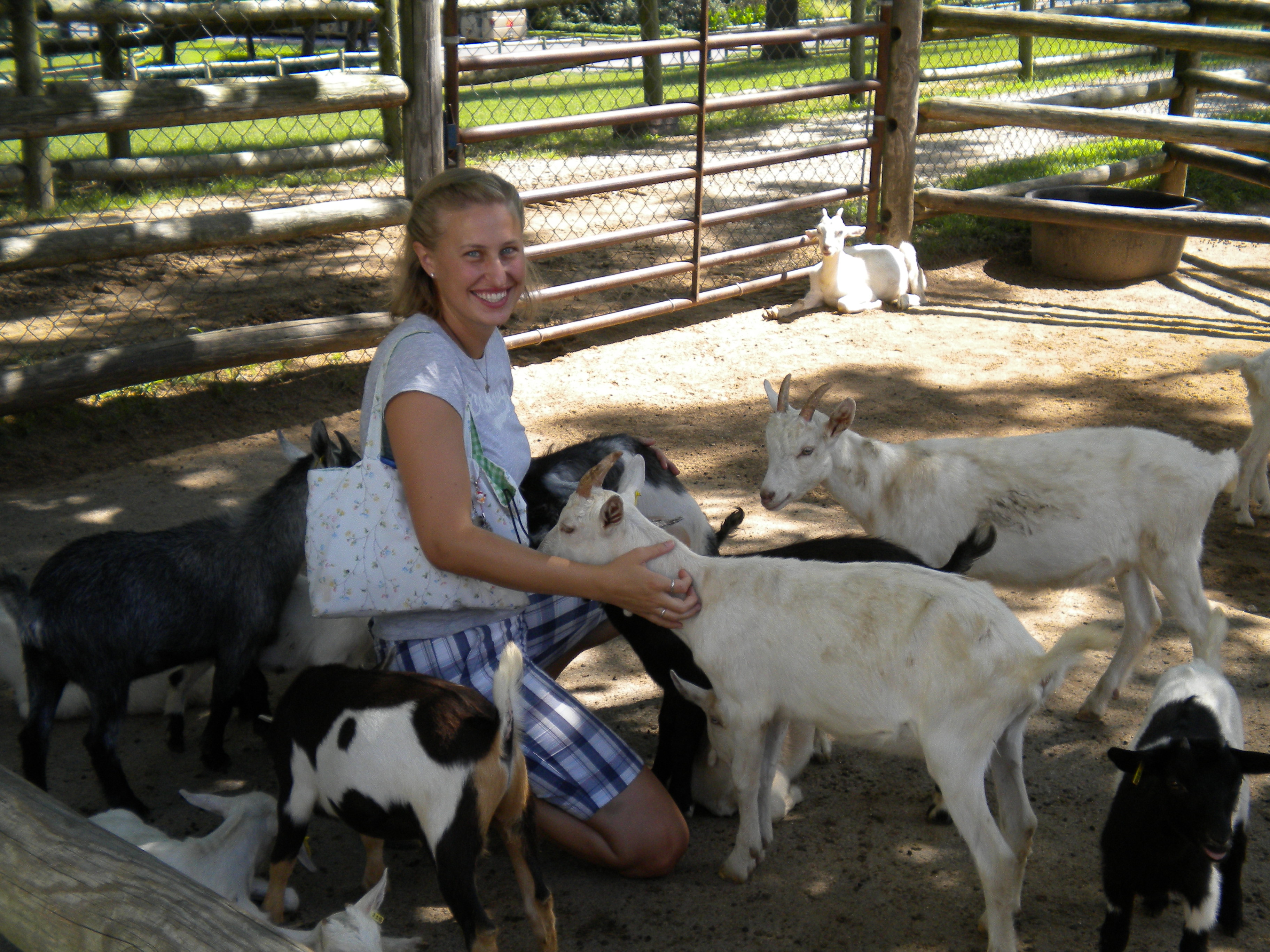
 County Fair.
.jpg) Kansas State. She was born and raised in Paraguay (that’s in South America, not Hawaii) and has been working with Powell and the barfblog gang for a couple of years.
Kansas State. She was born and raised in Paraguay (that’s in South America, not Hawaii) and has been working with Powell and the barfblog gang for a couple of years. coli O157:H7 and sickened people
 And now confirmed.
 CI, 1.0 to 3.1), and Hispanic ethnicity (OR, 2.3; 95% CI, 1.2 to 4.5) were associated with exposure. Our study shows that children can be exposed to raw meat and poultry products while riding in shopping carts. Parents should separate children from raw products and place children in the seats rather than in the baskets of the cart. Retailer use of leak-proof packaging, customer placement of product in a plastic bag and on the rack underneath the cart, use of hand sanitizers and wipes, and consumer education may also be helpful.