Going public: Chipotle involved in 4th outbreak this year that was kept secret

Lynne Terry of The Oregonian writes, Chipotle has had three known outbreaks this year, including the most recent one in Oregon and Washington. But there was also a fourth in Seattle that put two people in the hospital.

chipotle.BSIt was essentially kept secret. Health officials, who investigated the outbreak, did not inform the public.

“It took us a while to make the connection between the sick people and Chipotle,” James Apa, spokesman for King County Public Health, said in an email. “By the time we were able to make an association with Chipotle, the outbreak was over.”

A total of five were sickened after eating at a Chipotle restaurant at 1415 Broadway, according to Bill Marler, a Seattle food safety litigator representing one of those who got sick. He said his client only contacted him recently in wake of the latest outbreak.

Like the latest outbreak, it involved E. coli.

The five people dined at Chipotle in late July, Apa said. Health officials were never able to determine the culprit.

Restaurant inspectors found no problems at the restaurant.

Source food that is microbiologically safe.

And stop with the BS.

Tracing produce helps answer outbreak questions – Chipotle edition

When I was a graduate student investigating food safety in the produce industry, I saw a lot of transactions and product movement while I was in packing sheds. Repacking, trading pallets (“I’m short on product but I need to fill an order”) and cash sales. These transactions are messy, documentation and separation-wise, and provide a challenge to traceability within the supply chain.

Traceability and being able to follow the route that a a supply is part of a good food safety culture. When it works, it allows investigators to find the source of a problem leading to lessons learned.Chipotle

According to WRAL, some folks I know in the North Carolina food safety world are helping out trace produce ingredients identified as the source of 40 cases of E. coli O26 linked to Chipotle restaurants.

When the E. coli outbreak occurred at Chipotle restaurants in the Northwest, tracing the source of the problem started at Food Logiq, a software food safety company in Durham. Food Logiq contracts with companies like restaurants and grocery stores to track fresh fruits, vegetables and other products from the source to where they end up. If there’s a problem—as in the case of Chipolte—Food Logiq’s software can trace it.

“The big thing that we do is proactive data collection,” said Andrew Kennedy, co-founder of Food Logiq. 

“This case label, not only does it have the product, but it has the log code which then points to packaging dates,” Kennedy said. “We know exactly what dates it was packed. We can trace that back to the farm of origin, and that is the key piece of information.”

Ben Chapman, a food safety expert and associate professor at North Carolina State, blogs about food safety issues. He says companies like Food Logiq track vital information about the food supply chain. “The more we can trace these things, and pull that information together, that means we can all build—in our community and food safety community—better tools to help reduce the chances of people getting sick,” Chapman said.

Cringing at Chipotle’s communication

Friend of the barfblog, Michéle Samarya-Timm, with the Somerset County Department of Health (Jersey, represent), writes:

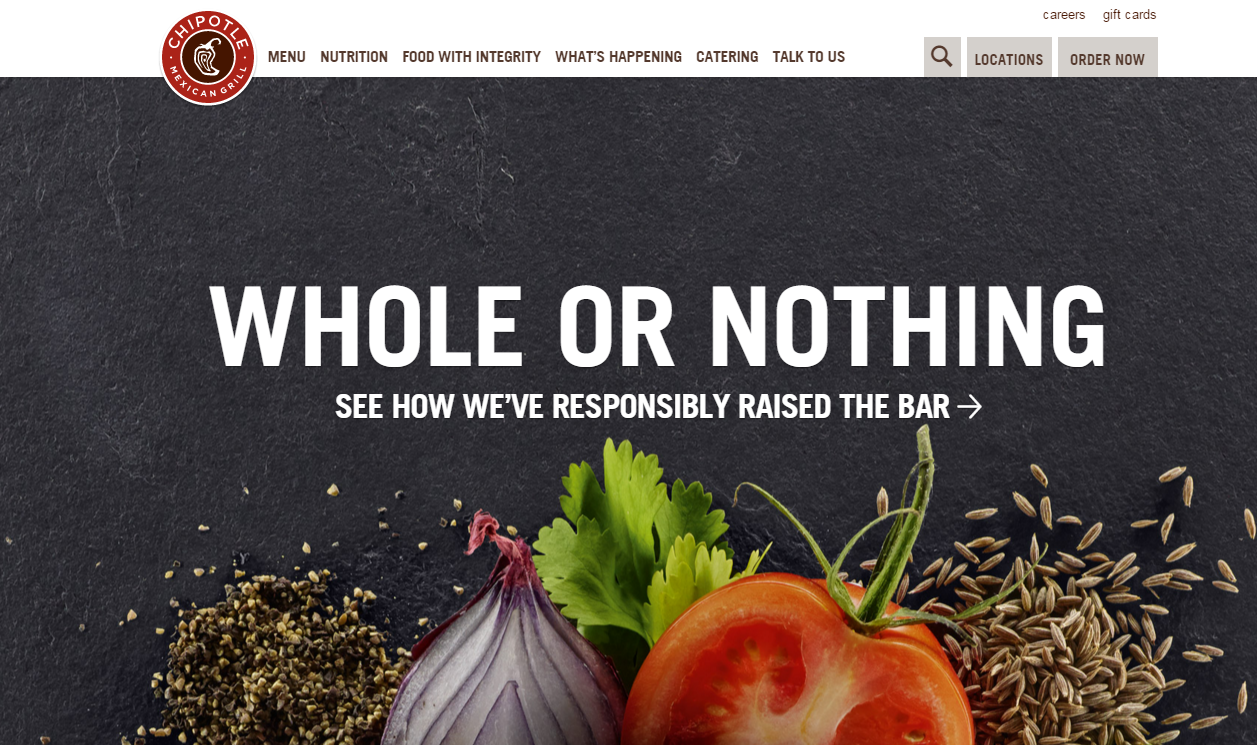
chipotleWith 39 confirmed E. coli O26 illnesses linked to Chipotle, the restaurant has information on its homepage (paradoxically under a banner of “See how we’ve responsibly raised the bar”).  However, Chipotle is verbally minimizing this outbreak, as they choose to call it a “restaurant closure update.”

The words “outbreak,” “illness” and similar are not used. Chipotle prefers to call it a “situation” and an “issue” (I sense attorneys).

The best folks in risk communication have regularly counseled that corporations experiencing a crisis should communicate regularly with their customers, and not minimize an issue.  Considering their previous experiences with Salmonella and Norovirus, Chipotle is still fairly inadequate in this area.

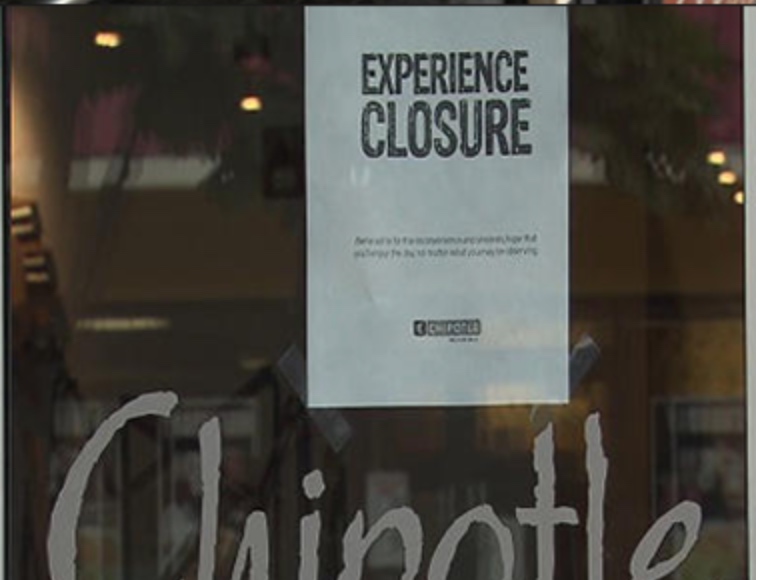
With this in mind, the signs on the doors of their closed stores:  “FYI”, “Outage”, “Don’t Panic” and “Experience Closure” sound more like an admonishment to their corporate administration, then they do words of acknowledgement and updates to loyal fans.

At least they have an empathy statement, “We offer our deepest sympathies to those who have been affected by this situation,” but I’m not feeling it.

CHipolteThe most glaring aspect of failing to reach out to those who are loyal to their burritos: Chipotle’s Twitter & Facebook feeds are silent on the issue. For a company with 715,000 followers, and 407,000 marketing tweets, that’s a huge omission.

In the absence of corporate messaging, people will make it up. Too bad Chipotle isn’t spending as much effort talking to their customers during this outbreak, as they do reaching out with their slick marketing campaigns.

When the company finally decides to jump back on the social media platform, they may have a hard time overcoming the current circulating meme:  You can’t spell Chipotle without E. coli.

Show me the data: Chipotle outbreak is caused by in restaurant vegetable processing?

I don’t know about that.

But that’s amateur epidemiologist (and president of Taylor Farms Florida) Leonard Batti’s working theory on the 39 cases of E. coli O26 outbreak linked to Chipotle (via The Packer).

Leonard Batti, president of Orlando-based Taylor Farms Florida, a division of the Salinas, Calif.-based Taylor Fresh Foods Inc., said changes in the foodservice industry likely contributed to the Chipotle outbreak.iWKad22

“It’s a classic example of what’s happening in foodservice today,” he said. “They made a decision a little less than a year ago to move away from fresh-cut and start cutting products in their facilities, somewhere around 1,700 restaurants.

“So basically, almost overnight, we had 1,700 new vegetable processors pop-up around the country. We’ve all been in fast-food restaurants. You never question their focus on food safety. I am not really surprised that we have what’s transpired with Chipotle.”

Uh, what? It sure seems like a supplier issue, not an on-site processing issue. But I’d like to see the data first.

37 now sick from E. coli O26 linked to Chipotle; focus on produce

I’d rather have microbiologically safe food.
chipotle.ad.2Health officials say 37 people have E. coli in Washington state and Oregon amid an outbreak tied to Chipotle restaurants in the Northwest, an increase from 22 cases reported earlier.

Washington health officials are still testing samples from people who have fallen ill in Clark, Cowlitz, Island, King and Skagit counties to see if they all have the same form of the potentially deadly illness.

Officials say most of those sickened by E. coli have eaten at the Mexican food chain.

Nine people in Washington and three in Oregon have been hospitalized, but no one has died. People with E. coli connected with the outbreak have ranged in age from 5 to 60.

Dr. Scott Lindquist, state epidemiologist, says knowing the type of E. coli that’s sickened nearly two dozen people will help officials determine the exact source of the illness.

Food from six Chipotle stores connected with the outbreak is being tested. Lindquist says officials may know by Wednesday what type of food tests positive for the same microorganism. They’ve asked Chipotle to turn over information about its food suppliers so officials can determine where the product came from.

chipotlawayMeanwhile, Chipote is taking a hit on its antibiotics stance.

Dan Charles of NPR writes that when you’re a nationwide food company, it can be tough to live up to your own lofty marketing slogans.

Chipotle claims to serve only “food with integrity.”

That’s not the same as microbiologically safe food.

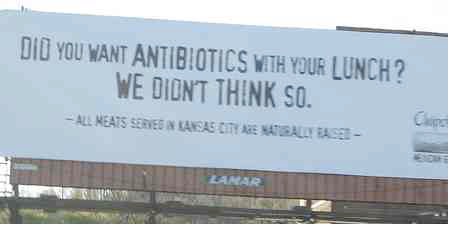
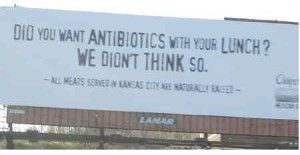
Chipotle is also having difficulty living up to another claim: Its promise to sell only meat that’s “antibiotic-free” — or “produced without the use of antibiotics.”

It’s an increasingly popular label among consumers. Chipotle has ridiculed its drug-using competitors with catchy online videos featuring cartoon versions of big meat factories, where machines inject animals with drugs that turn them grotesquely plump.

In reality, though, Chipotle’s hard line on antibiotics isn’t quite as uncompromising as the ads make it seem. The company’s suppliers can, in fact, use these drugs.

“Under our protocol, if an animal is sick and needs to be treated with antibiotics, then it’s treated with antibiotics, but then it’s removed from our program,” says Chris Arnold, Chipotle’s director of public relations.

That animal is sold to someone else, who usually pays less for the animals than Chipotle does. And Chipotle can say that its animals never get antibiotics.

“It’s easier to explain to people,” Arnold says.

Now, though, Chipotle is being forced to do a bit more explaining, because it’s running into some trouble living up to its marketing slogans: It’s running into a pork shortage.

A lot of farmers don’t want to raise pigs the way Chipotle demands. It’s not so much because of restrictions on antibiotics. Chipotle also requires suppliers to let pigs root around outdoors or in buildings with dirt floors.

So to get enough pork, Chipotle has turned to a British supplier, named Karro.

And Karro has a different policy on antibiotics. It treats pigs when they get sick, and when they recover, those pigs go right back into the regular pork supply.

Some will become Chipotle’s carnitas. Chipotle restaurants that serve pork from this supplier will have a little sign explaining how that pork is different.

Actually, the pork itself isn’t different at all. There shouldn’t be traces of antibiotics in any of it.

Veterinarian Gail Hansen points out that such residues are against the law in all meat, “so you’re not eating antibiotic-laden meat.”

 

23 sick: It’s E. coli O26 at Chipotle, stock falls

I never liked Chipotle. How can that much smugness and superiority be crammed into one restaurant in Manhattan, Kansas?

chipotlawayBut when Amy was pregnant with Sorenne, she had Chipotle cravings and I would dutifully comply.

(I had a brief procedure at the hospital this a.m. that involved knocking me out, and when the nurse informed me I could go and Amy was there to pick me up, she asked if I wanted to finish my tea. I said, no, she’s here, I better go.

She said I was an obedient husband.

I said no, just learned a — little –bit over the years).

After 23 cases of what is apparently E. coli O26 linked to Chipotle restaurants led to the voluntary temporary closure of 43 of its Pacific Northwest eateries, shares in the company went down.

“We assume this outbreak is much broader than we’ve seen,” said Dr. Katrina Hedberg, Oregon‘s state health officer and epidemiologist.

JoNel Aleccia of The Seattle Times reports that in Oregon, health officials say they’ve identified the outbreak strain as E. coli O26, one of several types of Shiga toxin-producing bacteria that can cause severe illness. E. coli O26 was linked to an outbreak tied to raw clover sprouts that sickened 33 people who ate at Jimmy John’s restaurants in 2012, according to the Centers for Disease Control and Prevention.

Washington officials have not yet named the specific bug.

“Right now, we don’t know whether all of the cases identified are even going to turn out to be the same strain,” said Dr. Marisa D’Angeli, Washington state medical epidemiologist. Some cases may turn out to be E. coli O157:H7, a strain often associated with undercooked ground beef, while others may be E. coli O26 — or something else.

chipotleWashington state epidemiologist Dr. Scott Lindquist says more people are being tested.

Laura Ries, president of Atlanta marketing strategy firm Ries & Ries, said the decision to immediately close the 43 restaurants in Washington and Oregon will help the brand in the long term. She says the chain “went above and beyond what they needed to do.

Attorney Bill Marler of Seattle law firm Marler Clark who is involved in other lawsuits against Chipotle restaurants, agreed, and says people should not assume a company that focuses on local and fresh ingredients is going to be immune from food safety issues.

But he says three cases of foodborne illness in a few months shows Chipotle is not paying attention to food safety like it should.

In September, more than 60 people who ate at Chipotle restaurants in Minnesota were sickened by Salmonella, and in August, nearly 100 customers and staff were infected by norovirus at a Chipotle restaurant in Simi Valley, California.

One new case was reported in Oregon on Monday, bringing the case count in the state to four people, including two who were hospitalized. There were no new cases in Washington state, where 19 have been sickened, including seven hospitalized.

“This is a refreshing company to work with,” Lindquist said. “They want to get to the bottom of this.”

Health officials suspect a produce item was to blame, such as leafy greens, tomatoes, cilantro or parsley. Beef is also associated with E. coli, which lives in the intestinal tracts of cattle. But it’s highly unlikely that all six locations failed to thoroughly cook the meat, Marler said.

Heat kills E. coli. But produce is eaten raw. If it’s contaminated, it’s difficult to clean it with water.

And now, a Chipotle update: 22 sick from E. coli as Chipotles close in Ore., Wash. amid investigation

A number of Chipotle restaurants across the Northwest abruptly closed late Friday afternoon.

portland-press-herald_3512878On Saturday morning, the Oregon Health Authority said they were investigating a possible E. coli outbreak at Oregon and Washington Chipotles. Three cases in Oregon and 19 in Washington were reported, and one-third of those people were hospitalized, according to OHA spokesman Jonathan Modie.

People in Clackamas and Washington counties in Oregon, and Clark, King, Skagit and Cowlitz counties in Washington have reported symptoms of Shiga toxin E. coli (STEC) infection, according to the OHA.

Chipotle released the following statement Saturday and said all stores near where the illnesses were reported were temporarily closed.

“The safety and wellbeing of our customers is always our highest priority. After being notified by health department officials in the Seattle and Portland, Ore. areas that they were investigating approximately 20 cases of E. coli, including people who ate at six of our restaurants in those areas, we immediately closed all of our restaurants in the area out of an abundance of caution, even though the vast majority of these restaurants have no reported problems. We are working with health department officials to determine the cause of this issue. We offer our deepest sympathies to those who have been affected by this situation.” 

Chipotle restaurants from the Portland metro area all the way up to Seattle closed their doors. Adding to the mystery were the signs found on the doors.

“We’re sorry for the inconvenience and sincerely hope that you’ll enjoy the day no matter what you may be observing,” read the sign posted at the PSU Chipotle.

“Don’t panic … due to an equipment issue we are unable to open at this time … order should be restored to the universe in the very near future,” read the sign posted at the Chipotle in Northwest Portland.

5 sick with E. coli: Chipotle still sucks at food safety

The Skagit County Department of Public Health in Washington state announced Friday that it has closed Chipotle Mexican Grill in Burlington pending an investigation of several E. coli infections among recent diners.

chipotle.ad.2Of five cases under investigation since Oct. 15, four individuals were hospitalized, according to the health department news release. Results of specimens sent to the state health lab for analysis are expected early next week.

64 sick: Tomatoes fingered as Salmonella source in Minnesota Chipotle outbreak

As the number of Americans sick from Salmonella linked to Mexican cucumbers reached 418, tomatoes have been identified as the source of a Salmonella outbreak linked to Chipotle restaurants in Minnesota.

lettuce.skull.e.coli.O145So much for the wife’s tomato and cucumber salad, with olive oil and salt.

The Minnesota Department of Health reports tomatoes have been identified as the source of the Salmonella Newport outbreak that has sickened dozens of people who ate at Chipotle restaurants in Minnesota since late August. Investigators are working with state and federal partners to trace the tomatoes back to the farm of origin.

Since the outbreak was reported last week, additional illnesses have been confirmed by MDH.  A total of 64 cases and 22 locations now have been linked to the outbreak [locations are listed below]. Nine people have been hospitalized; all are recovering. Meal dates for the cases range from August 16 to August 28 and people became ill between August 19 and September 3. The cases range in age from 10 to 69 years and are from 13 metro counties and several greater Minnesota counties.

“We expected to see additional cases because it can take up to 10 days for symptoms of Salmonella to appear, another few days to a week before people go to their doctors and the cases get reported to us,” said MDH Epidemiologist Dana Eikmeier. “However, there is no longer a risk of Salmonella from this particular product at Chipotle.”  The company has switched suppliers for its tomatoes and implicated product was removed from stores.