Powell and Chipotle: My job is to make it microbiologically safe. Then you can add the adjectives

Samantha Allen of the Daily Beast chatted with me on the phone this morning (my time) and she got it pretty much right so I’m not going to change anything.
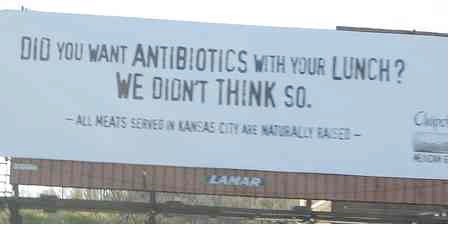
chipotle_ad_2Except a few superfluous notes.

Sorenne wiped out on her scooter yesterday as we came home from school.

The worst thing I could have said was, I told you so.

I didn’t.

I asked her to pull herself together, and we’d go inside and chill (it’s summer here, quite hot).

As Samantha writes, Chipotle’s multistate E. coli nightmare continues, and food safety advocates say the outbreak was destined to happen.

Dr. Douglas Powell saw the Chipotle E. coli outbreak coming eight years ago.

In 2007, Powell, a former Kansas State University food safety professor who now publishes the popular and appetizingly-named Barfblog, was turned off by the growing chain’s emphasis on “naturally-raised meats” and “organic” ingredients.

“I’m never eating there again,” he declared in a Barfblog post.

With the Centers for Disease Control and Prevention (CDC) now reporting 52 cases of E. coli-026 infections, including 20 hospitalizations, linked to Chipotle restaurants across nine states, Powell may have dodged a bullet—or, at least, some projectile vomit—by swearing off the foil-wrapped burritos. In fact, he all but predicted this outcome.

“Kudos to Chipotle for capitalizing on hucksterism,” he explained at the time, citing what he perceived as the chain’s overuse of buzzwords. “But given the ubiquitous outbreaks of E. coli and Salmonella on spinach, lettuce, and tomatoes, I choose to purchase food from those who value and promote microbiologically safe food.”

In 2008, when Chipotle announced that it would purchase more locally-raised produce, Powell cautioned again, “I’m all for local food, as long as someone is checking to ensure the microbiological safety of fresh produce. Local does not automatically mean safe.”

As 2016 approaches, the chips are down for Chipotle. The company’s stock has taken a 25 percent nosedive over the last two months, as reports of the rare strain of E. coli continue to emerge.

In early November, the CDC and FDA investigated reports of infection linked to Chipotle restaurants in Washington and Oregon. More cases from the same window continued to be reported throughout the month and, on December 4th, the CDC updated the full list to include reports of illness in California, Illinois, Maryland, Minnesota, Ohio, New York, and Pennsylvania.

Earlier this week, in what appears to be an unrelated incident, 80 (140) Boston College students, including several members of the men’s basketball team, fell ill after eating at Chipotle. By Wednesday, the count rose to 120 and the presence of norovirus, which causes vomiting and diarrhea, was confirmed. It’s not E. coli but it is bad timing.

doug.hockey.2.sep.15In an attempt to rescue his company’s sagging public reputation, Chipotle founder and co-CEO Steve Ells is promising Wall Street that change is coming.

“We have this desire to be the safest place to eat,” he told the Bernstein Consumer Summit on Tuesday. “We’re serving extraordinary quality ingredients, and that’s been something in place for many, many years now, and we’re the best in the world at that. We’re going to be the best in the world at food safety, and we’re taking this very, very seriously.”

As Nation’s Restaurant News reported, Ells announced at the summit that Chipotle will now be preparing tomatoes, lettuce, and cilantro in a commissary and using a “sanitary kill step” to reduce the risk of foodborne illness. The company has also announced an improved food safety program that includes more rigorous testing of fresh produce and better internal training for employees.

But Powell believes that Ells’ commitment to “quality ingredients” shouldn’t have preceded Chipotle’s heightened focus on food safety.

“The program’s nice,” he told The Daily Beast, wryly adding, “I wonder why they didn’t do it before.”

In fact, two of the ingredients that Chipotle will now be preparing in a commissary were ones that Powell highlighted back in 2007 as risk factors for foodborne illness at the fast casual chain: lettuce and tomatoes.

Powell said that he’d leave the final conclusions to epidemiological experts on the scene, but did note which ingredients are most likely to present an E. coli risk: “Besides lettuce and tomatoes, it can often be things like herbs, like cilantro or parsley. I don’t know if they’re used in the burritos or not because I don’t really go there.” (Chipotle’s ingredients list does not include parsley but cilantro can be found in the restaurant’s salsa, rice, and guacamole.)

Another possible warning sign came in September of this year, when Minnesota health officials determined that some of the restaurant’s tomatoes were the cause of 64 Salmonella infections in the state this summer. Nine people were hospitalized and the company switched suppliers.

On Wednesday’s edition of Barfblog, Powell’s long-simmering beef with Chipotle boiled over into a scalding “I told you so” post, in which he reviewed his long history of criticism and chastised the chain for its handling of the current crisis.

“This is a company that has focused on sound bites rather than microbial food safety,” he alleged in our interview.

When asked what steps the restaurant had taken to ensure the microbial safety of its ingredients prior to the newly-announced program, Chipotle spokesperson Chris Arnold told The Daily Beast, “That varies based on individual ingredients, though all of our practices have always been very much within industry norms. It’s important to note that restaurant practices are regulated by health codes, and restaurants are routinely inspected by health officials. Everything we have done in our supply chain and in our restaurants has been within industry norms.”

Arnold added, “In addition to testing conducting by health officials, we have tested thousands of samples of food and surface areas in restaurants that have been linked to this, and none of those tests have shown any E. coli.”

It is a distinct possibility that an offending ingredient in the current E. coli cases will never be identified. The company has publicly stated that “no ingredients that are likely to have been connected to this incident remain in Chipotle’s restaurants or in its supply system.”

And CDC spokesperson Tom Skinner told The Daily Beast, “We have not pinpointed a specific food source. And the fact is we may never be able to identify or pinpoint a specific food source from the restaurant.”

With no answers in sight, Chipotle is left to battle for its customers. The company is predicting an eight to 11 percent drop in sales for the fourth-quarter and cancelling projections of a sales increase in 2016. Chipotle told AdAge that only 57 percent of its customers were aware of the E. coli issue, as if that were heartening news. But in its response, the company has also been pushing back on the media and even the CDC—both risky moves in the midst of a PR crisis.

sorenne.hockey.puck.nov.15As Fortune reported, Chief Financial Officer Jack Hartung complained about “sensational headlines” at an investor conference. He also claimed that the CDC is partially responsible for Chipotle’s current woes: “It’s been fueled by the sort of unusual, even unorthodox way the CDC has chosen to announce cases related to the original outbreak in the Northwest. They’ve done that a couple of times now and they’re not announcing new cases—they’re simply announcing new reporting to them from local health agencies.”

It is true that the CDC has posted at least seven updates on the situation but that is not a break from convention so much as it is a reflection of the way an E. coli outbreak works. So far, the earliest infection date the CDC has on record is October 19th and the latest is November 14th but, as the agency notes, illnesses after November 11th “might not yet be reported due to the time [two to three weeks] it takes between when a person becomes ill and when the illness is reported.”  This slow trickle of information is typical for a multistate foodborne disease outbreak.

The CDC told The Daily Beast directly that there is nothing unusual about their handling of the Chipotle-related outbreak. Said Skinner, “We are investigating this outbreak just like any other foodborne disease outbreak that we investigate and we’re posting our updates the same way we post all of our updates. We’re not doing anything new, or out of the ordinary, or unusual here investigating this outbreak and providing updated information about [it.]”

When asked whether Chipotle stood by Hartung’s comments, Arnold said he was unsure of their specific context, adding, “We have been working closely with CDC throughout this incident and continue to do so. While we might not always agree with their decisions regarding updates, we fully understand their rationale and the charge they have to ensure public health.”

In the broader context of foodborne illness in the U.S., the 52 cases at Chipotle are akin to a single grain of rice in a tub. As Chipotle was sure to highlight in its latest press release, 48 million Americans come down with a foodborne illness every year, according to CDC estimates, including 265,000 cases of E. coli. More worryingly, 128,000 people a year are hospitalized due to foodborne illness and 3,000 people die. Fifty-two cases is an infinitesimal fraction of these numbers.

But as was the case with the Blue Bell Listeria outbreak or the Costco Rotisserie Chicken Salad E. coli investigation, multistate incidents tied to a specific brand can quickly erode customer trust.

“Making your customers sick is really bad for business,” Powell told The Daily Beast, “and it’s just not a nice thing to do.”

Going forward, Powell hopes that restaurants can learn from the Chipotle situation that food safety is just important to advertise as food quality.

“For any company, if you really want public trust you have to market food safety at retail,” he said. “If you go to retail, whether it’s a supermarket or a fast-food joint, you’re marketed in so many buzzwords except ‘microbiologically safe.’”

And despite his well-known aversion to Chipotle, Powell is fine with others dining there so long as they don’t read “local,” “fresh,” and “organic” as synonyms for “safe.”

“It’s not my job to make value judgments for other individuals,” he said. “My job is to make sure that it doesn’t make them barf. So above everything else, it has to be microbiologically safe. Then you can add the adjectives.”
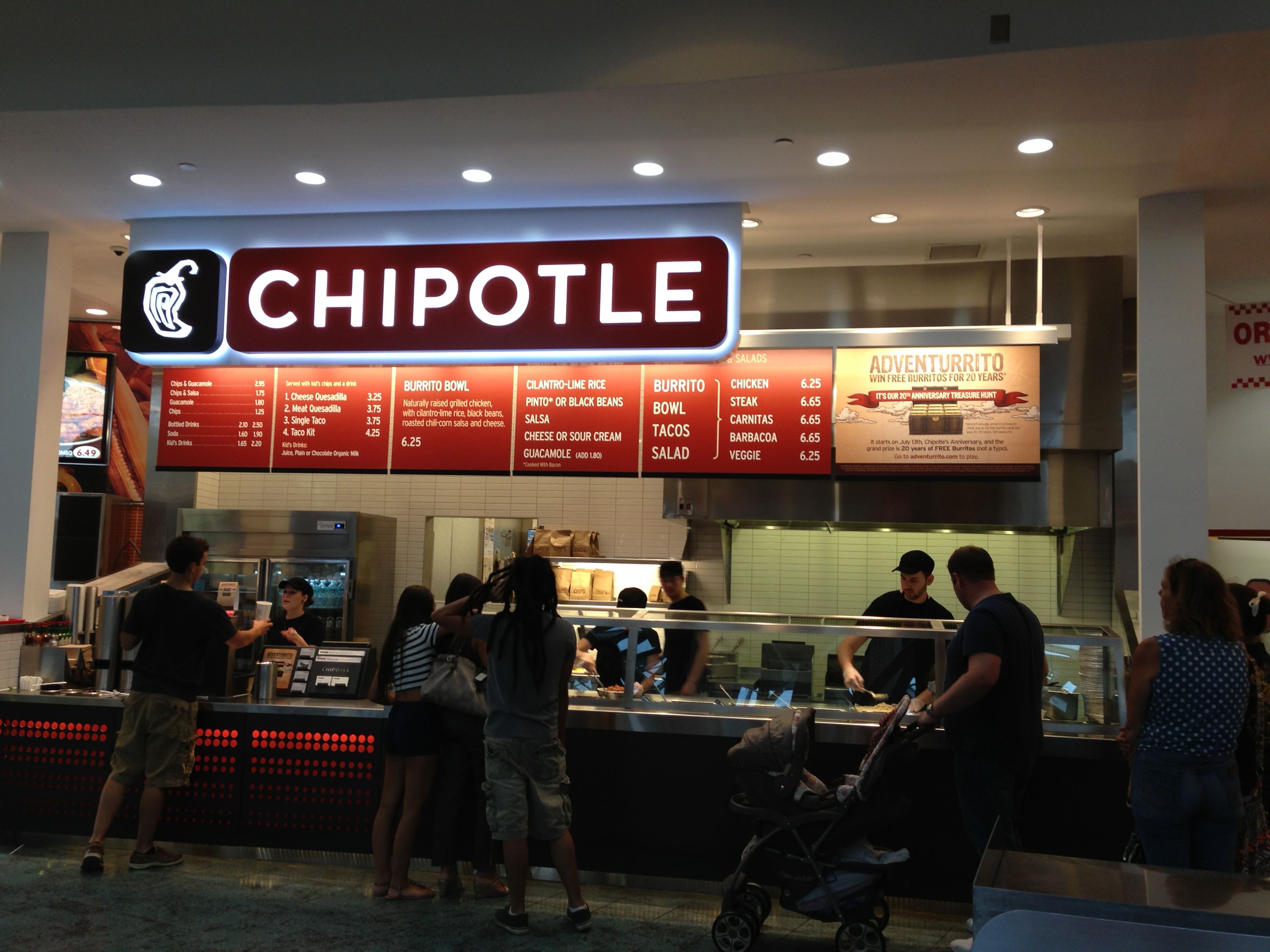
Chipotle seen and heard: apologies, stock prices, recovery and another outlet shut

The saga of Chipotle’s food safety woes continued today. This morning, according to Business Insider, Chipotle CEO Steve Ells hit the Today Show to talk about one of their current outbreaks (the E. coli O26 one, not the norovirus one).

“This was a very unfortunate incident and I’m deeply sorry that this happened,” Ells said on NBC’s Today Show. “But the procedures we’re putting in place today are so above industry norms that we are going to be the safest place to eat.” Ells said it’s a “really tough time” for Chipotle.Chipotle_Brandon.jpeg

“We have closed our restaurants out of an abundance of caution and tested all the ingredients, surfaces — thousands and thousands of tests — and they call came back negative for E. coli,” Ells said.

A team of epidemiologists and food-safety experts has investigated the delivery, handling, cooking, and serving of all 64 of Chipotle’s ingredients, and developed better food-safety standards for the chain going forward.

“It has caused us to put in practices … that will put us 10 to 15 years ahead of industry norms and I believe this will be the safest restaurants to eat at,” Ells said.

I’m still not sure what this means. Or what it is that Chipotle plans to do that is so revolutionary, but since food safety isn’t a competitive issue; I’m sure they’ll share the details.

In related news, Chipotle’s stock rebounded with a five per cent bump following Ells pledge for better food safety.

James Surowiecki of the New Yorker compares Chipotle to Jack-in-the-Box which still carries stigma over 20 years after a devastating and tragic outbreak.

Chipotle can take solace in the knowledge that Jack in the Box did eventually recover, and indeed prospered. And Chipotle has advantages that Jack in the Box did not. Its reputation for quality before the crisis was stronger, which means that the reservoir of good will among customers is higher. It is also the market leader in the fast-casual category—a sector it essentially created—rather than an also-ran, as Jack in the Box was. Still, those advantages only go so far. There are now myriad good fast-casual alternatives in much of the country. Customer loyalty is no longer what it was—consumers are far more likely to abandon brands when they disappoint. And while Chipotle has said that it is introducing more stringent testing and reassessing its food-handling practices, its reliance on local suppliers means that the task of insuring the integrity of its supply chain will be harder than what Jack in the Box faced.

Oh, and according to Bloomberg, one of Chipotle’s Seattle outlets that was closed last month during the O26 investigation, and then reopened, was closed again today after an inspector found deficient handling practices including temperature control issues.

The public-health department for Seattle and King County closed the restaurant, which was located in the city’s South Lake Union neighborhood, according to a statement from the agency on Thursday.

In Seattle, an inspector found that food wasn’t being kept hot enough on a line that prepares takeout orders, said Chris Arnold, a spokesman for Chipotle Mexican Grill Inc. “We are looking into the cause of that and will certainly address it,” he said in an e-mail.

FiveThirtyEight analyzes Chipotle’s norovirus outbreak

I’ve been a fan of Nate Silver’s fivethirtyeight.com for a few years. It’s one of a handful of sites that I read daily. Today the numbers nerds tackled the Chipotle norovirus outbreak comparing it to other fast food outbreaks using CDC’s databases. Turns out this outbreak is unique for its size and location – at a fast food setting.Screen Shot 2015-12-10 at 10.17.38 PM

Just under 3 percent of the food-related norovirus outbreaks that the Centers for Disease Control and Prevention tracked from 2009 to 20141sickened 80 or more people. Only 1.3 percent of outbreaks sickened 140 or more people. Half of all outbreaks sickened 11 or fewer people.

It’s not just the size of the outbreak that’s unusual — it’s where it happened. Although norovirus is the most common cause of food-related illnesses nationwide (about 50 percent of outbreaks), it’s not the most common cause of illnesses at fast-food outlets like Chipotle. Since 2009, when the CDC began tracking where outbreaks occurred, fast-food restaurants have been much more likely to give their patrons salmonella than norovirus (28 percent of illnesses at fast-food chains were linked to norovirus, while 43 percent were linked to salmonella). Sit-down restaurants have the opposite risk profile (45 percent of illnesses linked to norovirus, 25 percent to salmonella).

And here’s some more context from CDC on where norovirus outbreaks happen.

Screen Shot 2015-12-10 at 10.13.16 PM


Chipotle seen and heard (there’s a lot going on)

As norovirus was confirmed at a Boston-area Chipotle (marking the 5th confirmed outbreak in the past 6 months), Chipotle officials took the airwaves to talk about how they plan on responding.

Phil Wahba of Fortune writes that cases linked to a Cleveland Circle Chipotle have climbed to 120.Chipotle_Brandon.jpeg

Boston College said Wednesday the number of students suffering from symptoms consistent with the Norovirus is now 120, up from an estimate of 30 earlier this week. The school said, “Nearly all cases are related to students who ate at the Chipotle restaurant in Cleveland Circle” last weekend. Chipotle has temporarily closed that location.

According to Nation’s Restaurant News, Chipotle plans on doing some radical things (although they have yet to reveal the details of what their new standards are).

In a presentation to Wall Street analysts at the annual Bernstein Consumer Summit in New York, officials with the Denver-based chain laid out a plan for improving food safety that they contend will put Chipotle 10 to 20 years ahead of industry norms.

“We have this desire to be the safest place to eat,” said Steve Ells, Chipotle chairman, founder and co-CEO.

Meanwhile, Chipotle is investing heavily in food safety with new protocols that will include more testing of fresh produce.

Just as suppliers are asked to meet certain standards under the chain’s Food With Integrity mission, produce suppliers will be held to higher standards in terms of food safety, Ells said.

“There will be robust testing procedures that will need to be in place for all of our suppliers, whether large or small,” he said. “Some of the smaller suppliers might have a hard time implementing these robust testing procedures initially. We’ll help them. Not all will be on board, for sure, but we think most will.”

But, because “it’s impossible to test every tomato,” the chain is taking additional operational steps, Ells said.

For example, Chipotle has begun dicing tomatoes in a commissary, putting them through a “sanitary kill step” to eliminate pathogens, and hermetically sealing them for delivery to restaurants.

I’m interested in what this sanitary kill step is, and what data they have that validates it. Is it a 5- or 7-log reduction kill step? Or a 1- to 2-log reduction one?

The PR world is analyzing Chipotle’s communications reresponse and according to CNBC, they aren’t doing great.

“They’re not going far enough,” Gene Grabowski, who runs the crisis group at kglobal, told CNBC. “They’re not painting pictures with their words,” he said. “They’re still doing too much explaining.”

They aren’t really explaining enough what they actually plan – paint the picture of a company that has a good food safety culture, and implement it.

In related news, Chipotle stocks continue to fall, but have no fear, significant traffic driving initiatives (whatever those are) will bring the people back.

In a report published Wednesday, Sara Senatore of Bernstein maintained a bullish stance on Chipotle’s stock even though she acknowledged that Chipotle’s brand has been “diminished” following the recent E. coli outbreak. However, the analyst noted that once the CDC gives the “all clear,” the company should benefit from “significant traffic driving initiatives.

Senatore said Chipotle is likely to initiate a series of initiatives including an up-tick in “traditional marketing,” including social media outreach and direct mail – which may consist of buy-one-get-one free offers and other discounting that have “proven very effective” for the company in the past. Naturally, these initiatives will result in gross margin pressure in the near term, but margin recovery should “materialize over time” as management realizes efficiencies and benefits from improvements in technology and throughput.

Here’s a significant Traffic driving initiative for you.

Boston chipotle closed after 80 illnesses; employee worked while ill

Things aren’t good for Chipotle. Here’s the list of recent outbreaks: E. coli in Seattle, Salmonella in Minnesota, Norovirus iportland-press-herald_3512878-300x235n California and E. coli O26 and in at least 9 states. All of that since July.

And now, according to NBC news, over 80 ill Boston College students (and probably others) have been linked to a eating at a Chipotle in Cleveland Circle. Environmental health folks shut the restaurant following an investigation revealed an employee worked while ill.

Not good.

City health officials ordered the outlet closed after an inspection showed the cooked chicken used to make burritos, tacos and other dishes was being kept at too low a temperature, an employee worked while showing signs of illness and because of the reports of possible foodborne illness.

Chipotle said it had voluntarily closed the restaurant in the Brighton section of the city.

“All 80 students have confirmed that they ate at the Chipotle Restaurant in Cleveland Circle during the weekend,” Boston College said in a statement.

“All have been tested for both E. coli and the norovirus. Test results will not be available for at least two days.”


From bad to worse: 30 sick linked to Boston Chipotle

Ten players from the Boston College men’s basketball team have possibly been stricken with E. coli, along with 20 other students, all possibly linked to the Cleveland Circle Chipotle Mexican Grill (turns out it was Norovirus).

chipotle.ad.2Chipotle said it had temporarily closed the restaurant.

Shares in the company fell another 6 per cent.

“We do not have any evidence to suggest that this incident is related to the previous E. coli incident,” Chipotle spokesman Chris Arnold said in an email. “There are no confirmed cases of E. coli connected to Chipotle in Massachusetts.”

Boston College officials sent alerts on Monday to students, informing them of the suspected food poisoning.

The time between ingesting E. coli bacteria and feeling sick is usually three to four days, but may be as short as one day or as long as 10 days, according to the U.S. Centers for Disease Control and Prevention. Symptoms often begin slowly with mild belly pain or non-bloody diarrhea that worsens over several days.

52 sick with E. coli O26 linked to Chiptole; tightening suppliers

As the number of confirmed cases of E. coli O26 linked to Chipotle restaurants increased to 52 in nine states, the company says it’s revamping its food-supply standards.

portland-press-herald_3512878Chipotle will work with Seattle-based IEH Laboratories and Consulting Group, unveiled a new safety program that includes improving its supply chain and doing DNA testing of produce. Chipotle also is retooling its training to help employees handle food more carefully.

“While it is never possible to completely eliminate all risk, this program eliminates or mitigates risk to a level near zero, and will establish Chipotle as the industry leader in this area,” Mansour Samadpour, head of IEH Laboratories, said in a statement.

USA Today said Chipotle Mexican Grill will soon have stricter guidelines for its suppliers that will mean the chain will be using local produce less often.

Chris Arnold, a company spokesman, said in an e-mail Wednesday that the company plans on formally releasing some of its changes in the coming days, if not sooner.

“We do expect that some of the local suppliers we have used will not meet more stringent testing standards we have put in place,” Arnold said.

More cases linked to Chipotle; some patrons aren’t concerned

As the E. coli O26 cases associated with Chipotle restaurants grows to 45 (with six additional cases linked to restaurants outside the Pacific North West) shares fall and according to Reuters, folks start talking about trust. Blue Bell is dealing with this too, but the cult of Texas ice cream eaters might be stronger than burrito lovers in college towns and the burbs. Or not.

Diners at Chipotle Mexican Grill locations on Saturday said freshness and convenience outweighed concerns about contamination following the news that food poisoning cases had erupted at the chain’s locations in six U.S. states.Screen Shot 2015-11-22 at 10.37.11 PM

“I’m not going to get flipped out by all the horrible things that could happen. I think Chipotle is cutting-edge,” said Marguerite Regan, 50, in Wichita, Kansas.

Brandon Doby, a 19-year-old Colgate University student who picked up food at a Chipotle in Syracuse, New York, said: “I’m aware of the E. coli breakout, but I’ve got bigger things to worry about than E. coli.”

Alex Boucounis, 17, who also ate at the Syracuse restaurant on Saturday, said he was concerned and planned to research exactly which stores had been hit. He said he had not realized that New York was affected.

“It tastes good. It goes down good, and it’s a lot cheaper than bar food, and it’s a lot better for you too,” he said.

“I can’t live my life worried about some minute possibility something might kill me,” said Stan Yao, 29, a Harvard Law School student.

In a statement on Friday, Chipotle said it had expanded testing of key ingredients and examined food-safety procedures in its restaurants in the wake of the outbreak.

“In practice, as someone in food safety and someone who focuses on that and as a concerned customer, I’d want to know what the specifics of that are,” said Ben Chapman, an assistant professor at North Carolina State University who studies food safety.

I was talking about the plans Chipotle lists on their website:

Chipotle is also taking significant steps to be sure all of its food is as safe as possible. Specifically, we are expanding testing of key ingredients, examining all of our food-safety procedures to find any opportunity for improvement, and are working with two renowned food safety scientists to assess all of its food safety programs, from the farms that provide our food to our restaurants.

It’s easy to talk food safety, but what does this all actually mean? Testing of what, for what? What specific food safety procedures. Some details would be nice.

E. coli O26 outbreak linked to Chipotle gets weird – and no one’s talking – but students and faculty still eat there ‘it’s life’ (sad)

It was 50 people confirmed with the outbreak strain of E. coli O26 on Nov. 12, 2015. Yesterday it was 37.

chipotle.ad.2No one knows why.

As reported on November 6, a U.S. Centers for Disease Control search of the PulseNet database identified one person in Minnesota infected with STEC O26 that has the same DNA fingerprint. This ill person did not eat at a Chipotle Mexican Grill in the week before illness onset. Minnesota’s investigation is ongoing. The illness does not appear to be linked to Chipotle Mexican Grill locations in Washington and Oregon.

CDC and state and local public health partners are continuing laboratory surveillance through PulseNet to identify additional ill persons and to interview them. Updates will be provided when more information is available. Investigators are using whole genome sequencing, an advanced laboratory technique, to get more information about the DNA fingerprint of the germ causing illnesses in Washington, Oregon, and Minnesota.

As reported by The Traveler, for many University of Arkansas students, Chipotle Mexican Grill is life. When students get hungry, they can take a short walk down Dickson Street to get a burrito that pushes the boundaries of how much food can fit in a tortilla wrap.

chipotle.ad.nov.15“We have always strived to have the highest standards in the restaurant industry as far as safety goes for our customers and our crew, and we are just going to have continue doing what we do,” said Chris Garrett, store manager at the Dickson Street location. “I cannot predict the future, but all I can say is we have different distributors than the stores in Washington and Oregon did.”

Garrett also stressed the fact that many of the items used at the Dickson Street are locally grown products.

“The majority of our rice, bell peppers, onions, lettuce comes from local resources,” Garrett said.

“Of course avocados – those come from Mexico. There are not a lot of avocado farms around here,” Garrett said.


Shit happens, but hipsters will still flock to Chipotle, even if previous outbreak was secret

Chipotle restaurants in Washington may reopen as soon as Wednesday after samples tested negative for E. coli linked to an outbreak that sickened dozens in Washington and Oregon, health officials said Monday.

chipotle.barf,nov.15Tests of thousands of produce samples turned up negative for the Shiga toxin-producing E. coli O26 bacteria tagged as the culprit, and the popular restaurant chain has gone “above and beyond” state health requirements to ensure safety, said Dr. Scott Lindquist, Washington’s epidemiologist for communicable disease.

“Do I think the food is safe? I can’t answer whether the food is safe, but I can tell you I agree with all of the steps they are taking,” Lindquist said. “We have found no food with E. coli and there doesn’t appear to be an ongoing risk at this point.”

Testing is a poor substitute for epidemiology.

Last week the chairman and co-CEO of Chipotle, Steve Ells, said in a statement, “The safety of our customers and integrity of our food supply has always been our highest priority.”

There is one case of the same strain and DNA fingerprint of E. coli in Minnesota, but that person had not eaten at a Chipotle within the week before symptoms began, therefore health officials believe this is an unrelated case. The CDC is unaware of any cases in other states.

State and local health officials continue to work with federal health officials to investigate this outbreak.