Raw is risky: 19 children develop HUS in France from E. coli O26 linked to raw milk cheese

Gabrielle Jones, Sophie Lefevre, et al report in Eurosurveillance that from 25 March to 27 April 2019, 19 suspected Shiga toxin-producing Escherichia coli (STEC) associated paediatric haemolytic uraemic syndrome (HUS) cases were notified by French hospital paediatric departments to Santé publique France, compared with 5–10 cases during the same period in previous years [1].

Thirteen cases were confirmed as serogroup O26, with whole genome sequencing (WGS) underway for strain comparison. Initial epidemiological investigations using a trawling questionnaire identified the consumption of raw cow’s milk soft cheeses (Saint-Félicien and Saint-Marcellin) as the common link for eight of these 13 cases. Trace-back investigations using supermarket loyalty cards identified a common producer (producer A) of these cheeses for three cases and on the basis of this information a recall was initiated by French health authorities on 27 April 2019 [2]. As at 27 May 2019, investigations identified 16 outbreak cases including 14 paediatric HUS cases and two cases with uncomplicated diarrhoea (one child and one adult). Investigations are ongoing for one suspected case. The 16 outbreak cases reside in six administrative regions in France. All paediatric cases are under 5 years of age; the median age is 22 months (overall age range: 6 months–63 years). Eight cases are female. Date of symptom onset was between 31 March (week 13) and 29 April (week 18). All HUS cases were hospitalised. Thirteen cases received blood and/or platelet transfusion and seven underwent haemodialysis. Six cases had neurological complications, all of them received transfusions and three also had haemodialysis.

The families of all 16 outbreak cases and the suspected case were interviewed about their at-risk exposures during the 10 days before symptom onset. Families of 16 cases (15 outbreak cases and one suspected case) reported the consumption of Saint-Félicien or Saint-Marcellin raw cow’s milk cheeses by either the case (n = 12) or household members (n = 4). One outbreak case did not report consumption of these cheeses. For the 16 cases with reported consumption of these cheeses, trace-back investigations using loyalty cards and supply data from the different shops where the caretakers reported purchasing the cheeses identified a link with producer A for 13 (all outbreak cases).

Producer A manufactured only Saint-Félicien and Saint-Marcellin cheeses. To date, no positive STEC O26 cheese or milk samples have been identified. Investigations, including sampling of the cheeses and trace-back of the milk supply chains, are ongoing.

Four outbreak cases had not consumed the cheeses themselves but a household member had. This suggests the affected child may have been infected via cross contamination (knives, cutting board, hands, etc.). None of the household members reported symptoms of illness, indicating that the cases were unlikely to have been infected by person-to-person transmission. Investigations are ongoing in an attempt to further document the exposures of these cases (consumption of cheeses or other food items cut by the knives or on the same cutting board as the suspected cheeses). Only one in 16 outbreak cases reported a family member with self-limiting diarrhoea (no stool analysis).

Note: If that many people developed HUS, hundreds could have potentially been sickened.

Just cook it doesn’t cut it: 196 sick from E. coli O103 linked to ground beef

The U.S Centers for Disease Control (CDC) reports several states, and the U.S. Department of Agriculture’s Food Safety and Inspection Service are investigating a multistate outbreak of Shiga toxin-producing Escherichia coli O103 infections linked to ground beef.

Ill people in this outbreak ate ground beef from many sources. Some ground beef has been recalled, but more product contaminated with E. coli O103 may still be on the market or in freezers.

Restaurants, retailers, and institutions should not sell or serve the following recalled ground beef products because they may be contaminated with E. coli O103 and could make people sick:

Grant Park Packing in Franklin Park, Ill., recalled 53,200 pounds of raw ground beef products on April 24, 2019.

Recalled products were sold in 40-lb. bulk cardboard boxes of “North Star Imports & Sales, LLC. 100% GROUND BEEF BULK 80% LEAN/ 20% FAT” marked “FOR INSTITUTIONAL USE ONLY” with lot code GP.1051.18 and pack dates 10/30/2018, 10/31/2018, and 11/01/2018.

Recalled products are labeled with establishment number “EST. 21781” inside the USDA mark of inspection on the boxes.

K2D Foods, doing business as Colorado Premium Foods, in Carrollton, Ga., recalledexternal icon approximately 113,424 pounds of raw ground beef products on April 23, 2019.

Recalled products were sold in two 24-lb. vacuum-packed packages in cardboard boxes containing raw “GROUND BEEF PUCK” with “Use Thru” dates of 4/14/19, 4/17/19, 4/20/19, 4/23/19, 4/28/19, and 4/30/19.

Recalled products are labeled with establishment number “EST. 51308” inside the USDA mark of inspection.

Investigators continue to trace other sources for ground beef eaten by ill people in this outbreak, and more product contaminated with E. coli O103 may be recalled.

Cook ground beef hamburgers and mixtures such as meatloaf to an internal temperature of 160°F. Use a food thermometer to make sure the meat has reached a safe internal temperature. You can’t tell whether meat is safely cooked by looking at it.

For hamburgers, insert thermometer through the side of the patty until it reaches the middle.

(Piping hot doesn’t cut it, UK).

‘Contamination of wheat poses a foodborne illness risk’

Following up on Chapman’s coverage of the current outbreak of E. coli O26 in flour that has sickened at least 17 people, researchers have concluded that little information is available regarding microbial pathogens in wheat and wheat flour. Information about microbial pathogens in wheat is needed to develop effective methods to prevent foodborne illnesses caused by wheat products.

From 2012 to 2014, we conducted a baseline study to determine the prevalence and levels of pathogens in wheat samples taken before milling. A total of 5,176 wheat samples were tested for enterohemorrhagic Escherichia coli (EHEC), Salmonella spp., Listeria spp., and L. monocytogenes. Positive samples were assayed for most probable numbers (MPNs), and isolates were fingerprinted by pulsed-field gel electrophoresis (PFGE). The rate of detection of each pathogen tested was as follows: Salmonella was in 1.23% of the samples (average level of 0.110 MPN/g), EHECs occurred in 0.44% of the samples (0.039 MPN/g), and Listeria spp. occurred in 0.08% of samples (0.020 MPN/g), but L. monocytogenes was not detected.

The PFGE assessment found a high diversity for all organisms. All EHEC PFGE patterns (22 of 22) were unique, and 39 of 47 Salmonella patterns (83%) were unique. These results indicate a diverse background of naturally occurring organisms. These findings suggest that the microbial contamination is coming from diverse sources and provide no evidence in support of a specific pathogen load. Altogether, our surveillance study shows that contamination of wheat with pathogens is clearly evident and poses a foodborne illness risk.

Occurrence and levels of salmonella, enterohemorrhagic Escherichia coli, and listeria in raw wheat

June 2019

Journal of Food Protection vol. 82 no. 6 pp. 1022-1027

Samuel Myoda, Stefanie Gilbreth, Deann Akins-Leventhal, Seana Davidson, and Mansour Samadpour

https://doi.org/10.4315/0362-028X.JFP-18-345

https://jfoodprotection.org/doi/full/10.4315/0362-028X.JFP-18-345

Tangled up in blue: Finding food safety purpose

I used to write up the U.S. Centers of Disease Control with the enthusiasm of a teenage going on a date.

It was current, it was confident and it was cool.

Now, not so much.

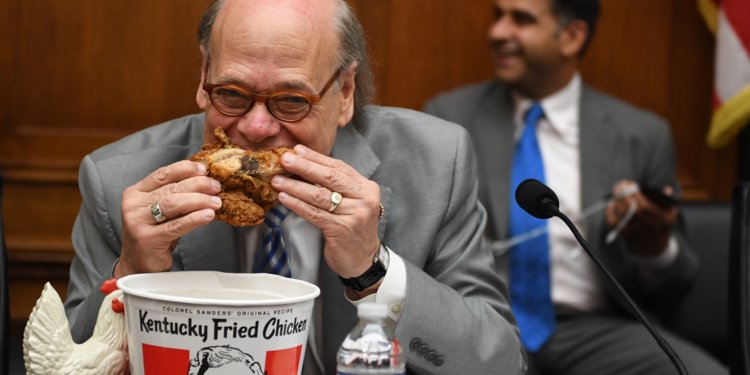
Maybe it’s just me, but I’m tired of watching Salmonella and other foodborne illnesses flatline, even if a Senator brings a day-old bucket of KFC into a hearing to make some sort of metaphorical point.

I’ll say the same thing I say every year: the numbers aren’t changing because the interventions are in the wrong place.

When national organizations go agenst the World Health Organization and don’t mention on-farm food safety, then they’re missing the source.

According to Food Business News, illness was more prevalent in 2018, according to preliminary surveillance data from the Centers for Disease Control (C.D.C.) and Prevention. Incidents of Campylobacter, Salmonella and Cyclospora infections increased last year, according to FoodNet 2018 preliminary data released by the C.D.C. The increases were due, in part, to more infections being diagnosed using culture-independent diagnostic tests (C.I.D.T.s), but the C.D.C. noted the possibility that the number of infections actually is increasing.

Campylobacter infections were the commonly identified infection in FoodNet sites since 2013 with poultry being the major source of infection.  More infections are being diagnosed, the C.D.C. said, because more laboratories use C.I.D.T.s to detect Campylobacterand other pathogens. C.I.D.T.s detect the presence of a specific genetic sequence of an organism. The tests produce results more rapidly because they do not require isolation and identification of living organisms.

Reducing Campylobacter infections will require more knowledge of how case patients are becoming infected, the C.D.C. said. The pathogen can contaminate raw chicken or poultry juices, and cross-contamination can impact hands, other foods or kitchen equipment.

“Focusing on interventions throughout the food production chain that reduce Campylobacter bacteria in chicken could lead to fewer illnesses in people,” the C.D.C. said. “Whole genome sequencing might help us figure out the contribution of various sources and help target interventions.”

Salmonella infections, the second most common infection, also appear to be increasing, according to the preliminary report. The most common Salmonella serotypes were Enteritidis, Newport and Typhimurium. Additionally, Enteritidis infections are not decreasing despite regulatory programs aimed at reducing Salmonella in poultry and eggs.


Just cook it doesn’t cut it: 6-year-old in France dies from E. coli

(Thanks to our French colleague, Albert, who forwarded this)

Matthew, a child “full of life, very intelligent despite his disability ” according to his mother, Angélique Gervraud, died February 22, 2019 at the Children’s Hospital of Bordeaux. He had been sick for more than a month after eating an undercooked burger at the beginning of January 2019 says his mom in a forum posted on his Facebook page.

It’s probably poorly cooked mince that has contaminated Matthew, his mom is sure. “Matthew only ate that,” she explains. Matthew developed haemolytic uremic syndrome (HUS) usually linked to shiga-toxin producing E. coli.

And because food safety is simple – that’s sarcasm, which the French may not get —  the transmission of the disease can be avoided by simple actions, which advises the site Public Health France:

  • Cook meat thoroughly and especially minced meat at over 65 ° C(The Ministry of Health published a note to the attention of the professionals of the collective catering from February 2007, with the appearance of the first cases)
  • Avoid giving raw lai, and cheeses made from raw milk to young children. Prefer baked or pasteurized pressed cheese
  • Always wash your hands before cooking
  • Keep cooked and raw foods separately
  • Consume quickly and well warmed leftover food.
  • Do not give untreated water to children or the elderly.

In 2017, 164 cases of HUS were reported in children under 15 years of age. There are a hundred in France in general every year.

Always tragic: Washington state third-grader’s death may be linked to E. coli

Wendy Culverwell of the Tri-City Herald reports a Pasco elementary student has died from apparent complications of E. coli.

Ismael Baeza Soto, 9, died Feb. 11 at Sacred Heart Medical Center in Spokane, apparently of kidney failure brought about by E. coli.

The Benton-Franklin Health District is investigating the source of what sickened the boy. So far, it appears to be an isolated case that hasn’t been linked to other investigations, though future testing could change that.

“We have not identified any ongoing public health threats,” said Dr. Amy Person, the public health officer for the Mid-Columbia.

Trade live cattle, introduce next E. coli O26 sequence type

Shiga toxin–producing Escherichia coli serogroup O26 is an important public health pathogen. Phylogenetic bacterial lineages in a country can be associated with the level and timing of international imports of live cattle, the main reservoir.

We sequenced the genomes of 152 E. coliO26 isolates from New Zealand and compared them with 252 E. coli O26 genomes from 14 other countries. Gene variation among isolates from humans, animals, and food was strongly associated with country of origin and stx toxin profile but not isolation source. Time of origin estimates indicate serogroup O26 sequence type 21 was introduced at least 3 times into New Zealand from the 1920s to the 1980s, whereas nonvirulent O26 sequence type 29 strains were introduced during the early 2000s.

New Zealand’s remarkably fewer introductions of Shiga toxin producing Escherichia coli O26 compared with other countries (such as Japan) might be related to patterns of trade in live cattle.

Use of genomics to investigate historical importation of shiga toxin-producing Escherichia coli serogroup O26 and nontoxigenic variants into New Zealand

March 2019

Emerging Infectious Diseases vol. 25 no. 3

Springer Browne1, Patrick J. Biggs, David A. Wilkinson, Adrian L. Cookson, Anne C. Midwinter, Samuel J. Bloomfield, C. Reed Hranac, Lynn E. Rogers, Jonathan C. Marshall, Jackie Benschop, Helen Withers, Steve Hathaway, Tessy George, Patricia Jaros, Hamid Irshad, Yang Fong, Muriel Dufour, Naveena Karki, Taylor Winkleman, and Nigel P. French

https://wwwnc.cdc.gov/eid/article/25/3/18-0899_article

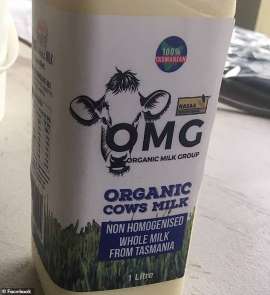
E. coli in organic milk, kefir, sparks two separate recalls in Australia

Mungalli Creek Kefir 1 L has been recalled in Cairns and Townsville due to the possible presence of E. coli, while Organic Milk Group is recalling OMG Organic Milk 1 L in Tasmania with a best before date of February 4, 2019, also for the possible presence of E. coli.

No info on what type of E. coli was found.

North Koreans ordered to produce impossible amount of human manure every day to help save agriculture

Fox News is not the, uh, most reliable source, but they report North Korean dictator Kim Jong Un has commanded every citizen to turn over an impossible 200 pounds of human manure a day for fertilizer in an effort to revitalize the communist country’s struggling agriculture.

The country’s leader first made agriculture the forefront of the economic recovery during the New Year’s address.

This led to the mass mobilization of the population to fulfill the government’s wishes and ensure the human manure quotas are met. If the people don’t meet their daily quota, they have to supply over 600 pounds of compost or livestock manure, according to Radio Free Asia.

“The entire population has been mobilized to produce manure as the first major task of the year,” a source told the outlet. “The authorities in each local region task factories, institutions and citizens groups with assigning production quotas to each individual.”

“They are demanding that each person produce 100kg of human feces per day, or about 3 tons per month,” the person added. “But how on earth can it be possible for one person to make 3 tons of human feces and deliver it?”

The absurdly-high quotas are forcing the people to either collect the human manure in cold or pay cash to others for the manure.

“Most people can’t [make or collect] 100kg per day, so they end up giving what they think is sufficient. The quota is therefore meaningless,” the source told the outlet.

Facebook don’t know food safety: Zuckerberg once served Dorsey cold, hand-killed goat

Twitter CEO Jack Dorsey recalls as his “most memorable encounter” with Facebook boss Zuckerberg, in a new interview with Rolling Stone.

“He made goat for me for dinner. He killed the goat,” Dorsey says, before clarifying that he didn’t actually witness the slaughter. “He killed it before. I guess he kills it. He kills it with a laser gun and then the knife.”

When the interviewer rightly questions Dorsey’s use of the term “laser gun”, Dorsey says: “I don’t know. A stun gun. They stun it, and then he knifed it. Then they send it to a butcher.”

Though it was undoubtedly a smart move for Zuckerberg to send the animal to be prepared by a professional after he killed it, he might have also considered hiring a chef, with Dorsey indicating the meat wasn’t exactly cooked when it was served.

“I go, ‘We’re eating the goat you killed?’ He said, ‘Yeah.’ I said, ‘Have you eaten goat before?’ He’s like, ‘Yeah, I love it.’ I’m like, ‘What else are we having?’ ‘Salad.’ I said, ‘Where is the goat?’ ‘It’s in the oven.’

“Then we waited for about 30 minutes. He’s like, ‘I think it’s done now.’ We go in the dining room. He puts the goat down. It was cold. That was memorable. I don’t know if it went back in the oven. I just ate my salad.”

Being ruminants, goats are a significant source of Shiga-toxin producing E. Coli (STEC) with estimates of 10 per cent contaminated.

A pledge to only eat animals he personally killed was part of Zuckerberg’s yearly self-imposed challenge in 2011. Laser guns weren’t specifically mentioned in the challenge, but at this point nobody would be surprised if he used one. Apparently the goat was one of six he kept at his Palo Alto property.