HSE investigates highly contagious and dangerous case of e coli in Laois, Ireland

The Health Service Executive is investigating a suspected case of E coli in a baby in Laois.

Sinead Moore of RSVP Live reports the HSE launched an investigation late last week after a potentially serious strain of the bacteria was suspected in the Irish infant.

The strain, called VTEC or verotoxigenic E coli, comes from contact with faeces of healthy farm animals. It can be spread through children’s shared toys or during nappy changing.

The child is understood to have since been diagnosed with the less dangerous E coli bacteria, the Leinster Express reports.

The bacteria can cause vomiting and diahorrea.

As part of the investigation, the creche the baby attends, Sonas Community Childcare Centre in Mountmellick Co Laois was contacted last Friday to raise awareness among staff and parents and to examine if other children attending the creche had any similar symptoms.

Two gorillas at Milwaukee zoo likely died from water contaminated with E. coli

Two gorillas at the Milwaukee County Zoo likely died after ingesting water contaminated with E. coli, according to zookeepers.

Cassius, an adult male, died on April 12, and Naku, a 17-year-old female western lowland gorilla, died on April 29, the zoo said in a press release.

Autopsy results for the gorillas show that they died of gastrointestinal infections believed to have been caused by E. coli in their water supply, according to the zoo.

The water systems in the gorilla and bonobo areas have been disinfected, the zoo said, adding that the water supply available for consumption by the public was never affected.

Zookeepers are also using new protocols to disinfect produce, which can be another source of E. coli, according to the release.

While all animals, including gorillas and even humans, have healthy E.coli in their gut, some variants of E. coli can cause intestinal damage and disease, the zoo said.

Naku had been euthanized after veterinarians found that a portion of her intestine was no longer functioning, ABC affiliate WISN in Milwaukee reported.

Cassius and Nauku’s 8-month-old baby, Zahra, is now an orphan.

Zahra’s diet has consisted mainly of formula in the absence of her mother’s breast milk, zookeepers wrote on Twitter. She is also eating some produce, sweet potato, red pepper, and beans, the zoo said.

‘Close to 10 children hospitalized for E. coli’ in Tennessee: raw milk, farm animals may be sources

Kristi Nelson of Knox News reports East Tennessee Children’s Hospital said Tuesday it’s treated “close to 10” children, all younger than 4, for a “serious outbreak” of E. coli-caused illness over the past 10 days. 

The Knox County Health Department has confirmed two likely sources of the outbreak are unpasteurized milk and farm animals.

Most of the ill children are known to have consumed raw milk from a local cow-share dairy, French Broad Farm in Knox County, the health department said in an alert issued Tuesday evening. The health department recommends consumers dispose of all raw milk or other unpasteurized products they may have from this farm.

“People need to be aware that if they choose to drink raw milk, they’re taking a risk,” said Dr. Martha Buchanan, health department director.

The health department is also investigating whether any of the affected children were exposed to E. coli after interacting with farm animals at a local child care facility. The facility, which officials declined to name, is not currently operating, Buchanan said.

Four of the children are in the Pediatric Intensive Care Unit with kidney failure, said the hospital’s chief medical officer, Dr. Joe Childs, who is director of the PICU. There have been no fatalities related to the outbreak, hospital staff said, but life-threatening infections can occur when the strain of E. coli releases a toxin, shiga, that harms small blood vessels, of which the kidneys have many. Childs said the damage to the blood vessels is usually “temporary,” but children can get very ill, require surgery to place catheters, and may have nonfunctioning kidneys for weeks. 

“We are concerned that some of these cases do have exposure to the consumption of raw milk,” or milk sold unpasteurized, Childs said. “Tennessee is a state where that’s legal, to obtain raw milk. … The FDA and the American Academy of Pediatrics strongly discourage the consumption of raw milk and raw milk products because there’s a lot of things that can be in milk and there’s no real good way to decontaminate it other than pasteurizing it.” 

We let our kids explore the world, they get raw milk and barf

Following a school ski-trip to Austria from 10-18/02/2017, nine of 25 participants of the group from Lower Saxony (Germany) developed gastroenteritis. The students and teachers (17-41 years) shared meals in a hotel. Active case finding revealed further cases among German school groups from North Rhine-Westphalia and Schleswig-Holstein, staying at the same hotel in February 2017.

We conducted two retrospective cohort studies using self-administered questionnaires on clinical symptoms and food consumption. We defined a case as a trip participant in February 2017, staying at the aforementioned hotel and developing diarrhoea, vomiting or abdominal pain during or within ten days after the trip and/or who had a stool sample tested positive for STEC within four weeks after the trip. During the outbreak investigation, Austrian authorities detected that unlabeled raw cow milk delivered by a dairy farm had been offered at the hotel for breakfast during January and February 2017. Stool samples of participants, samples of milk served in the hotel and fecal samples of various animals kept at the milk-delivering farm were examined by culture and polymerase chain reaction. STEC isolates were typed using Pulsed-field Gel Electrophoresis (PFGE) and Whole-Genome Sequencing (WGS).

All 25 participants from Lower Saxony completed the questionnaire on symptoms and milk consumption; 14 were cases (56%). Thirteen of 20 participants who had consumed cold milk fell ill (risk ratio (RR): 3.25; 95%-confidence interval (CI): 0.55-19.32). Of 159 trip participants from North Rhine-Westphalia, 81 completed the questionnaire (51%), 25 were cases (31%); RR for cold milk was 2.11 (CI: 0.89-5.03). The combined RR for cold milk in both groups was 2.49 (CI: 1.16-5.35). Shiga toxin 1a-gene and eaeA-gene positive STEC O103:H2 were detected in nine of 32 patients’ stool samples and in two of 18 dairy farm cattle. Nine isolates from human stool samples and two isolates from cattle fecal samples yielded the same strain with an almost identical PFGE-pattern and WGS-profile.

Microbiological and epidemiological evidence identified raw cow milk as the vehicle. Results may have been compromised by misclassification of cases due to a recall bias and mild symptoms. As a result of this outbreak investigation, the Austrian authorities enforced Austrian law in the hotel, to provide milk only when pasteurized. We recommend re-emphasizing the risk of raw milk consumption to providers.

Shiga toxin-producing Escherichia coli O103:H2 outbreak in Germany after school trip to Austria due to raw cow milk, 2017-The important role of international collaboration for outbreak investigations, 29 May 2018

International Journal of Medical Microbiology

Maren Myliusa, b, c, , , Johannes Dreesmana, , Matthias Pulza, , Gerhard Pallaschd, , Konrad Beyrera, , Katja Claußena, ,  Franz Allerbergere, ,  Angelika Fruthf, ,  Christina Langf,  Rita Pragerf,  Antje Fliegerf,  Sabine Schlagere, ,  Daniela Kalhöferg, ,  Elke Mertensa, 

https://doi.org/10.1016/j.ijmm.2018.05.005

https://www.sciencedirect.com/science/article/pii/S1438422118301905

25 sickened Don’t make mousse in a bowl used to prep raw meat: Settlement for kids in Nevada sickened by E. coli

Brian Duggan of the Reno Gazette Journal reports that more than two years after they got sick from eating E. coli-tainted chocolate mousse cake at two Reno restaurants, six children are now awaiting a Washoe judge to approve their financial settlements, according to court records.

The six Reno-area children were all plaintiffs in a lawsuit that followed Washoe County’s worst-ever E. coli outbreak that also sickened two other children and 17 adults.

The outbreak started in October 2015 when the tainted dessert was prepared in a mixing bowl that had been used to process raw meat at Reno Provisions. The cake was later served at Heritage, located inside the Whitney Peak Hotel, and South Reno’s Twisted Fork. 

Owner Mark Estee later closed Reno Provisions. Estee was a consulting chef at Heritage, which was later changed into the Roundabout Grill. Twisted Fork is still in business and has passed all of its restaurant inspections since the 2015 outbreak with no violations, according to Washoe County Health District data.

In all, the children will get $2.5 million — 90 percent of that shared between two boys who had extensive stays at the UC Davis Medical Center to treat their injuries, according to court records.

Estee did not return requests to be interviewed for this story. A representative with Twisted Fork and victims of the outbreak also declined comment. 

Brent L. Ryman, who represented Reno Provisions, said several lawsuits were initially filed by victims of the outbreak in 2015 and 2016. Those lawsuits were later consolidated into one case that ended in financial settlements without the need for a trial. The settlements with the adults who got sick are private and did not require a judge’s approval. 

Two of the boys developed serious kidney complications because of the E.coli infection, said Bill Marler, a Seattle-based attorney who represented nine of the plaintiffs in the case.

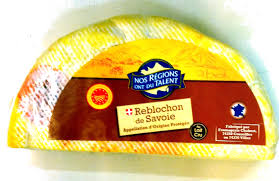
1 child dead, 14 sick from E. coli O26 in French ‘Our regions have talent’ raw milk cheese

Outbreak News Today reports on a statement from the French about the Escherichia coli ( E. coli ) O26 outbreak linked to the consumption of raw milk reblochons produced at the Cruseilles (Haute-Savoie) site of Chabert. French health officials are now reporting 14 children aged one to five years included in the investigation.

As of May 31, 6 children with HUS were infected with the same strain of E. coli O26, for which the consumption or reblochon incriminated is documented. These six children are domiciled in several regions of metropolitan France (Center-Val de Loire, PACA, Ile-de-France, Auverhne-Rhone-Aples, Pays-de-la-Loire); and for 8 other children, investigations are in progress. Of these, two had signs of gastroenteritis and six had HUS. One of the children with HUS died; the investigation around this case is in progress. To date, it cannot be dismissed or affirmed that these cases of HUS are linked to the consumption of reblochon: non-isolated and characterized strain, or consumption of reblochon incriminated not yet documented.

1 dead, 42 sick: E. coli outbreak linked to pork products in Alberta declared over

On Friday, Alberta Health Services said the E. coli outbreak linked to certain pork products in the province was officially over.

AHS started investigating a number of confirmed cases on March 29.

The outbreak was connected to some pork products sold and distributed by The Meat Shop at Pine Haven. Several other businesses were impacted since they used the affected pork products and the Canadian Food Inspection Agency (CFIA) issued a food recall.

In total, there were 42 lab-confirmed cases of E. coli linked to this outbreak.

Thirteen patients needed medical treatment at the hospital and one person “died likely due to infection with E. coli,” AHS said.

“Our thoughts remain with the family of the patient who died and all of those affected by this,” said Dr. Jasmine Hasselback, medical officer of health for the Edmonton zone. “We would like to thank our federal and provincial partners for their collaboration on this investigation.”

Ireland daycare closes over E. coli outbreak

A community creche in Co Monaghan has been closed over an outbreak of shiga-toxin producing E.coli infection among children and staff.

Ballybay Community Creche was forced to close following the outbreak, to limit the spread of the infection. All children and staff members are due to be screened to see if they have picked up the infection.

Drinking E. coli for science

There’s just not enough grad students willing to go deep and shield professors from abusive partners, bail their professors out of jail, coach girls hockey or drink E. coli for the sake of science.

Rachael Rettner of Live Science reports that in a new studdy, volunteers downed a cup of E. coli, for science.

Their fortitude paid off. Scientists were able to study an important question: whether a person’s blood type affects the severity of an “Enterotoxigenic E. coli” infection, the leading cause of traveler’s diarrhea.

It turns out, there was a difference in severity by blood type: Those with blood type A got sick sooner, and experienced more severe symptoms, than those with blood type B or O, the researchers said. [Top 7 Germs in Food that Make You Sick]

What’s more, the study uncovered an explanation for these findings: It appears that the bacteria release a protein that attaches to intestinal cells in people with blood type A, but not in people with other blood types.

The new finding might one day lead to the development of a vaccine that could reduce disease severity in people with type A blood. “A vaccine targeting this protein would potentially protect the individuals at highest risk for severe disease,” study senior author Dr. James Fleckenstein, an associate professor of medicine and molecular microbiology at Washington University School of Medicine in St. Louis, said in a statement.

The study was published online (May 17) in The Journal of Clinical Investigation.

Original article on Live Science.

E. coli strikes teen in Paris

The Lake Geneva teen who returned home last week after an E. coli diagnosis overseas described his experience and thanked supporters in a pair of videos Monday. 

Nathan Dyer started feeling sick during a trip to Morocco and was taken to a Paris hospital where he was in a coma for a period of time. Doctors later diagnosed him with E. coli. 

He returned home where he is still recovering. He’s feeling neurological and physical effects of being in a coma. Doctors in Paris said he should make a full recovery. 

Oh, and E. coli doesn’t work that fast. It takes a couple of days.

Book chapter: McDonald’s is not the source of most foodborne illness. It’s a fairy tale.