8 kids sick with E. coli from burgers in France

Eight children in Northern France have been admitted to hospital after eating beef burgers bought frozen from the German discount chain Lidl.

"One of the children was put on dialysis overnight," Health Minister Xavier Bertrand said on Radio Classique. "His condition has worsened."

The children, all aged between 20 months and 8 years, fell ill with symptoms such as bloody diarrhea. One was discharged from hospital on Wednesday.

Health authorities have blamed the contagion on beef burgers sold frozen for distribution under the "Steaks Country" label.

Privately-owned Lidl, which distributes burgers that are produced by French frozen-beef supplier SEB-CERF, has pulled all "Steaks Country" brand burgers from supermarket shelves.

5 children seriously ill from E. coli in Nord-Pas-de-Calais, France

At least five children were hospitalized for food poisoning of a rare type of E. coli in France. At least 4 of them had eaten frozen hamburgers sold by Lidl stores.

The serotype is not the same as in the German outbreak, according to authorities.

The 5 children are aged from 20 months to 8 years and one of them was hospitalized this weekend in a pediatric unit. All five victims had serious bloody diarrhea and suffering from hemolytic uremic syndrome, explained Dr. Joëlle Perrin, medical advisor in the regional health agency.

Health authorities have identified that four of the five children ate frozen beef burgers from the Steaks Country brand sold in Lidl stores.
 

Cooking is not enough; Auchan recall frozen cheeseburgers because of E. coli O157:H7 ignores cross-contamination risk

French retailer Auchan is recalling frozen cheeseburgers because of E. coli O157:H7 contamination but said that if cooked properly, to 65 C, the consequences of such contamination were prevented.

This ignores the risk of spreading even minute amounts of E. coli O157:H7 around household kitchens and food service operations.

AFP reported the manufacturer of the burgers, Cerf, said that the product recall was made "on behalf of the precautionary principle."

??They are sold without a brand name but in a plastic bag which is drawn on an American flag, it was learned from the company. ??"A review has highlighted, in the raw materials used in these products before cooking, the presence of Escherichia coli O157:H7.”
 

Whole Foods still sucks at food safety; so does a Toronto newspaper and Cooks Illustrated

In the latest installment of Whole Foods Market has terrible food safety advice — blaming consumers for getting sick, selling raw milk in some stores, offering up fairytales about organic and natural foods – today’s grilling tip is that “chicken that is cooked enough will feel springy when pressed. If you’re uncertain, cut into the thickest part of one piece. The meat should still be juicy, but the juices should be clear, never reddish.”

Color is a lousy indicator.

Use a tip-sensitive digital thermometer.

Toronto’s Globe and Mail has gotten into the trend of using someone with what appears to be an Australian accent to flog food but seems to skimp on the food safety.

Stephen Alexander, owner of Cumbrae Meats, says in a video  that, “cooking a burger to medium is totally fine as long as you start with good quality fresh ground meat.”

I don’t know what medium means. How is good quality defined, by bacterial counts? And where’s the thermometer, the same one Alexander uses when cooking chicken on the grill but that Whole Foods doesn’t know exists.

Cook’s Illustrated likes its burgers “juicy and rosy throughout.” 

Child disabled due to tainted meat sues Winnipeg grocery chains

A Winnipeg child who ate ground beef tainted with deadly E. coli bacteria — commonly known as hamburger disease — will never see again or be able to look after himself. The nine-year-old child, who is a permanent ward of Winnipeg Child and Family Services, is suing Westfair Foods, Superstore and XL Foods for general damages, including care costs throughout his life and loss of future income.

"This is a child with catastrophic injuries," lawyer Norm Cuddy said on Monday.

Cuddy said the child was hospitalized in June 2004, but all of his injuries weren’t known until a few years later.

Another lawyer working on the lawsuit, Chris Wullum, said the child is a permanent ward of Winnipeg CFS because the mother wasn’t able to look after him with all of his special needs.

According to the statement of claim, filed in Manitoba Court of Queen’s Bench last week, the child’s mother bought the ground beef at the Superstore on McPhillips Street.

The child suffered hemolytic uremic syndrome, received a kidney transplant, has spastic triplegia, severe and ongoing pain and has developmental delays, including not being able to take care of himself.

The Canadian Food Inspection Agency initiated a recall of the ground beef products in August 2004 after two people in Manitoba were poisoned with E. coli bacteria in July 2004 and after tracing back those and other cases across the country to find the source of the meat.

Food safety disasters nothing new in Japan

In June 1996, initial reports of an outbreak of E. coli O157:H7 in Japan surfaced in national media.

By July 1996, focus had centered on specific school cafeterias and two vendors of box lunches, as the number of illnesses approached 4,000. Lunches of sea eel sushi and soup distributed on July 5 from Sakai’s central school lunch depot were identified by health authorities as a possible source of one outbreak. The next day, the number of illnesses had increased to 7,400 even as reports of Japanese fastidiousness intensified. By July 23, 1996, 8,500 were listed as ill.

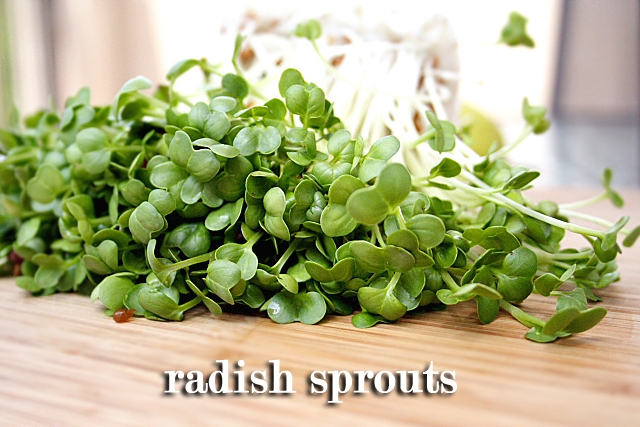
Even though radish sprouts were ultimately implicated — and then publicly cleared in a fall-on-sword ceremony, but not by the U.S. — the Health and Welfare Ministry announced that Japan’s 333 slaughterhouses must adopt a quality control program modeled on U.S. safety procedures, requiring companies to keep records so the source of any tainted food could be quickly identified. Kunio Morita, chief of the ministry’s veterinary sanitation division was quoted as saying "It’s high time for Japan to follow the international trend in sanitation management standards."

Japanese health authorities were terribly slow to respond to the outbreak of E. coli O157:H7, a standard facilitated by a journalistic culture of aversion rather than adversarial. In all, over 9,500 Japanese, largely schoolchildren, were stricken with E. coli O157:H7 and 12 were killed over the summer of 1996, raising questions of political accountability.

The national Mainichi newspaper demanded in an editorial on July 31, 1996, "Why can’t the government learn from past experience? Why were they slow to react to the outbreak? Why can’t they take broader measures?" The answer, it said, was a "chronic ailment" — the absence of anyone in the government to take charge in a crisis and ensure a coordinated response. An editorial cartoon in the daily Asahi Evening News showed a health worker wearing the label "government emergency response" riding to the rescue on a snail. Some of the victims filed lawsuits against Japanese authorities, a move previously unheard of in the Japanese culture of deference.

Fifteen years later, with at least four dead and 100 sick from E. coli O111 served in raw beef at the Yakiniku-zakaya Ebisu barbecue restaurant chain, Japanese corporate, political and media leaders are still struggling.

Under Health, Labor and Welfare Ministry guidelines, only meat that meets strict standards–such as being processed on equipment exclusively for handling meat for raw consumption and in a meticulously hygienic environment–can be shipped to be eaten raw.

However, the decision on what meat can be served raw is left up to the restaurant serving it. The wholesaler who sold the beef in question to the Yakiniku-zakaya Ebisu chain reportedly told a public health center that the meat it shipped "was supposed to be eaten after being cooked."
The sanitation guidelines have no binding power and have largely been ignored. The health ministry, for its part, has long failed to stringently push industries to comply with the sanitation standards.

To ensure people can eat raw meat without fearing for their health, the government must review the regulations for the entire meat preparation process.

Anrakutei Co., a Saitama-based yakiniku barbecue chain, stopped serving yukke at its 250 outlets, mainly in the Kanto region, on Tuesday.

"We’ve been providing the dish to customers based on strict quality control, but customers’ concerns make it difficult to continue to serve it," a public relations official of the company said.

Anrakutei said the company conducts bacteria tests on the Australian beef it uses for yukke three times–first before it is purchased, again before it is sent to the company’s meat processing plant and finally before it is shipped to outlets. At the plant, the meat is processed separately from other food materials to prevent it from coming into contact with bacteria, the company explained.

There is no discussion of what is being tested, and how valid those tests are at picking up a non-O157 shiga-toxin producing E. coli like O111 There is no verification that anyone is testing anything.

In the absence of meat goggles that can magically detect dangerous bacteria, eating raw hamburger remains a risk.

 

Excuse me, while I kiss the pavement; gestures won’t get rid of E. coli O111 in raw beef

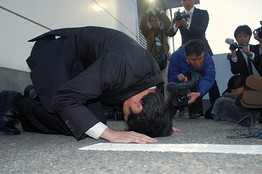
Yasuhiro Kanzaka, president of Japanese barbecue restaurant chain Yakiniku-zakaya Ebisu fell on his sword and kissed the pavement at the company’s headquarters in Kanazawa in Ishikawa Prefecture on May 5, 2011.

This is of little comfort to the four dead and 70 sick from E. coli O111 in raw beef served at the restaurants which was never tested because, “We never had a positive result, so we assumed our meat would always be bacteria-free.”
In a supreme case of reactive rather than proactive food safety policy, the Health, Labor and Welfare Ministry said it will introduce stricter standards for the handling of raw meat and penalties for violators.

The ministry aims to quickly establish the standards in line with the Food Sanitation Law, and will seek advice from a food safety panel and other concerned bodies, ministry officials said Thursday.

Here’s the advice: don’t serve raw hamburger.

Oh, and authorities on Friday afternoon raided the corporate headquarters of Yakiniku-zakaya Ebisu and a wholesale distributor connected to the outbreak. They probably have those bacteria-vision googles.

At least 20 of the 70 sick are in critical condition.
 

’We never had a positive result, so we assumed our meat would always be bacteria-free’

One of the dumbest food safety quotes ever, but characteristic of food safety failures.

Or any failure within an organization.

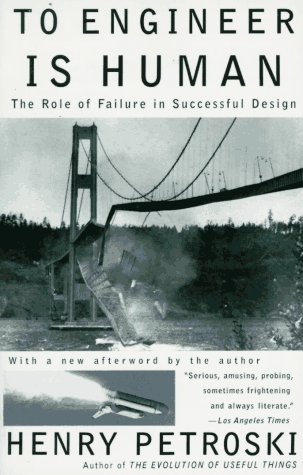
Those who study engineering failures – like the BP oil well in the Gulf, the space shuttle Challenger, Bhopal – say the same thing: human behavior can mess things up.

In most cases, an attitude prevails that is, “things didn’t go bad yesterday, so the chances are things won’t go bad today.”

And those in charge begin to ignore the safety systems.
Listeria counts go up in a processing plant, no worries, we’ll get to it tomorrow.

News out of Japan on food safety outbreaks is often difficult to come by because of a prevailing culture of patriotism. But some gems do leak out.

Daily Yomiuri Online reported yesterday the operator of a yakiniku barbecue restaurant chain linked to four deaths and 70 illnesses from E. coli O111 in raw beef admitted it had not tested raw meat served at its outlets for bacteria, as required by the health ministry, since 2009.

Yasuhiro Kanzaka, president of Foods Forus Co., which runs the Yakiniku-zakaya Ebisu chain, said during a press conference Monday at the firm’s headquarters in Kanazawa, "We’re not strict enough [about food safety]."

The company said it had not conducted such tests at any of its outlets since July 2009. "We’d never had a positive result [from a bacteria test], not once. So we assumed our meat would always be bacteria-free," Kanzaka said.

Kanzaka said no restaurant would be able to satisfy the ministry’s current standard for uncooked beef.

"The government should make it actually illegal to serve raw meat that doesn’t meet the standards as yukhoe or in other dishes," he said.

I have no idea what the Health, Labor and Welfare Ministry testing requirements are for restaurants serving raw meat, but I do know restaurants can’t test their way to safe food.

This is how four people die and 70 are sickened by E. coli O111.
 

Two children dead, 56 ill in Japan from E. coli O111 in raw meat

In Jan. 1995, a four-year-old girl died in Australia from E. coli O111 after eating contaminated mettwurst, an uncooked, semi-dry fermented sausage; 173 others were sickened.

The company, Garibaldi, blamed a slaughterhouse for providing the contaminated product, while the State’s chief meat hygiene officer insisted that meat inspections and slaughtering techniques in Australian abattoirs were "top class and only getting better." By Feb. 6, 1995, Garibaldi Smallgoods declared bankruptcy. Sales of smallgoods like mettwurst were down anywhere from 50 to 100 per cent according to the National Smallgoods Council.

The outbreak of E. coli O111 and the reverberations fundamentally changed the public discussion of foodborne illness in Australia, much as similar outbreaks of VTEC or shiga-toxin producing E. coli (STEC) in Japan, the U.K. and the U.S. subsequently altered public perception, regulatory efforts and industry pronouncements in those countries.

Yet almost two decades later, history is still being relived.

Japanese media outlets are reporting that two children have died and 56 other people became ill from food poisoning linked to a raw meat dish at a restaurant in central Japan.

One boy died on Wednesday in Fukui Prefecture and the other boy on Friday in Toyama Prefecture after eating dish called Yukhoe served at restaurants run by Foods Forus Co in Kanazawa. The two were infected with E coli O-111 strain.

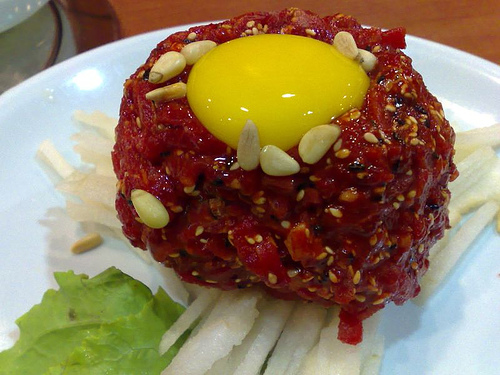
Yukhoe refers to a variety of hoe (raw dishes in Korean cuisine), which are usually made from raw ground beef seasoned with various spices or sauces. It is basically a Korean steak tartare.

Raw meat is a bad idea.

The company conceded at a news conference that it had failed to carry out hygiene inspections for the last two years of raw meat supplied by a Tokyo-based wholesaler for the dish.

Foods Forus said that it knew its Tokyo-based wholesaler had not sold the beef concerned to be eaten raw, but it served it raw based on its own judgment.

The wholesaler said it was impossible to comment because the person in charge of the sale was absent, Jiji said.

The Japanese apparently have some high-tech bacterial vision goggles that weren’t used in this case.

E. coli O111 has shown up in several tragic outbreaks, including the illness of 314 people and one death in Oklahoma in 2008, the sickening of 212 people in New York in 2004 linked to unpasteurized apple cider, and in salad that sickened 56 in Texas in 1999.
 

Meals for kids from local restaurants should be safe; local school types should demand safety standards

Wellesley, Ontario, home of the annual Wellsley Apple Butter and Cheese Festival , the last Saturday every September, is a nice enough place. Now populated largely by commuters who want the tech jobs in Waterloo, Ontario, but the small-town lifestyle, the place keeps on.

But those commuting parents may want to check out what is being served to their kids at the local school.

As reported by The Elmira Independent, a local paper with lotsa investigative journalism credibility, 28 children ordered hamburgers on March 3, 2011, as part of Wellesley public school’s regular hot lunch program.

The hamburgers arrived at the school, wrapped in tin foil, from Wellesley restaurant and catering business The Grill and Chill Drive In; a number of students complained about finding “pinkish red,” undercooked hamburger in their meals.

Color is a lousy indicator of food safety, but when public health types visited the The Grill and Chill Drive In, they found failure to maintain records of manufactured meat to aid in identification, and failing to ensure food was cooked to a minimum internal temperature.

No thermometers.

Once informed of the potentially raw hamburgers, Wellesley principal Lee Anne Andriessen immediately called Region of Waterloo Public Health. She was told to collect all of the remaining hamburgers so they could run a full screen of the meat for any pathogens.

“Her concern was for the safety of the children involved,” said Brenda Miller.
The region’s manager of infection control, rabies, and vector borne diseases, said it was the principal’s good diligence that sparked the investigation and allowed health inspectors to begin work the same day.

Public health officials made calls to parents of all 28 children who had ordered meals to warn them about possible symptoms their children may experience if the undercooked meat was ingested.

Miller said 20 different samples were tested and no pathogenic organisms were isolated.

Miller said public health officials will continue to work with the school board to provide food safety awareness.

All schools that offer hot lunch programs through outside catering companies are advised to make sure the food coming into schools is produced at regularly-inspected premises.

In the weeks following the incident, the school has continued to use hot lunches supplied by the restaurant under investigation by public health, although the menu was different and hasn’t included any hamburger.

If parents want the service for their kids, fine, but ask questions grounded in food safety: like using a thermometer to make sure food is properly cooked, handwashing compliance, sourcing food from safe sources. An annual inspection from the local health types is not enough.