
BBQ food safety tips….in August…a little late in the game for us in Canada, then I realized this story stems from Australia.
Food safety tips for parties and BBQs
Storage:
Ensure you have enough fridge and freezer space
Keep cold foods in the fridge until they are ready to serve e.g. salads
Temperature controls:
The bacteria that cause food poisoning grow rapidly between 5°C and 60°C (also known as the temperature danger zone)
Hot food should be served steaming hot – at least 60°C
Food should be thoroughly cooked before consuming. It is recommended that poultry, minced meats and sausages be cooked until well done right through to the centre. No pink should be visible and the juices should run clear. Alternately, you can use a meat thermometer to check if the meat is properly cooked.
Nope. Always use a thermometer to ensure safety of foods, never rely on color alone. This will also prevent over-cooking meats/fish that would otherwise lend to formation of heterocyclic amines (HCA’s), potent mutagens formed when meats/fish are cooked using high temperature methods. One way to reduce the formation of HCA’s is to marinate your meat/fish before grilling. Studies have shown that marinated meats and fish contained lower levels HCA’s than non-marinated samples with the exception of pan-fried salmon(1). 
Preventing cross-contamination:
Wash and dry hands thoroughly before preparing food (and in between handling raw and cooked foods)
Keep raw and cooked food separate – don’t let raw meat juices drip onto other foods
Use different knives and cutting boards for raw and cooked foods
Ensure that benches, kitchen equipment and tableware are clean and dry
Avoid making food for others if you are sick
Leftovers:
Refrigerate any leftovers straight away
Leftovers should be consumed within 3 days
Reheat leftover food to at least 75°C or until it is steaming hot
1. Heterocyclic amines content of meat and fish cooked by Brazilian methods. 2010. J Food Compost Anal. Feb 1; 23(1): 61–69.
.jpg) wife and I. While inspecting a fast food restaurant which serves predominantly burgers, I noticed the chef relying solely on color to determine doneness of burgers. As mentioned time and time again on barfblog, color is not a reliable tool to determine doneness of burgers due to premature browning of meat which may result before the burger reaches 160°F, the temperature required to inactivate pathogens such as E. coli 0157 H:7. Studies have demonstrated that burgers cooked to 135°C and allowed to sit for a few minutes looked the same as a burger cooked to 160°C. After explaining this concept to the chef, the response was well I cook the burger on high heat until it pretty much looks charred. Oh “that’s a deal breaker.” I have been dying to use this catch phrase from 30 Rock for sometime now. I went on to explain what happens when meat is cooked at high temperatures to a point of charring. A chemical change can occur in the meat resulting in the formation of heterocyclic amines (HCA’s). To prevent this from occurring, one can lower the temperature used for grilling and flip patties continually. The use of tongs or spatulas should be used to flip meat as a fork will puncture the meat causing juices to run causing flame ups which are responsible for polycyclic aromatic hydrocarbons, a carcinogenic compound2. It is interesting to note that marinades and spices may reduce the amount HCA’s found in the meat. The addition of spices such as rosemary, thyme, sage, and brine, reduced the content of HCA’s below 60% when compared to a control1. It is always a good idea to scrape off any parts of the meat that are charred. Finally, always use a digital tip sensitive thermometer to determine if your burger is done 71°C (160°F).
wife and I. While inspecting a fast food restaurant which serves predominantly burgers, I noticed the chef relying solely on color to determine doneness of burgers. As mentioned time and time again on barfblog, color is not a reliable tool to determine doneness of burgers due to premature browning of meat which may result before the burger reaches 160°F, the temperature required to inactivate pathogens such as E. coli 0157 H:7. Studies have demonstrated that burgers cooked to 135°C and allowed to sit for a few minutes looked the same as a burger cooked to 160°C. After explaining this concept to the chef, the response was well I cook the burger on high heat until it pretty much looks charred. Oh “that’s a deal breaker.” I have been dying to use this catch phrase from 30 Rock for sometime now. I went on to explain what happens when meat is cooked at high temperatures to a point of charring. A chemical change can occur in the meat resulting in the formation of heterocyclic amines (HCA’s). To prevent this from occurring, one can lower the temperature used for grilling and flip patties continually. The use of tongs or spatulas should be used to flip meat as a fork will puncture the meat causing juices to run causing flame ups which are responsible for polycyclic aromatic hydrocarbons, a carcinogenic compound2. It is interesting to note that marinades and spices may reduce the amount HCA’s found in the meat. The addition of spices such as rosemary, thyme, sage, and brine, reduced the content of HCA’s below 60% when compared to a control1. It is always a good idea to scrape off any parts of the meat that are charred. Finally, always use a digital tip sensitive thermometer to determine if your burger is done 71°C (160°F).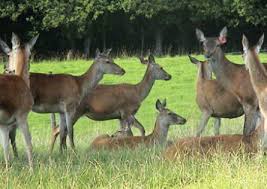 flashlight, my husband got his doe.
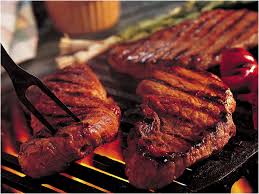 My food microbiology professor boasted of eating his steaks near raw: As long as the steaks haven’t been pierced before cooking (which would allow any bacteria on the outside to get inside the meat), the cook only needs to sear the surface to be rid of most things that could make him sick.