
Wong et al. conclude in Clinical Infectious Disease that for every four children infected with E. coli O157:H7 treated with antibiotics, one will develop hemolytic uremic syndrome (HUS). The authors state antibiotic use during E. coli O157:H7 infections is associated with a higher rate of subsequent HUS, and should be avoided.
The authors enrolled children infected with E. coli O157:H7 in this prospective cohort study in five states over 9.5 years within one week of the onset of diarrhea. The primary and secondary outcomes were HUS (hematocrit < 30% with smear evidence of hemolysis, platelet count < 150 x 103/mm3, and serum creatinine concentration > upper limit of normal for age) and oligoanuric HUS. Univariate and multivariable and ordinal multinomial regression analyses were used to test associations between factors apparent during the first week of illness and outcomes.
Of the 259 children analyzed, 36 (14%) developed HUS. Univariate analysis demonstrated that children who received antibiotics during the diarrhea phase more frequently developed HUS than those who did not (36% vs. 12%, p=0.001). The higher rate of HUS was observed across all antibiotic classes used. In multivariable analysis, a higher leukocyte count (aOR 1.10; 95%CI 1.03, 1.19), vomiting (aOR 3.05; 95%CI 1.23-7.56), and exposure to antibiotics (aOR 3.62; 95% CI 1.23-10.6) during the first week of onset of illness were each independently associated with development of HUS. Multinomial ordinal logistic regression confirmed that initial leukocyte count and antibiotic use were independently associated HUS, and, additionally, these variables were each associated with the development of oligoanuric HUS.
Risk Factors for the Hemolytic Uremic Syndrome in Children Infected with Escherichia coli O157:H7: a Multivariable Analysis
http://cid.oxfordjournals.org/content/early/2012/03/16/cid.cis299.abstract
.jpg) negative was isolated from one HUS case. Molecular analyses show this strain to be genetically similar but not indistinguishable from the E. coli O104:H4 2011 outbreak strain of France and Germany.
negative was isolated from one HUS case. Molecular analyses show this strain to be genetically similar but not indistinguishable from the E. coli O104:H4 2011 outbreak strain of France and Germany. .jpg) time frame. Public health authorities and clinicians should be vigilant for possible STEC O104 infection in individuals returning from these areas who present with post-diarrheal HUS.
time frame. Public health authorities and clinicians should be vigilant for possible STEC O104 infection in individuals returning from these areas who present with post-diarrheal HUS..jpg) from Huntingdon County. There are also two Maryland residents who got sick after visiting the park.
from Huntingdon County. There are also two Maryland residents who got sick after visiting the park.  are open and actually there was a good turnout today. A link to the park has not been established."
 6-year-old girl, a 15-month-old boy and several children who apparently suffered "mild symptoms" but did not require hospitalization.
.jpg) contaminated at any point along the route.
contaminated at any point along the route.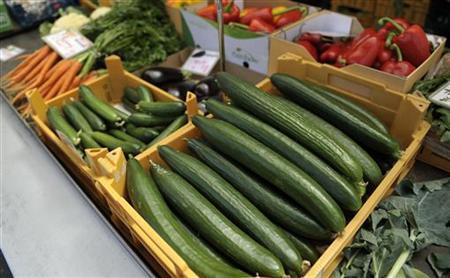 Cornelia Pruefer-Storcks.
 But the German reference laboratory for EHEC in Wernigerode has so far identified the serotype of EHEC in stool samples from five patients as O104.
 which can also give acute kidney failure and change blood chemistry.
 County Fair.