
We’re about to go to France, so will once again experience the different toilet regimes.
 Drake Baer writes in New York Magazine that at the turn of the 20th century, the way America pooped went through a revolution when the at-home flushing toilet became a standard part of people’s homes. But you needed a way to wipe that wouldn’t clog up plumbing like catalogues or corn cobs would. Enter the entrepreneurial brothers Clarence and Irvin Scott, who in 1890 gave the world toilet paper on a roll, wrapped individually for sale.
It was huge: Without TP, says New York University microbiologist and pathologist Philip Tierno, there’s “no standardization of hygiene.” You name it and it was used to wipe the anus. One review of toilet technology notes that lots of places use water, grass, animal fur, corn cobs, seashells, snow, or hands.
Now it appears another revolution is afoot. In the reaches of the Upper East Side, the bidet is coming in a big way. As detailed in breathless New York Times trend pieces like “The Cult of the Toto Toilet,” the next big Japanese import is looking to be a class of high-end toilet seats — the kinds with heated seats, deodorizers, and “tornado dual flush technology.” (Owners are evangelists. After his wife bought him an automatic toilet, NBA star Steph Curry said “that toilet just makes me happy in life. I bet if I did a case study on my performance since I got that toilet, you’d see the difference.”) In the words of Times reporter Steven Kurutz, the “need for toilet paper is virtually eliminated” thanks to an air dryer.
As soon as the price tag falls (substantially — they’re currently priced from $499 to $9,800), toilet paper could become much less of a necessity.
After all, as Poop Culture: How America Is Shaped by Its Grossest National Product author David Praeger tells Science of Us, toilet paper isn’t even the most hygienic approach to cleanup. If a bird poops on your arm while you’re walking down the street, you don’t smear it with a paper towel — you go to the bathroom and use soap and water.
There’s the sustainability critique, too. According to one analysis, Americans use 36 billion (!) rolls — or 15 million trees’ worth — of toilet paper a year, not to mention all the energy spent shipping the sheets around the world. That’s a lot of paper and energy literally being flushed down the toilet.
Toilet paper is more “a psychological comfort, not a true measure of cleanliness,” Praeger says. It’s a way of keeping our bodies separate from the waste they produce. But “sometimes the paper rips and you’re confronted with your own mortality,” he says, “right on your fingers.”


 evaluation points. “My team and I have been tested over an entire day,” explained the restaurateur. “It’s an extremely thorough evaluation that leaves nothing to chance in matters of hygiene and food quality. From maintenance of the kitchen up to the quality of referenced products and the state of the dining room. He added, “Nothing is possible without the willingness and training of the team. It’s a partnership.”
 consumers choose where to eat out or shop for food by giving them information about the hygiene standards in restaurants, cafés, takeaways, hotels and food shops.
 and health and safety offences."
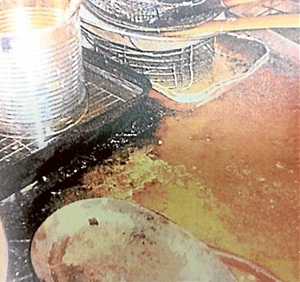 unsafe food handling.
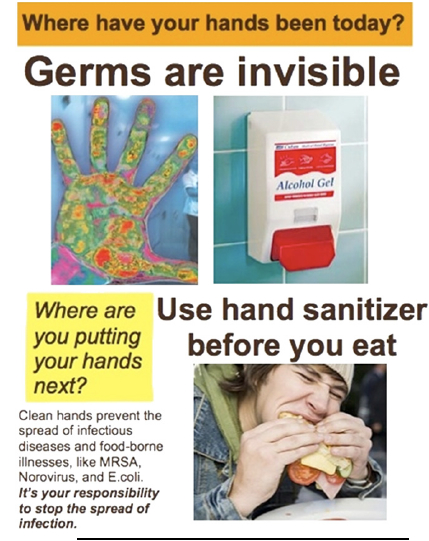 on the team was Ben Chapman, assistant professor in the department of 4-H youth development and family and consumer sciences at North Carolina State University.
 of good hygiene training in catering. It is reinforced by scientific expertise in food safety from the School of Industrial Biology (EBI).
  washed dishes and served food. She fell ill on 20 October, and had been exposed to canteen food during the 4 days prior to disease onset. Food handler B travelled to Morocco from 23 September to 1 October. This person started working on 4 October and was involved in vegetable washing, preparation of hot meals, sandwiches, cold dishes involving vegetables and cleaning the canteen. He did not declare having fallen sick. Food handler C was also involved in all activities except in hot meal preparation. He had not travelled, been absent or fallen sick.