
‘Not in our culture to eat horse meat’; horse, pig DNA found in Irish supermarket burgers

Traces of horse meat have been found in burgers on sale in some of the country’s busiest supermarkets, food safety chiefs have revealed.

Scientific tests on beef products sold in Tesco, Dunnes StoresLidlAldi and Iceland uncovered low levels of the animal’s DNA.

Professor Alan Reilly, chief executive of the Food Safety Authority of Ireland (FSAI), said there was no health risk but also no reasonable horse.meat.09explanation for horse meat to be found.

“The products we have identified as containing horse DNA and/or pig DNA do not pose any food safety risk and consumers should not be worried,” he said.

According to the research by the FSAI, one sample of burger goods, Tesco Everyday Value Beef Burgers, showed about 29% horse meat relative to beef content.

“Whilst there is a plausible explanation for the presence of pig DNA in these products due to the fact that meat from different animals is processed in the same meat plants, there is no clear explanation at this time for the presence of horse DNA in products emanating from meat plants that do not use horse meat in their production process,” Prof Reilly said.

“In Ireland, it is not in our culture to eat horse meat and therefore, we do not expect to find it in a burger.”
Recession squeezing food safety in some Irish restaurants

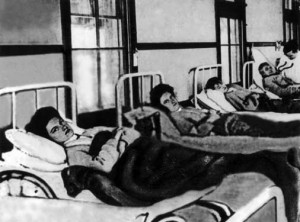
Not washing her hands led to the previously anonymous Irish cook Mary Mallon being transformed into New York’s notorious Typhoid Mary. She was blamed for infecting more than 50 people with the disease in the early 1900s and reportedly said she rarely washed her hands when cooking as she didn’t see the need for it.

Food safety has come a long way since those heady days when fridges, food gloves and best-before dates were unheard of. Now, typhoid_mary
people starting up food businesses frequently complain about the overwhelming number of regulations facing them.

So does this improvement in food hygiene standards mean the number of food safety enforcement orders has collapsed in recent years? Actually, no.

According to the Food Safety Authority of Ireland (FSAI), 46 food businesses were served with enforcement orders in 2008. Last year, up to December 19th, 108 businesses had been served with the orders. This was 24 more than the total for 2011, or an annual increase of nearly 30 per cent. The types of orders vary but are all served because of a risk to public health posed by the restaurant, take-away, shop or food stall.

October saw the highest number of enforcement orders in 10 years and at that time the authority’s chief executive, Prof Alan Reilly, said food safety inspectors were regularly encountering cases where the health of consumers was being put at risk because the businesses were not meeting their legal obligations.

Common reasons for orders include pest infestation, lack of hygiene and storing food at the wrong temperature.

The FSAI’s director of service contracts, Dr Bernard Hegarty, told the Irish Times there is a suggestion that businesses are cutting back on food safety practices to save money. If they have fewer staff and those people are working harder it may mean corners are cut when it comes to hygiene practices.

Big jump in E. coli cases on Irish farms

There has been a dramatic increase in the number of cases of a type of E. coli infection that is most commonly found on farms, the Food Safety Authority of Ireland (FSAI) has warned.

According to the FSAI, so far this year, almost 550 cases of farm-related verotoxigenic E.coli have been recorded, compared to 251 cases during the same period last year.

It is calling on all farmers to ensure that they have ‘robust hygiene practices in place’.

According to FSAI chief executive, Prof Alan Reilly, there are a number of well-recognized ways E. coli is spread on farms, such as via contaminated private water supplies and farm animals and their environments.

“Because their immune systems are still developing, babies and young children are most at risk of becoming seriously ill from this infection. It can be easily spread to others such as their siblings or other children in their crèche or at their childminder,” Prof Reilly explained.

He described it as ‘vitally important’ that special attention is paid to protect children on farms. This includes ensuring children wash their hands properly after being on the farm and not allowing them to drink unpasteurised milk.

“Children suffering from diarrhea or vomiting must also be kept away from their crèche or childminder until they are clear of symptoms for 48 hours,” Prof Reilly added.

Try a new approach? Businesses closed over food safety in Ireland

Traditional food safety messages don’t work: that’s why some 18 enforcement orders were served on businesses for breaches of food safety legislation last month in Ireland, the highest number served in any month in a decade.

The Food Safety Authority of Ireland said 12 closure orders and six prohibition orders were served on food businesses by environmental health officers or veterinary inspectors in October.

Four businesses were also successfully prosecuted by the Health Service Executive.

FSAI chief executive Prof Alan Reilly expressed his concern at the “high level” of non compliance with food safety regulations by some food businesses in October.

“The inspectors found illegal, unhygienic or unsafe foods, with significant breaches of food safety legislation that put people’s health at serious risk,” he said.

“There’s absolutely no justification for negligence in this area. The legal onus is on food businesses to act responsibly and ensure that the food they serve and sell is safe for consumption.

“This requires putting appropriate food safety management procedures in place and making sure they are adhered to at all times.”

231 sick; 2 different E. coli outbreaks at Belfast restaurant

BBC News reports the type of E. coli linked to a restaurant in north Belfast this month is a different strain than four cases reported there in August.

The Public Health Agency (PHA) said there are now 29 confirmed cases and 202 probable cases.

Fifteen people have been hospitalised since the start of this month’s food poisoning outbreak at Flicks restaurant in the Cityside complex.

The PHA confirmed that the type of E. coli O157 in cases in October is different from the type found in August cases associated with the same restaurant.

It said the four cases in August which were linked to this restaurant were investigated thoroughly at the time and all tests on the restaurant were negative.

Further environmental health inspections were conducted, it added, all of which were satisfactory, and enhanced surveillance to monitor for cases was also put in place.

It said the current cases came to light through that enhanced monitoring.

If that’s the case, how many cases of foodborne illness, everywhere, would be detected with enhanced surveillance?

69 sick in E. coli outbreak linked to Belfast restaurant

Twelve confirmed and 57 probable cases of E. coli have been linked to a restaurant in north Belfast, health authorities say.

The diners were struck down after eating at Flicks in Cityside Mall, York Street, in the last three weeks.

Management at the restaurant have voluntarily closed the premises and are co-operating with an investigation by the Public Health Agency (PHA) and environmental health officers from Belfast City Council.

The PHA has advised that anyone who ate at Flicks since September 24 and has symptoms of diarrhoea and/or abdominal pain should contact their GP urgently for medical advice.

The agency has revealed that four cases of the same E.coli O157 strain were linked to the restaurant in August. But it said subsequent tests in the restaurant at that time were negative.

Further environmental health inspections were conducted after those incidents, all of which were satisfactory.

The agency said it was examining whether the current outbreak was linked to the August instances but it was too early to confirm either way.

Irish Ironman event on despite E. coli scare

A forthcoming international Ironman competition will go ahead despite a recent E-coli contamination on Irish beaches, organizers have said.

Organisers of the triathlon event, which is set to attract a number of Irish celebrities, said they were satisfied the dangerous bacterial contamination, which has led to the closure of Grattan Beach in Galway, had not spread to the rest of the bay. The news came as swimmers re-entered the icy surf off several southern beaches yesterday, after new tests indicated bacteria levels were falling in sea water.

The 1.2-mile swimming leg of the triathlon will take place from the promenade in Salthill. Athletes will set off from Blackrock out into the bay and return to Palmer’s Rock, along the promenade.

They will then complete a 90-km bike ride finishing with a run around Salthill. A number of Irish celebrities are set to take part, including former Miss World Rosanna Davison, Grainne Seoige, Keith Barry, Brian Kennedy, Matt Cooper and Ray D’Arcy.

I don’t know who any of these people are.

Twelve cafes and restaurants hit with closure in Ireland

 “… There continues to be food business operators who put consumers’ health at risk by not complying with their legal obligations for food safety and hygiene.

"Food business operators must recognise that the legal onus is on them to be responsible and ensure that the food they serve is safe to eat."

That’s professor Alan Reilly, chief executive of the Food Safety Authority of Ireland, describing the monthly inspection results as "extremely disappointing".

Twelve companies were hit with closure orders after being found with such poor food safety and hygiene standards they were deemed to be of grave or immediate danger to the public.

One cash-and-carry was served with a prohibition order, meaning it was banned from selling food found to have been dangerous to consumers.

The Food Safety Authority of Ireland (FSAI) said the 13 orders represented a fourfold increase from the previous month, making July one of the highest ever for enforcements over the last decade.

Rate of dangerous E. coli in Irish children triples

Irish Health reports 13 children in Ireland have been hit with hemolytic uremic syndrome, a life-threatening complication of shiga-toxin producing E. coli that affects the kidneys, so far this year.

Provisional figures show a 200% increase in the number of STEC cases in the first half of 2012 compared with the same period last year, according to Dr Kevin Kelleher, head of health protection in the Health Service Executive (HSE).

There have been 212 reports of people being infected by strains of E. coli O157 in the first six months of this year, compared to 69 for the same period in 2011.

Part of the increase is thought to be due to heavy rainfall contaminating private water supplies, others largely in child-care centers.

Steal this movie, don’t steal this beef

The Food Safety Authority of Ireland has alerted consumers and food businesses about a theft of a consignment of beef from a Dublin-based meat wholesaler.

Consumers are being urged not to purchase any meat sold from unregistered outlets or unregistered door-to-door sales.

Up to 43 boxes (approx 20-24kg per box) of beef containing prime cuts, rolled rib of beef and knuckle were stolen.

The FSAI said food businesses have a legal obligation to only purchase meat from approved sources after checking all appropriate documentation.

Any break in the cold chain between the time the meat was stolen and when it may be sold could result in a serious health risk to consumers, particularly given the recent hot weather.