Bag of cows’ hooves found in Dublin take away

A plastic bag filled with cows’ hooves and five plastic bags of cow skin found in a Dublin take away were just some of the unusual items which were the subject of prohibition orders for May, the Food safety Authority of Ireland (FSAI) reported today.

Cow HoofFollowing the discovery of the bags at Johnson Best Food (take away), 86A Summerhill, Dublin 1, a prohibition orders was served under the EC (Official Control of Foodstuffs) Regulations.

Commenting on these latest Enforcement Orders, Prof. Alan Reilly, Chief Executive, FSAI, stated: “Food businesses must recognise that the legal onus is on them to make sure that the food they serve is safe to eat. This requires ongoing compliance with food safety and hygiene standards to ensure the food they are producing is safe to consume. There is absolutely no excuse for negligent practices.”

The FSAI today also reported that three Closure Orders and one further Prohibition Order were served on food businesses during the month of May for breaches of food safety legislation. The Orders were issued by environmental health officers in the Health Service Executive.

Abattoir owner in Ireland jailed for food safety offences

In Ireland, if you screw up food safety, you go to jail.

A former poultry slaughterhouse owner has been jailed for four months for food safety offences.

Tim Blake Nelson, George Clooney, John TurturroNigel Wilson was convicted three years ago of nine breaches of food regulations at Upper Erne Lakes Poultry in Newtownbutler.

A warrant for his arrest was issued after he failed to appear in court, but he was convicted in his absence.

He appeared at Enniskillen Magistrates Court on Monday, having recently returned to NI from abroad.

The Food Standards Agency in Northern Ireland (FSA), which brought the case, said it welcomed the sentencing for the serious breaches of regulations and hoped it “sends a strong message to those who try to operate food businesses outside the law”.

“The investigation found decaying animal by-products infested with maggots, old and drying blood stains on the floor and no cleaning process in operation,” said Michael Jackson, the FSA’s head of food safety and operations.

And it was all avoidable: seven businesses in Ireland closed over food hygiene

Seven food businesses were closed across the country last month for breaches of food safety legislation, the Food Safety Authority of Ireland has confirmed.

Professor Alan Reilly, chief executive of the FSAI, stated that there is absolutely no excuse for food businesses to put consumers’ health at risk fsaithrough negligent practices.

“While most food businesses follow high standards and are compliant with food safety legislation, we continue to encounter cases where consumers’ health is jeopardised through a failure to comply with food safety and hygiene requirements. These breaches are avoidable,” he said.

One restaurant and a take-away were served with closure orders under Irish legislation in March while three restaurants, a take-away and a butcher were served with closure orders under European regulations. In addition, one fish processor was served with a prohibition order by the Sea-Fisheries Protection Authority.

Closure orders are issued if it is deemed that there is or there is likely to be a grave and immediate danger to public health or where an improvement order has not been complied with.

Food safety breaches worse than ever in Irish restaurants

This year has proven the worst ever for food safety breaches, with a record 118 businesses receiving closure orders. These are only issued when there is deemed likely to be a “grave and immediate danger to public health”.

This year’s grim tally is up 30 per cent on the 2012 closure rate and there are now four Irish-Pubtimes as many closures as there were in 2006.

However, in the vast majority of cases, the orders were lifted within days or weeks, showing that major structural changes were not required to comply with food safety requirements.

FSAI chief executive Prof Alan Reilly warned this month that health inspectors would continue to operate a zero-tolerance policy to food safety breaches, with extra vigilance needed during the busy Christmas period when increased volumes of food were being supplied.

Good on ya, Alan: horsemeat in food chain ‘for three years’

Horsemeat in the food chain could have been passed off as beef for three years, the country’s food safety watchdog has said.

Alan Reilly of the Food Safety Authority of Ireland said he suspects the rogue product may have been in beef for years.

The first definitive test showing horsemeat contamination only came in April last year, but Prof Reilly insisted the problem was right under the noses of horse.meat.09Europe’s food safety watchdogs.

Prof Reilly said the authority had been using DNA testing on meat since 2005, but decided seven years later to see if people were “cheating” by passing off horsemeat for more expensive cuts.

He admitted he had “lost some sleep” after one burger was found to contain 29% horsemeat.

The FSAI boss revealed the decision to go public on the fraud was very difficult.

He added: “The Irish media attacked us for going public, but what we uncovered was a massive international fraud.”

Prof Reilly said the scandal has removed trust from buyers but he cannot see the situation happening again.

He added: “The industry norm now is to buy nothing on trust and to test it. So I couldn’t see it happening again.”

The FSAI tested several blocks of frozen meat used for burgers.

Prof Reilly said in one case a block labelled as Polish beef trim contained “horsemeat with an Irish stamp and a micro-chip for a Polish horse.”

‘No excuse for negligent practices’ seven Ireland food businesses served closure orders in September

The Food Safety Authority of Ireland (FSAI) has reported that seven closure orders were served on food businesses during the month of September for breaches of food safety legislation. The orders ireland.pubwere issued by environmental health officers in the Health Service Executive.

Three closure orders were served under the FSAI Act, 1998 on:
• Davak Superstores (grocery), 17 Bolton Street, Drogheda, Louth
• 10 Thousand Restaurant, 39 Middle Abbey Street, Dublin 1
• Tasty Grill (restaurant), 39 Richmond Street South, Dublin 2

Four closure orders were served under the EC (Official Control of Foodstuffs) Regulations, 2010 on:
• The Morning Star Food Hall (grocery) (Closed area: Store area only), Townparks, Commons Road, Navan, Co. Meath
• Utterly Nutty (bakery/confectionery), Bakery Mews, Kenmare, Kerry
• Tralee Central Hotel, Maine Street, Tralee, Kerry
• Planet Spice (restaurant), 51 Church Street, Tullamore, Offaly

Also during the month, successful prosecutions were brought against:
A1 Cafe Limited, Cafe India, Patrick’s Court, Patrick Street, Tullamore, Offaly
Mr John Muldowney, The Old Bank House Restaurant, 17 Main Street, Portlaoise, Laois

Commenting on these latest closure orders, Prof. Alan Reilly, Chief Executive, FSAI, stated that vigilance is always required in relation to food safety and that standards must not be permitted to slip to such levels that consumer health is put at risk.

“While most food businesses are committed to high standards for the health of their customers, this is not always the case.  We’re urging food businesses to make sure that they have a food safety management system in place and that it is consulted on a regular basis and updated, where necessary, to ensure non-compliance issues and breaches of food safety legislation don’t occur.  There is absolutely no excuse for negligent practices.”

13 sick; Cryptosporidium in Irish water supply again

Contaminated water has left 13 people with stomach illnesses after two outbreaks of cryptosporidiosis.

The Sun says up to 6,000 people in Roscommon town and its surrounds have south.park.diarrheabeen affected by the bug in the local water supply.

A “boil water notice” has been in place since April 25.

People living and working in the area have been advised by Roscommon County Council and the HSE to boil all water for drinking, preparation of salads and for use in brushing teeth.

Both bodies have set up an Incident Response Team to minimize the risk to the public.

Sales of bottled water have shot up in the area amid concerns that the boil water restriction could remain in place until the system gets the all-clear, which could take several weeks.

Roscommon County Council confirmed three dead calves were removed from a stream which is a tributary of one of the sources for the Roscommon town central water scheme where cryptosporidiosis has been detected.

The townlands affected are Killaraght, Rockingham, Knockvicar, Cootehall, Tarmon Road, Kiltycreighton, Crossna, Derrycashel, Moigh, Carigeenroe, Battlebridge and Ardcarne.

34 sick, 2009-11; Salmonella and duck eggs in Ireland, outbreak summary

McKeown et al. report in  Eurosurveillance today that Salmonella Typhimurium DT8 was a very rare cause of human illness in Ireland between 2000 and 2008, with only four human isolates from three patients being identified.

Over a 19-month period between August 2009 and February 2011, 34 confirmed cases and one probable case of Salmonella Typhimurium DT8 duck_eggs_may_10(1).featuredwere detected, all of which had an MLVA pattern 2-10-NA-12-212 or a closely related pattern.

The epidemiological investigations strongly supported a link between illness and exposure to duck eggs. Moreover, S. Typhimurium with an MLVA pattern indistinguishable (or closely related) to the isolates from human cases, was identified in 22 commercial and backyard duck flocks, twelve of which were linked with known human cases.

A range of control measures were taken at farm level, and advice was provided to consumers on the hygienic handling and cooking of duck eggs. Although no definitive link was established with a concurrent duck egg-related outbreak of S. Typhimurium DT8 in the United Kingdom, it seems likely that the two events were related. It may be appropriate for other countries with a tradition of consuming duck eggs to consider the need for measures to reduce the risk of similar outbreaks.

The  complete report is available at http://www.eurosurveillance.org/ViewArticle.aspx?ArticleId=20454.

Ireland monthly restaurant closures; doing the same thing and expecting a different result is crazy

Every month about this time, Alan Reilly gets to roll out the same quote, saying he is disappointed in the high number of food business closures that month, adding something like,

“We continue to find unacceptable levels of non-compliance with food safety legislation. Time and time again, we encounter cases of food business BobbyJ2operators who are potentially putting their customers’ health at risk by not complying with their legal obligations for food safety and hygiene.

The chief executive of the Food Safety Authority of Ireland will then add something like, “There is absolutely no excuse for negligent practices. Food businesses must recognize that the legal onus is on them to make sure that the food they serve is safe to eat. This requires ongoing compliance with food safety and hygiene standards to ensure the food they are producing is safe to consume.”

It must be frustrating.

The March list of 11 closures and one prohibition order are available at:

http://www.irishtimes.com/news/health/closure-orders-over-food-breaches-served-on-businesses-1.1354022

Know thy supplier: horse, pig meat found in Irish beef burgers

My mother informed those gathered last month that, as a child, I would barf in the car going to get groceries.

mr-edIt’s true, I can’t tolerate the motion.

We went out on a boat in Florida, and I yakked.

So does Chapman.

But I did manage to drive about half of the 48 hour trek from Kansas to Florida and back and would sometimes stop at a burger joint. Then that craving goes away, for longer and longer periods of time.

So what’s a little horse mixed in?

It has to do with faith-based food safety, reputation, and that purveyors say one thing but may be doing another.

And that makes lots of people want to barf.

The Independent reported last week the horsemeat-in-beef-burgers scandal is now a fully fledged economic crisis for Ireland’s multi-billion agribusiness – a beacon of light during the recession – and the country’s reputation as an international food producer may be damaged beyond repair.

It is now a runaway train that could yet derail the lucrative export market for Irish processed meat products and cost the economy millions of euro. The damage included immense reputational harm to not just Irish meat processors found to have produced burgers with horse.meat.09equine DNA but the overall food industry here. In all, 27 beef burger products were analyzed, with 10 of the 27 products (37 per cent) testing positive for horse DNA and 23 (85 per cent) testing positive for pig DNA.
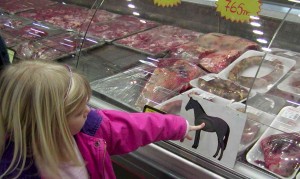
The Food Safety Authority of Ireland (FSAI) had last week revealed that up to 29 per cent of the meat content of some beefburgers was in fact horse, while they also found pig DNA.

In addition, 31 beef meal products – shopping-trolley staples such as cottage pie, beef curry pie and lasagne – were also analysed. Of these other beef products, 21 were positive for pig DNA but all were negative for horse DNA.

All 19 salami products analysed tested negative for horse DNA.

But traces of horse DNA were detected also in batches of raw ingredients, including some imported from the Netherlands and Spain which are used in the production of burgers.

Reputational damage to major international companies will also cost Ireland dear in lost business – even though it now appears likely that the source of the contamination was a bought-in additive from either the Netherlands or Spain, though the Spanish have denied involvement.

Tesco – where one of its Irish produced “Value Range” burgers had 29 per cent horsemeat – lost €300m of its market value in one day. Burger King was revealed as using one of the Irish suppliers at the centre of the storm. It has now ditched all Silvercrest beef products in Britain and Ireland.

Cooking tools, pans, sinks and dishcloths used in kitchens where the meat was handled must also be sanitised or disposed of.

According to a January 20 memo, employees at restaurants in the UK were told to continue serving the suspected meat until they received replacement product from a different supplier – and make no mention of the withdrawal to customers.

“If our guests inquire regarding our beef products, the team member should immediately inform the restaurant manager,” wrote Tracy Gehlan, the vice president of brand standards and excellence for stores in northwestern Europe, wrote in the memo.

“The manager should inform the guest that Burger King ‘has taken all necessary precautions to ensure that our guests are receiving the quality products that Burger King is known for’.”

Excellence.

The frozen burgers were on sale in high-street supermarket chains chapman.vomitTesco and Iceland in both Britain and Ireland, and in Irish branches of Lidl, Aldi and Dunnes Stores. Tesco is Britain’s biggest retailer.
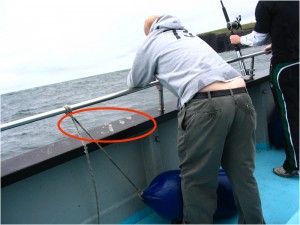
In related horse meat news, FSA has admitted five horses which tested positive for a drug harmful to humans were exported to France for food.


Earlier, shadow environment secretary Mary Creagh said “several” UK-slaughtered horses with phenylbutazone, or bute, may have been sold for food.

The FSA said it identified eight cases of bute-positive horsemeat in 2012, none of which was for the UK market.

The drug is banned from being consumed by humans within the EU.