A scenario-based survey was distributed via Amazon’s Mechanical Turk to collect data from 1,034 respondents; the tally of valid responses was 1,025. Partial least squares-based structural equation modeling (PLS-SEM) showed perceived vulnerability and perceived severity to be statistically significant; both also negatively affected customer intentions to patronize restaurants cited for serving foods that caused foodborne illness outbreaks.
Results suggest that type of restaurant is a significant moderator between perceived severity and customer intentions. The type of diner, however, based on frequency, does not moderate the relationships between perceived severity and perceived vulnerability and customer intentions to patronize restaurants that served food causing a foodborne illness outbreak (FBI).
Using protection motivation theory (PMT) (Rogers, 1975), this study’s findings contribute to understanding determinants and moderators of customer intentions to revisit restaurants after a foodborne illness outbreak.
Consumers’ return intentions towards a restaurant with foodborne illness outbreaks: Differences across restaurant type and consumers’ dining frequency
Hurriyet Daily News writes the senate of Van Yüzüncü Yıl University in the eastern province of Van has decided that one academic will dine with students every day after dozens of students living in a dormitory suffered from foodpoisoning last week.
On Nov. 29, a total of 337 students were hospitalized following complaints such as nausea and high fever. A special commission was established to investigate the suspected poisoning and officials from the local health and provincial directorate of agriculture collected samples from the food and the water students consumed.
While the investigation is still ongoing the university’s governing body decided that each day one academic staff should eat together with the students.
“Academics and students will share the same meal and the table to ease concerns and possible provocations. We have to stand by our students when they have concerns,” Peyami Battal, the rector, said. Battal was the first academic to dine with the students following the senate’s decision.
NBC New York reports a salad bar blamed its building after up to eight mice were seen running rampant in its midtown location Sunday night, and said the store was closing permanently next month.
“We closed this store for several days to give our team the Thanksgiving holiday off and did not notice the issue in a timely matter. Rodent activity has been a struggle for the concourse area in general,” Just Salad CEO and founder Nick Kenner said in a statement of the Rockefeller Center location.
Kenner added that the brand would moving out of the underground location entirely at the end of December.
Rockefeller Center owner Tishman Speyer did not immediately respond to a request for comment.
The mice were caught on camera by Eli Colon, who had just finished having dinner at a nearby restaurant about 7:30 p.m. when he saw something moving in the Just Salad.
He said he spotted about six to eight mice running and jumping inside the store, which is closed Sundays, and started to film. “When you see this kind of stuff you get very concerned for the health of the people who work there and the people who have lunch there every day,” he said.
In the video, the mice can be seen scampering around behind the counter in the kitchen. Colon has a 3-year-old with allergies so he was particularly concerned about the level of hygiene. sanitary grade of “A” displays mice like that and we were just passing by not searching for mice and those are noticeable. I’m sure there have to be more. Also questions about the standards and processes used by the sanitary organizations that rates these places and how reliable those are.”
Supplying a safe, nutritious, and increasing local food supply to any military outfit is a challenge.
I was privileged for a few years to provide my thoughts to U.S. military food safety types once or twice a year while at Kansas State University in Manhattan.
I made some lasting friendships, and deeply respect the challenges they faced.
Zulfikar Dogan of Ahval News writes that when the Turkish government issued a series of decrees reshaping the country’s institutions in the aftermath of the July 2016 coup attempt, none of the bodies it set its eye on were more significant than the Turkish Armed Forces.
The radical changes implemented in the military came under the spotlight last week when 21 commando trainees in the western province of Manisa were hospitalised with food poisoning. This followed mass outbreaks of food poisoning in May and June last year, again in training facilities in Manisa, where more than 1,000 soldiers became ill and one died.
Similar cases of mass food poisoning took place in other barracks across the country around the same time. Several government-linked catering companies have already lost their contracts, and the defence minister at the time, Nurettin Canikli, resolved to review catering tenders and introduce a new procurement procedure.
Now, spurred by this month’s poisonings, Özgür Özel, a member of parliament for the main opposition Republican People’s Party (CHP), directed a series of questions in the assembly to Defence Minister Hulusi Akar.
He asked whether the new procurement system described by Canikli last year had been put in place, and for information on the food supply at the Manisa barracks and on the companies involved in catering. He also demanded answers on the last date of inspection at the barracks and on the truth of claims that detachments tasked with checking food had been shut down.
But the ruling Justice and Development Party (AKP) rejected opposition proposals to create a special investigation commission and convene the Committee on National Defence in response to the cases of food poisoning.
After the cases of food poisoning, the Turkish Medical Association released a statement drawing attention to the vacuum left when the military medical institutions were turned over to the Ministry of Health. The association called for these institutions to be reopened and returned to the Turkish Armed Forces.
The Turkish Retired Non-Commissioned Officers Association gave its own statement on the matter, stressing that military doctors were soldiers as well as doctors and that the decrees had made the Turkish Armed Forces the only military in the world that did not have dedicated hospitals and doctors. The association also demanded to know whether private companies would be responsible for catering to Turkey’s troops in wartime.
The points Başbuğ and these associations raise are well illustrated by the response to the cases of mass food poisoning in May and June of last year. Since there was not adequate space in Health Ministry facilities to treat the thousands of poisoned troops, hundreds were forced to receive treatment on stretchers outside hospitals.
Similar scenes were replayed after the food poisoning this month. Handing military decision making to the civilian bureaucracy and dissolving military education and medical institutions has resulted in increased casualties.
Mr Fadli Salleh, who was married with two young children, had been in critical condition in the intensive care unit (ICU) of Sengkang General Hospital (SKH) after he was one of 72 people who suffered gastroenteritis, allegedly after eating bento boxes prepared by Spize’s River Valley outlet for an event last Tuesday. (the raw egg looks like a Salmonella factory).
The party was for a Deepavali celebration organised by security company Brink’s Singapore and held on its premises at Kaki Bukit.
Mr Fadli attended the gathering as he was deployed to Brink’s Singapore, though the event itself did not involve Sats.
A Sats spokesman said: “We are providing support to the family during this sad and difficult time. Please approach Brinks if you have further questions.”
Brinks offered its condolences to Mr Fadli’s family and said it it was “deeply saddened” that an employee of its business partner died.
A joint statement by the National Environment Agency (NEA), MOH and Agri-Food and Veterinary Authority last Friday said the authorities were notified of the cases last Wednesday and they conducted a joint investigation that day.
Spize’s 409 River Valley Road branch’s licence was suspended at 7pm that evening.
The statement added that they were investigating several cases of gastroenteritis traced to the consumption of food prepared at the restaurant.
“Several hygiene lapses were observed, including leaving ready-to-eat food uncovered in a chiller, not providing soap for hand washing (soap dispenser was faulty) and slotting knives for preparing ready-to-eat food in the gap between the food preparation tables,” said the statement.
Spize had supplied 88 bento sets to Brink’s Singapore and Spize’s co-owner Mr Haresh Sabnani had told The Straits Times on Wednesday before news of Mr Fadli’s death was confirmed that “on that day, 221 bento sets were sent to six different locations, but only that one location was affected”.
A new computer model that uses machine learning and de-identified and aggregated search and location data from logged-in Google users was significantly more accurate in identifying potentially unsafe restaurants when compared with existing methods of consumer complaints and routine inspections, according to new research led by Google and Harvard T.H. Chan School of Public Health. The findings indicate that the model can help identify lapses in food safety in near real time.
“Foodborne illnesses are common, costly, and land thousands of Americans in emergency rooms every year. This new technique, developed by Google, can help restaurants and local health departments find problems more quickly, before they become bigger public health problems,” said corresponding author Ashish Jha, K.T. Li Professor of Global Health at Harvard Chan School and director of the Harvard Global Health Institute.
The study will be published online November 6, 2018 in npj Digital Medicine.
Foodborne illnesses are a persistent problem in the U.S. and current methods by restaurants and local health departments for determining an outbreak rely primarily on consumer complaints or routine inspections. These methods can be slow and cumbersome, often resulting in delayed responses and further spread of disease.
To counter these shortcomings, Google researchers developed a machine-learned model and worked with Harvard to test it in Chicago and Las Vegas. The model works by first classifying search queries that can indicate foodborne illness, such as “stomach cramps” or “diarrhea.” The model then uses de-identified and aggregated location history data from the smartphones of people who have opted to save it, to determine which restaurants people searching those terms had recently visited.
Health departments in each city were then given a list of restaurants that were identified by the model as being potential sources of foodborne illness. The city would then dispatch health inspectors to these restaurants, though the health inspectors did not know whether their inspection was prompted by this new model or traditional methods. During the period of the study, health departments continued to follow their usual inspection procedures as well.
In Chicago, where the model was deployed between November 2016 and March 2017, the model prompted 71 inspections. The study found that the rate of unsafe restaurants among those detected by the model was 52.1% compared with 39.4% among inspections triggered by a complaint-based system. The researchers noted that Chicago has one of the most advanced monitoring programs in the nation and already employs social media mining techniques, yet this new model proved more precise in identifying restaurants that had food safety violations.
In Las Vegas, the model was deployed between May and August 2016. Compared with routine inspections performed by the health department, it had a higher precision rate of identifying unsafe restaurants.
When the researchers compared the model with routine inspections by health departments in Las Vegas and Chicago, they found that the overall rate across both cities of unsafe restaurants detected by the model was 52.3%, whereas the overall rate of detection of unsafe restaurants via routine inspections across the two cities was 22.7%.
The study showed that in 38% of all cases identified by this model, the restaurant potentially causing foodborne illness was not the most recent one visited by the person who was searching keywords related to symptoms. The authors said this is important because previous research has shown that people tend to blame the last restaurant they visited and therefore may be likely to file a complaint for the wrong restaurant. Yet clinically, foodborne illnesses can take 48 hours or even longer to become symptomatic after someone has been exposed, the authors said.
The new model outperformed complaint-based inspections and routine inspections in terms of precision, scale, and latency (the time that passed between people becoming sick and the outbreak being identified). The researchers noted that the model would be best leveraged as a supplement to existing methods used by health departments and restaurants, allowing them to better prioritize inspections and perform internal food safety evaluations. More proactive and timely responses to incidents could mean better public health outcomes. Additionally, the model could prove valuable for small and mid-size restaurants that can’t afford safety operations personnel to apply advanced food safety monitoring and data analysis techniques.
“In this study, we have just scratched the surface of what is possible in the realm of machine-learned epidemiology. I like the analogy to the work of Dr. John Snow, the father of modern epidemiology, who in 1854 had to go door to door in Central London, asking people where they took their water from to find the source of a cholera outbreak. Today, we can use online data to make epidemiological observations in near real-time, with the potential for significantly improving public health in a timely and cost-efficient manner,” said Evgeniy Gabrilovich, senior staff research scientist at Google and a co-author of the study.
According to Harvey Solomon-Brady of The Sun, police in Spain have arrested 18 people for selling filthy mojitos riddled with E.coli bacteria to unsuspecting tourists on the beaches.
The cocktails contained “green powders of an unknown composition which were thrown into the drink” and other ingredients which were stored in sewers or rubbish bins.
Public health officials say the mojitos were totally unsuitable for public consumption and could have caused diarrhea, gastroenteritis and other digestive disorders.
Raids were carried out on the beaches along the popular Barcelona coast that were packed with holidaymakers of all nationalities, including Brits.
The green dust is currently being examined in labs but police say everyone who drunk one of these mojitos was put at serious risk.
The 18 people arrested are suspected of making the cocktails and then selling them, usually for between five and ten euros.
The mojitos were made with suspicious ingredients hidden in bins including a mysterious green power
The drinks are sold to unsuspecting tourists on Spanish beaches who think they have come from local bars
Almost all the drains on one particular street were filled with supplies
Spain’s police officers are now cracking down on the illegal trade which can leave holidaymakers very sick
More than 60 people have reported symptoms of foodborne illness as of Wednesday after dining at Pasha Mediterranean Grill on Wurzbach Road, according to Metro Health. Read more here.
Nearly one dozen customers reached out to Pasha Mediterranean Grill in the 9300 block of Wurzbach Road and reported getting sick after dining at the restaurant, according to an inspection report from the San Antonio Metropolitan Health Department.
The restaurant’s managers also stated at least two employees had been sick with and reported symptoms of fever and diarrhea.
The manager told Metro Health that raw chicken and beef were discarded as a precaution after it was prepared by food handlers.
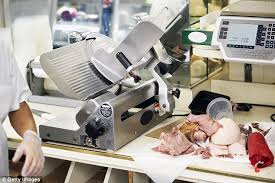
According to a food safety inspection report, an inspector found a live, large gray rat last week hiding in a meat slicer on a shelf in the back of Laurenzo’s Italian Market in North Miami Beach, Florida.
The inspector ordered a “stop use” on all food processing areas, the receiving area and on the receiving of food items.
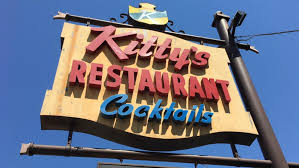
ABC News reports a Massachusetts restaurant has been shut down until further notice after nearly 40 people reported getting sick during a suspected salmonella outbreak.
The North Reading Board of Health posted an advisory saying the state Public Health Department had received complaints from 39 people who said they got sick at Kitty’s late last month. The state confirmed nine cases of salmonella and 30 suspected cases of salmonella.
The source of the outbreak was traced to the antipasto salad.
The restaurant was closed July 5 and allowed to reopen Friday after a sanitization but has since closed again.

 A scenario-based survey was distributed via Amazon’s Mechanical Turk to collect data from 1,034 respondents; the tally of valid responses was 1,025. Partial least squares-based structural equation modeling (PLS-SEM) showed perceived vulnerability and perceived severity to be statistically significant; both also negatively affected customer intentions to patronize restaurants cited for serving foods that caused foodborne illness outbreaks.