Friday we took baby Sorenne to her first pediatrician’s appointment. Everything was cool, we went and got some groceries, and on the way home a reporter from the Times of London rang me up. He wanted to chat about dioxin in feed in Ireland and had actually found a technical report me and a couple of students wrote almost a decade ago about dioxin in Belgian feed.
 Indeed, I was the same person, oops, hang on a sec, removed the car seat from car, then chatted for about 20 minutes as I trugged the groceries up the hill.
The stories are running Sunday morning in London and my quotes are an excellent example of baby brain: some of the right words are there, but much of what I said comes across as gibberish. Nevertheless, the stories provide an excellent overview of the dioxin-in-Irish-feed crisis.
In the central science laboratory in York last Saturday, scientist Martin Rose stared in disbelief at his dioxin detector. He had injected a sample of Irish animal feed into the machine, and the results had gone off the scale. The level of toxic contamination was at least 5,000 times the legal limit.
Rose knew there was some urgency about the analysis. The Irish authorities had asked the laboratory team to work over the weekend to get test results in a few days; normally it would take four weeks.
At 3.40pm on Saturday last, Alan Reilly, deputy chief executive of the Food Safety Authority of Ireland (FSAI), was given the bad news. He called Brian Cowen and outlined the grim scenario. While only 8% of Irish pork was contaminated, it could not be isolated quickly.
 Every minute that the taoiseach dallied, consumers were eating dioxin-laden Irish meat. How much damage that might be doing to people’s health was not known. Nevertheless, Cowen made his decision almost immediately. Aware of the damage it would do to Ireland’s pork industry, he ordered a full recall of all pork products from September 1.
“I actually can’t believe this decision is even being questioned,” said the FSAI’s Reilly. “I’m astonished by the people saying that we shouldn’t have ordered a recall. If we had left that meat on the shelves, leaving people to eat contaminated product, we would have been lambasted for being irresponsible, and in all probability we’d be out of our jobs.
Doug Powell, scientific director of the International Food Safety Network at Kansas State University, said off-the-scale readings from the feed justified the action.
“When you get those kind of numbers the response should be ‘let’s pull everything.’ If the public perceive that the authorities knew there was a risk and didn’t do anything, then they’d be crucified. From a crisis-management point of view it’s clear they did the right thing. Compare that with [the similar contamination crisis in] Belgium and we see the mess that came out of that.” …
The International Food Safety Network’s Powell believes that the government’s policy of annual testing is insufficient. “One test a year is only a snapshot. How do you know what they are doing the other 364 days?” he said. “We talk ‘farm to fork’ food safety all the time, but are the guys making the feed taking it seriously? We need to get a culture where the manufacturer is saying ‘we can’t mess this up’ rather than waiting for somebody to catch you. Everybody needs to have a culture of food safety. The marketplace can be brutal but that’s why we need to change attitudes.” …
 According to Powell, the way forward is to change the culture that led to the crisis. “There will be a stigma associated with the product for a while,” he said. “The marketplace is going to demand better. Supermarkets will want to know what is going into the feed of their pigs. The producers and the processors can’t just say they have testing in place; they’ve got to prove it.”
Below is the abstract from the technical report we produced on the dioxin in Belgian feed crisis of 1999. The entire report is available at http://www.foodsafety.ksu.edu/en/articledetails.php?a=3&c=9&sc=64&id=316
In the spring of 1999, dioxin was introduced into the Belgian food supply, including exports, via contaminated animal fat used in animal feeds supplied to Belgian, French and Dutch farms. Hens, pigs and cattle ate the contaminated feed and high levels of dioxin were found in meat products as well as eggs. What followed was yet another European food safety scandal filled with drama and public outcry. There were government investigations, the removal and destruction of tons of eggs and meat products and huge economic losses. The case study of this incident reported here illustrates how the crisis unfolded, and evaluates how the Belgian government managed and communicated this crisis, based on publicly available documentation. The government’s major error, based on the unfolding public discussion of the events, was a perceived failure to publicly acknowledge the crisis, resulting in accusations of a self-serving cover-up. The government’s poor crisis management and communication strategy became the focus of intense public and media criticism and blame. Moreover, the significant issue of poor quality control in the food and feed industries was pushed to the sideline. Not only was the reputation of the food supply tarnished but public confidence in the government was damaged, leading to the resignations of two cabinet ministers and the ousting of the ruling party in a national election. This study confirms the basic components required to manage food-related stigma:
• effective and rapid surveillance systems;
• effective communication about the nature of risk;
• a credible, open and responsive regulatory system;
• demonstrable efforts to reduce levels of uncertainty and risk; and,
• evidence that actions match words.

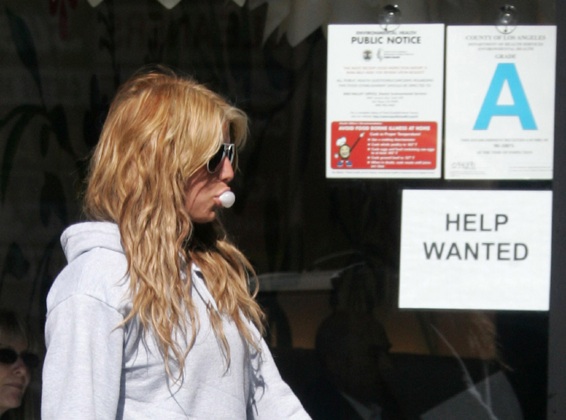 Despite a warning from the county grand jury, the Board once again declined Tuesday to impose a letter grading system designed to inform would-be diners about the health safety record of restaurants.
 After watching the mish-mash of federal, state and local approaches to restaurant inspection in a number of western countries for the past decade, I can draw two broad conclusions:
.jpg) Milk and dairy products are cornerstones of a healthy diet. However, if those products are consumed unpasteurized, they can present a serious health hazard because of possible contamination with pathogenic bacteria. An average of 5.2 outbreaks per year linked to raw milk have occurred in the United States between 1993 and 2006—more than double the rate in the previous 19 years, according to co-authors Jeffrey T. LeJeune and Päivi J. Rajala-Schultz of the College of Veterinary Medicine in Columbus, Ohio. …
Milk and dairy products are cornerstones of a healthy diet. However, if those products are consumed unpasteurized, they can present a serious health hazard because of possible contamination with pathogenic bacteria. An average of 5.2 outbreaks per year linked to raw milk have occurred in the United States between 1993 and 2006—more than double the rate in the previous 19 years, according to co-authors Jeffrey T. LeJeune and Päivi J. Rajala-Schultz of the College of Veterinary Medicine in Columbus, Ohio. … No one knows where this advice comes from, yet every holiday, the soundbites are trotted out like a recurring nightmare. It’s like a song by Journey or Styx or Bryan Adams – Don’t Stop Believing, I’m Sailing Away, Summer of ’69 — it keeps playing and it’s horrible.
.jpg)

.jpg) A year ago
A year ago  Doug wrote a book called
 Schlageck also asks, “where do the most significant food safety problems occur — on the farm or in the kitchen?
 Bracket started out in academia, established himself at the University of Georgia, then went to government as director of the Food and Drug Administration’s Center for Food Safety and Applied Nutrition, and then to industry as senior vice president and chief science and regulatory affairs officer of the Grocery Manufacturers Association. That’s a lot of titles. And gives Bracket a credibility others can only talk about. This guy walks the talk, and has done it in various shoes.