
Jim Romahn: It’s time for general Canadian public to speak up

I’ve know Jim Romahn for about 15 years. His writing drives a lot of bureaucrats ballistic, which is why he’s recognized as one of Canada’s best journalists writing about food and agriculture.

Jim just sent me this column about food, protectionism and hypocrisy. The South Koreans went somewhat nuts about American beef earlier this year, with riot police called to quell the protests of tens of thousands.

Six months later and the Washington Post reported, what was the big deal?

“Low-priced U.S. beef has appeared in supermarkets here in recent days, after a decision by three major retailers to start selling it again, and the reaction has been brisk business and no political fuss. Fifty tons of U.S. beef disappeared from shelves the first day it was offered for sale."

That’s usually the way things work. Politicians worried about particular constituencies will make outrageous claims on behalf of all Canadians or Koreans or consumers in general, in the absence of any data. Yet when people are allowed to vote at the grocery store, with their wallet, conventional wisdom becomes political nonsense.

So here’s Jim’s take on Canada, South Korea, trade and BS.

Pity the beef and pork producers eager to increase exports to South Korea.

Trade talks have been dragging on for years.

For sure, the beef and hog producers of South Korea oppose dropping tariffs on Canadian products.

But there’s also a big problem in our own back yard.

The Koreans want to sell us cars, but Chrysler, Ford and General Motors are lobbying hard to maintain the 6.1 per cent tariff. So is the Canadian Autoworkers Union.

There is another big problem – our dairy industry.

The trade talks have expanded to bring in other countries to make a deal more attractive, especially to increase exports.

So far those talks involve Singapore, Chile, Brunei and New Zealand.

New Zealand wants to export its dairy products. And everybody knows Canadian dairy farmers won’t budge one iota.

So, after 13 rounds of negotiations with South Korea, and a few with the so-called P4, Canada’s special interests are blocking trade deals that would quite obviously benefit beef and hog farmers and all Canadian consumers.

It’s one thing to stonewall at the World Trade negotiations. It’s even more upsetting when our politicians stonewall on country-specific negotiations, and this P4 group of minor countries.

What are the chances our politicians will agree to trade terms that will increase competitive pressure on our auto industry?

What are the chances they will undermine supply management for the dairy and poultry farmers?

What hope, then, that Canadians will be able to heed the advice of Prime Minister Stephen Harper when he says the current economic crisis calls for free trade.

Harper reminds world leaders that protectionism gets blamed for some of the depth of the Great Depression.

It’s not world leaders who need a lecture. It’s our own Canadian protectionists.

What’s more, Harper has the tools to back his talk with action.

 If he could make a deal with the P4, it would set the stage for him to take a far more aggressive position in the World Trade negotiations.

 And there the goal from the beginning of the Doha round has been to benefit poor nations. And among the poorest people in those nations are farmers.

The Canadian Federation of Agriculture and a series of agriculture ministers have pretended we can take a “balanced” position in trade negotiations, winning market access for our exporters and continued protection for the marketing boards.

It’s obviously not true.

The Doha round talks have repeatedly stalled. Thirteen rounds of negotiations with South Korea have failed to yield a deal. And Canada is unlikely to stay at the negotiating table with the P4 because it won’t compromise with New Zealand.

It’s time for the general Canadian public to speak up and demand an end to political pandering to special interests. We can’t afford to waste our money and resources, especially as the rest of the world moves to capture the benefits of freer trade.
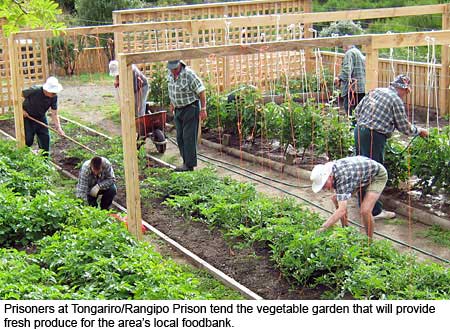
Fresh produce and food banks

‘Tis the season for giving, and increasingly, food banks are distributing fresh produce.

The New York Times reported earlier this month,

“… food banks are preparing ready-to-eat meals, opening their own farms and partnering with institutions as varied as local supermarkets and state prisons to help gather and process food. They are also handling much more fresh produce, which requires overhauling the way they store and distribute food.”

What the story doesn’t mention is the risks of foodborne illness associated with fresh produce and how best to manage those risks.

Years ago, I went to an industrial kitchen that produced meals for several Toronto food banks to review their food safety protocols. It was impressive, and whatever fresh produce they got went into soups and stews, for food safety and preservation reasons.

I’m all for increased consumption of fresh produce, through food banks and elsewhere. But acknowledge and manage the risks.
 

Chicago’s Wiener’s Circle closed after inspection

A Chicago eatery famous for “its rambunctious late-night crowd and foul-mouthed staff,” was closed after an inspection Thursday.

Wiener’s Circle, an iconic hot dog stand on the North Side, was shut down by the city today after inspectors found several food safety violations, including finding no hot running water at the Lincoln Park restaurant. …

The inspection followed an inspection Dec. 12 after a customer called 311, claiming the restaurant had a rodent infestation. There was no evidence found of rodents, the release stated, but management was ticketed for having an overflowing garbage container.
 

Dog treats continue to sicken in U.S., Australia

The U.S. Food and Drug Administration (FDA) continues to caution consumers of a potential association between the development of illness in dogs and the consumption of chicken jerky products also described as chicken tenders, strips or treats. 

FDA continues to receive complaints of dogs experiencing illness that their owners or veterinarians associate with consumption of chicken jerky products. The chicken jerky products are imported to the U.S. from China.  FDA issued a cautionary warning to consumers in September 2007.

Australian news organizations report the University of Sydney is also investigating an association between illness in dogs and the consumption of chicken jerky in Australia. At least one firm in Australia has recalled their chicken jerky product and the recall notification stated the chicken jerky product was manufactured in China.

FDA believes the continued trend of consumer complaints coupled with the information obtained from Australia warrants an additional reminder and animal health notification.

Chicken jerky products should not be substituted for a balanced diet and are intended to be used occasionally and in small quantities.  Owners of small dogs must be especially careful to limit the amount of these products. … FDA has conducted extensive chemical and microbial testing but has not identified any contaminant.


How safe is Canadian food? Don’t ask

The Maple Leaf makeover continued this week – a promotional video, settling all lawsuits for $27 million – yet some lingering questions remain. And neither Maple Leaf nor the Canadian Food Inspection Agency is rushing to answer the hard questions:

• who knew what when;

• why won’t Maple Leaf make their listeria test results public; and,??????

• what is Maple Leaf Food’s advice to those folks vulnerable to listeria.??????

Rob Cribb of the Toronto Star reports today that thousands of pages of documents detailing the federal government’s handling of this summer’s listeria outbreak are being withheld.

The Star and the CBC are seeking the records, which include emails sent between officials with the Canadian Food Inspection Agency (CFIA), Maple Leaf Foods and the City of Toronto, through an access to information request.

The CFIA has imposed extensions of a year or more on top of the normal 30-day deadline for responding to such requests.

The joint investigation used the federal access to information law in the hope that a request would yield records showing what went wrong, when officials first knew of the outbreak’s potential impact and how quickly the system kicked in to protect Canadians.

None of the records first requested four months ago have been released.

Repeated requests for an interview with Federal Agriculture Minister Gerry Ritz have been denied.

Paraguay, cockroaches, and food safety

I arrived to Paraguay yesterday, escaping the freezing rain from Kansas right on time. It was close to 90 °F (around 30° C). A lot of my friends back in Kansas were jealous, but with 50% humidity, the heat is almost unbearable.

This weather is also perfect for disease-transmitting mosquitoes and cockroaches. I have almost substituted body lotion with bug spray. And just yesterday, a dandy cockroach was climbing the curtains beside my bed (picture to the right).

I cannot even imagine how many of these are roaming the restaurants that I normally go to. Actually, I’m not even sure if there is a governmental agency dedicated to food safety or anything of the sort. If there is, I probably wouldn’t trust it.

Paraguay is one of the poorest nations in South America, with poverty levels of up to 50 percent and rising. Our government is a fiasco; corruption is institutionalized. We have lots to worry about.

The culture of food safety that Doug is all over about is not often one of these worries. I didn’t know what that meant until I became a news puller. It will be interesting to ask around and see what people think.

I will introduce my dad to the meat thermometer the next time he cooks an asado – typical barbecue of the region pic bellow – and I will report my findings. So keep tuned.

Oh Oprah: Celebrity cook makes food safety errors

“Doug. Oprah is cross-contaminating everything.”

Sure enough, there was Oprah on TV this afternoon in a repeat broadcast, with Christina Ferrare, who is supposedly cooking Oprah’s holiday meals.

In a three minute segment, Oprah and her gal pal managed to repeatedly touch raw poultry and then touch everything else on her celebrity kitchen set – including cooked poultry – never once washed their hands, incorrectly inserted a meat thermometer into the bird, and said the bird had to be cooked to 180-185F. The correct temperature is 165F.

Christina will not be cooking any of my meals. I’m sure she is relieved.
 

Top Five Records presents Top 10 food safety issues – 2008

Casey Jacob’s been working full-time with me for the past six months. We got  a bunch of papers coming out and she’s developing into a fairly decent writer. So here’s Casey’s version of the Top 10 food safety stories of 2008.

1. Salmonella in tomatoes/peppers – problems with tracing sources of produce
Companies that can provide efficient traceability systems for their products provide an advantage to the retail food service sector during recall and outbreak situations.

2. Melamine in Chinese infant formula – know your suppliers
Buyers need to know their suppliers, the risks that might be associated with their products, and how they should be managed. Suppliers should be able to demonstrate the safety of their products and processes, and have programs in place to manage risks.

3. Listeria in deli meats and soft cheeses — should vulnerable populations be warned?
Beginning in July, 20 Canadians were killed and dozens were sickened by an outbreak of Listeria monocytogenes in deli meats produced by Maple Leaf Foods.
Most of the deaths were related to the consumption of deli meats in places like nursing homes that were unaware of the recommendation that immunocompromised individuals avoid deli meats to reduce the risk of Listeria, unless they are thoroughly heated. Pregnant women are also advised to avoid unheated deli meats, soft cheeses, and other refrigerated ready-to-eat foods that can foster the growth of Listeria. Warnings for vulnerable young, elderly, ill, or pregnant. people on product labels or menus may provide information for those populations to make informed choices.

4. Restaurant inspection disclosure systems on the rise
The food service sector should recognize that certain diners are interested in the information provided by inspection reports and summaries. This increase in transparency highlights the importance of maintaining or improving. compliance with food safety regulations during inspections.

5. Downer abuse in California –poor animal welfare can impact business
It’s not enough for a producer or processor to say they are doing the right thing; they will have to be able to prove it using techniques like video surveillance. It is expected that proof of actions will become increasingly demanded and adopted over the next year.

6. Patrons use cell phone cameras to document food safety issues
Public health authorities in Toronto, Canada, shut down one of Chinatown’s most prominent restaurants after a passerby took a photo of rats on a countertop in February.

7. E. coli O157:H7 linked to UK butchers – no food safety culture and lax inspection
Creating a culture of food safety within an organization where all members from executives to front-line staff. have a set of shared values around risks will be come increasingly important for the foodservice sector.

8. Pot pies and chicken thingies – the danger of microwave use and the difficulties of consumer communication
USDA’s Food Safety and Inspection Service (FSIS) issued a public health alert in March advising the public of a salmonellosis outbreak associated with frozen, stuffed raw chicken products in Minnesota—the sixth of its kind since 1998.
 It may be prudent to blatantly inform consumers through product package labeling that if products contained are raw and should, therefore, not be prepared in the microwave.

9. Outbreaks at several universities — outbreak communication strategies

Several outbreaks of illness occurred at university campuses where communication departments were slow to take responsibility.

10. Sourcing locally – don’t make assumptions about safety

Organizations and individuals are making commitments to utilize local food sources. However, there is little discussion surrounding the microbiological safety of such food.  All foods, regardless of the location, should be sourced from trusted sources that provide evidence of safe practices, and claims regarding the safety of food should made in conjunction with sound data.

Dipping Areas: The food on Top Chef sucked so bad no one got kicked off

PhD student Ben is cursing me. I know he’s just finished watching Top Chef. So did I. So he had to endure smug stock-fixer Martha Stewart, who is constantly touching her hair when cooking. And the pretentiousness of food porn that is Top Chef.

But give credit when deserved. Two weeks ago some of the chefs served lamb and used a food thermometer – they just didn’t say anything about proper temp or whether the thermometer helped decide whether the lamb was done.

But this week, a refrigerator door was left open overnight and a bunch of pork and duck was sent to the trashbin after hours at room temp.

Said one aspiring top cheffie:

“I cannot serve meat that is not at a safe temperature. I could kill or make very sick everybody in the room.”

Oh, and 15 years before Top Chef showed up, Toronto comedy fabs, Kids in the Hall, were skewering the fascination with all things food porn.
 

Vilsack is Obama’s agriculture secretary – my kid farted

My kid just had this huge dump. Or a huge fart. Amy and I walked around in the snow this afternoon in our own sustainable transportation way, and when we got home I was holding her in the living room, and she passed gas for a good 30 seconds.

It was awesome.

I wouldn’t be much of a new parent if I didn’t talk about my kid’s bowel movements. And all this talk about the so-called sutainable ag community wanting some food porn type to be the agriculture secretary has me focused on baby farts.

Bob and Angelique brought us dinner and hung out – much better than baby wresting in a restaurant – and we were watching some Flight of the Conchords reruns. Murray the Manager had a poster in his office that said, New Zealand: Don’t expect too much and you will love it.

That’s how I feel about government appointments. Sure a political appointment can set a tone, make a fashion statement, but it’s not really going to change anything. And why wait for government – if you want to change something, go do it.