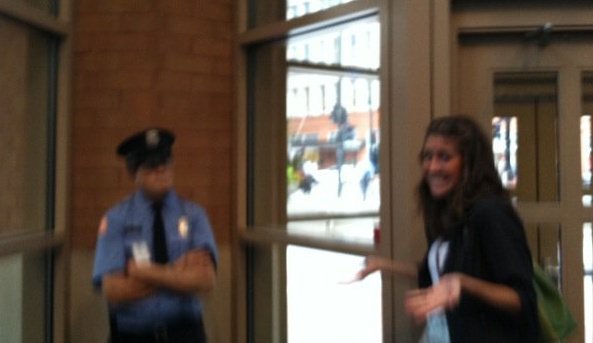
Be ready for storms, Hurricane Irene edition

As we move from one natural phenomenon (an earthquake) to another (Hurricane Irene), I’ve updated the food handler-targeted food safety in storms infosheet.

Food Safety Infosheet Highlights:
– Place a thermometer in your fridge and freezer.
– Have a tip-sensitive digital thermometer ready to check foods.
– Have items that don’t require refrigeration and can be eaten cold or heated on an outdoor grill.
– Freeze containers of water for ice and to help keep food cold in the appliances.
– Plan ahead by preparing coolers and knowing where dry ice and block ice suppliers are.

Click here to download the infosheet.

Red Rooster fined $50,000 for dirty kitchen

A Brisbane outlet of Australian fast-food joint Red Rooster has been fined $50,000 after pleading guilty to food standards breaches based on 2009 inspections – the third such conviction for the store.

Prosecutor Luke Godfrey said, "It’s clear there is a large degree of non-compliance particularly regarding cleanliness.”
.
But defense counsel Richard Perry said none of the matters before the court were likely to lead to the contamination of food.

He added that since the time of these offences in 2009, Red Rooster’s Moorooka store had gained a four-star rating from Brisbane City Council for food standards.

Chief Magistrate Brendan Butler accepted some charges seemed less serious than others, and that there was a significant improvement in the cleanliness of the store between council’s two inspections.

"However the extent of uncleanliness on the first occasion can’t be trivialized," he said.
 

8 sick with E. coli O157 in Ontario, source unknown

Two weeks ago, Canadian bureaucrats said there was an outbreak of E. coli O157:H7 linked with consumption of veal liver, but never did say how many people got sick or where.

Tonight, Grey-Bruce public health officials – that’s in Ontario, Canada — are trying to find a link in a cluster of genetically similar cases of E. coli O157 which has sickened eight people over the past several weeks.

Health spokesthingy Angela Newman said, "We’re looking at their food history, where they’ve been travelling, some of their activities in order to determine if there’s any linkage between the cases. At this point, we have not been able to identify any particular link.”

Those sickened range in age from six to 85. Some of the victims are still in hospital, but are "on the mend," Newman said. Some were "pretty ill."

No one seems to know much.
 

What I did on my summer vacation IAFP edition #3: Audrey Kreske

The International Association for Food Protection, an organization of over 3000 food safety professionals, celebrated its hundredth birthday in Milwaukee, WI a couple of weeks ago and I was there to partake in the festivities. Having pretty well everyone in the food safety world together in one spot is a great way to catch up on all things food safety and reconnect with old friends.  After a ridiculously short 15 minute connection flight from Chicago, IL, I arrived in Milwaukee just in time for the welcome reception; a great way to start a great meeting.

The first symposia I went to on environmental testing – a subject I want learn more about. Timothy Jackson’s (Nestle, USA) take home message was “testing is not control”. In food production, you are dealing with a dynamic system that is constantly changing and testing can be misleading. To explain how testing can be misleading, Tim had three decks of cards and handed them to three audience members. He told each audience member, your facility is the deck of cards and each card is a random sampling site. So you have 52 sites, if you only sample 25% of your sites each week that will be 13 sites. Tim then asked the audience members to pull 13 cards off and tell him when they found the ace of hearts. One audience member found the contaminated site in the first week and the other two found the ace of hearts during their last week of sampling. Using cards like Tim is a great way of explaining how testing can give you a false sense of security and an example I will use in class in the future. Ultimately, you can test all you want but if you don’t get out in the facility and watch practices you won’t catch the real problems.

Another symposia on human pathogens in the environment by Dr. Charles Gerba (The University of Arizona) reported high counts (CFU) of bacteria found on sponges, kitchen sinks, bath sinks, and cutting boards compared to low counts on toilet seats, bath counters, and bath floors. Surprisingly it was more common to find methicillin-resistant Staphylococcus aureus and Clostridium difficile on touch screens at grocery stores than in hospitals. Salmonella and E. coli can survive and grow in vacuum cleaner bags. This session was very interesting and from now on I will be washing my hands after touching any screen or vacuum cleaner bag.
During a session on education and training, a project by Majorie Davidson at U.S. Food and Drug Administraion, discussed something called the Health Belief Model. The Health Belief Model was developed by Irwin Rosenstock in the 60s to study and promote the uptake of health services. It was determined that demographics, perceived seriousness, perceived susceptibility, perceived benefits, and perceived barriers will affect the likelihood of action. In this project they studied the likelihood of adopting safe food handling practices in South America by hospital residents.

Another presentation by UGA MS student, Ashley Bramlett (University of Georgia) aimed at increasing food safety knowledge of college students through the use of social media. The researchers created a Facebook page including short food safety videos to be visited by college students in a general food science course. Ashley reported there was an increase in knowledge of students participating in class and commenting on the Facebook page but after the Institutional review board time frame ran out the Facebook page was deactivated. I believe the researchers could have prepared a mirror page excluding comments from participants in the study and continue to support the page.

After four days of food safety sessions and technical posters, this food scientist definitely had her fill of information and ideas for future food safety education endeavors.  Overall I attained my goal of attending sessions that increased my knowledge of food safety issues and learning about current food safety education projects going on across the world.
 

What I did on my summer vacation IAFP edition #2: Allison Smathers

North Carolina State University graduate student Allison Smathers writes,

I am a conversation enthusiast.  I often search for opportunities to meet new people and hear their stories.  The two people I sat next to on the plane home from the International Association of Food Protection annual meeting were no exception.  Dr. Bernadette Franco of University of Sao Paulo and Dr. Mario Killner of SFDK laboratory of product analysis S/c Limited were also leaving the conference with great fervor for progress in food safety.  We conversed on the sessions we attended as well as information we had learned and discussed during the conference.  Dr. Killner exclaimed, “if we could just get people to wash their hands, much of the foodborne illness burden would be lifted.”

Is it that simple and is that even a simple task?  Increasing compliance with handwashing guidelines is not a simple task.  After four days of meetings, symposia and technical sessions, I am more aware of the challenges confronted by food safety professionals.
During this short conversation on the plane, I reflected on the Food Safety Education Professional Development Group I had attended on my first-full day within the conference walls.  The discussion led by Dr. Ben Chapman and Dr. Renee Boyer was a great reminder that even though we all have the same goal in eliminating foodborne illness, we do not have the same objectives or ideas for the method to achieve this goal.  Topics of communication and science-based recommendations were some of the hot topics that got some members visibly agitated. 

Should we waste more time and resources deliberating over washing our hands for 15 seconds or 20 seconds?  Or should we encourage people to merely attempt handwashing, especially considering the low rate of compliance? 
Where to focus energy, time, and resources for best risk-reduction was one food safety objective I was burdened with during the conference.

Considering the focus of my MS research is to develop a food safety curriculum for farmers’ market vendors and managers,  education program development sessions were a priority for me to attend.  It is reassuring to know other people are passionately working in the same arena.  During one such session, Dr. Judy Harrison, Dr. Mimi Cooper, and Dr. Adrienne Shearer conveyed their role in educating our youth on food safety.  The curriculums they have developed are encouraging; especially considering our youth will soon be working in the food service arena and making my food.

The importance of knowing your audience and how to best communicate best risk-reduction behaviors was a common theme in each of the food safety for youth curriculums.  The methods for communicating the importance of handwashing were extremely different based on the age bracket each curriculum was aimed towards.  This session supported the fact that telling people to wash their hands and having them effectively change behavior is not a simple task.

What good is research and knowledge if it is not communicated in a manner that brings about better risk-reduction behavior?  Challenges in closing the gap between scientific assessment of risk and behavior is not new – it is a communication issue.  The disparities and issues associated with communicating food safety risks was also explored by people who do it all the time in a session called “How do I answer that?! How to respond to Questions from Media and Consumers.”  In this session, Frank Yiannas, Caroline Smith De Waal, and Dr. Pat Curtis further supported the notion that without proper communication of science, best risk-reduction practices will not become a part of the real world.

On Tuesday, the role of the government in bringing about food safety changes was communicated by the U.S. Secretary of Agriculture Tom Vilsack.  Vilsack confronted the difficulty of time, the economy, and budget cuts that will continue to impact the USDA’s role in food safety and protection of the “337 billion meals consumed every year by Americans.”  Vilsack communicated different actions the USDA has made alongside President Obama’s commitment to food safety because “an ounce of prevention is better than a pound of cure.”

The information, networking, and food safety camaraderie made the twelve hours of travel to get to the conference null and void.  The information that I learned during the conference will also become null and void if I do not communicate it effectively with those who can make changes toward better practices in risk-reduction such as handwashing.
 

What I did on my summer vacation IAFP edition #1: Ellen Thomas

North Carolina State University graduate student Ellen Thomas writes,

Like a bad 90s sitcom, “Milwaukee or bust” should have been emblazoned on matching shirts as fellow grad student, Allison, and I attempted to get to the state where 2.6 billion pounds of cheese are produced each year. It also happened to be the location of our first International Association of Food Protection meeting. Our connecting flight to Milwaukee was cancelled, and so we ended up visiting four airports in 12 hours before we finally arrived to catch the last few minutes of the welcome reception.

Luckily, this less than ideal traveling itinerary was just a rough start to a really great week.

The first sessions I attended were some of the professional development group (PDG) meetings.  Usually when I’m in a situation that combines students with established professionals an awkward disconnect pops up. I didn’t feel that way at the PDGs – not only were students welcomed, but encouraged to become active in these groups. I was passed a sign-up sheet almost immediately, and in many of the meetings, the topic of how to increase student involvement was a common discussion point.

I attended a very compelling symposia, a late-breaking session that focused on the recent sprouts-linked E. coli O104 outbreak in Europe.  With over 4,300 illnesses, including over 55 deaths, this outbreak provides a humbling lesson about microbes and a strong reminder to cut through politics, money and trade – food safety is about avoiding tragedies. This seminar was especially effective because various speakers discussed all aspects of the outbreak- from the unique pathogenicity to the crisis communication mistakes that occurred.

One of my favorite parts of IAFP was meeting students from other universities, as well as seeing the close bond that students still have with their former masters or PhD advisor, sometimes years after their collaboration. Not only is it good to be aware of what others in the field are researching, but open communication and the opportunity for further collaboration is invaluable in making progress toward the goals of IAFP. Additionally, the student mixer was a great time; I also attended a Brewers game and explored downtown Milwaukee.

Adding to the excitement of the week was seeing Dr. Lee-Ann Jaykus, one of my committee members at NC State, serve as IAFP president; this, combined with the announcement by Sec. of Agriculture Tom Vilsack of a $25 million USDA grant focused on norovirus, being awarded to Dr. Jaykus and her team made this week pretty cool as well.

I came home to Pennsylvania for a bit before class begins- exhausted, and I think I may remove cheese from the menu for a while.                                                                        
 

Friend of barfblog, Lee-Ann Jaykus named Tar Heel of the week by Raleigh News & Observer

At some point during the 2004 IAFP annual meeting I hung out with Lee-Ann Jaykus at a reception. Doug hooked me up with invites to the good parties, and as a goofy and somewhat timid graduate student I was a bit awkward around all the folks who were there. Lee-Ann and I started chatting near a cheese platter and she asked me what I was working on — GAPs and media analysis — and we talked about risk communication stuff for a while (awkwardly, I’m sure). When my current position was posted, Lee-Ann was the first person I called to find out about NC State; she was great ambassador for the University and region.
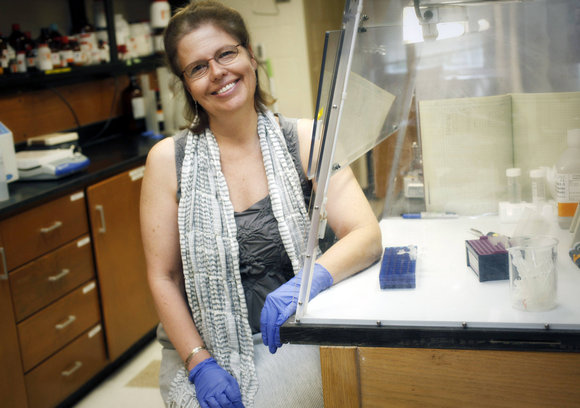
In Sunday’s Raleigh News & Observer, Marti Maguire profiled Lee-Ann and her leadership around foodborne viruses. Lee-Ann’s focus has culminated in a major award, $25 million over 5 years from USDA’s National Institute for Food and Agriculture, for a team of research, public health and extension folks (full disclosure, I’m also a member of this team).

Maguire writes, "Lee-Ann Jaykus thinks a lot about things most people would rather forget.
Understanding microscopic nasties such as norovirus and Hepatitis A, and their unpleasant effects on the bodies they inhabit, is a big part of her job as a food safety researcher.

The stomach bugs that she studies don’t make for good dinner party conversation, but her unusual specialty did help her land a $25 million USDA grant to study food-borne viruses.

The grant, announced this month, was the largest ever received by the College of Agriculture and Life Sciences at N.C. State University. And it is largest ever awarded for food safety by the USDA’s National Institute for Food and Agriculture.

As part of the grant, Jaykus will lead the multi-university Food Virology Collaborative, which will tackle the problem of noroviruses, the most common cause of food poisoning, and similar bugs. The role will cap a long career in food safety that started well before a steady stream of E. coli deaths, cruise ship outbreaks and other scares made it a hot topic.

"This is my minute of fame," said Jaykus, a professor at N.C. State since 1994 in the food science and microbiology departments.
Jaykus has built a career studying food-borne viruses that have traditionally gotten far less attention than bacteria such as salmonella and E. coli. Norovirus (also known as Norwalk’s virus) and Hepatitis A make people sick, but cause few deaths, and they are difficult to study in the lab.

When she embarked on this research in the 1990s, there was skepticism in some quarters over whether it was feasible, or even worthwhile, to focus on food-borne viruses, said Mark Sobsey, director of the Environmental Microbiology Laboratory at UNC-Chapel Hill, who oversaw Jaykus’ Ph.D. studies. The large USDA grant confirms the field’s significance. "The evidence has emerged over the last couple of decades and it’s very clear that this is a major problem, and no one knows what the best approaches are to prevent it, to reduce the risk," Sobsey said.

Jaykus is now among the top dozen researchers in the field of food safety microbiology, said Bob Buchanan, director of the Center for Food Safety and Security Systems at the University of Maryland. He’s also impressed with her skills as an administrator, educator and advocate for her field – so much so that he’s tried, unsuccessfully, to lure her to Maryland. "She’s been a groundbreaker not only in the science, but in getting additional support for virology," said Buchanan. "She’s been an articulate spokesperson."

Jaykus was born in a rural-turned-suburban area of Connecticut that she compares to Cary in the 1970s. Her father was a land surveyor, her mother an elementary school teacher. She pegs her interest in science to an excellent high school biology teacher, though she can trace her interest in food safety back further, to news reports about botulism in the 1960s, and family illnesses that she has diagnosed, in retrospect, as a norovirus and rotavirus. But she took a somewhat unusual path to academia. After earning her master’s degree from Purdue University, she worked for seven years in private industry, first for Frito-Lay, and then at a private lab that tested for food contaminants. She and her first husband started the lab in California’s San Joaquin Valley for an existing company. It was there that she got her first taste of the sleuthing side of food safety, thanks to an outbreak of listeriosis in the 1980s that was linked to unpasteurized Mexican cheese. Jaykus had to figure out how to test for the bacteria, which had caused stillborn children, at time when the tools weren’t readily available. It made a huge impression her, in part because she was pregnant with her second child.
"As a young mother, I could relate to the terror of losing a child," she wrote in a column for Food Protection Trends. "As a lab manager … I appreciated that there was so little we understood about this organism and how industry and regulators alike were struggling to deal with the issue."

Sensing an emerging area of research and ready for a change, she came to Chapel Hill to earn her Ph.D. By then, she was divorced with two young children. But professionally, her timing was impeccable. Scientists were just learning to trace outbreaks of food-borne diseases to their sources, and realizing how big a problem they were. "Food science as an impending health concern emerged just about when I was going to grad school," she said. She went to N.C. State after graduation, where she built a research program focused on identifying food-borne viruses using molecular techniques, as well as risk assessment and other niche specialties.

Jaykus said the USDA grant has monopolized her time for well over a year. (The application checked in at 800 pages). She first learned about it in her email inbox. "I had three or four messages from people I’ve worked with over the years saying, ‘You’re the most logical person to go after this, and I want to work with you,’ " Jaykus said.

She keeps her sense of humor about a specialty that is rife with potty jokes, and she is quick to cite times when her knowledge was not welcome. The classic example of a norovirus outbreak, for instance, is on cruise ships, confined quarters where the illness spreads quickly. When she went on a cruise with her parents, she scoffed at her fellow passengers who found comfort in hand sanitizer stations, commenting that the antibacterial spritz was useless.

Her parents also like to remind her of a New Year’s party she ruined by talking about her dissertation topic – detecting viruses in raw oysters, which also happened to be on the menu. "I work with diseases that make people throw up and have diarrhea," she said. "It always makes for a very nasty table conversation." Still, she said, she’s not overly concerned about what’s in her food. She avoids certain foods, such as oysters, mainly because she doesn’t like them.

"My husband thinks that I overcook pork, but I don’t overcook it because of safety," she said. "I forget that it’s in the oven."

 

Tulsa morning show DJs hit by suspected food poisoning

I listened to a lot of Howard Stern when I was a grad student. For a couple of years, I drove all around southern Ontario visiting vegetable greenhouses, talking to farmers about food safety practices and taking samples for microbiological testing. The early mornings and distance between farms was made easier by listening to the King of All Media. I didn’t find any of the other radio morning shows in the region all that compelling.

Demonstrating the power of social media, A Tulsa OK radio show crew, described as Howard Stern-type format, has alleged that a fan of a rival show, and kitchen staff member of a Red Robin restaurant, gave them tainted food after receiving instruction from other fans through a Facebook page.

According to the witty Courthousenews.com,

The morning crew for 106.9 K-Hits aka The Billy Madison Show sued Red Robin International and cook manager Mathew Rand in Tulsa County Court. The four members of the morning crew – Nathan Norris, Jacob Day, Bishan Jones and William Garvey – say they "held a business meeting" over lunch at the Red Robin on Kenosha Street in Tulsa on Nov. 3, 2010.

In a somewhat grammatically challenged paragraph, the complaint states: "After finishing their lunch, and as Plaintiff’s were preparing to pay for their lunch, one of the Show’s listener’s emailed Plaintiffs informing them that one of Defendant’s cook managers posted on a competitor’s Facebook webpage that Plaintiffs were dining at the Premises and he proceeding to take a poll on what he should do to Plaintiff’s food."

Garvey says he "immediately confronted the Premises manager about the incident," and the manager told him "that the cook manager will be suspended indefinitely."

Norris says he suffered "severe migraine and nausea" which caused him to leave work early that afternoon, and that evening, "after attempting to eat dinner, began vomiting uncontrollably and visited an urgent care center," where he was "diagnosed with severe food poisoning."

The next day, Day, Jones and Garvey "also visited an urgent care center and were also diagnosed with food poisoning," the complaint states. The morning crew says "Rand poisoned Plaintiff’s food" while working for Red Robin as a cook manager. They seek punitive damages for battery, negligence and vicarious liability.

Facebook and Twitter are increasingly being used for instant dialogue and engagement. Regardless of whether the allegations are found to be true or not, the public discussion of whether a food handler should contaminate a patrons food isn’t a good thing for a food safety culture, or business. Based on the symptoms and onset of reported illnesses, my guess for the cause of illnesses is something chemical; pretty hard for a cook to whip up some pathogen concoction that would work that quickly, even if a Mallrats-esque stinkpalm was utilized.


Antifreeze-tainted vinegar kills 11 in China, 120 poisoned

Vinegar contaminated with anti-freeze was suspected of causing the deaths of 11 people who ate an evening feast during the ongoing Ramadan holiday in a Muslim area of China.

Local police told state media that vinegar stored in two plastic barrels that had previously contained anti-freeze was thought to be the cause of mass poisoning after about 150 people ate together on Friday evening in a remote village in Pishan county in the western region of Xinjiang.

Investigations were continuing and toxicity tests had still not confirmed the source of the poisoning, the official Xinhua news agency quoted a police statement as saying.

The statement said about 120 people were poisoned with one person still in critical condition by Monday.
 

Name and shame for Canberra restaurants?

Two months after a senior health official told the Canberra Times that Canberrans must not be told which of the city’s restaurants were deemed too unhygienic to serve food, because naming them would undermine the rule of law, Canberra wants to introduce a name-and-shame program for restaurant inspection disclosure.

Like Washington, D.C., the Australian Capital Territory is a unique government structure all its own. Although located within the Australian state of New South
Wales, which includes Sydney, ACT and the federal capital of Canberra can apparently make its own rules – at least regarding restaurant inspection disclosure.

ACT Chief Minister Katy Gallagher told ABC News recommendations include forcing restaurants to display official shame notices in their windows.

"We’ve had a couple of examples where businesses have been required to close and a sign may go up saying business closed due to holiday or something like that. So we are trying to look at how we manage that. That is, if you are closed because of a food safety reason that you have to display that clearly so people can see the reason behind the closure."

Ms Gallagher says they are also considering a ‘scores on doors’ system, which she says works well overseas in Singapore and Canada.

"Restaurants get rated against an ‘A to E’ based on their food handling techniques and inspections that are done. Obviously everyone would aspire to having an ‘A’.

Can’t speak for Singapore, but that’s not quite how it works in Canada, where a mixture of colors, grades and websites are used in various counties.

Regardless, Ms Gallagher said – without talking to industry – that she expects the industry will welcome the ideas.

"It is about rewarding those that do the right thing. It is about identifying the poor performers, it’s not actually doing anything against those who are doing the right thing.”