Horse head in lasagna?

Fictional movie director Jack Woltz, after refusing to cast a part to The Godfather’s godson, Johnny Fontane, woke up with a horse head in his bed.

Europeans are waking up to horsemeat in food – some with horror, some with godfather-horse-head-scene01delight.

Food fraud and hucksterism is as old as human trade.

But given the depth, the cultural variations and the criminal element involved in substituting cow with horse, one wonders – what were all those food inspectors doing all along?

The New York Times reports that few things divide British eating habits from those of Continental Europe as clearly as a distaste for consuming horse meat, so news that many Britons have unknowingly done so has prompted alarm among shoppers and plunged the country’s food industry into crisis.

A trickle of discoveries of horse meat in hamburgers, starting in Ireland last month, has turned into a steady stream of revelations, including, on Friday, that lasagna labeled beef from one international distributor of frozen food, Findus, contained in some cases 100 percent horse meat.

The widening scandal has now touched producers and potentially millions of consumers in at least five countries — Ireland, Britain, Poland, France and Sweden — and raised questions of food safety and oversight, as well as the possibility of outright fraud in an industry with a history of grave, if episodic, lapses despite similarly episodic efforts at stricter regulation and reform. Already, tens of millions of hamburgers from several suppliers have been recalled.

Though public health is not at issue now, government oversight is, and the latest developments have echoes of earlier European food safety crises, including mad cow disease in Britain and dioxin in eggs and poultry in Belgium. Those tended to mushroom once investigators traced products through the Continent’s complex web of producers, food makers and suppliers.

The Guardian notes the eating of horses has a long history. Many prehistoric cultures both ate and sacrificed horses, and the ban on horse meat by Pope THE GODFATHER, from left: Al Pacino, Sterling Hayden, Al Lettieri, 1972Gregory III in 732 was in part an attempt to eradicate pagan rituals in the Germanic states.

Bowing to cultural concerns, the UK Food Standards Agency didn’t say horse meat was safe as long as it was piping hot, but rather issued interim advice to public institutions, such as schools and hospitals, caterers, and consumers purchasing from caterers, reminding public of their responsibility for their own food contracts. We expect them to have rigorous procurement procedures in place, with reputable suppliers.

Sweden’s National Food Agency (Livsmedelsverket) is considering reporting food giant Findus to the police over the horse meat lasagne scandal, and France is very, very angry, blaming Romanian butchers and Dutch and Cypriot traders as part of a supply chain that resulted in horsemeat disguised as beef being sold in frozen lasagna around the continent.

At some point, maybe a retailer will take responsibility for the food it sells.

The following animation is over the top, but indicative of what’s out there.

Fail; bad food advice on kibbeh, snow and deer; mocked by moose cleanse

From MTV, the network that brought The Hills and Jersey Shore but doesn’t actually play music videos anymore, comes Buckwild, a so-called reality show based in West Virginia. As part of an initiation, one character willingly ate raw deer meat.

Fail.

NPR published a blog saying the secret to a good kibbeh, a Lebanese dish combining raw meat, bulgur and onion, is freshness and trust.

“Freshness remains key to good, safe raw kibbeh. One must be certain of the meat’s provenance. … Of course, grinding the meat yourself at home is a surer way to know your meat is safe.”

Tell that to sick people in separate kibbeh-linked outbreaks in Ontario and Michigan.

Fail.

NPR also published a piece claiming that snow is a fab ingredient for a variety of dishes, some cooked and some raw, like New England maple syrup on snow.cooler.feb.13snow. Snow makes a great cooler when electricity is unavailable (or when it is). I’ll stick to ice from chlorinated or tested water.

And then there’s the moose cleanse.

Did you know that pound for pound, the moose is the leanest ruminant on earth, begins a breathlessly satirical piece in The Atlantic.

Did the author know that all ruminants are natural hosts for shiga-toxin producing E. coli?

“A moose cleanse is a natural way to release those toxins, to give your body a break. It’s pure, it’s simple, and it’s natural. A moose is both in the forest and of the forest. And after just a few days on the moose cleanse, you will be too. …

“When you moose, you’ll be able to process way more birch through bark stripping than you could ever just eat at one time. This way you maximize the nutritional benefits of ingesting 10, even 15 pounds of roughage every day. Without the added burden of birch digestion – which takes a lot of time and energy – your body will be free to detoxify your liver and kidneys. …

“Because moose don’t have upper front teeth, you’ll want to make sure to avoid using yours whenever possible in order to extract the maximum possible benefits from your food.”

314 sickened in 2010 outbreaks of Cyclospora infection on an Australian cruise ship

Gibbs et al. report in the March issue of Epidemiology and Infection that in 2010, an outbreak of cyclosporiasis affected passengers and crew on two successive voyages of a cruise ship that departed from and returned to love.boat.cyclosporaFremantle, Australia. There were 73 laboratory-confirmed and 241 suspected cases of Cyclospora infection reported in passengers and crew from the combined cruises.

A case-control study performed in crew members found that illness was associated with eating items of fresh produce served onboard the ship, but the study was unable conclusively to identify the responsible food(s). It is likely that one or more of the fresh produce items taken onboard at a south-east Asian port during the first cruise was contaminated. If fresh produce supplied to cruise ships is sourced from countries or regions where Cyclospora is endemic, robust standards of food production and hygiene should be applied to the supply chain.

Multiple outbreaks of a novel norovirus GII.4 linked to an infected post-symptomatic food handler in NZ

Thornley et al write in the current issue of Epidemiology and Infection that multiple norovirus outbreaks following catered events in Auckland, New Zealand, in September 2010 were linked to the same catering company and investigated.

Retrospective cohort studies were undertaken with attendees of two events: 38 (24·1%) of 158 surveyed attendees developed norovirus-compatible illness. Attendees were at increased risk of illness if they had consumed food vomit(7)that had received manual preparation following cooking or that had been prepared within 45 h following end of symptoms in a food handler with prior gastroenteritis. All food handlers were tested for norovirus. A recombinant norovirus GII.e/GII.4 was detected in specimens from event attendees and the convalescent food handler. All catering company staff were tested; no asymptomatic norovirus carriers were detected.

This investigation improved the characterization of norovirus risk from post-symptomatic food handlers by narrowing the potential source of transmission to one individual. Food handlers with gastroenteritis should be excluded from the workplace for 45 h following resolution of symptoms.

Barf in dining area and other food safety failures: 305 sickened in Wyoming Gloden Corral norovirus outbreak

At least 305 individuals became ill with norovirus gastroenteritis after patronizing Golden Corral in Casper, WY from November 17, 2012 through December 19, 2012.

The Wyoming Department of Health has issued a complete report on the outbreak, and identified a number of potential environmental health concerns golden-corralthrough both patron and employee interviews.

Investigators received several reports of dirty dishes being stacked for use in the buffet line, vomitus accidents in the dining area, raw or undercooked food being set out for consumption, employees working while ill with gastrointestinal symptoms, refilling food on buffets without replacing service bowl or service utensils, lack of glove use when handling ready-to-eat foods, cross-contamination between raw and cooked foods, and other reports of general poor food-handling practices.

Both patrons and employees independently reported several vomitus accidents in the dining area and in the restaurant’s bathrooms. Investigators noted these events when the interviewee was able to provide a concise date of occurrence.

Recommendations were made for immediate control and as a result of the investigation.

 The restaurant must follow all rules and regulations contained in the Wyoming Food Safety Rule.

 The Wyoming Food Safety Rule currently states that any food-handling staff person who is known to be ill due to gastrointestinal symptoms such as diarrhea or vomiting should be excluded from work until at least 48 hours has passed since that individual’s last bout of diarrhea or vomiting (whichever occurred last). The 48 hour recommendation is the minimum, as many norovirus-21foodborne pathogens, including norovirus, can be shed by previously-ill persons for longer than 48 hours.

 The Wyoming Food Safety Rule also specifies that the restaurant shall require food-handling employees (i.e., kitchen staff, servers, etc.) to report to the person-in-charge information about their health and activities as they relate to diseases that are transmissible through food. A food-handling employee shall report the information in a manner that allows the person-in-charge to reduce the risk of foodborne disease transmission, including providing necessary additional information, such as date of onset of symptoms and illness, or of a diagnosis with symptoms if the food-handling employee has diarrhea, vomiting, jaundice, sore throat with fever or lesions containing pus, an infected wound, has been diagnosed with Salmonella, Shigella, E. coli, Hepatitis, or norovirus.

 Enhanced surface disinfection with a product effective against norovirus. A concentrated bleach solution was suggested.

 To minimize bare hand contact with ready-to-eat foods, such as lettuce, the restaurant should consider requiring the use of gloves when employees are handling those food items. Please note that glove use does not negate the need for proper hand-washing.

 All vomitus accidents should be treated as if they are highly contagious. Staff should use gloves and a concentrated bleach solution to disinfect affected areas. Staff should try to quarantine the area of the accident until the area is adequately disinfected. Staff should quarantine any rags, towels, or mops that were used to clean up the vomitus until they are adequately disinfected to prevent further transmission.

 Report any suspected cases of foodborne illness to health officials. Public health officials provide important services to business owners which include an objective investigation of the problem and providing quick, accurate, and effective mitigation strategies.

 Continue to consult with local environmental health specialists when questions arise about safe food-handling and consider ServSafe training for all kitchen staff.

After norovirus outbreak, California steakhouse set to reopen

County health types closed Fleming’s Steakhouse in Walnut Creek, California, Wednesday after confirming that the restaurant was the source of a norovirus norovirus-21outbreak that had made several diners ill earlier in the week.

An employee at the restaurant tested positive for norovirus.

Fleming’s Steakhouse will open Friday at 5 p.m. after getting a clean bill from the health department.

In January, a deli in Concord was closed because of norovirus.

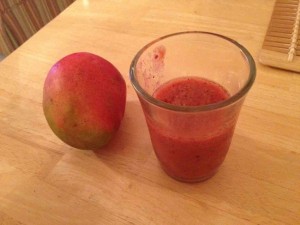
Why didn’t they do this before? Eastern cantaloupe, mango growers now super serious about food safety

Two unrelated items from The Packer that both beg the question: what took you so long?

The formation of the Eastern Cantaloupe Growers Association follows a string of cantaloupe recalls, including a deadly 2011 listeria outbreak linked to mango.dec.12cantaloupe from Jensen Farms, Holly, Colo., and an August multistate outbreak traced to Chamberlain Farms Produce Inc., Owensville, Ind.

Food safety standards adopted by the group are the subject of a Feb. 11 meeting in Atlanta. More than a dozen retailers were anticipated at the meeting.

Growers from Indiana to Florida met in Atlanta in early January to discuss food safety, agreeing to form the association.

To display the group’s seal, growers are required to maintain Global Food Safety Initiative auditing metrics which include water specifications, soil amendments and sanitation and equipment cleaning standards that exceed those mandated by GFSI, Hall said.

Audits from any third-party auditor with GFSI benchmarking is accepted in the program, and growers must have at least one surprise audit during production to ensure adherance to the association’s standards, he said.

Meanwhile, the National Mango Board is inviting growers, packers, handlers and importers to the first mango food safety conference.

A table of cantaloupe-related outbreaks is available at: http://bites.ksu.edu/cantaloupe-related-outbreaks.

Most recently, 143 people in Canada and the U.S. were sickened with Salmonella from Mexican mangoes.

69 sick; Tel Aviv Hepatitis A increases may be linked to market veggies

Dozens of hepatitis A cases reported in the Tel Aviv area in Israel since last year may be linked to vegetables health officials say, according to a Haaretz report Friday.

Israeli health officials say since the beginning of 2012, there have been 69 cases of the viral liver disease reported from the area, with the majority tel.aviv.marketreported in the latter half of the year.

The Global Dispatch says this is a dramatic increase from the seven cases reported in all of 2011.

According to the report, Health Ministry officials believe the source may be vegetables sold in open-air markets in the south of the city.

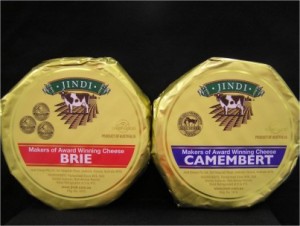
Third Listeria death linked to Australian cheese company

A third person has died following a listeria outbreak linked to soft cheeses produced in the Australian state of Victoria.

Victoria’s acting chief health officer, Dr Michael Ackland, has confirmed the death of a 68-year-old New South Wales man in late January was linked to the listeria contamination of Jindi cheese products.

An 84-year-old Victorian man and a 44-year-old Tasmanian man have also died of listeria infection. A pregnant NSW woman miscarried. More than 20 listeriaother cases have been reported.

Jindi has voluntarily recalled all batches of cheese manufactured up to January 6.

The Newcastle Herald cited Dr Ackland as saying the outbreak, which has been traced to the company’s factory in Gippsland, was the largest the nation had suffered and one of the most complex. He described the process of tracking the outbreak to Jindi as ”an important piece of investigative work”, which involved obtaining food histories from victims and intelligence from OzFoodNet, the federal food diseases surveillance unit, as well as bacterial DNA tests to determine the strain of listeria.

On January 7, Jindi’s French-owned parent company, Lactalis – which bought the gourmet cheese maker from Menora Foods in November for an estimated $20 million – voluntarily committed to a quality assurance program jindi.cheese.listeria.13that ”significantly cranks up” its existing food safety standards and has satisfied Victoria’s chief health officer.

Jindi’s chief executive, Franck Beaurain, has not returned telephone calls from Fairfax Media for more than a week.

Listeria risk from raw milk cheese 50-180X greater than pasteurized; FDA, Health Canada publish draft risk assessment

The U.S. Food and Drug Administration has announced a draft quantitative assessment of the risk of listeriosis from soft-ripened cheese consumption in the United States and Canada. The risk assessment is a joint effort between FDA and Health Canada.

The new FDA/Health Canada draft risk assessment found that the risk of listeriosis from soft-ripened cheeses made with raw milk is estimated to amy.pregnant.listeriabe 50 to 160 times higher than that from soft-ripened cheese made with pasteurized milk. This finding is consistent with the fact that consuming raw milk and raw milk products generally poses a higher risk from pathogens than do pasteurized milk and its products.

While raw milk and raw milk products put all consumers at risk, the bacteria they may contain can be especially dangerous to people with weakened immune systems, older adults, pregnant women and children.

FDA invites comments that can help FDA and Health Canada improve:

the approach used;

the assumptions made;

the modeling techniques;

the data used; and

the clarity and transparency of the draft quantitative risk assessment documentation.

To submit comments electronically, go to docket FDA-2012-N-1182 on regulations.gov. The comment period opens February 11, 2013 for 75 days.