Are NYC health inspectors inflating restaurant grades?

So asks Nell Casey of The Gothamist.

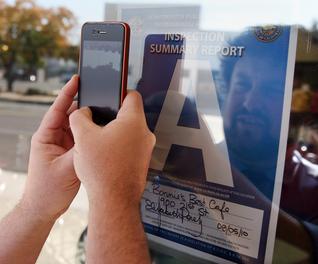
New York’s restaurant inspection system has been criticized for being unfairly punitive since its controversial inception under the Bloomberg administration. Even though fines have been dramatically reduced and qr.code.rest.inspection.gradethe system altered to be more equitable, restaurant owners are still struggling with poor grades, which can severely impact their business.

That’s why it’s surprising to learn that city health inspectors seem to rather give a restaurant an “A” grade if the score hovers close to the 13 points or less needed to obtain that letter. On his data-heavy blog, Pratt City & Regional Planning faculty member Ben Wellington studies grading data since the program’s beginnings in 2010 and finds that three times as many restaurants received a score of 13 than a score of 14, which would have earned them a “B” grade. Wellington surmises that inspectors must be using “discretion” when issuing their final tally of violations.

Much like a teacher might boost a student’s final grade when taking other factors (attendance, participation, effort, etc.) into consideration, Wellington believes inspectors are “turning a blind eye towards that last violation that would put a restaurant over the edge.” 

29 sick after Australian wake; again with the eggs?

Suspected food poisoning left most guests at a Canberra wake last week bedridden, with some interstate travellers having to delay trips home because of vomiting, a Canberra woman says.

Cheryle Parkes said 29 of the 40 guests had become sick after eating at her mother’s wake at the Raiders Belconnen club in Kippax last Wednesday.

Cheryle ParkesThe 61-year-old Ngunnawal resident suspects chicken and egg sandwiches were the cause.

”My brother-in-law had such severe diarrhoea, my sister had shocking vomiting,” Mrs Parkes said.

”Another lady, my sister’s sister-in-law, said she’d never been so sick in her life.

Raiders club manager Craig Potts said staff were working with ACT Health. ”If there is an issue we need to deal with it, but currently they haven’t given us any findings and therefore we are unable to deal further with this in this instance,” he said.

”As soon as the findings are made available we will be in contact with the client we dealt with and will take any needed action as such.”

An ACT Health spokeswoman would not comment on the specific complaint on Wednesday.

”ACT Health can confirm we are currently investigating a number of possible food poisoning outbreaks,” the spokeswoman said in a statement. ”We are unable to comment on the source or cause of any alleged outbreaks.”

While the $627 spread for the noon wake included a cake platter, hot foods and a cheese and dry fruit offering, Mrs Parkes said the sandwiches were the common raweggdenominator in those who had later become ill.

”I had a quarter of a quarter of a chicken and mayo sandwich,” she said.

”I’d say [mayonnaise] is in the egg too.”

Mrs Parkes said she was disappointed by the lack of detail.

”What did they find? I need to know what has made us sick,” she said.

Mrs Parkes said she wanted a refund from the Raiders club for the aftermath of the important day.

”You go to celebrate your mother’s life and everyone’s ill, and you’re apologizing to them for being so sick,” she said.

Home-made mayonnaise was to blame last year when 140 diners fell ill and 15 were admitted to hospital after eating at the Copa Brazilian Churrasco restaurant on May 12.

Australia still has an egg problem. And there’s nothing like a grandmother who has catering experience and just lost her mother to lay plain the lumbering attitude towards Australian consumers from both government and industry.

More on that later.

A table of raw-egg related outbreaks in Australia is available at http://bites.ksu.edu/raw-egg-related-outbreaks-australia (and we’re working to update the tables).


Hawaiian bakery fined $20,000 for food safety violations

The Hawaii Department of Health announced Friday that it has reached a $20,000 settlement with Kanemitsu Bakery, which is known for its Molokai sweet bread, over violations related to food being sold under Kanemitsu Bakerypoor sanitary conditions.

Kanemitsu Bakery’s health violations date back to 2000.

More recently, the Department of Health suspended the bakery’s food establishment permit in April 2012 for numerous health code violations and for not complying with orders to stop all sales of products produced at the bakery. The department then closed the bakery after finding serious deficiencies in its maintenance and manufacturing practices, until a plan to correct the conditions was put in place. After failing multiple health inspections, it reopened in November 2012.

$20,000 fine for Gold Coast eatery after health inspectors find roach ridden kitchen

With temperatures heading to 95F (35C), Sorenne is off to the beach today with a friend, before hockey (the ice kind) later this afternoon. I told this to daughter Braunwynn yesterday, who is ordering boat drinks in the 16F (-9C) London, Ontario, and she told me to go f*** myself.

They grow up so fast.

The Sai Tandoori Indian restaurant in up-market Main Beach was first slapped with a clean-up compliance order in March last year after a The Sai Tandoori Indian restaurantroutine inspection from Gold Coast City Council health inspectors uncovered grease, grime and cockroach remains in the food preparation area.

When they came back on July 3, the problem was worse.

A surprise inspection a week later led to owner Sandeep Kumar Soni being charged with two counts of breaching basic food standards under the Food Act.

Photographs were tendered in the Southport Magistrates Court Friday showing live and dead cockroaches littering the restaurant’s kitchen floor, storage areas and above the stovetop, where food was cooking in uncovered pots.

Prosecutor Nick Hatcher, for the council, said when inspectors shifted the deep freezer unit they found a nest of cockroach eggs and numerous live cockroaches.

They also found food waste, grime, grease and dust encrusted on cooking equipment and on the handwashing station, and human hair in the cutlery storage area.

However Mr Hatcher said the restaurant had since been given a clean bill of health.

Magistrate Paul Johnstone ordered him to pay a $20,000 fine, $1500 in professional costs and $83.90 in court costs.

Missouri restaurant closed for numerous health violations

A popular restaurant on Springfield’s south side is closed and facing numerous health violations.

On February 10 2014, the Springfield-Greene county Health Department visited Mr. Yen’s to address complaints and conduct a Mr.Yen's.mo.feb.14compliance check. They say they found several violations that initiated a re-inspection.

Roxanne Sharp, Public Health Investigator, says that they have gone back to the restaurant numerous times on checks and re-inspections, and when they were not doing the things they asked them to, then there’s a closure.

There were several critical violations including the following:

-A cook smoking in the kitchen — repeat violation

-Several live and numerous dead cockroaches were observed — repeat violation. A cockroach was also found in a mixer bowl.

-Raw chicken was stored over shrimp in the walk-in cooler and raw chicken stored over cooked chicken in a walk in cooler.

-The chicken was held at a temperature of 108° to 116° instead of being held at 41°and below or 135° and above

-They also had no sanitizer in the dishwasher.

$104K fine for repeat Chinese restaurant failure in Australia

This sounds about right for Australian time.

But at least they have decent penalties.

The Imperial Peking restaurant at Saint Peters in Adelaide was visited by health-types 12 times between 2006 and 2013 and served warning notices on each occasion. The Chinese takeaway was closed for eight Imperial Pekingdays in December 2012.

Prosecutor Paul Kelly told Magistrates Court that failures included insufficient hygiene training of staff.

“This is a significant food business over a number of years. The offending has occurred over a sustained period against a backdrop of warnings … and it continued after the business reopened in December 2012.”

He said the restaurant closure in 2012 saw a sign put up saying it was closed ‘due to a gas leak’.

He fined the company, MustWin Investments Pty Ltd, its cook manager Joel Zhuo Bin Guan, and one of its directors, Di Fei Huang, a total of $104,000 plus costs.

Doing more to make an A; internal inspections, consistency key to good restaurant grades

One busy evening at the Flatiron Room on West 26th Street, a man walked in and announced to a restaurant’s staff that he was there to do a health inspection.

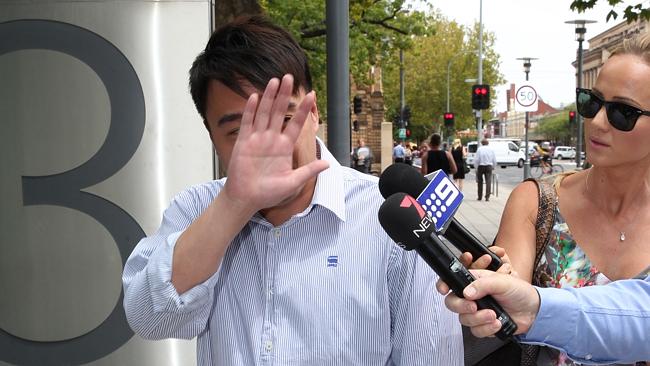
He surveyed every corner of the restaurant, from liquor bottles to egg cartons, and cjake.gyllenhaal.rest.inspection.disclosurehecked the temperature of refrigerators and dishes on the line.

The man, though, according to the Wall Street Journal, wasn’t a city Health Department inspector whose report determines the letter grade plastered in a restaurant’s windows. He was a restaurant consultant performing a mock inspection so that the eatery would be ready for the real thing.

Flatiron Room owner Tommy Tardie has an inspector from Letter Grade Consulting come once a month because he believes a lot rides on what grade his year-old restaurant gets.

“I’m guilty of it. I definitely use [letter grades] as a deciding factor,” said Mr. Tardie, whose restaurant has an A and has been using the consultants for four months. “If I’m walking somewhere and I’m looking for a quick bite to eat, and one is a B and one is an A. It’s a no brainer. I’m going to go to the A.”

The New York City public grade program was introduced in 2010, and in early 2012, the Health Department introduced a smartphone application, which searches all 24,000 restaurants it inspects for letter grades, scores, and all health violations. The app has been downloaded 44,000 times, according to the Health Department.

The business review site Yelp plans to shine even more light on the process by introducing inspection results along with reviews in New York City.

The pressure to pass the inspections leads restaurant owners to seek out restaurant consultants, who can charge $250 for a one-time mock inspection or thousands of dollars for yearly contracts with larger restaurants—including representation at hearings where violations can be contested.

At the Pad Restaurant in Topeka, Kansas, cleaning the walls is a family tradition. Scrubbing down table legs is a rite of passage.

Cleanliness, co-owner Troy Mentzer said, is one of the founding principles of the family business, dating back to when his father started it in 1973.

Last year, the restaurant had just three food safety violations. As such, it ranks among 39 Shawnee County restaurants to boast no more than three violations and no follow up visits qr.code.rest.inspection.gradein all of 2013.
For the Pad, that is a complete turnaround from 2012. That year, the restaurant had 31 total violations, earning a place among the county’s worst 20 restaurants for violations.

Mentzer credited the shift to listening to state inspectors, offering consistent food safety training to managers and staff, and a new internal inspection schedule.

“Two years ago, we took a hit and had some violations,” he said. “Now, we self-inspect weekly.”

Washington woman on mission for restaurant grading system

It’s deeply weird or deeply hypocritical that Seattle, self-proclaimed home to many things food and Super Bowl champs, doesn’t have a decent restaurant inspection disclosure system.

Sarah Schaht, a longtime Seattle resident, who had been stricken with E. coli previously, said, “I had internal bleeding and stomach cramps that were debilitating.”

Ambassel Ethiopian Restaurant was closed down by King County health inspectors last jake.gyllenhaal.rest.inspection.disclosureyear.  But the owners have since reopened with a new name: Laco Melza.

Schaht chose the Ethiopian restaurant because customers on Yelp gave it nearly four stars.  What she didn’t know was the restaurant had failed six health inspections since 2010 and had one of the worst inspection scores of any Seattle restaurant last year.

Among the violations on March 6:

-Ready-to-eat food surfaces were being used to prepare raw meat.

-Workers weren’t washing their hands.

-There were insects and rodents in the restaurant.

“You have to be an expert to understand the scoring system,” said Schaht, because there are “red scores, blue scores, unsatisfactory, satisfactory.”

Schaht has started a petition to pressure King County health officials to adopt a simple letter grade system, in which restaurants are required to post an A, B, C or F grade in their front window so diners know how the establishment performed on its latest inspection. Cities in nine states have letter grade requirements, including Los Angeles, San Francisco and New York City.

KIRO 7 took the data from other cities to officials at Public Health–Seattle & King County to ask why they’ve opposed switching to a letter grade system. But they refused our requests for an interview.

Instead, we were given a statement that said the health department is currently looking into the letter grade system, after 1,768 people signed Schaht’s petition.

Eating poop? Make sure it’s cooked; Calgary sushi joint reopens after mouse-poop discovery

Sushi and mouse poop really don’t go together; if you’re going to eat poop, make sure it’s cooked.

Health inspectors shut down a Calgary sushi restaurant last week – because when I think fresh, raw fish, I think Calgary — after finding a “significant amount of mouse droppings,” a Fuji Yama.calgarylive critter in the bar and other upkeep issues.

Fuji Yama on 17th, a late-night hangout for sushi buffs, re-opened 24 hours after being ordered to close by provincial authorities on Jan. 27.

Alberta Health Services spokesman Bruce Conway acknowledged the findings would likely invoke squeamishness for some, but contended it’s not unheard of in the industry.

Six critical health code violations and three others were reported on Jan. 24 during a routine inspection.

Rodent excrement was found in “several areas” of the restaurant such as the pop dispenser closet, dry storage shelving and bar area.

Other critical violations cited included sanitizer without chlorine, no paper towels in the staff washroom, and raw frozen meat refrigerated in containers without lids. Non-critical offences consisted of rusty shelving, missing tiles and an “extreme build up” of food debris on the rice cooker.

On Monday, owner and head chef Francis Tam denied knowledge of the closure and told Metro he was “busy for now” before declining to answer further questions.

Bahrain temporary restaurant source of Salmonella outbreak

Food samples taken from a restaurant following an outbreak of a mass food poisoning have tested positive for Salmonella (no word on how many sickened or source).

Food Control and Diseases Control Section inspectors collected samples from restaurant food and swabs from staff in the aftermath of the food poisoning outbreak. The food control inspectors shut down the main restaurant, which is suspected of causing the food bahrain.autumn.fairpoisoning outbreak, as well as two affiliated branches.

The staff have been suspended from work, administered proper medication and given health tips to avert any future incidence of food poisoning. In another precautionary measure, the stocks of food suspected of being infected with salmonellosis bacteria have also been destroyed.

The inspectors found serious irregularities in storing food at the temporary restaurant branch located at the Autumn Fair.