
From July 2009 until April 2010, the U.S. Centers for Disease Control identified 272 cases of Salmonella Montevideo in people from 44 states and the District of Columbia.
The outbreak strain was identified in salami products, one company A facility environmental sample, and sealed containers of black and red pepper used to 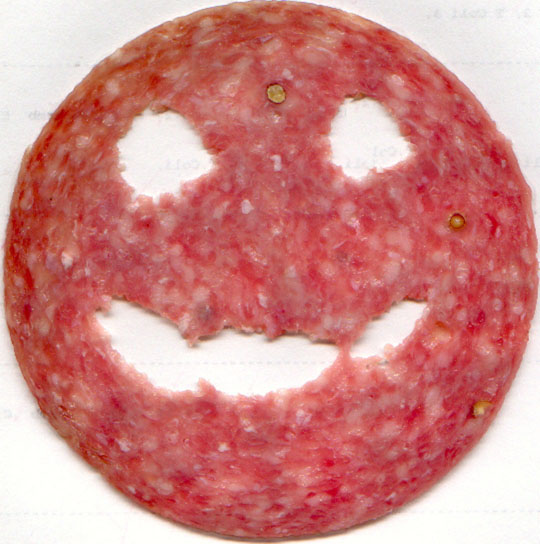 produce company A salami products.
This outbreak highlights the importance of preventing post-processing contamination of ready-to-eat products from raw ingredients such as spices.
This nationwide outbreak of Salmonella Montevideo infections was associated with salami products containing contaminated imported black and red pepper. This outbreak highlights the importance of preventing product contamination between its production and its use and the potential for spices, such as pepper, to contaminate ready-to-eat products.
Eight spice-associated Salmonella outbreaks occurred during 1973–2009, accounting for 1,656 human illnesses. In September 2008, an outbreak of Salmonella Rissen infections was associated with ground white pepper. An increasing number of dried spice recalls have occurred over the past several years, with only two during the 1990s and 16 during 2000—2004.
Membership cards helped provide important brand-specific information in this investigation. During hypothesis generation, it was learned that many patients reported shopping at different locations of a national warehouse chain. This  prompted WADOH to collect data on items purchased by patients based on membership card records. Information gathered from these cards, with patient permission, helped determine the brand name and purchase dates of implicated products. Based on this information, USDA-FSIS traced back lots of ingredients, which helped FDA identify lots of black and red pepper used to produce the contaminated salami products. As this investigation demonstrates, membership and shopper cards can provide critical information to quickly identify potentially contaminated foods and should be considered for use in future foodborne disease outbreak investigations.
The complete report is available at:
http://www.cdc.gov/mmwr/preview/mmwrhtml/mm5950a3.htm?s_cid=mm5950a3_x
 will complete a “thorough cleaning” of their facility “in the next several days.”
 information, 23% reported being hospitalized. No deaths have been reported.
 obviously knew what CDC is now reporting today. So why would you limit the yanking of sprouts to just Illinois? Why did it take CDC at least an additional two days to report what Illinois folks have been reporting for days?
 not able to be completed until after Christmas.
 the establishment located at 12780 Maxi Sherbrooke East, Montreal, because it could be contaminated with salmonella.
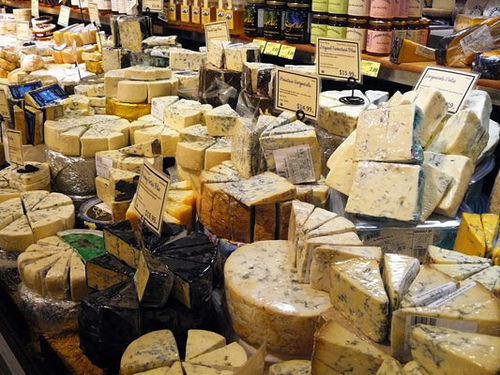 may have become soiled or contaminated. Specifically, the owner was observed throughout the day to altemately perform cheese making functions, such as stirring cheese curd with bare hands and wrapping cheese in grape leaves, with outside activities, such as milking/feeding livestock, without any hand washing being observed.
 brushed pants with a bare hand and was later observed standing over a bucket of drained curd in the cheese room with the soiled pants coming in to contact with the edge of the bucket.
 educar a través del mundo. Si usted quiere proponer un tema o mandar fotos para los folletos, contacte a Ben Chapman a benjamin_chapman@ncsu.edu.

 doors

 3. U2
 source de E. coli O157:H7 était un aliment, une boisson ou un manipulateur d’aliments. Les officiels des services de la santé étudient les sources possibles en analysant les échantillons des aliments préparés.