Baker makes up for cockroach loaf

New Zealand’s biggest baking company is promising compensation to a man who found a cockroach in a loaf of bread.

The firm, Goodman Fielder promised compensation to Rob Hemming, but he heard nothing more until the Herald on Sunday got involved.

Now the company says it will send him a $60 voucher and a ham, but insists the cockroach was not baked into its bread.

Hemming discovered the insect in his bread a month ago.

"The next day I pulled it out of the fridge for breakfast and I spotted a blooming cockroach embedded in the bread."

He took the bread back to the Selwyn Heights Four Square in Rotorua, whose manager offered Hemming a replacement. But he decided to deal with the manufacturer directly.

Hemming called Goodman Fielder. A representative apologised and told him to freeze the loaf and she would post him some packaging to return it.

The first package did not turn up, and it was two weeks before the replacement arrived.

Goodman Fielder spokesman Ian Greenshields said the loaf had been examined at an independent laboratory; "Their tests showed the cockroach was not baked into the product but there was a hole in the bag and the cockroach could easily and most probably crawled into the bag," Greenshields said.

Four Square owner Amish Patel was confident the cockroach had not got into the bread at his shop.

Auckland’s worst eateries score E for eeewww

One of Auckland’s most famous nightclubs (that’s in New Zealand), a party spot for the rich and famous, has been given the city’s worst food hygiene grade – ‘E’ for eeeww.

The Crow Bar on Wyndham St – where Bono from U2 hung out after one concert – is one of just 13 eateries to be awarded the worst possible grade.

The New Zealand Herald reports all of the new Supercity’s 8000 restaurants, cafes, bars, dairies and bakeries – anywhere you can buy food to eat – have a rating between A and E. Any worse, and the council bans them from trading.

Council inspectors have discovered huge cockroaches, liquid from raw meat dripping into salads, the stench of rats and mice, and more, at some city eateries.
Only a few of the worst-rated eateries were willing and available to explain why their ratings were so bad.

Council environmental health inspectors said in other cases, hygiene levels were so bad they had no option but to close down outlets.

On one occasion, as an operator was explaining to health inspectors that there were no hygiene issues, a huge cockroach walked on to the bench.

Another noted "the smell of rotting produce hit when opening the car door on arrival to inspect the premises."

And in some eateries, fridges have been so overloaded the food cannot be stored properly; raw meat is left on a higher shelf where it drips into other food such as salad, likely to cause food poisoning.

I’m not a fan of the E grade, because it might be interpreted as excellent, and prefer A, B, C, F (for fail). U2 is hopelessly overrated, apparently like places where Bono hangs out.

Salmonella-tainted eggs linked to U.S. government’s failure to act; screw consumers

Government is hopeless. Endless meetings, competing agendas, bruised egos – all in an effort to get a national salmonella-egg rule passed going back to the 1980s.

The Washington Post has a blow-by-blow account of the bureaucratic wankfest that is federal egg safety, which will keep politicos intrigued with their Saturday morning lattes and eggs Benedict, but offers nothing for the over-easy crowd.

The salmonella-in-eggs outbreak this summer sickened over 1,900 with plenty of blame to go around – negligent ownership, lax inspections, awful auditors and retailers who didn’t want to know. But after reading the Post account, does anyone really want the feds in charge?

Lester Crawford, whose own bout with salmonella in 1986 turned the issue into a personal battle, pushed for egg regulation while running the food safety program at the U.S. Department of Agriculture from 1987 to 1991, and he said he was stunned by the lack of progress when he joined the Food and Drug Administration as acting deputy commissioner in 2002.

"The system certainly was at its worst. … I went nuts. I was told it was ready to go and all we needed to do was say yes, so I said yes.”

He kept up the fight through 2005, when he left the agency.

The regulations that took effect this year require farmers to buy chickens that are certified free of salmonella, test those chickens while they are laying eggs and, if there is a positive test, stop selling whole eggs.

In the absence of federal regulation, some states began in the 1990s to enact their own rules, many focused on refrigeration. But the varying requirements created headaches for producers selling nationwide.

The health of chickens falls under the USDA, but the FDA oversees the safety of whole eggs. Once an egg is broken and made into an "egg product," responsibility for its safety switches back to the USDA.

The USDA also oversees transportation of whole eggs, but the FDA dictates how they should be stored once they reach restaurants or stores.

Because salmonella wasn’t making chickens sick, the USDA initially decided not to intervene. USDA inspectors are in packing facilities, but henhouses normally are the purview of the FDA. And the FDA rarely inspected henhouses.

The FDA has not routinely inspected egg farms because it has not established rules or standards, Deputy Commissioner Joshua M. Sharfstein said.

I get that the feds failed. But as a consumer, am I supposed to have faith that FDA has checked out Salmonella Jack DeCoster’s operations, now that his eggs are back on retail shelves?

What if I want to avoid DeCoster’s eggs, because he has a bad track record and will soon be slip-slidin’ away to the lowest common denominator?

Repeated outbreaks have shown there are good producers and bad producers, good retailers and bad retailers. As a consumer, I have no way of knowing.

Tell consumers about salmonella-testing programs meant to reduce risks; put a URL on egg cartons so those who are interested can use the Internet or even personal phones to see how the eggs were raised and testing data. The best producers and processors will go far beyond the lowest common denominator of government and should be rewarded in the marketplace.

Sorenne, eggs for breakfast?

 

Over 11,000 sick in Sweden cryptosporidium outbreak; source found

Investigators in Ostersund, Sweden, say they traced a cryptosporidium outbreak that has sickened more than 11,000 residents to a multifamily dwelling in the city’s Odensala neighborhood

Ostersund environmental head Jari Hiltula told Swedish news agency TT,

"We’ve found high levels of the parasite in the connection to this source. We’ve handed over the information to the police who are responsible for the investigation. A property owner will also be contacted."

The parasite may have entered the city’s water supply through a sewage line mistakenly connected to a rainwater drainage system, the report said.

"It looks like the sewage pipe wasn’t connected properly," said Andrew Sorensson, an environmental crimes investigator with the Ostersund police.

Missouri resident dies from E. coli; 10 others sick from family gathering

A Jasper County resident died earlier this week from what sounds like shiga-toxin producing E. coli food contamination and health department is investigating other possible cases that might be related to a single family gathering over Thanksgiving weekend.

Jasper County Health Department Director Tony Moehr told the Carthage Press the victim died this week of an extreme case of E. coli and his department is trying to determine what the people who got sick ate at this gathering, adding,

"Sometimes people have symptoms and they get over them in a day or a few days. In rare cases, severe E. coli poisoning can progress to conditions like hemolytic uremic syndrome that can cause the organs to shut down. That more severe form is apparently what happened in this case.”

Moehr said his office has collected the leftover food that remains from that family event. He said a total of 11 people out of 24 people who attended the event have reported some symptoms, including the one person who died.

Ontario restaurant sickened 5 in 2007; conviction still stands in 2010

In May, 2007, five patrons of the Yaman Restaurant in St. Catherines, Ontario (that’s by Niagara Falls) got sick with E. coli.

The problems started when owners Mahmoud Asaad and Senan Daoud continued to run their business on May 19, 2007, despite the fact water to the restaurant was cut off due to a water-main break. The restaurant was shut down by the region that month, but reopened with a clean bill of health in August that year.

The two were convicted in 2009 on five counts each of selling food unfit for human consumption, and were fined $7,500 each.

The St. Catharines Standard reports that Judge Ann Watson said today in a written decision the 2009 convictions by another judge would stand in relation to four of five patrons.

UK bacon producer fined 18,000 for illegally selling hams

When food safety types arrived for a routine inspection at a bacon producer on Dec. 17, 2009, they found the company had started cooking and selling hams at the premises.

The Wiltshire Gazete and Herald reports a subsequent inspection of the ham production area found problems with cleaning and food safety management, including structural defects and poorly maintained equipment.
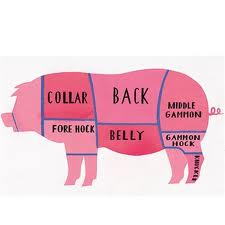
Remedial Action Notices were served requiring them to stop the production and sale of cooked meats at the premises. The company, Sandridge Farmhouse Bacon Ltd in Bromham, agreed to voluntarily surrender all the hams on site because they had not been produced in accordance with the relevant food safety legislation.

Sandridge Farmhouse Bacon Ltd and the managing director, Roger Keen, pleaded guilty to all seven charges brought by Wiltshire Council, which were:

Failure to ensure the council had up-to-date information about the business and its operations
Failure to have in place a food safety management system
Failure to ensure the design and construction of the premises helped protect against the formation of condensation and mould on surfaces
Failure to ensure the premises was kept clean and maintained in good repair and condition
Three counts of failing to ensure that surfaces (including the surfaces of equipment) in areas where foods were handled were in a sound condition and easy to clean and disinfect.

In addition to the fine, Mr Keen and Sandridge Farmhouse Bacon Ltd were ordered to pay costs of £1,000 and a £15 victim surcharge – for a total of £18,000.

Councillor Keith Humphries, Cabinet member for health and wellbeing, said,

“This was a deliberate attempt by the business to supply food for the festive season which was produced in unsatisfactory conditions. I commend the food safety officers for their prompt action in removing the food from sale and safeguarding public health.”

Since the inspection last December standards at the premises have greatly improved and they are now able to resume ham production.
 

Small-scale business recalls a lot of soup; right thing to do

I made my first soup ever a few weeks ago.

I’ve never really loved soup for a variety of reasons (mainly because I’m messy when I eat it) but Dani loves it. I’ve taken over the majority of meal duties since our youngest son arrived a month ago and I thought I’d mix things up and dive into the world of soup. I made a butternut squash/apple soup that actually turned out pretty good and was easy to make (except for dicing up the squash). Quality-wise, it was way better than what I’ve had in the convenience of canned or boxed soups. I made a bunch of soup but not enough that I needed to freeze or can. We ate it all within a few days.

There are weekly features in various media outlets about the increase of home-based food processors and the changing/updating of rules to support the local food economy businesses – many of these businesses are an expansion or new direction of a family-run farm.

Doug and I (and lots of others) gained experience with this sector 10 years ago while working with Jeff Wilson and co. at Birkbank Farm in Hillsborough ON (that’s in Canada). Jeff, moving away from just producing commodities and towards being a ready-to-eat food producer, had a market store on his 200 acre fruit and veg farm and expanded his business.

The extension agents I work with in North Carolina are receiving an increased number of calls looking for advice about moving from a strictly agriculture business to other ventures like making apple cider; baking pies and canning jams; shredding and bagging leafy greens to be sold with homemade salad dressing; and making soup.

Relatives of Doug’s run Barrie Brothers Local Food Company, who expanded into the home food business as a way to supplement their existing fresh asparagus sales.

From their website:

The initiative to launch Barrie Bros. Local Food Company was inspired by our Grandfather, Homer McMann. A life-long farmer from Alliston, Ontario, Homer provided Campbell’s Soup Company with exceptional quality asparagus for use in their soups. We still use Grandpa’s soup crates in our operation and have modelled our own Barrie Brother’s crates in their image as a way of paying homage to the years Homer spent making good soup.
 
Earlier this week, the Canadian Food Inspection Agency announced a recall and issued a warning the public not to consume one of Barrie Brothers products, Fresh Broccoli Soup.
 
According to the Waterloo Region Record:
 The problem surfaced Monday after the Ontario Ministry of Food and Agriculture tested several jars of the company’s fresh broccoli soup as part of the ministry’s one-year pilot project to routinely monitor locally-produced products, Barrie said.
 
“This one jar did come back with a potential concern of the presence of bacteria,” he said. While the exact type of bacteria was not identified, “the concern is for botulism,” he said.
 
The soup was made in a Guelph-area kitchen in July 2009 and it has a shelf life of 18 months. The ministry inspected the certified kitchen where the soup was made and no problems were identified, he said, adding that ministry officials believe the process time for this one batch of the soup was not long enough to kill all bacteria.
 
Late last night Barrie Brothers expanded the recall to include all of their soups that were processed in that kitchen (see here, already up on their website). They did the right thing by going public and getting the other products back. By only focusing on one lot, or one product producers make the assumption that an issue is isolated and not systemic – when it comes to processing times and equipment and messing around with botulism risks, recalling everything that was processed using the same techniques is a good way to go. Even with the small margins and the financial hit Barrie Brothers will take through this event, it’s better than being linked to illnesses and saying “we didn’t know it was a problem.”
 

Jersey paper wrong: steak tartare a bad idea

The Bergen Record, somewhere in north Jersey, ran a story on Dec. 8, 2010 entitled, Tartar steak and roquefort cheese log.

Tartar steak sounds gross but could be microbiologically safe. Unless the author, Susan Leigh Sherill, was referring to steak eaten by Tartars, the combined forces of central Asian peoples including Mongols and Turks who, under the leadership of Genghis Khan, conquered much of Asia and eastern Europe in the early 13th century. I can’t vouch for the safety of what they ate.

The roquefort cheese log is material enough for another post.

Some Americans, like the dead chef, James Beard, I guess dropped the ‘e’ in tartare as too Frenchy. Whatever, the stuff is raw beef and raw eggs, but James Beard’s American Cookery – cocktail food chapter, states, "This way of serving it has convinced many people that raw meat can be thoroughly delicious."

Choose your poisons.

But the crime is when Jersey Susan writes,

“Make sure you buy your beef from a good butcher who understands that you will be serving it raw. I got mine from Rosario’s Market in Montclair.”

That’s nice, but unless your butcher has meat goggles to provide divine insight into the microbiological components of raw beef and eggs, the statement is bio BS.

Stephen Colbert tried out meat goggles the other night.

The Colbert Report Mon – Thurs 11:30pm / 10:30c
Cheating Death – Calming Meat Goggles & the iThrone<a>
www.colbertnation.com
Colbert Report Full Episodes Political Humor & Satire Blog</a> March to Keep Fear Alive