There s an app for that: restaurant inspection grades coupled with complete data

Providing information about food – or anything else – needs to be layered to meet the needs of individual consumers.

Most people don’t care. But some want everything.

The mandatory posting of restaurant inspection grades is a way to provide a snapshot of information to diners as they enter an establishment. But with all those newfangled portable gadgets out there like iphones and ipads that baffle me but my 2-year-old can handle with ease, some are trying to provide additional information – for those who care.

Bakersfield.com reports that Kern County Environmental Health officials in California are backing up the letter grades they issue to restaurants with some technological muscle, giving diners the power to access detailed inspection reports of food businesses through their mobile phones and other data devices.
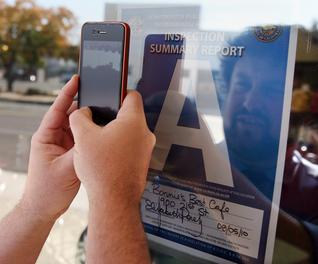
County regulators started printing a small, square "QR" code on all of the letter grade cards they post in the front windows of food establishments.

If your phone or data device can take a picture and surf the Internet, then downloading a QR code reader application will allow you to use your camera to scan that box of data (right, photo by Casey Christie, The Californian).

Public Health Department Director Matt Constantine said the code on the posted grade cards sends the person scanning the information to the county’s inspection report page, where they can input the name of the restaurant and pull up the establishment’s inspection history.

Restaurants are already required to keep a paper copy of their most recent inspection report on hand and give it to anyone who asks for it.

So far only a few restaurants — Tahoe Joe’s in the Marketplace, a Starbucks on Olive Drive, 24th Street Cafe, among others — have the codes on their grade cards.

Michelle Rowley, who stopped by Bonnie’s Best Cafe in downtown Bakersfield Thursday to pick up a phone order, uses the grade cards all the time and loves the idea of having more access to information.

"I won’t eat at anything less than a ‘B.’ Sometimes I wonder how some places get an A," she said.

A quick cell phone search, triggered by the grade card in the window nearby, shows Bonnie’s Best has a stellar 99 point A grade with only a couple "non-critical" problems — a leaking faucet in the food prep area and an improper wastewater disposal practice.

Rowley said she was actually surprised that the county had come up with such a clever way to use technology to serve the public.

"It’s more technologically advanced than I would expect government in California to be.”

Stricter testing for federal ground beef program may not lead to safer meat

About a year ago, the USA Today ran a series of stories about the microbial safety of food served in the U.S. school lunch program, stating,

“McDonald’s, Burger King and Costco, for instance, are far more rigorous in checking for bacteria and dangerous pathogens. They test the ground beef they buy five to 10 times more often than the USDA tests beef made for schools during a typical production day. And the limits Jack in the Box and other big retailers set for certain bacteria in their burgers are up to 10 times more stringent than what the USDA sets for school beef.”?

That caused a stir at the time, and the U.S. Department of Agriculture commissioned a report from the National Research Council, which formed a Committee on an Evaluation of the Food Safety Requirements of the Federal Purchase Ground Beef Program, chaired by Gary Acuff of Texas A&M University.

Today, the committee concluded in their published report (it’s not on-line yet) there is, “no scientific basis that more stringent testing of meat purchased through the government’s ground beef purchase program and distributed to various federal food and nutrition programs — including the National School Lunch Program — would lead to safer meat."

In its assessment of AMS’s ground beef purchase program, the committee that wrote the report said validated cooking processes provide greater assurance of ground beef’s safety than would additional testing for pathogens. Testing alone cannot guarantee the complete absence of pathogens because of statistical implications associated with how beef is sampled during testing.

The committee’s analysis of the number of illnesses since 1998 linked with AMS ground beef provided to schools suggests that outbreaks were rare events before AMS requirements became more stringent in February, implying that controls already in place were appropriate for protecting public health. For instance, no recorded outbreaks of E. coli or salmonella associated with AMS ground beef have occurred in more than a decade. Prevention of future outbreaks will depend on eliminating contamination during production and ensuring meat is properly handled, stored, and cooked before it is served, the committee emphasized.

As part of its review, the committee also attempted to compare the AMS specifications with those of large industry purchasers of ground beef. Among purchasers, the committee found considerable differences in testing and safety standards and suspected that the intended use of the ground beef could account for the variations. For example, all raw AMS ground beef is distributed in frozen form, but distributors of fresh meat products may require different standards designed to improve shelf life. While AMS safety requirements appear comparable to or more demanding than those of commercial companies on the surface, the lack of information detailing the science used for corporate specifications prevented the committee from making direct comparisons.

"The report encourages AMS to strengthen its established specifications and requirements for ground beef by utilizing a transparent and clearly defined science-based process," said Gary Acuff, chair of the committee and professor and director of the Center for Food Safety at Texas A&M University, College Station.

In addition, the report says that some of the requirements were founded on expert opinion and industry practices where the scientific basis was unclear. The committee recommended that AMS base their requirements on standards supported by the International Commission on Microbiological Safety of Foods, the Codex Alimentarius Commission, and the Research Council report An Evaluation of the Role of Microbiological Criteria for Foods and Food Ingredients. It also suggested that AMS analyze data from the suppliers’ bacterial testing to evaluate the safety requirements over time and use statistical methods to set testing sample and lot sizes. Overall, AMS should develop a systematic, transparent, and auditable system for modifying, reviewing, updating, and justifying purchasing specifications.
 

Barfing behind bars: 5 sick with E. coli at Idaho prison

Five inmates at the Idaho Correctional Center, south of Boise, became sick around Dec. 1.

Associated Press reports at least two tested positive for toxin-producing E. coli.

Sarah Correll, staff epidemiologist at the Central District Health Department, said no new cases have been discovered and the inmates who were sickened are recovering.

The Idaho Correctional Center is run by Corrections Corporation of America.

Who doesn’t slaughter their own pigs

On Dec. 6, 2010, Karen Selick wrote in Canada’s National Post about the plight of an Ottawa-area man charged with home slaughtering and distribution in a story titled, Drop The Pig And Put Your Hands In The Air.

M. Milstein, doctor of veterinary medicine, Vancouver, responds in today’s National Post in a memo to veterinary colleagues at the Canadian Food Inspection Agency:

You wasted your time getting a veterinary degree and spending your professional lives working towards ensuring that Canadians have a wholesome food supply. All you had to do, according to Karen Selick, was grow up on a farm, hunt, join the Armed Forces and get a degree in biomedical toxicology.

Then you "could tell a healthy animal from a sick one." Who knew?
 

Rat in curry prompts cull at Bangladeshi university

drive after rodent meat found its way into chicken curry served to students.

A spokesman told the BBC,

"One student detected the head of the rat while eating his lunch. That student instantly suffered a stomach upset."
Soon after the incident hundreds of angry students staged a demonstration demanding action against the chef.

The chef has now been suspended and handed over to police who have been called in to investigate the incident.

Filion graduates, more contributions to food safety culture

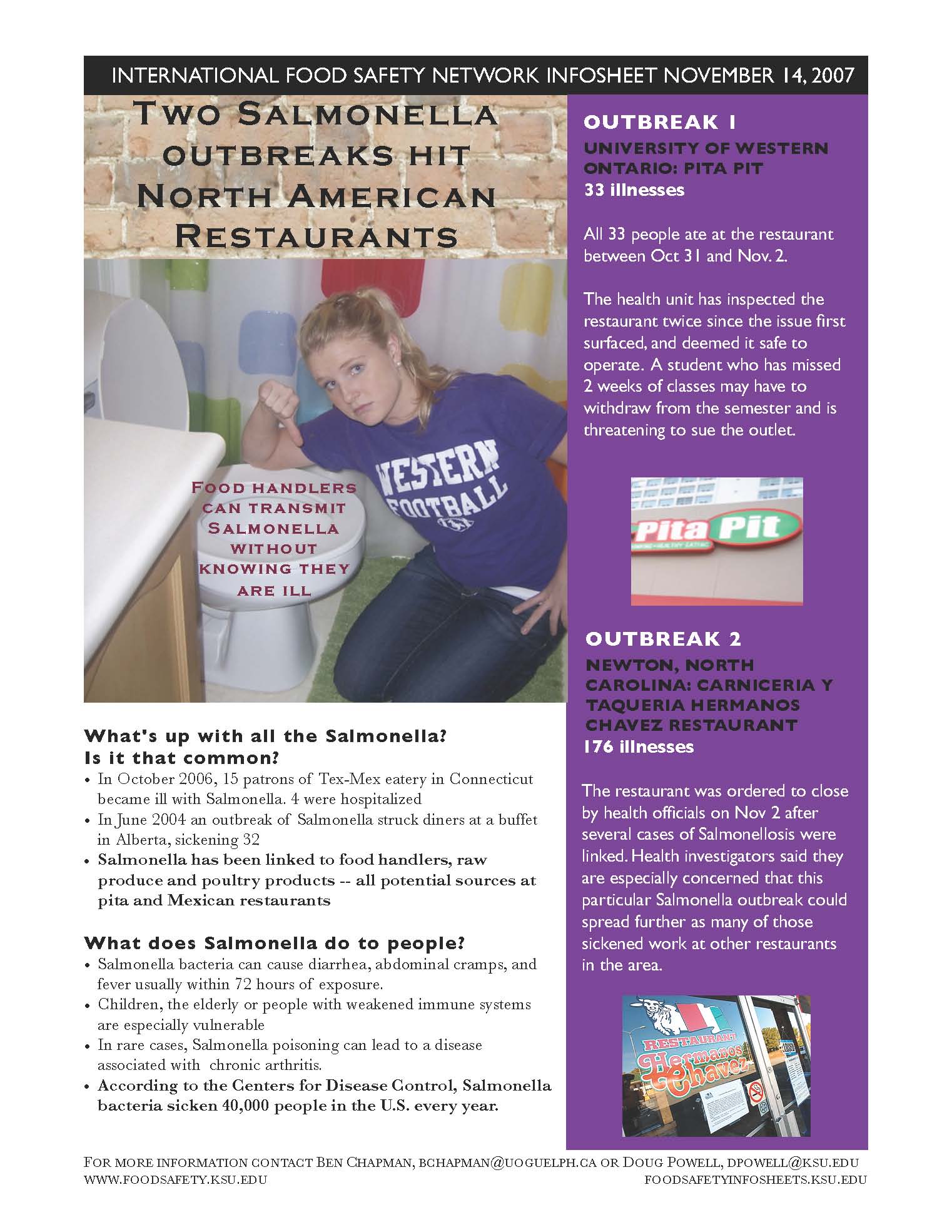
In just three short years, Katie Filion has transformed herself from infosheet model (right) into an unemployed graduate with a Master’s degree (exactly as shown, this morning, left).

That’s right. Filion successfully defended her MS thesis, Designing A National Restaurant Inspection Disclosure System For New Zealand, and, will be a graduate of biomedical sciences in the veterinary college at Kansas State University. As soon as we turn in the paperwork.
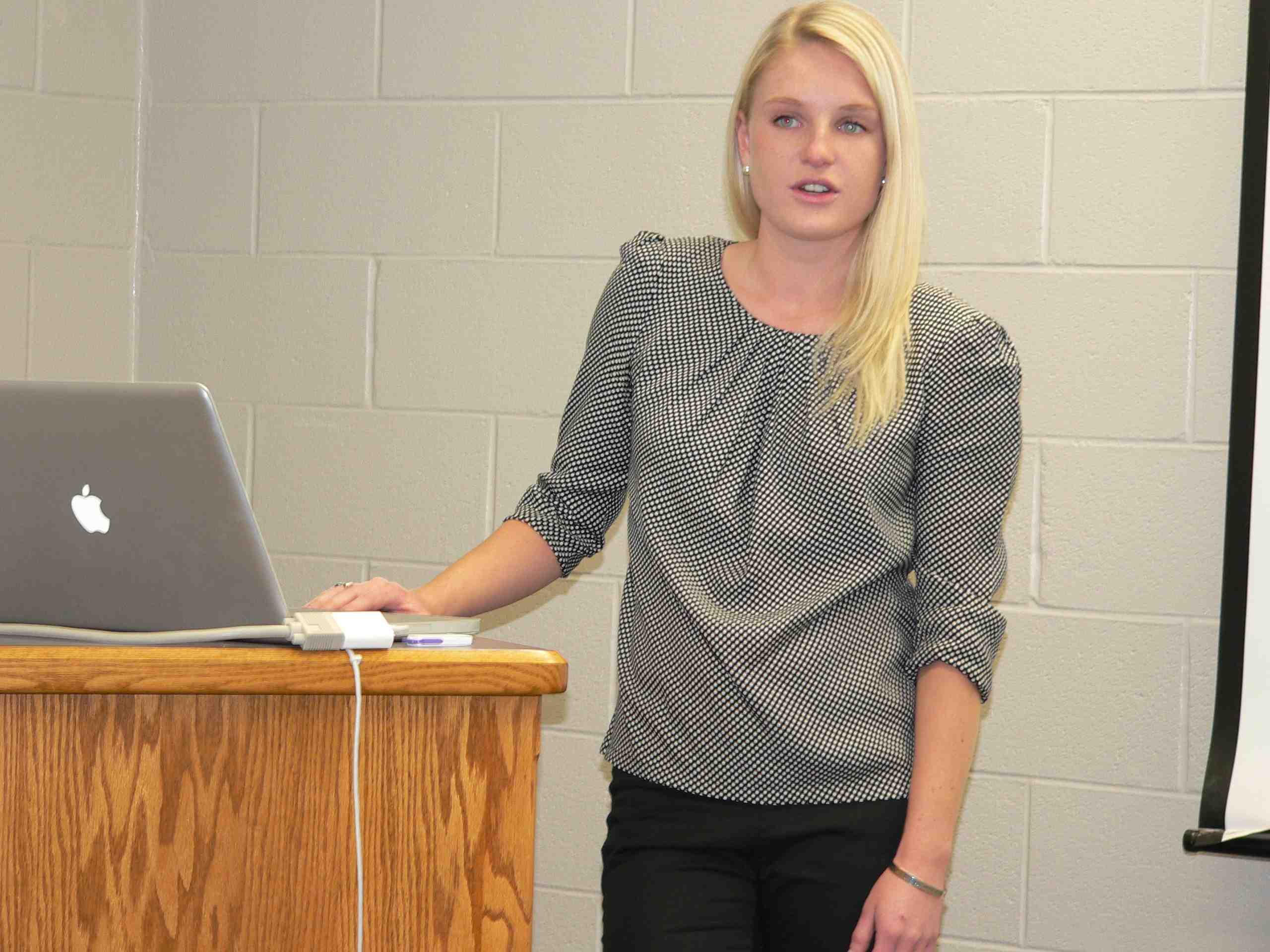
K-State also highlighted the work of my lab through barfblog.com this morning where I said,

“Awareness is the best asset for enhancing the food safety culture. The best approaches come through incentives and the punishment of bad behavior. A prominent example is restaurant disclosure. This is based on giving letter grades for inspections. The greatest benefit is that it establishes a dialogue, but the information has to be posted.

"Publishing the information in the newspaper every couple of weeks doesn’t help when you’re walking through the restaurant’s door. It needs to be right there."

Powell said he’s encouraged by the level of dialogue on improving food safety, but acknowledges there’s plenty of work to do.

"For every step forward there always seems to be a few steps back. When you look at the billions of meals served in the country each year, food safety is pretty good. But when someone screws up, it’s pretty bad."

Powell said he is respectful of food when he cooks. But he cautions against being too paranoid.

"I think of any raw food as containing microorganisms that could be dangerous. I don’t treat it like nuclear waste, but I treat it with respect."

And way to go, Katie. Respect.

Café owner sickened 47 police with staph sandwiches must wear electronic tag

In July, 2009, West Midlands Police were dispatched to control demonstrations between the English Defence League and anti-fascism groups in Birmingham, U.K. The coppers ordered more than 100 lunches from Morris’s Meal Machine cafe, in Nechells, Birmingham. Fourty-seven were sickened by contaminated chicken and tuna sandwiches. One officer said, “I thought my life was coming to an end.”

A couple of weeks later, Birmingham City Council’s environmental health department closed the café following checks into processes and procedures, which unvocered failures in “food handling, cross contamination, temperature control and general cleanliness.”

The Daily Mail reports the packed lunches were provided by former cafe owner Muriel Morris, 70, who admitted four charges of breaching food hygiene regulations at Birmingham Magistrates Court on Monday.

She was tagged and ordered to obey an overnight curfew after District Judge Robert Zara accepted she could not pay a large fine.

He also imposed a four-month suspended sentence on her.

She has since sold the business, the court heard.

The court was told some of the officers were left mentally scarred and even feared they would die because of the staphylococcus aureus infection.

Others passed out and required oxygen as they were taken to hospital by ambulance and another said he lost eight pounds in weight and suffered symptoms for a week.

185 Glasgow eateries failed to meet legal requirements

A total of 185 out of the first 1,200 businesses tested under a new restaurant inspection and disclosure scheme in Glasgow, Scotland, received an ‘Improvement Required’ certificate.

The Evening Times reports that health inspectors suggest to owners that their certificates should be publicly displayed in their premise, although businesses are not required by law to do so.

Which is sorta against the point of disclosure schemes.

Peter Midgley, Head of Enforcement for Scotland at the Food Standards Authority, said the information means diners can make informed choices about where to eat, adding

“It is the owners’ choice if they display their certificate but usually if certificates are being displayed in nearby restaurants, other owners follow.”

Usually, but not always, especially for those diners with lousy inspection results. The system is flawed – make disclosure mandatory.

The hygiene status for businesses in Merchant City, City Centre, Anderston, Woodlands, Yorkhill, Hillhead, Dowanhill and Hyndland are available at www.glasgow.gov.uk/en/Business/Protection/FoodSafety/FoodHygieneInformationScheme
 

Penn goes state way for restaurant inspection and disclosure

A new law will overhaul the way Pennsylvania’s restaurants are inspected.

newsworks.org reports the law imposes a uniform set of safety standards for every restaurant, whether it’s state or local officials carrying out inspections.

Agriculture Secretary Russell Redding said every report will also be posted online.

"I think that’s going to be the big change. We certainly saw it in the state, when we went to an online system. As soon as you know that your inspection is online, for the public view, you certainly are more attuned to making those little changes that are important for food safety."

Redding said the Agriculture Department has been pushing for the changes for more than five years. The law will go into effect in January.

So if online inspection reports make operators “more attuned” then how much more attuned would operators be, with public disclosure on the premises, like a letter grade on the door.