
Exposes by local media and the weekly discussion of restaurant food safety compliance might do something for inspection scores. Media pressure certainly affected L.A. over 12 years ago, leading to a revamped inspection system and the county becoming a U.S. leader for posting restaurant scores. Anecdotally, the coverage affects sales both positive and negatively. Pretty well every day media coverage of restaurant inspection shows up in our Google Alerts and most of the time what’s being reported is entirely expected: dirty sinks, insects, food out of temp, etc. 
1 dead, 10 sick from E. coli at Missouri Thanksgiving meal
Details are trickling out about the death of Jasper County, Missouri, resident from E. coli last week.
The Joplin Globe reports this morning that a food or a beverage served at a Thanksgiving dinner is the apparent source of an E. coli outbreak that killed a 51-year-old Carthage woman and sickened several other people.
Tony Moehr, director of the Jasper County Health Department, said,
“We have two confirmed cases of E. coli O157:H7 in Jasper County. One of the cases resulted in a death.”
Moehr said a third confirmed case of the bacterial infection has been reported in Dade County and involves someone who attended the Thanksgiving dinner.
“It appears the cases are related to a family gathering for Thanksgiving on Nov. 27,” he said. “We have identified seven or eight additional illnesses related to that gathering, but we don’t have the test results back for them. These cases occurred around the same period of time but were not as severe.”
It is believed that 11 of the 24 people who attended the event became ill.
The department, Moehr said, did not issue a press release about the E. coli death because the incident was associated with a family gathering and did not pose a threat to the public.
Salmonella strikes baby at 4-star hotel
A couple whose baby fell seriously ill with food poisoning at a four-star hotel are taking action against holiday firm Thomson.??
Metropolitan police officer Ediz Mevlit, 35, and wife Jenny said today it was “terrifying” watching daughter Melissa suffer from the salmonella (photo, right, from the Evening Standard).
The London Evening Standard reports that the child, now 15-months-old, contracted the bacteria on a £1,500 Moroccan holiday to the Royal Atlas
hotel in September, the family’s first foreign trip.
Mrs Mevlit, 28, said her daughter was sick for three weeks and may suffer long-term health problems.
The couple also had mild stomach cramps. They said they spoke to others who suffered food poisoning at the hotel. One couple reported on website Trip Advisor that much of what was available at the Royal Atlas was “inedible.”
The 338-bedroom hotel in Agadir is exclusive to Thomson customers. Thomson said all the hotels it used “are closely monitored to ensure the highest health, safety and comfort levels are maintained”, adding: “As this case is being investigated by our legal team, we are unfortunately unable to comment any further.”
MRE: tastes great, less filling, lasts forever
In honor of Chuck Dodd successfully defending his PhD yesterday at Kansas State University, I decided to crack open the military Meal Ready to Eat (MRE) he’d given to me a couple of years ago.
In June 2008, The Christian Science Monitor reported about Jeanette Kennedy, a food technologist at the US Army Natick Soldier Systems Center (NSSC) west of Boston. Kennedy faces creative challenges unlike those
before any other chef because she creates MREs, designed to fuel soldiers lugging 100-pound packs all day.
The story says that meals can’t just taste good; they’ve got to last … for three years stored at 80 degrees F., be capable of withstanding chemical or biological attacks, and survive a 10-story free fall (when packed in a crate of 12).
MREs were first served in the 1980s when canned fare gave way to meals packed in sturdy beige pouches. Others have called them Meals Rejected by the Enemy, Meals Rarely Edible, and Meals Refusing to Exit (a name that continues to stick despite the addition of more fiber).
Troop acceptance of the meals, which cost the military $7.13 each, has taken center stage. Back in 1982 when MREs debuted, designers assumed they could hang up their aprons. But when the first Gulf War broke out, the new ration moved from limited training use to the only food soldiers ate for months on end. Angry letters flooded in from the trenches, and the military realized that rations had to be a work in progress.
Now food technologists conduct focus groups with troops across the country, follow restaurant fads, and even attend culinary school to make sure
their approach isn’t entirely scientific.
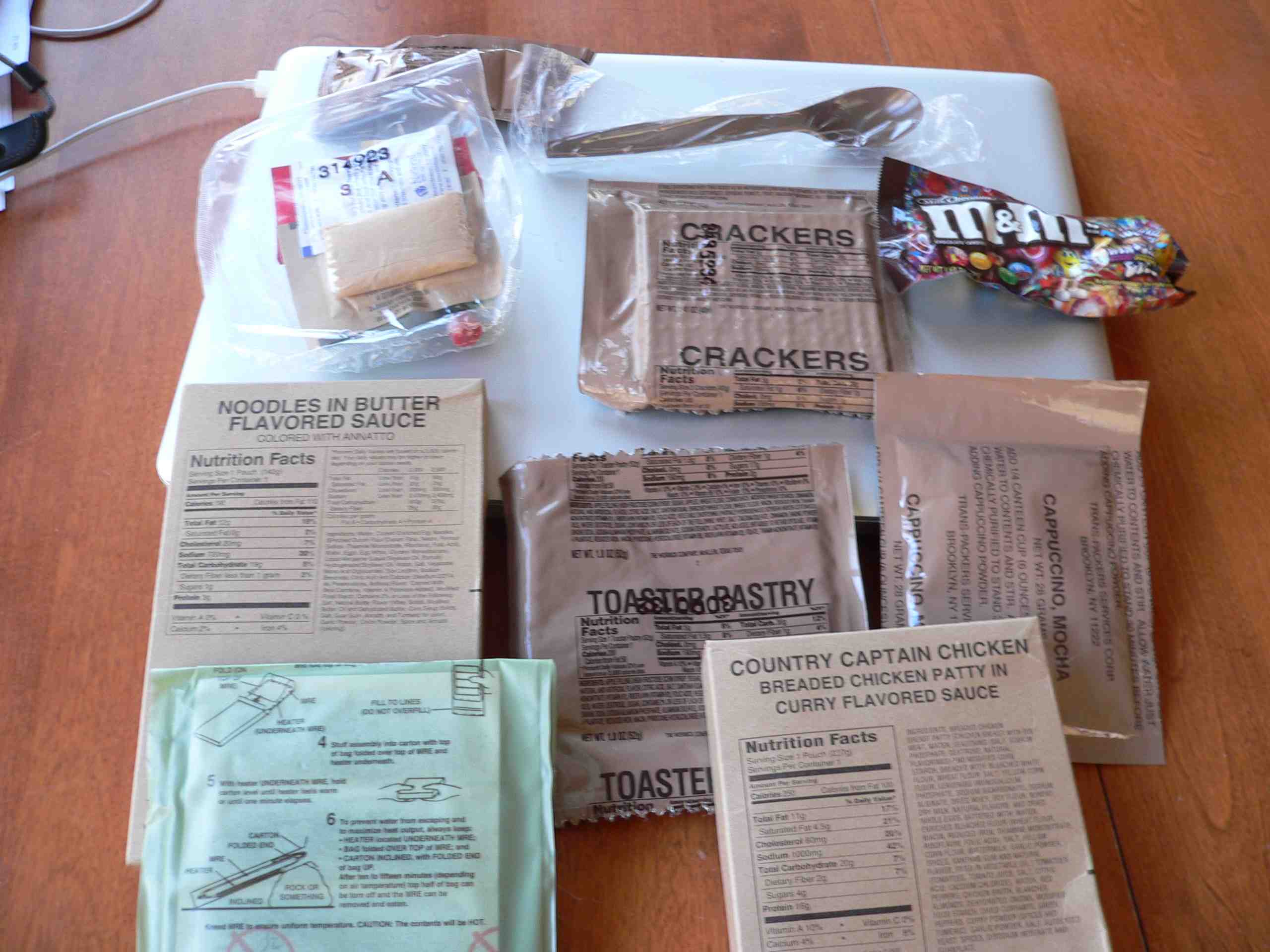
The MRE I had contained noodles in butter-flavored sauce, cheese spread, breaded chicken patty in curry-flavored sauce, toaster pastry, crackers, cappuccino, condiments, and of course, M&Ms. The activated heater pouch to warm food and coffee MREs was particularly innovative. The food? I wouldn’t want to live on it.
In 2008, chef Kennedy said, "[MREs] really go along with the trends. As new things come out at restaurants, new flavors like chipotle or buffalo [get popular], they get incorporated into the MRE…. The trend [now is] going to more comfort foods like Salisbury steak, beef briquette, but it’s not just macaroni and cheese, it’s Mexican macaroni and cheese."
Dodd defends: E. coli and salmonella in cattle production
Chuck Dodd looked fairly snappy as he defended his PhD (below, left) today – to go with his MS and DVM – but he spent much of the past three years (right), knee deep in cow poop.
Chuck’s thesis was entitled, Epidemiology of Salmonella and E. coli O157 in Beef Cattle Production Systems and included four interrelated studies:
• effects of Salmonella Newport SRP® vaccine;
• prevalence and persistence of Salmonella;
• relatedness of E. coli O157 in feces and on carcasses; and,
• a simulation model for E. coli O157 interventions.
During his defense, Chuck said he learned “you can’t test or inspect your way to food safety. It’s the entire system.”
Good for him, and best wishes. When he finally washes out the cow smell, Chuck’s off to the Landstufl Regional Medical Center in Germany.
Kenka closed by NYC health department
One of New York’s most popular Japanese spots, Kenka, was closed by the Health Department last week after racking up 93 points on its inspection.
According to Grub Street, the good-luck tanuki (actually a raccoon dog) didn’t do its job, because the restaurant was cited for evidence of mice, inadequate personal cleanliness, and potentially contaminated food, among other violations.
Among the violations:
• Hot food item not held at or above 140º F..
• Raw, cooked or prepared food is adulterated, contaminated, cross-contaminated, or not discarded in accordance with HACCP plan.
• Evidence of mice or live mice present in facility’s food and/or non-food areas.
• Hand washing facility not provided in or near food preparation area and toilet room. Hot and cold running water at adequate pressure to enable cleanliness of employees not provided at facility. Soap and an acceptable hand-drying device not provided.
• Personal cleanliness inadequate. Outer garment soiled with possible contaminant. Effective hair restraint not worn in an area where food is prepared.
• Food not protected from potential source of contamination during storage, preparation, transportation, display or service.
UK prisoners suing over salmonella; same place Julian Assange is visiting
The Brits do have a way with words. From today’s issue of The Sun:
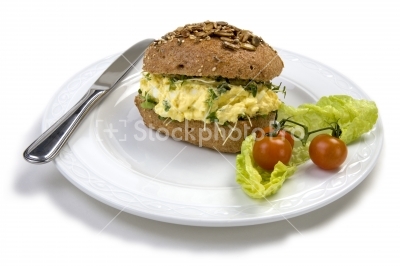
Rapists, paedophiles, a killer and drug-dealers may pocket £300,000 after prison sarnies gave them food poisoning.
A group of 164 inmates were all poleaxed after eating egg and cress rolls
infected with salmonella.
Their lawyers have filed a High Court claim demanding £1,800 compensation for each convict for "pain, suffering and loss of amenity".
They are almost certain to get some money because the Ministry of Justice has admitted kitchen staff at South London’s Wandsworth Prison failed to cook the eggs properly.
A Whitehall source said: "There is no doubt that compensation will be paid, but the amount of money the prisoners are after will be contested vigorously. There will be very little public sympathy for this."
And now, a message from Julian Assange:
Newborn mice found in chips at UK supermarket; it’s OK, we’re near a canal
A Birmingham mum went wild in the aisles – when newborn mice burst out of crisp packets in a busy supermarket.
Stunned shopper Liz Wray was horrified when she saw half a dozen pink mice emerge from multipacks of crisps at a new Tesco store in Aston Lane, Aston.
The mum-of-one snapped pictures of the mice on her phone (right) and confronted the store manager but said she was horrified Tesco bosses
decided not to shut the store down.
“All the staff did was put a cardboard box over the mice and closed aisle six,” said Liz, a health visitor from Kings Norton. “I was with a work colleague who reached out towards the crisps and started screaming.
“Suddenly these tiny pink things appeared from the multipacks and were lying in front of us.
“They were repulsive and made me feel revolting. There were half a dozen of them crawling out of different holes in the crisps and we couldn’t believe our eyes. …
“When I told the store manager, he said ‘We can’t do much about it because we are near a canal and railway track and the mice tend to come through the floor.’”
Don’t eat poop, works for kids
Our two-year old, Sorenne, has been reluctant to wash her hands lately. Today during a particularly messy diaper change, she reached down to see what was going on, got poop on her index finger, and decided to wipe it on my forearm saying, “Blech, poop yucky!”
I decided this was a good time to try the “don’t eat poop” slogan. I explained to Sorenne, “Don’t put your fingers in your mouth. Poop will make you sick. Don’t eat poop, ok?” She repeated, “Don’t eat poop!” enthusiastically. I added a little explanation that included her favorite French iPod app, “Feed me!” and reminded her that the monster gets sick when he eats something bad. “Turn green!” she chimed in. “Yuck. Don’t like it!”
That’s what happens if you eat poop, Sorenne. You’ll get sick. So wash your hands. And for the first time in ages, she very happily washed her hands with soap.
Sydney inspectors to swab kitchens in foodservice crackdown
Sydney restaurants and cafes will be subjected to random swabs of their kitchens and cooking equipment to test for the presence of bacteria under a new program to begin next year.
As part of new enhanced program to be conducted by the City of Sydney council, health inspectors will take samples for testing from food
preparation areas including from chopping boards, bench tops and dish clothes as part of their routine inspections.
The swabs will be tested for Salmonella and Staphylococcus aureus bacteria — two forms of bacteria which can contribute to food poisoning and illness.
City of Sydney chief executive officer Monica Barone told Hospitality magazine the sampling program reflects the high expectations of the million city workers, visitors and residents who rely on cafes, restaurants and sandwich shops every day, adding,
“As a global city and Australia’s leading culinary destination, people expect a high standard of cleanliness and hygiene at the restaurants and cafes where we all eat. … These sampling measures go above and beyond mandatory legislative requirements and provide customers with added reassurance that the kitchen surfaces used for the preparation of food are being monitored.”
The enhanced measures are part of the City of Sydney’s thorough inspection program of the 3,000 Central Sydney and inner city restaurants, cafes and food premises. Barone said not all premises will be tested, but random samples may be taken at anytime.
Premises found to have elevated levels will be re-inspected and staff given advice and training on hygiene practices. Premises found to continually return elevated readings may be issued with warning notices and fines – which are published on the NSW Food Authority’s website.