Risks with human breast milk from Internet (or others)

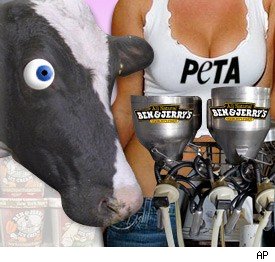
An animal advocacy group wanted Ben and Jerry’s to use human breast milk in its ice cream a couple of years ago, but it sounds like there’s some weirder mommy fetish going on in Canada – so much so that Health Canada warned Canadians yesterday to be aware of the potential health risks associated with consuming human breast milk obtained through the Internet or directly from individuals.

Obtaining human milk from the Internet or directly from individuals raises health concerns because, in most cases, medical information about the milk donors is not known. The Canadian Paediatric Society does not endorse the sharing of unprocessed human milk.

There is a potential risk that the milk may be contaminated with viruses such as HIV or bacteria which can cause food poisoning, such as Staphylococcus aureus.

In addition, traces of substances such as prescription and non-prescription drugs can be transmitted through human milk. Improper hygiene when extracting the milk, as well as improper storage and handling, could also cause the milk to spoil or be contaminated with bacteria and/or viruses that may cause illness.
Breastfeeding promotes optimal infant growth, health and development and is recognized internationally as the best method of feeding infants. However, unprocessed human milk should not be shared.

Food safety falsehoods from the free-range

Fresh from the Michael Pollan school of “don’t eat anything your great-grandmother wouldn’t recognize as food,” comes Joel Salatin of Virginia, telling Australian farmers that industrial-scale agriculture has created problems for farmers who want to slaughter on farm and sell locally.

"What’s stimulating it is squiggly words, 30 years ago who heard of campylobacter, who heard of listeria, e-coli, salmonella, bovine spongiform encephalopathy, avian influenza.”

From wiki, not the greatest source but certainly sufficient to quickly counter the claims of Salatin:

The symptoms of campylobacter infections were described in 1886 in infants by Theodor Escherich. These infections were named cholera infantum, or summer complaint. The genus was first discovered in 1963; however the organism was not isolated until 1972

Listeria monocytogenes was first described by E.G.D.Murray in 1926.

The genus Salmonella was named after Daniel Elmer Salmon, an American veterinary pathologist. While Theobald Smith was the actual discoverer of the type bacterium (Salmonella enterica var. choleraesuis) in 1885, Dr. Salmon was the administrator of the USDA research program, and thus the organism was named after him.

The verotoxigenic forms of E. coli were discovered in the late 1970s, and first identified as a source of human disease in 1982.

Campylobacter, listeria, E. coli and salmonella are all natural. So is small pox. Doesn’t mean I want it.
 

Worst name ever for a group

Maybe there’s something lost in translation.

The First meeting of the High Level Forum for a better functioning of the food supply chain happened November 16 in Brussels.

“It will adopt a work plan to boost competitiveness and to promote best contractual practices in the European food sector, extending the work of the previous High Level Group on the Competitiveness of the Agro-Food Industry to the whole supply chain. Vice President Antonio Tajani is leading …”
Never mind.

The organization sounds mildly interesting, in a caste-sorta way:

The work of the Forum will be developed along a three-tier structure, namely:
The High Level Forum (Ministers, CEOs, Presidents of associations, etc),
the Sherpa group which mirrors the memberships of the Forum and which will have as main task the preparation of the work of the Forum in close cooperation with the Commission services, several expert platforms (working groups), namely:

Business to business contractual practices in the food supply chain,
Food price monitoring tool,
Competitiveness in the agro-food industry,
Agro-logistics.

Who writes this stuff?
 

Real-time turkey: Carl Custer version

Food safety sage Carl Custer (left, exactly as shown) shares his version of turkey time today from Bethesda, Maryland:

My nephew comes over with three gallons of peanut oil and a brined turkey to use my tamale steamer/turkey fryer. Instructions say 350°F oil for 52 minutes. At 35 minutes I pull it out and check deep thigh temperature with a Comark PDT 300.

It’s 175°F. ¡Ay carumba! Into the kitchen and double check deep breast temperature: 145! Male puppy! Back to the fryer for another 10 minutes.

Deep breast temperature in several places is now >170°F.

Earlier, a brine injected turkey goes into the grill/smoker at 7:00 a.m. Yawn.

It’s cold and drizzly so difficult to keep air temperature >200°F even with tarp and wind shields. Pull turkey at noon; it’s 150°F. Put into a 350°F oven with an 8 cm "L-shaped" probe. I wrap the probe with a wet paper towel so it doesn’t act as a "potato nail" and give a false high reading. An hour later it’s 160°F and coasting up to 168°F.

Mmmm mmmm good and safe.

Time may be on your side but temperature is better.

Carl also notes the raw birds were handled with latex gloves, and sinks were washed with detergent & paper towels, followed by 70% ethanol.

Texas Aggie food microbiologist, Carl Custer, sojourning in Merryland for past 38 years, smokes turkey (and other animal parts) following scientific principles.

Real-time turkey: using a thermometer to ensure safety

Color is a lousy indicator. So are those pop-up thingies that Michele wrote about last night. There was one on my bird that I was apparently supposed to insert. Or not. It  popped after 20 minutes. Useless.

Poultry should be cooked to an end-temperature of 165F or 74C, as measured by a tip-sensitive digital thermometer. The problem with 15-pound turkeys is that the breast was creeping up to 140-150F, while the stuffing and other parts were languishing at 120. Foil over the breast helps, but it’s always a problem; and why gravy was invented.

This isn’t perfect, and cross-contamination is always a concern, but I removed the two turkey breasts, ensured they were fully cooked, scooped out the stuffing and brought it to a safe temperature in the microwave. The remainder of the bird went back in the oven.

A delicious meal was had by all. To avoid problems with Clostridium perfringens, I took the remainder of the turkey apart within an hour, the good meat in the refrigerator, the rest into the stock pot – turkey stock is really one of the best parts of the (subsequent) meal.

Stick it in.

Real-time turkey: stuffing and roasting the bird

I’m a fan of the stuffing. Not the stuff in the box but whatever’s leftover in the fridge.

Included this year are some freeze-dried chestnut slices I got for Amy last year – she’s a fan of the chestnuts – that never got used. For guidance, I use Google searches to find various recipes (my students, tiring of me asking to find this or that, finally showed me how to use Google about four years ago), and then I improvise, generally adding more vegetables.

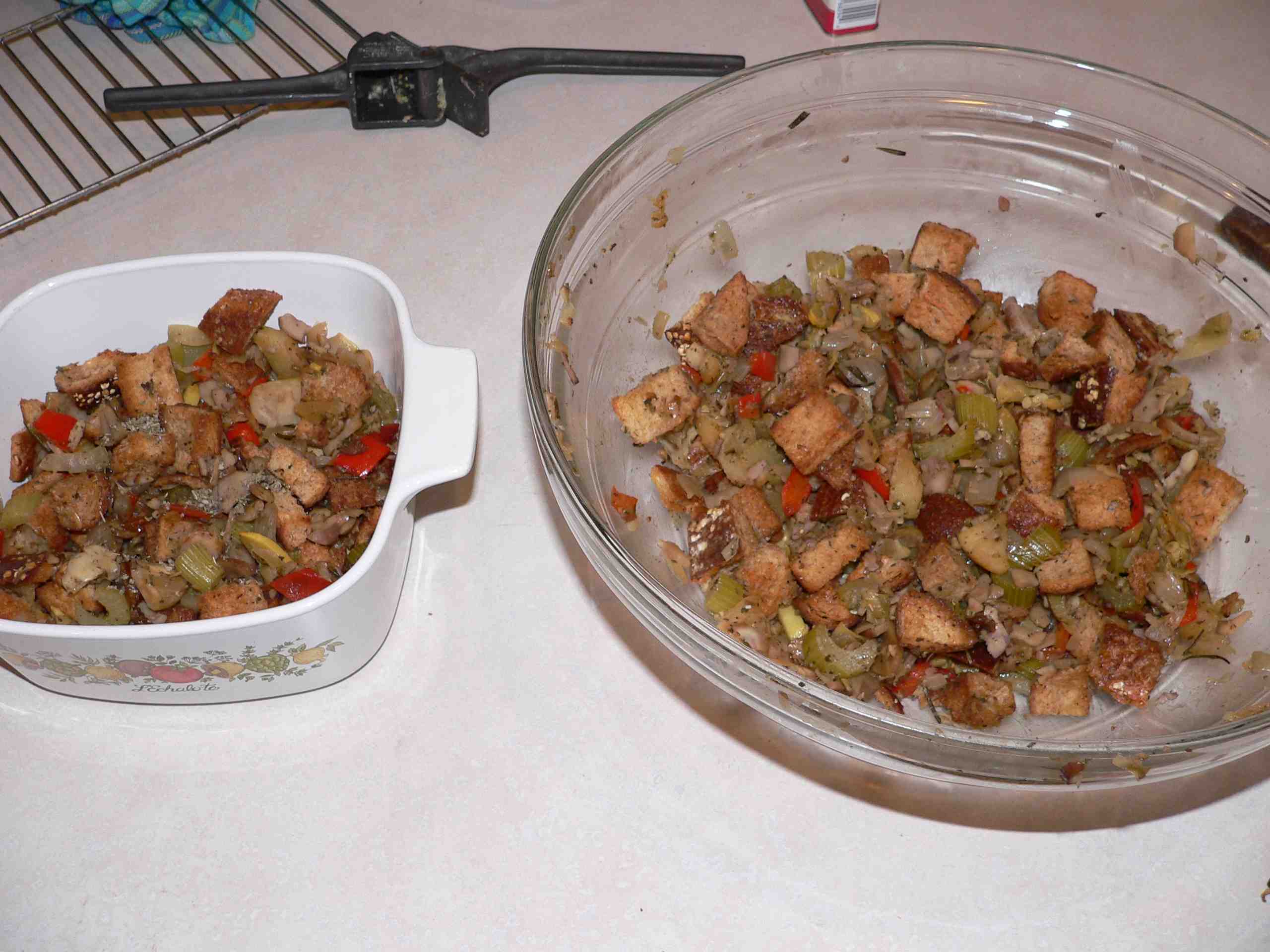
This year, the stuffing contains leftover multigrain wheat bread ends, cubed and baked. Butter, onion, garlic, white wine, sage (lots), rosemary, zucchini squash, red pepper, celery, and chestnuts. Half goes into the cavity of the bird, the other half is baked in a dish separately for our vegetarian guests.

Cross-contamination is the big concern. Again, I prefer to handle the bird in the roasting pan to limit bug flow in the kitchen. Being prepped and having everything near the sink helps. Be the bug.
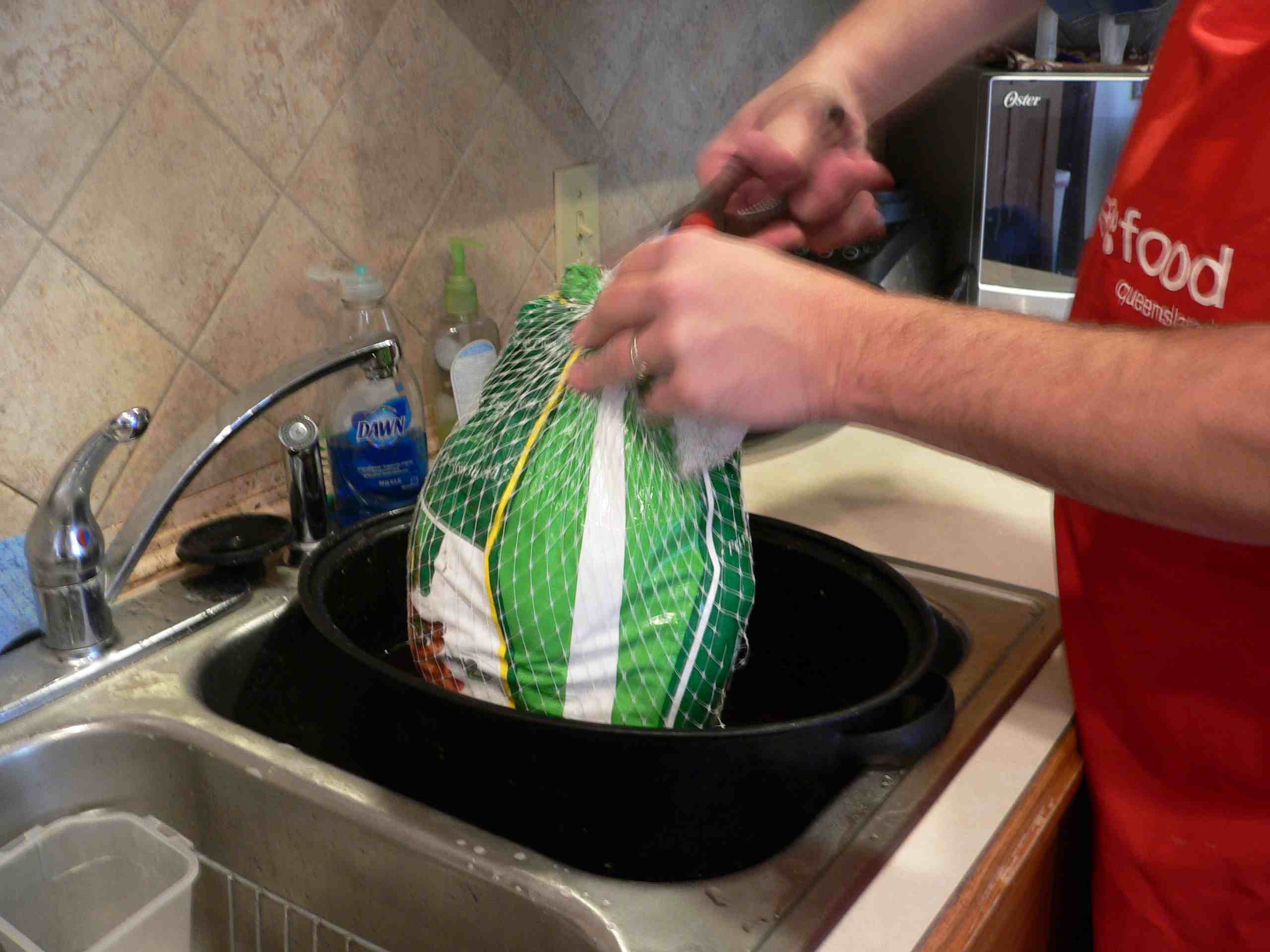
Safely back in the roasting pan, hands washed and counters cleansed, the turkey goes into a 450F oven for 30 minutes, a tin-foil teepee is used to cover the breast and the temperature is lowered to 325F. The bird is regularly brushed and injected with a citrus-based glaze.

Next: Thermometers
 

Real time turkey; bugs everywhere: the cross-contamination nightmare of prepping a turkey

Five days after purchasing a 15-pound frozen turkey for $0.68/pound, it’s time to prep the bird for our 4 p.m ish Thanksgiving dinner in Manhattan (Kansas, so Central time)..

Using a combination of countertop and the front porch to thaw the bird in a covered roasting pan, the frozen turkey has a surface temperature of 47F and an interior temperature of 39F (I’ve been letting it sit on the counter to warm up in preparation for cooking).
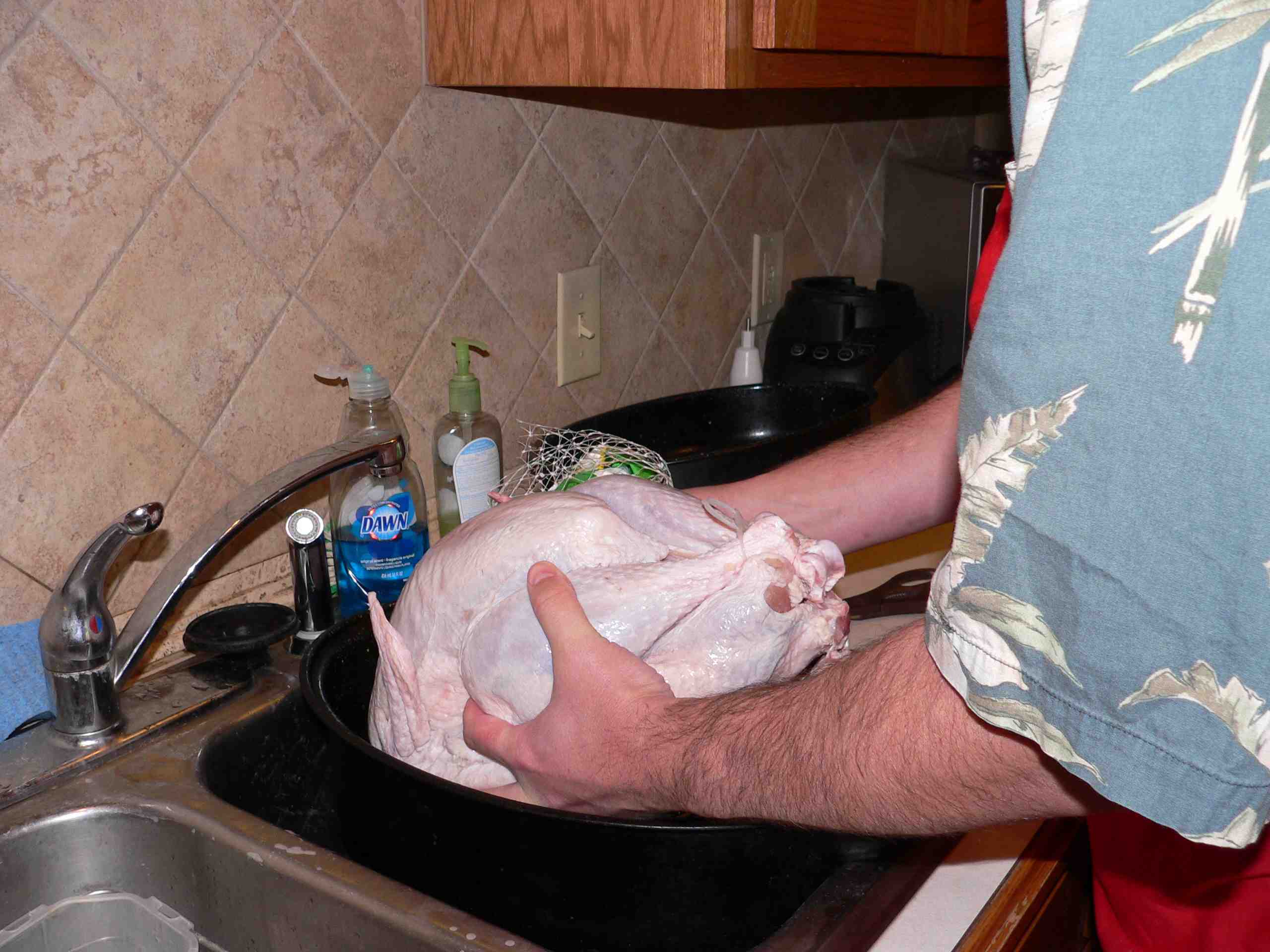
There was at least an inch of melted turkey juice and water at the bottom of the roasting pan. Whoever said place a frozen bird on a plate in the refrigerator to thaw has never done it. There would be salmonella-and-campylobacter-laden liquid everywhere, most likely on the fresh produce in the crisper drawer.

As I picked up the bird to begin removing the packing, there was a splash, and a few tablespoons of liquid splattered on the floor. Oops. Then there was a package of gravy mix in the cavity, covered in all sorts of bacteria. Got that into its own container, and the neck into the stock pot. Got me and the surrounding area cleaned up.
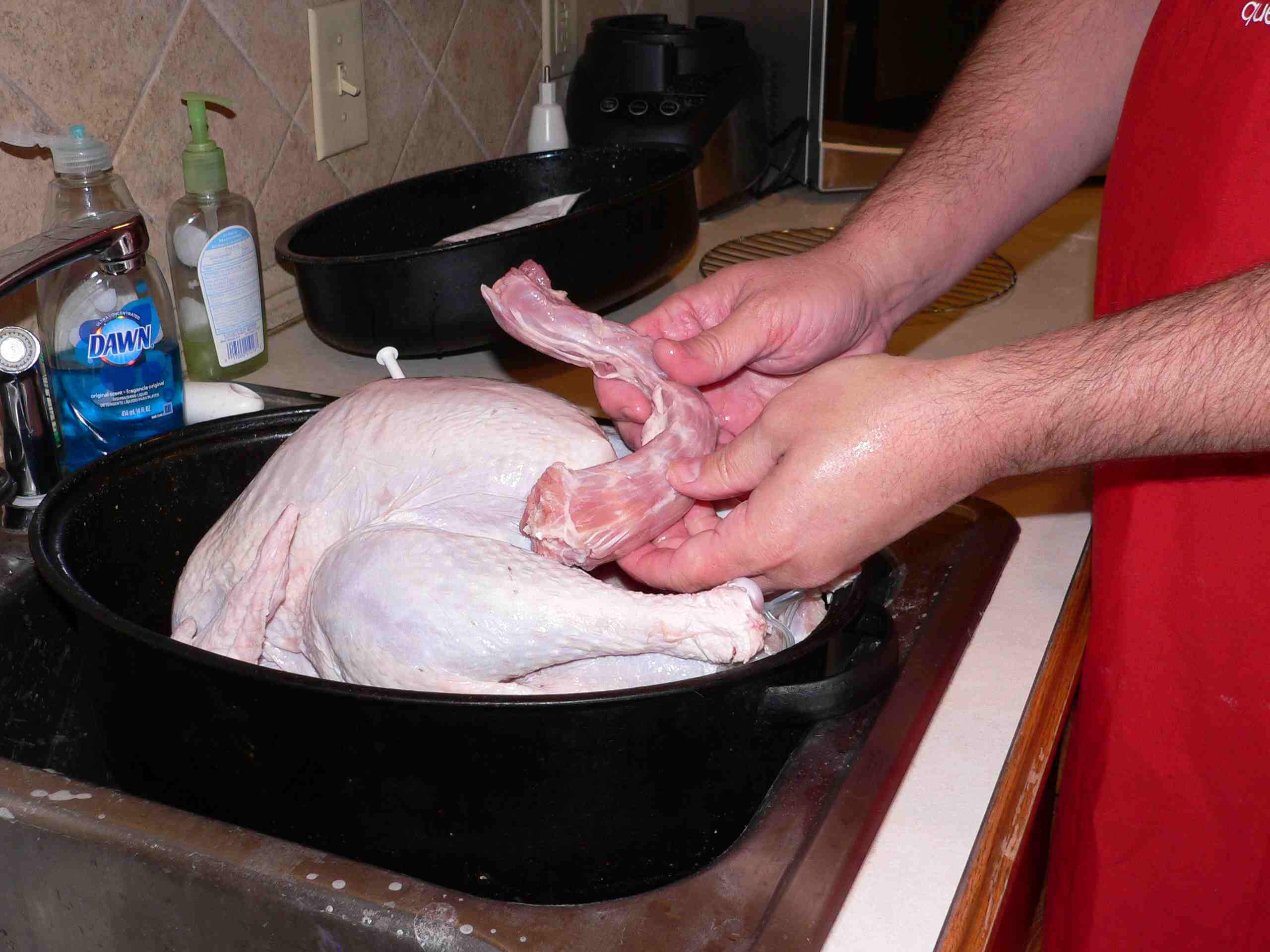
The bird is continuing to warm up at room temperature for another hour and then into the oven. The chestnut stuffing has to cool a bit.

Next, more cross contamination follies as the bird gets stuffed.


Mason’s mum vows to fight for justice; FSA will try harder

Although Coroner David Bowen said butcher William Tudor’s disregard for food hygiene sparked an E. coli O157 outbreak that claimed the life of 5-year-old Mason Jones in 2005, the “horrific catalogue” of breaches was not enough for him to record the verdict as unlawful death.

While disappointed, Mason’s mom, Sharon Mills, told the South Wales Echo she was grateful Mr Bowen called for tougher enforcement of food hygiene laws and better regulation of food businesses.

Steve Wearne, director of the Food Standards Agency in Wales, said,

“We are determined to ensure that lessons are learned from the tragic death of Mason Jones. We have provided guidance to local authorities that aims to ensure that each intervention in a food business – whether advice, inspection or enforcement – moves it towards full compliance with the law.

“We will shortly issue a public consultation on extending the use of Remedial Action Notices to all food premises. These notices would allow local authority enforcement officers to require a process or activity in a food business that poses a significant risk to human health to be stopped immediately, and would not allow it to recommence until specified action to reduce the risk had been taken.”

Cookiegate: health chief fired for eating cookie instead of answering questions

Today’s lesson in risk communication: don’t brush off reporters with crazy gestures involving a cookie, and don’t whine, “I’m still eating my cookie.”

You’ll get fired.

Professor Stephen Duckett, , 60, who had been headhunted from Australia in 2009 to take charge of the newly created Alberta Health Services, was fired after preferring to munch on a cookie rather than answer media questions as he left a meeting of senior healthcare advisers in Canada.

Following a recent meeting in Edmonton, Dr Duckett refused to talk to waiting media about the health crisis in the Canadian province of Alberta.

The Age reports that at one stage, as he tried to outpace the media, he prodded the cookie towards the face of a female reporter and said the only thing he was interested in was eating his cookie.

He was quickly dubbed the "Cookie Monster" after a video of the incident went viral showing him nibbling on the biscuit and repeatedly telling the pursuing media "I’m eating my cookie."

The former La Trobe University academic issued an apology the day after the incident on November 19, saying he deeply regretted his behavior and said he respected journalists’ right to ask timely questions in the public interest.

Board chairman Ken Hughes told reporters that Dr Duckett was sacked because his ability to be effective in the role was compromised and the cookie video was "one of the elements" that led to the decision.

Wedding guests ill in Wisconsin

The Franklin Health Department is investigating an illness that appears connected to a wedding last weekend. The bride’s parents told Today’s TMJ4 they feel terrible that the wedding guests became so ill, including the bride and groom.

At least 20 people came down with symptoms including nausea, vomiting, diarrhea, and abdominal cramps, according to the health department. The bride’s parents said they believe the number of victims may actually be much higher than 20.

The health department said it was unclear whether the illness came from food consumed at the wedding reception or some other location guests visited over the course of the weekend. The Franklin Health Officer said the department will contact guests who may have come in contact with the illness.

One health official, who is not connected to this investigation, questioned whether the illness could be norovirus which has recently spiked in northern Illinois.