Raw milk is not a cosmetic; Australian Co-op fined

The Sunshine Coast in Queensland, Australia, sounds like a groovy place, especially when Cleopatra’s Bath Milk, a raw milk product which is labeled as a cosmetic, is available.

The Sunshine Coast Daily reports that Maleny’s Maple Street Co-op was fined $2,500 in court yesterday after it was found guilty of misleading and deceiving the public.

The sale of unpasteurised milk is prohibited under Queensland’s Food Production Safety Act 2000.

After a complaint from a resident in February last year, a plain-clothes Queensland Health officer purchased a two-litre bottle of Cleopatra’s Bath Milk.

While it could not be proven the sales assistant had promoted the raw milk for consumption, the prosecution focused on the fact that the unpasteurised milk had been displayed in the same refrigerator as organic, pasteurised, milk and price listings indicated it was no different to its legal counterparts.

Know thy suppliers: UK Kosher Deli fined for supplying meat unfit for human consumption

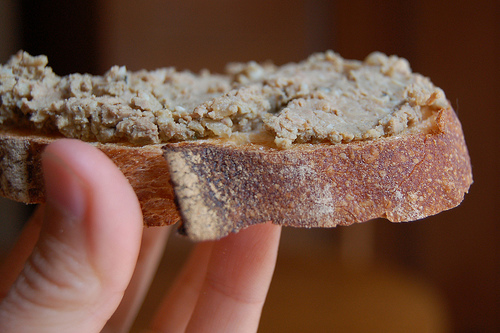
A kosher food supplier has been ordered to pay £27,000 by the courts for selling a pot of chopped liver containing a potentially deadly bacteria.

Bosses of Kosher Deli UK Ltd., based on the Claremont Industrial Estate, in Claremont Way, Cricklewood, admitted supplying 1kg of meat contaminated with Listeria to a residential care home in May 2008.

An investigation into the company, lead by Barnet Council’s environmental health team, was launched after an 89-year-old care home resident was diagnosed with listeriosis.

A judge at Wood Green Crown Court on Monday said serious issues at Kosher Deli had been set out in an audit report by the Meat Hygiene Service, but accepted the offence represented a lapse over a short period of time in a business which had been operating for 74 years.

Albert Bendahan, managing director of Kosher Deli, said it was “exasperating” that the case was brought based on one allegation from a care home resident, and insisted the family run company took every precaution to ensure food safety was maintained, adding,

“We continuously test and monitor our products, instruct and train our staff and live up to the requirements and beyond of the Food Standards Agency Guidelines.”

Try harder.

How safe is chicken tartare; how not to ask a question

If you like steak tartare, you’ll love chicken tartare, a salmonella-laden crap-fest of raw chicken and egg.

Jonathan Kauffman of San Francisco Weekly writes readers were disgusted after his review of (raw) chicken tartare served at Ippuku, a Japanese restaurant in Berkeley.

Proving once again that most chefs know shit about food safety, chef Christian Geideman said that “since salmonella only lives in the digestive tracts of chickens, and since Geideman dipped strips of raw chicken breast meat in boiling water for 30 seconds before cutting it up and seasoning it, he’d eliminated the threat of salmonella contamination.”

Good thing Kauffman finally got in touch with friend of the barfblog, Harshavardhan Thippareddi, an associate professor of food science at the University of Nebraska, Lincoln (left, sorta as shown).

Dr. Thippareddi – also known as Reddi – told Kaufmann that, no, a 30-second plunge in boiling water would do little to kill pathogens.

When asked how chicken tartare would compare to steak tartare, Reddi said,

"Actually, the risk is lower in beef. The normal percentage of beef carcasses contaminated with E. coli O157:H7 is 0.1 to 0.3 percent. In poultry, the prevalence of salmonella is higher — the legal limit for poultry processors is that less than 20 percent of the birds may be contaminated. In some processors, they may have lower rates — like 5 or 7 percent."

Kauffman said,

"But those rates are probably for confined chickens. These chickens are pasture raised, and probably organic. Does that make a difference?"

Reddi said,

"We’d like to think it does, but sadly, it doesn’t.”

Science in a San Fran blog. Awesome.

Reddi added in a subsequent e-mail to the author,

"We all take risks in life. I suppose this is one of those ‘acceptable’ risks for some of us. However, I don’t think you will ever find me eating steak tartare or sushi (knowing the risks)."
 

Lamb on a shovel in a fire pit: finger test insufficient

Once the kid goes to sleep, Amy and I usually adjourn to the bedroom, no matter how early, and chill.

I go through my ritual of flipping through bad TV while Amy does fascinating farm animal things on Facebook.

Last night, my flipping took me to the Primal Grill With Steven Raichlen, where the dude was cooking lamb chops on a shovel in a fire pit.

Apparently, by holding the shovel over the open wood fire, the smoke curls up over the shovel to add a robust flavor to the chops.

This guy’s got way too much time on his hands.

To check if the lamb was properly cooked, he pushed his finger into a chop, proclaimed it “spongy” and therefore done.

However you want to cook meat – with a shovel, a pick-axe, a V-8 engine — use a tip-sensitive digital thermometer to ensure a safe food temperature.

Lousy food safety auditors put public and brands at risk

The voluntary quality control system widely used in the nation’s $1 trillion domestic food industry is rife with conflicts of interest, inexperienced auditors and cursory inspections that produce inflated ratings, according to food retail executives and other industry experts.

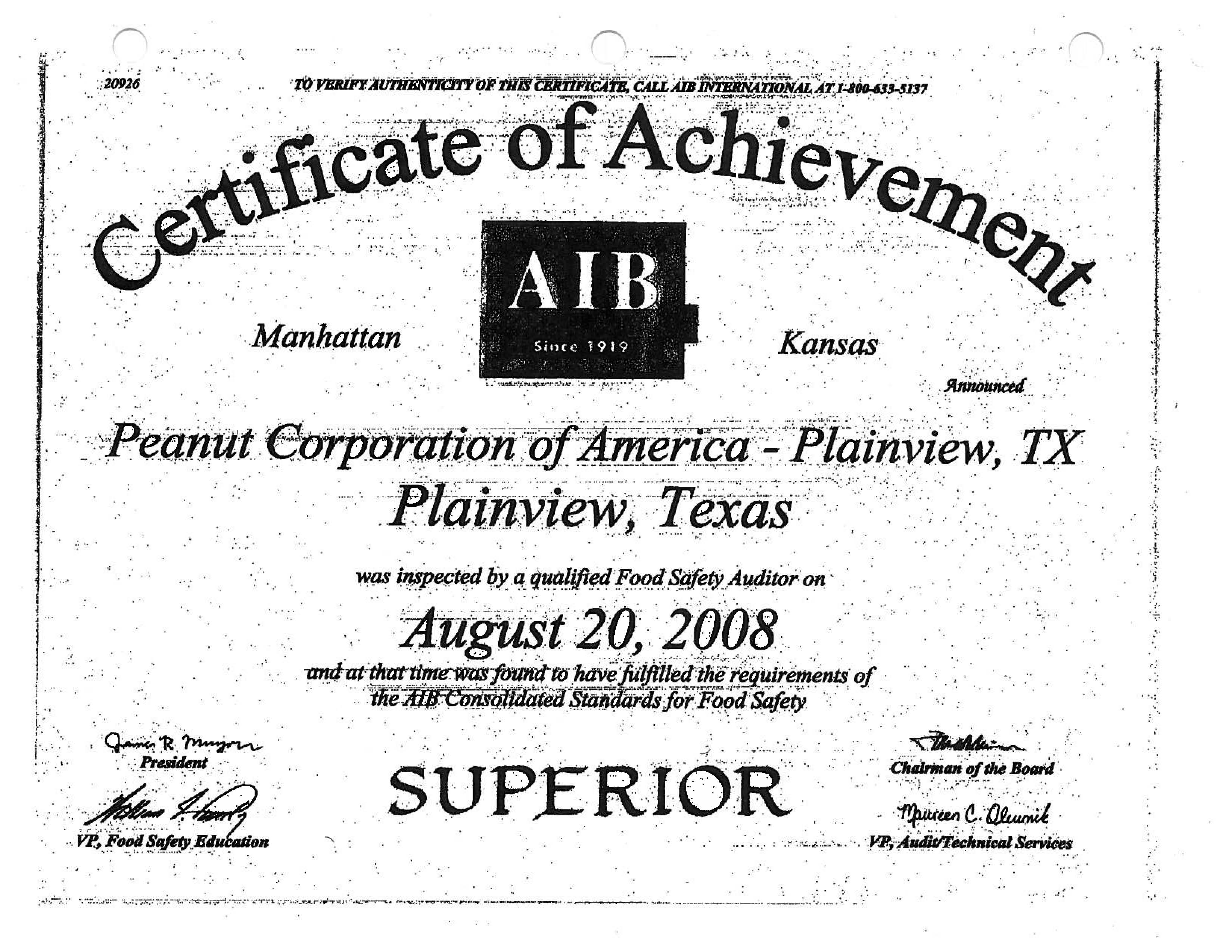
I’ve been saying that for a long time, but this is the Washington Post version, published this morning. I especially like the pictures of the Montgomery Burns Awards for Outstanding Achievement in the Field of Excellence, courtesy of AIB, the Manhattan, Kansas-based audiots that gave a stellar rating to PCA and Wright Eggs just prior to terrible food safety outbreaks and revelations of awful production conditions (see below).

The system has developed primarily because large chain stores and food producers, such as Kellogg’s, want assurances about the products they place on their shelves and the ingredients they use in making food. To get that, they often require that their suppliers undergo regular inspections by independent auditors. This all takes place outside any government involvement and without any signals – stamps of approval, for instance – to consumers. (That’s four-year-old Zoe Warren, right, of Bethesda, who was hospitalized in 2007 after contracting salmonella poisoning after eating a chicken pot pie. The photo is by Susan Biddle for the Washington Post.)

The third-party food safety audit scheme that processors and retailers insisted upon is, in many cases, no better than a financial Ponzi scheme. The vast number of facilities and suppliers means audits are required, but people have been replaced by paper.

In fact, most foodmakers, even those with problems, sail through their inspections, said Mansour Samadpour, who owns a food-testing firm that does not perform audits. "I have not seen a single company that has had an outbreak or recall that didn’t have a series of audits with really high scores.”

Third-party food audits, like restaurant inspection, are a snapshot in time. Given the international sourcing of ingredients, audits are a requirement, but so is internal food safety intelligence to make sense of audits that are useful and audits that are chicken poop.

Industry experts say some "third-party" inspections can be rigorous. Those that audit using internationally recognized private benchmarks "are much more thorough," said Robert Brackett, former senior vice president of the Grocery Manufacturers Association. "But they’re less likely to be used because they are much more expensive."
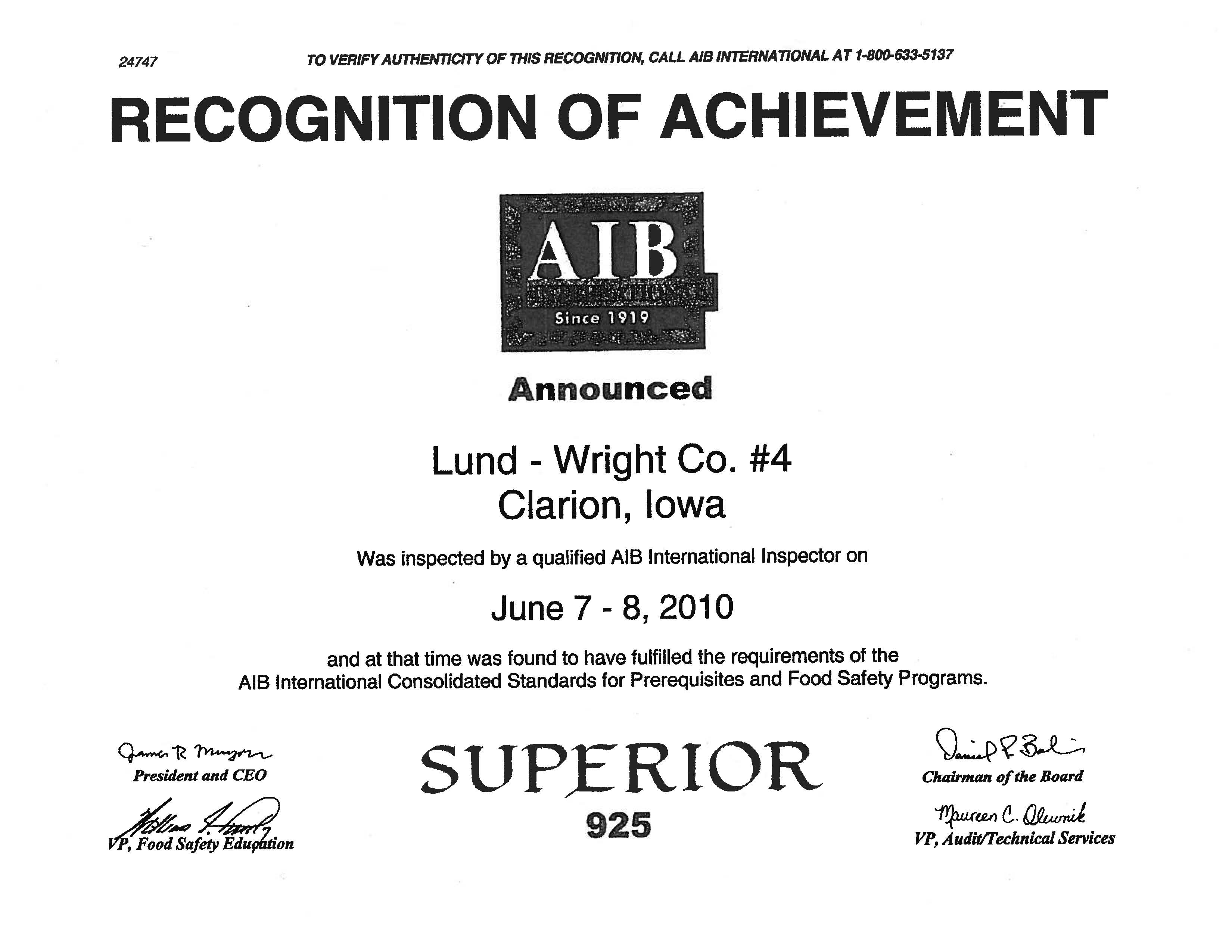
Audits, inspections, training and systems are no substitute for developing a strong food safety culture, farm-to-fork, and marketing food safety directly to consumers rather than the local/natural/organic hucksterism is a way to further reinforce the food safety culture.

Will Daniels, who oversees food safety for Earthbound Farm, the folks who brought E. coli O157:H7 in bagged spinach in 2006 that sickened 199 and killed four, said, Earthbound regularly received top ratings in third-party audits, including one exactly a month before the tainted spinach was processed, adding,

"No one should rely on third-party audits to insure food safety."

“… if the incentive is to pass with flying colors, it creates a disincentive to air your dirty laundry and get dinged and lose a customer over it.”

After the E. coli outbreak, Earthbound put in place an aggressive testing and safety program that includes outside audits but also requires Earthbound’s own inspectors to show up unannounced to check suppliers. The company tests its greens for pathogens when they arrive from farms and again when they are packaged.

Too bad Earthbound didn’t figure all this out after the 28 other outbreaks involving leafy greens prior to the deadly 2006 outbreak.

Cost is another factor.

Food companies often choose the cheapest auditors to minimize the added expense of inspections, which range from about $1,000 to more than $25,000.

The foodmakers can prepare for audits because they often know when inspectors will show up.

And auditors have a range of experience and qualifications, from recent college graduates to retired food industry veterans. They sometimes walk through a plant, ticking off a checklist to produce a score, Samadpour said. Basic inspections do not typically include microbial sampling for bacteria.

In a written response to questions, Brian Soddy, AIB‘s vice president of marketing and sales, said company audits are intended to give food manufacturers "guidance and education for improvement."
Producers have the ultimate responsibility, he said, adding that the audits are voluntary and not intended to replace any FDA regulatory inspections.
AIB said last week that it is reevaluating its "superior" and "excellent" rating systems because they "have led to confusion in the wake of recent incidents," Soddy wrote.

Some retailers include inspections as just one piece of their safety programs.

Costco, for example, has its own inspectors but also requires its estimated 4,000 food vendors to have their products inspected according to a detailed 10-page list of criteria. Private auditors must X-ray all products for "sticks and stones, bones in seafood – anything you can think of that might be in hot dogs, baked goods, outside of produce," said Craig Wilson, Costco’s assistant vice president for food safety and quality assurance.

Costco maintains an approved list of about nine audit firms. The list does not include AIB.

Wal-Mart requires suppliers of private-label food products sold in its stores and Sam’s Club to be audited using private internationally recognized standards.

In addition to conducting its own product testing, Giant Food requires its vendors to be audited from a list of about a dozen approved firms.

Officials release final report of Illinois Subway salmonella outbreak

Did the Sponge Bob leafy greens cone of silence descend on Illinois health types as they concluded in a 69-page report published today that lettuce, tomatoes and olives were the possible culprits in a Subway salmonella outbreak that sickened almost 200 earlier this year?

Pantagraph.com reported today that officials with the Illinois Department of Public Health traced a salmonella outbreak at Subway restaurants to one Central Illinois food distributor, but in a final report on the incident issued Thursday, could not identify the exact source of the problem, which led to 109 confirmed cases and another 90-plus probable or suspect cases of the illness between late April and June.

In the 69-page report, investigators said the “most likely source” of the lettuce, tomatoes and olives linked to the illnesses was Lincoln-based Sysco Central Illinois Inc., which delivered produce to the affected restaurants.

Samples collected at the company’s distribution facility in June, after many of the victims had already contracted the illness, were tested and found negative for salmonella.

Areas that may have been the source of salmonella may have been washed down and produce that was affected may have been discarded.

The report, which will be forwarded to the federal Centers for Disease Control, shows that 299 Subway restaurants were forced to dispose of their produce during the event.

More than 480 workers at the stores had to be tested. A dozen of them were found to be positive for the strain of salmonella.

Nosestretcher alert: CBC (that’s in Canada) sucks at food safety info

I was on a trip with some Kansas Staters earlier this week, and at a dinner, one of them started talking about a report he’d heard on NPR (National Public Radio) earlier that week.

I said, “State-sponsored jazz.”

He looked at me like I was special, because, how hard is it to repeat lines from the Colbert Report.

Satire, like the Intertubes, is lost on some people.

The Vancouver television section of the Canadian Broadcasting Corporation (CBC) ran a bunch of food safety stories in the run-up to Canadian Thanksgiving on Oct. 11, 2010. An astute reader e-mailed me to say, “You may want to check out their ‘food-safety facts.’” I have no idea where these alleged facts came from, but the BS highlights include:

2. "Pot luck meals are responsible for a large amount of food poisonings. They are usually caused by poor food temperature controls in egg or meat products."

4. "Harmful bacteria does not stop multiplying unless refrigerated below 5 degrees. However, most refrigerators are not capable of this temperature."

7. "Do not eat foods directly from a jar or can. Saliva can contaminate the contents inside."

8. "Peanut butter needs to be stored in a refrigerator after opening to prevent the fats from going rancid.”

None of these facts are substantiated, and there is plenty of available evidence to counter these claims. As the reader points out, nothing is mentioned about cross-contamination or handwashing.

Hate is a strong word, but I hate jazz. Especially state-sponsored jazz. And terrible taxpayer-funded news.
 

Wake County (NC) surveys food handling practices; makes me a happy resident

I’m pretty happy to live in Wake County today. It’s not just the sunny and warm weather (supposed to be in the 80s today); great amenities for a family or the relatively low cost of living that have me excited.

It’s the food safety nerd stuff.  

Wake County Public Health (the same folks who followed-up with me during the Campylobacter 2009 incident) have been proactively evaluating potential legislation changes and released a report on how well the businesses and institutions they inspect are doing when it comes to reducing foodborne illness risk factors.
 
FDA has conducted similar surveys in the past (2003 and 2008) and now Wake has local data that can be used for lots of different things including evaluating inspection changes, food handler training interventions and system differences.
 
Using a FDA data collection instrument including observation, health officials evaluated 458 randomly selected food service establishments representing  various types of facilities (including schools, hospitals, delis, full service restaurants and fast food). 
 
According to the report,
 
Wake County staff used a combination of direct observations at each restaurant and responses from restaurant management and food preparation staff. For each of the facility types, the number of items recorded as non?compliant with the current FDA Food Code was recorded. 
 
Improper holding/time and temperature was the risk factor found to be most often out of compliance.  The highest percentage of OUT of compliance values were most commonly  associated with:  
-Improper cold holding of potentially hazardous food (PHF)  and  
-Inadequate date marking of refrigerated ready?to?eat PHF 
 
Poor personal hygiene was the risk factor with the second highest incidence of OUT of compliance values.  The OUT of compliance values were most commonly associatd with: 
– Non?compliant employee health policy and
– Improper handwashing. 
 
A study like this does have limitations (inspectors as observers might influence behaviors of food handlers and managers, more than if it was an outside observer; observers get tired and miss things, have their own biases) but this is a great starting point and more than what many others have. Reports like this might generate some scary headlines but they arm health officials and the industry with a starting point to compare future efforts against.
 
According to Andre Pierce, Environmental Health director, “Based on the survey, the County will direct its attention to the risk factors that are most frequently out-of-compliance in food service establishments, and implement programs to reduce or eliminate the frequency of all of the risk factors that contribute to foodborne illness.”
 
Food safety culture issues are featured prominently in the report – addressing things like having ill food handlers step away from the kitchen (and managers supporting them) and monitoring how long open deli meats sit in a fridge are more than just regulatory concerns.
 
I told Martha Quillin of the News and Observer,
 
"Legislation can only go so far. What’s more important is what happens when the inspector’s not there. You have to find a way to engage everyone, from the business owner all the way down to the 15-year-old who works in the kitchen, in the concept that we need to prevent food-borne illness."

Reducing some of these factors have less to do with different inspections and more to do with creating an environment within a business where staff know risks, how to manage them and value not making patrons ill.

Peru soccer team allegedly poisons foes

I used to work with a guy a long time ago who said, “when I retire, I’m going to take my guitar, a couple of amps, sit on my front porch, and do a lot of hallucinogens.”

He had a poster of Jimi Hendrix in his office.

The New York Daily News reports an unidentified staff member of the Peru soccer team, Sport Ancash, has been accused of giving players from opposing team, Hijos de Acosvinchos, drugged water after four of the players passed out in the final moments of their Peruvian second-division game.

Doctors at a nearby hospital found traces of benzodiazepine — a psychoactive drug with sedative properties — in the player’s bloodstream.

Using the Contador defense, Sport Ancash President Jose Mallaqui blamed the incident on poultry, adding

“I was able to find out that the players ate rotisserie chicken and had some energy drinks before the game, which ended up hurting them.”

Sport Ancash ended up losing the game, 3-0.

Texas fresh-cut plant shut after links to 5 listeria deaths in celery

Sometime in Jan. 2010, someone in Texas got really sick with listeria.

By mid-May, 2010, five were sick and two were dead – all from the same strain of listeria. By Oct. 20, 2010, five were sick and five had died from the same strain of listeria. Most of the listeriosis patients were elderly with serious underlying health problems, and many were hospitalized before and during the onset of their infection.

Health types said six of the 10 cases were conclusively linked to chopped celery sold by Sangar Fresh Cut Produce of San Antonio, so yesterday, the Texas Department of State Health Services ordered Sangar to stop processing food and recall all products shipped from the plant since January. The order was issued after laboratory tests of chopped celery from the plant indicated the presence of Listeria monocytogenes.

Sangar President Kenneth Sanquist Jr. took issue with the state, adding in a statement,

“The state’s claim that some of our produce now fails to meet health standards directly contradicts independent testing that was conducted on the same products. This independent testing shows our produce to be absolutely safe, and we are aggressively fighting the state’s erroneous findings.”

DSHS inspectors say that in the Sanger plant, they found a condensation leak above a food product area, soil on a preparation table and hand washing issues.

The recalled products – primarily cut fresh produce in sealed packages – were distributed to restaurants and institutional entities, such as hospitals and schools, and are not believed to be sold in grocery stores.

For a glimpse of the Sanger plant, see the video below from Aug. 13, 2010, when Sanquist told KENS5 TV in San Antonio there should be tougher standards in the fresh-cut industry, adding,

"All we’re saying is everyone should have that standard. There is an entire process that we have to follow on a daily basis, if you miss a step or two steps or try to take a short cut…children could get very sick."

Sanquist said many businesses only require their produce company have a recall program in place and that’s simply not enough prevention.