
Going public with disease information: sooner the better

When to go public about health warnings – like potential outbreaks of foodborne disease – remains contentious. And no one is willing to come clean about it and say – this is when we go public and why. Or at least write it down. Bureaucrat 101 – write it down, have to do it; so don’t write it down.

I understand the flexibility public health types require to do their jobs effectively, but much of the public outrage surrounding various outbreaks – salmonella in tomatoes/jalapenos, 2008, listeria in Maple Leaf deli meats, 2008, the various leafy green recalls and outbreaks of 2010, and the delay in clamping down on Iowa eggs – can be traced to screw ups in going public.

It’s long been a tenet of risk communication that it is better to default to early public information rather than later. People can handle all kinds of information, especially when they are informed in an honest and forthright manner. In new research that seems directly applicable to going public about foodborne illness outbreaks, two mathematical biologists at the Georgia Institute of Technology and Marshall University in Huntington, West Virginia reported today that at the first sign of a disease pandemic, public health officials should begin strongly communicating about the extent of the outbreak and the steps that can be taken by the public to avoid infection

During outbreaks of serious infectious diseases, many individuals closely follow media reports and as a result, take precautions to protect themselves against the disease. These precautions may include staying home, getting vaccinated, avoiding crowds, using disinfectants, canceling travel plans and wearing face masks.

Known as "self-isolation," these precautions can significantly reduce the severity of an outbreak, according to mathematical modeling done by "The more forcefully the media provides information about pandemic infections and deaths, the more the total number of infections is reduced," said Howard Weiss, a professor in the Georgia Tech School of Mathematics. "Media coverage also reduces the maximum number of infections at any particular time, which is important for allocating the resources needed for treating infectious diseases."

The benefit of publicly reporting disease outbreaks seems obvious, and public health officials in the United States have a policy of regularly communicating with the news media about such incidents. But according to Weiss, not all world governments choose to communicate so well – and nobody had used rigorous mathematical techniques to study the impact of that communication before.

In a paper about the model submitted to a biostatistics journal and posted on the Physics arXiv blog, Mummert and Weiss describe testing their model with a hypothetical outbreak of Ebola Hemorrhagic Fever in Huntington – a college community of about 50,000 residents.

In their model, Mummert and Weiss did not look at such issues as the quality of news coverage, or what may happen if news reports turn out to be false or overstated. They also didn’t study the effect of individuals occasionally leaving their isolation to purchase food or medicine, for instance.

The paper cites the case of a false rumor spread across the Internet in 2003 about a restaurant worker in New York’s Chinatown who had supposedly died of the SARS infection. That rumor led to a decrease in travel to that area.

"In general, our advice to public health officials anywhere in the world is not to hold back," he added. "They should get out the news about infectious disease outbreaks loudly and quickly. It’s clear that vigorous media reporting can have a substantial effect on reducing the impact of an outbreak."

Listeria and Health Canada; the money wasted on terrible communications

Listeria in Maple Leaf cold-cuts killed 23 primarily-elderly Canadians in the fall of 2008.

Prior to the 2008 outbreak, the advice from Health Canada was mushy:

“Although the risk of listeriosis associated with foods from deli counters, such as sliced packaged meat and poultry products, is relatively low, pregnant women and immunosuppressed persons may choose to avoid these foods."??

The advice from the U.S. Centers for Disease Control was clear: Do not eat hot dogs, luncheon meats, or deli meats, unless they are reheated.

Of course, most mortals don’t go to federal agencies for advice – they ask their doctors or nurses or medical professionals. And who knows what kind of nonsense will spew out.

Regardless, Health Canada took to the Intertubes today to remind Canadians of the importance of food safety for older adults. Old people, listen up:

“As you age, it becomes harder for your immune system to fight off harmful bacteria. This means that older adults can come down with a serious illness if they eat contaminated food. For this reason, it is very important to choose, handle and cook food properly before eating. It is very important for older adults or their caregivers to follow food safety steps to help reduce the risk of foodborne illness.”

Betty White – was that wiener steaming hot?

Health Canada now says, and has for a couple of years, that you old folks – and I’m rapidly becoming one of them, heading out for the afternoon early bird dinner specials here in Florida — make sure to cook hot dogs and deli meats until they are steaming hot before eating them.”

That’s nice. But Health Canada has still said nothing – at least not publicly – about the morons at Toronto’s Hospital for Sick Kids, who said expectant mommies can eat all the cold-cuts they want as long as they are from reputable sources.

Just because advice is issued, doesn’t mean that anyone pays attention. Go on, Health Canada, get dirty, engage people, even if you upset some. Or play nice, be ignored, and let more people get sick. Is that category on your annual review?

Food donated for animals served in UK zoo cafeteria

In scandal-starved U.K., the Daily Mail reports a safari park has been forced to admit serving up food meant for its animals in the public canteen.

Woburn Safari Park in Bedfordshire has said that potatoes and onions generously donated for the animals were fed to paying customers.

However safari park bosses stressed today that they had not put customers’ health at risk.

The incident only came to light when a member of the public (or kitchen staff – dp) complained to Central Bedfordshire County Council about kitchen practices.

Park chiefs were then forced to admit that in September last year they had used food in the public canteen that had been donated as animal feed.

However, they insisted this was a ‘one-off’ and not common practice at the park which houses animals including lions, tigers, elephants, rhino and giraffes.

The potatoes and onions were said to have been unsuitable for the animals.
Officials from Central Bedfordshire Council launched an investigation into the incident and discovered the allegations were true.

Big egg farms don’t mean dirty egg farms.

Newly released reports pointing to years of positive salmonella tests at an Iowa egg facility have baffled some experts and egg producers.

Elizabeth Weise writes in today’s USA Today that Congressional investigators have obtained records that show Wright County Egg had evidence of even more problems than filth and vermin, as reported by the Food and Drug Administration last month. The records show that over the past three years, Wright County, the company at the center of the outbreak that sickened about 1,519 people and led to the recall of 550 million eggs, had multiple positive tests for salmonella in its plant that it did not report.

Numbers that high over that time period indicate "the environmental contamination is widespread on these farms," says Darrell Trampel, professor of production animal medicine at Iowa State University in Ames. "Maybe six to 12 positives … wouldn’t be surprising, but 73 is relatively high."

Besides, "if he’s getting repeated positives back on consecutive tests, that tells you that you’re not getting to the root cause of what the problem is," says Patricia Curtis, director of the poultry products safety program at Auburn University in Alabama.

Dave Thompson, owner of Pearl Valley Eggs in Pearl City, Ill., who produces 800,000 to 850,000 eggs a day, seven days a week, and was featured in a Weise report last month, says he can’t imagine getting numbers like Wright County’s. "I’ve never had a positive, and I test all the time," he says.

Under FDA rules put into place in July, large egg production facilities that have positive tests for salmonella enteritidis will be required to test 1,000 eggs four times at two-week intervals. "If even one egg tests positive, it’s mandatory that those eggs … be pasteurized," Trampel says.

Big ag doesn’t mean bad ag. Organic or conventional, local or global, big or small, there are good farmers and bad farmers. The good ones know all about food safety and continuously work to minimize levels of risk.

Consumers have no way of knowing which eggs or foods were produced by microbiologically prudent farmers and which were produced on dumps. Market microbial food safety at retail so consumers can choose.
 

Canadian farmers say they are misunderstood; market the fab food safety instead

This should make everyone feel all warm and fuzzy about Canadian farmers: according to a new poll (which is nonsensical anyway) Canadian producers think governments overreact to food safety incidences and overburden them with rules to prevent the spread of diseases on their farms.

Sarah Schmidt of Postmedia News reports that a summary of the focus groups led by Ekos Research Associates Inc. on behalf of Agriculture Canada said,

"Those who were being most affected by these measures felt that governments and retail industry giants had overreacted in the face of mad cow and other food safety incidences, as well as bowing to pressure from the United States and other countries."

This from the country – that would be Canada — that initially resisted the ruminant protein in ruminant feed ban in 1996, had lousy enforcement of said ban, leading to 15 or so cases of bovine spongiform encephalopathy over the past decade, and was so delusional about the potential for listeria in cold cuts that it created an outbreak climate culminating in 22 deaths in 2008.

Further, "consumers do not have sufficient basic information about agricultural products. And if they did, they would be more likely to buy Canadian and to buy products grown locally.”

I get that other countries can cut corners and flood the market, and labeling is confusing, but stop whining. Tell retailers about your fabulous food safety programs and standards. Market your Canadian product and back it up with food safety data, not some nostalgic allegiance to maple syrup and beavertails.

Raw oysters still risky

September may be a ‘R’ month but the Gulf of Mexico is still warm. I know. We’re still here. So is Vibrio vulnificus.

The Sarasota Herald Tribune reports the Florida Department of Health is warning heavy drinkers and people with liver damage to avoid eating raw oysters or exposing open wounds to still-warm Gulf and bay waters.
So far this year, six deaths from Vibrio vulnificus infection have been reported in Florida. The DOH has determined that at least two of the deaths were attributed to raw oyster consumption. Eight wound infections have been reported, but none were fatal.

Thoroughly cooking oysters — frying, stewing, or roasting them — eliminates harmful bacteria and viruses, says the DOH.
 

Restaurant cleaning cloths pose health risk, says study

I have a number of anecdotal studies going on whenever I go to the supermarket, a restaurant, a baby doctor, and other places.

When we go to a roadhouse-style restaurant, I often watch the servers clean the table with some sort of cloth, and I’ll ask, what is the cloth cleaned with or soaked in? They usually point to some sorta sanitary solution, but aren’t too knowledgeable about how often it’s changed or cleaned. Same with those aprons the chefs are always wiping their hands on – I have dreams of large sample sizes.

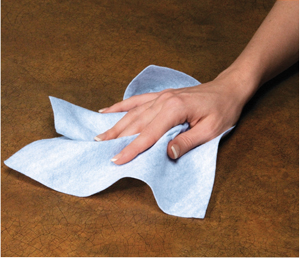
The U.K. Health Protection Agency does have some resources so set about to sample those clothes used to wipe down tables in restaurants and takeaways and found they are often contaminated with E coli, listeria and other potentially dangerous bacteria.

The Guardian reports that cloths used to clean surfaces where food is prepared need to be changed regularly or thoroughly disinfected to prevent the growth of bacteria that can cause food poisoning.

HPA researchers sampled 133 cloths used for cleaning in 120 restaurants and takeaways in the north-east of England. They told the HPA’s annual conference at the University of Warwick today that 56% of the cloths contained unacceptable levels of bacteria. The most common were enterobacteriaceae (found on 86 cloths) E coli (21), Staphylococcus aureus (six) and listeria (five).

Only a third of restaurant kitchens (32%) were following the recommendation to use disposable cloths and change them regularly. The remainder had reusable cloths; in 15% of the kitchens, staff were unsure how often they were replaced.

John Harford, of the HPA’s food, water and environmental microbiology laboratory, said there was no reason to suppose restaurant kitchens in the north-east operated differently from those elsewhere in the country. He pointed to the potentially serious consequences for those eating food in or from such restaurants, adding,

"We have had certain outbreaks of food poisoning at a restaurant where we have isolated salmonella from the person who has eaten the meal and we have found salmonella on the cloth in the kitchen as well.”

While most restaurants disinfected their reusable cloths every 10 to 24 hours, a number of restaurants left it longer than 24 hours and some did not know how often their cloths were disinfected.
 

Doctors work while sick: study

People shouldn’t work preparing or serving food when they are sick because they may spread the illness. That’s become a food safety mantra, and yet outbreaks are repeatedly traced back to sick food workers – like the 300 who got sick with norovirus at the Haaaaarvard faculty club earlier this year after 14 food service employees were discovered to be working while sick. Or the 529 who got sick with norovirus at Heston Blumenthal’s Fat Duck restaurant last year, where again, the presence of sick food workers was cited as a contributing factor to the outbreak.

There’s a difference between saying what should be done – sick workers stay at home – and actually doing it – food service workers may get fired, whether they work with divas or in dives.

Medical doctors are the same.

The Associated Press reports more than half of doctors in training said in a survey that they’d shown up sick to work, and almost one-third said they’d done it more than once.

Dr. Anupam Jena, a medical resident at Massachusetts General Hospital in Boston, developed food poisoning symptoms halfway through an overnight shift last year, but said he didn’t think he was contagious or that his illness hampered his ability to take care of patients.

Jena, a study co-author, said getting someone else to take over his shift on short notice "was not worth the cost of working while a bit sick." He was not among the survey participants.

The researchers analyzed an anonymous survey of 537 medical residents at 12 hospitals around the country conducted last year by the Accreditation Council for Graduate Medical Education. The response rate was high; the hospitals were not identified.

The results appear in Wednesday’s Journal of the American Medical Association.

Nearly 58 percent of the respondents said they’d worked at least once while sick and 31 percent said they’d worked more than once while sick in the previous year.

Bathroom instructions for men and women

How to properly use a public bathroom continues to be a source of mystery to many. Many proprietors have found it necessary to issue reminders regarding proper use of facilities, and to explain the difference between men and women, which may account for different levels of publicly observed handwashing compliance.

(A post on foodsafe-l last night attempts to explain that “When women use the restroom it is a more septic process than when men urinate. Women need to wash their hands more frequently than men.”)

Doctors, nurses don’t want patients to bug them about handwashing

Consumers are increasingly viewed as the critical control point (CCP) for food and hygiene safety, and are increasingly required to tell others exactly what they think, such as, Dude, wash your hands, Dude, use a thermometer to make sure my burger is done, and Dude, get that finger out of your ear, you don’t know where that finger’s been (or where it’s going).

Dr. Yves Longtin of the Geneva University Hospital presented results of an online survey at the 50th Interscience Conference on Antimicrobial Agents and Chemotherapy in Boston. The 277 respondents — all randomly selected doctors and nurses — believed that patient collaboration could help prevent medical errors, two-thirds had "negative feelings" about such participation programs.

Forty-three percent said that they would "feel humiliated" if they had to admit poor hand hygiene habits. Another 30 percent of workers said they simply would not appreciate patient reminders. Some respondents (16 percent) felt that if patients were to get involved, accountability then would shift partially from the caregivers to those patients.

What’s more, more than one-third of respondents said they would refuse to wear badges encouraging patients to ask about hand washing habits.

"Respondents had a pretty high impression of their own perceived levels of hand hygiene," Longtin said. "However, most believed they could improve."