Parents pissed E. coli petting zoo reopening

The petting farm at the centre of an E.coli outbreak that left several children seriously ill and more than 90 people reporting symptoms of the infection, has reopened despite a storm of criticism from parents.

Godstone Farm in Surrey opened its play areas yesterday but kept all visitors out of contact with animals. The attraction, which is still under investigation by the Health Protection Authority, will hold Halloween-related events this weekend.

Tracy Mock, whose two-year-old twins spent weeks in hospital fighting the bug after visiting the site said she was "shocked" to hear of the opening.

"I was under the impression the farm was going to stay closed until they had finished their investigations."

Safe food shouldn’t just be for the affluent – and they’re sorta clueless when it comes to food that makes them barf

Market research sucks. With food, people vote at the checkout counter with their wallets. Sitting at home, talking to some annoying survey person who only calls when dinner is about to be served reveals … nothing, except the potential buying patterns of pissed off shoppers, wondering why they can’t just eat dinner without the phone ringing.

A new national survey of more affluent consumers from strategic marketing communications firm Context Marketing, “Beyond Organic — How Evolving Consumer Concerns Influence Food Purchases,” has found that most respondents are highly concerned about the safety of the food they buy and would pay more for food they believe to be safer or healthier.

The research also found that assurances about what a food doesn’t contain, such as pesticides or antibiotics, matter a great deal to these consumers, along with ethical claims that reinforce quality and safety perceptions. …

While respondents confirmed that low price is a major influence on most food purchases, 60 percent said they would pay up to 10 percent more for food they think is healthier, safer or produced according to higher ethical standards, and 14 percent said they would pay a premium greater than 10 percent.

But right now, all that is available at retail is products that hint at enhanced microbial food safety and offer … nothing.

Market microbial food safety so consumers can choose.


I’m bona fide. I’m the paterfamilias. I have a residency card and can leave the U.S. and get back in

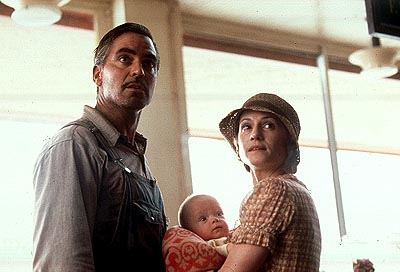
Or something like that from George Clooney in the 2000 movie and Courtlynn favorite, O Brother Where Art Thou.

As far as the U.S. government is concerned, I am indeed somewhat more bona fide, having received my permanent residency (below), so let the food safety world tour begin.

First stop – the motherland, U.K., in early January. Amy has a conference in Manchester, so thought we’d see some of my relatives in Newport, some friends in Cardiff, and visit the statue of my now confirmed great-great-great-great grandfather, William ‘The Tipton Slasher’ Perry, bare-knuckle boxing champ of England in 1850 and 1856, in Birmingham.

Better food poisoning awareness amongst docs after E. coli O157 inquiry in Wales

Looks like the E. coli O157 death of 5-year-old Mason Jones, the illnesses of 160 other Welsh schoolchildren and the subsequent inquiry headed by Prof. Hugh Pennington were not entirely in vain.

The South Wales Echo is reporting today that the number of reported foodborne illnesses increased to 631 in June, compared to 234 in January.

The figures highlight the impact the public inquiry into the September 2005 E.coli outbreak in South Wales has had on the willingness of doctors and sufferers to report suspected food poisoning cases.

A spokeswoman for Rhondda Cynon Taf council said,

“The high-profile E.coli court case and subsequent inquiry that has generated increased awareness of food poisoning and, as a result, has driven up the number of cases that are reported to us.

“More GPs are diagnosing cases as food poisoning and not stomach bugs and reporting them to us."

NYC restaurant: A mouse in the display case doesn’t mean a failed inspection

Being the typical older sibling, growing up middle-sister Lisa and I used to pick on youngest-sister Julie. Whenever we watched Disney movies we would assign Julie the nicknames of the odd Disney characters, like Gus-Gus. Gus-Gus, as some may recall, is one of the mice from Cinderella. Although Julie has forgiven us for the torture, the memories clearly have not faded. She messaged me recently to tell me she has acquired a new flatmate, named Gus-Gus, pictured right (next to his Disney counterpart).

While Julie and her new pet become acquainted, a New York City restaurant recently received a passing grade on its inspection even after photos of mice in the food display case were revealed, reports NY1.com.

The New York City Department of Health has given Junior’s Restaurant a passing grade, after two photos surfaced on the Internet which appeared to show a mouse in a display window (picture, right, from the source).

Junior’s owner says he took immediate action when he was made aware of the problem, calling it an isolated incident.

Earlier this week, health inspectors found evidence of mice in non-food areas and issued several violations.

City health inspectors went back Thursday for a reinspection.
The full results will be available on the city health department’s website next week.


Mmmm Gus-Gus turds.
 

Photoshop isn’t just for people – turkey breasts enhanced for magazine covers

The turkey has done what a supermodel never could: land the cover of dozens of magazines in a single month. The November covers of American food magazines are a turkey delight, with the burnished bird stuffed, garnished and splayed every which way.

Dana Cowin, the editor in chief of Food & Wine, said,

“I know it seems like, hey, what could be simpler than roasting a bird? But the perfect roast bird is a challenge. Turkey, as a model, is very much like a fashion magazine with fashion models. There are plump turkeys, and, I’m not kidding you, there’s skinny turkeys, there are chesty turkeys, breasty turkeys, there are flat-chested turkeys.”

“We have enhanced the breasts of turkeys,” she admitted.
 

Fat Duck won’t face charges – ‘I’ll never set foot in there again’ says food poisoning victim

The Telegraph reports this morning that Heston Blumenthal and the Fat Duck restaurant – home to 529 cases of norovirus earlier this year – will not face criminal charges despite failures in reporting illness and what appears to be an overall lack of food safety awareness.

Windsor and Maidenhead Council said that although the restaurant could have taken greater steps to combat the norovirus outbreak, there was insufficient evidence to take formal action.

Jim Rosenthal, the television sports presenter, who was among those affected after dining at the restaurant to celebrate his wife Chrissy’s birthday, said,

“I’m disappointed but not surprised. Unfortunately, the council has probably been forced to take a pragmatic view and decide against what would probably be the enormous cost of mounting a case against someone who can afford the best lawyers." If it was a café at a lay-by doing what he did they would have been taken to court long ago. Chrissy and I will never set foot in there again.”

Boxing promoter Frank Warren, who is also still awaiting compensation, said,

"The whole way they have handled this has been a disaster from start to finish. To hear that the council isn’t going to take him on doesn’t surprise me – it’s just because of who he is rather than what he’s done or not done.”

A spokeswoman for the Duckster claimed that the HPA report was "flawed" and continued to blame others.

“We are not surprised by the local authority’s decision, given that the Health Protection Agency’s report clearly concludes that responsibility for the outbreak lies with a shellfish supplier and the local water authority after its shellfish was contaminated with the norovirus. Regarding the assumptions made about The Fat Duck in the report, both our own experts and those appointed by our insurers believe them to be flawed.”

 

Compelling and disgusting messages might work better

As outbreaks of H1N1 continue to strike campuses across North America, our paper University Students’ Hand Hygiene Practice During a Gastrointestinal Outbreak in Residence: What They Say They Do and What They Actually Do,, keeps getting a bit of run. And a common discussion topic focuses on strategies that might work to affect hand hygiene practices.

One of the solutions we talk about is tailoring messages to the target audience. This means communicate with them like they talk amongst themselves and use trusted methods to get risk-reduction info out.

Bell and colleagues at Washington State University did this with their raw milk/Abuela project a decade ago. Recent publications out of the UK and Australia have focused on emotion and disgust in message building and even within a target audience, gender is a factor in intervention effectiveness.

These four papers demonstrate that generic, sanitized messages might be a waste of time and resources. A better bang for the public health buck might come from something more compelling and engaging. Or as Doug mentioned to the Nebraskan, "Wash your damn hands," and follow up with the consequences of not. They may or may not actually change their practices, but maybe you got their attention.