Elton John sick with E. coli, postpones Portland concert with Billy Joel

Hold me closer, tiny dancer, there will be no dueling pianos in Portland: The Elton John and Billy Joel concert originally scheduled for the Rose Garden November 10 was postponed after John was diagnosed with an E. coli infection.

Live Nation and The Rose Garden said Friday that John was advised by his doctor to postpone these performances due to a serious case of e-coli bacterial infection and the flu.

No word on what kind of E. coli had stricken Mr. John or possible sources.
 

Rats, mice and cockroaches, oh my – UK KFC needs to clean up

KFC may be dabbling with marketing food safety (see the lid from a bucket of chicken), but marketing has to be backed up with data. And having a lousy restaurant inspection report will turn anyone’s stomach, no matter how many checkmarks are on things.

Kentucky Fried Chicken (KFC) is being prosecuted after environmental health inspectors reported finding cockroaches, mice and flies at one of its busiest UK restaurants.

Officials from Westminster Council said that a cockroach scurried across a counter when they visited the fast food outlet in Leicester Square, central London.

They claimed a mouse was seen running across the floor and flies buzzed around their heads at the Coventry Street premises, Press Association reports.

In total, KFC faced 13 charges brought under food hygiene regulations following an inspection on August 15 last year. It has pleaded not guilty to all charges.

Foodborne illness? There’s an app for that. Using new methods and messages to communicate about food safety

With the expansion and ease-of-use of non-traditional, Internet-based communication tools such as Facebook, Twitter, Wikipedia, YouTube and blogs, individuals are discussing high-profile food risks through various mediums. Because up to 60 per cent of adults use on online social networking site, an opportunity  exists to utilize these communities to engage individuals around foodborne risks by providing information and establishing relationships tailored to specific audiences. The rapid dialogue between individuals with common food safety interests can impact belief formation and affect food decisions. Using case studies of recent outbreaks and observational studies, a catalogue of mediums and audience strategies will be presented.

Ben Chapman somehow received his PhD from the University of Guelph in 2009 under the supervision of Doug Powell. He is now an Assistant Professor and Food Safety Specialist in the Department of 4-H Youth Development and Family & Consumer Sciences at North Carolina State University, and part of NC Cooperative Extension. He will be speaking during Randy Phebus’ food science class on Friday, Nov. 13, 2009, from 12:30-1:20 in Weber 123 at Kansas State University. This talk is open to the public so any and all can attend.

For further information or to arrange a chat, contact
Dr. Douglas Powell
associate professor, food safety
dept. diagnostic medicine/pathobiology
Kansas State University
Manhattan, KS
66506
cell: 785-317-0560
fax: 785-532-4039
dpowell@ksu.edu
bites.ksu.edu
barfblog.com
 

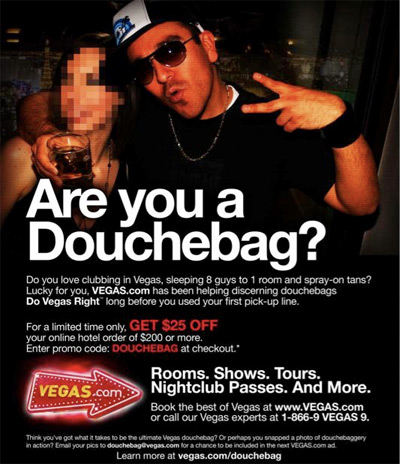
From the douchebag files

Some people are lawyers and specialize in rhetoric. It’s that Plato thing.

Some of us submit our opinions to cat scratching peer review, take our lumps and get better.

There’s this bunch of lawyers who say they’re Defending Food Safety.

Probably the worst blog name since Maple Leaf’s “Our Journey to Food Safety Leadership.”

One of them, Shawn Stevens (stevens@gasswebermullins.com) wrote on Oct. 22/09 that each year, American families eat somewhere in the neighborhood of 328.5 Billion safe meals – and countless more safe snacks. While any illness or death linked to the consumption of food is one too many, the fact remains that (at three meals a day) you and I are 20 times more likely to die this year from pneumonia or drowning than from a food-borne illness. Although not perfect, the statistics are quite impressive.

As the Sloan song says

When you find you’re a conformer
Take pride and swallow whole

Stevens goes on to say,
As consumers, we are inundated by media “fear-mongering,” and made to believe that with each meal consumed, we draw closer to the precipice of some fathomless tragedy. We are also taught to be suspicious and wary of the people who have dedicated their lives to ensuring that our families are fed, and that our food is wholesome.

You see, food safety is a complicated and dynamic issue. It is easy to be a cynic. It is easy to attack others with the benefit of extended hindsight. It is easy to simplify things to a level that a third grader would find devoid in both substance and fact. The real challenge, however, lies in embracing a reasoned and proactive approach that not only recognizes the limits of technology and science, but, at the same time, within these limits, best reduces the risks most likely to occur to the greatest extent possible.

Dude, you just failed my intro class for most horrible and unsubstantiated metaphors.

But why not reference  our paper, Where does foodborne illness happen–in the home, at foodservice, or elsewhere — and does it matter? Because that would conflict with your world-view?

In any event, for those who continue to ignore science and reason, who contend that food safety is the responsibility of food producers alone, and who wrongly proclaim that food safety is only as simple as “not eating poop,” I say this: given the statistics, what goes into one mouth is often far less harmful than what comes out of another.

I e-mailed the lawyer in question on Friday about the don’t eat poop line, and he decided not to answer. Seriously I don’t want to know what is coming out of his mouth.

 

Hinting at food safety – marketers play games but invoke consumer concerns

I shop at Dillons in Manhattan (Kansas), owned by Kroger. I’ve gotten to know the staff, we talk food safety stuff, and I’ve really enjoyed the few times I’ve chatted with Gale Prince, who used to be head of food safety at Kroger.

But I don’t understand the press release Kroger sent out today about its new line of salads which includes new technology on the packaging that enables customers to learn where the produce was grown as part of Kroger’s "Quality You Can Trace" program.

I don’t really care where it was grown. I do care if it was grown in cow shit.

The Kroger’s Fresh Selections are the only salads with HarvestMark technology sold in the U.S. today. Each bag carries a 16-digit code shoppers can enter at HarvestMark.com to learn more about the salad’s origin, packing location, ingredients, date and time the product was packed.  Customers can also offer their feedback on the product.

The PR BS goes on to say,

"Kroger continues to be a leader in offering customers innovative food safety tools and resources," said Joe Grieshaber, group vice president of Kroger’s meat, seafood, deli and produce departments.  …  Food safety is a top priority at Kroger.  Our partnership with HarvestMark makes it easy for customers who are interested to learn more about the food they purchase for themselves and their families. 

This has nothing to do with food safety. A food safety program for leafy greens would provide at retail – or at least through a url – practices on irrigation water testing, soli amendments and human hygiene programs for the workers. Market food safety directly and stop dancing.

Left, is a bag of Dole spring mix, purchased at Dillons. Included on the package is a salad guide that says taste, 4, on the mild to bold scale, and texture is 2 on the tender to crunchy guide.

The label also says the spring mix pairs well with balsamic vinaigrette, crumbled goat cheese, julienne sliced sun-dried tomatoes and a pinch of Mediterranean herbs. It’s thoroughly washed, preservative free and all natural. And Kosher certified and has a recipe for Balsamic vinaigrette.

I want to know if it has E. coli and is going to make me barf. Don’t eat poop. And if you do, cook it.

Canadians can go back to sleep; Maple Leaf Foods is profitable again

Some American colleagues have said killing 22 customers with deli-meat would have led to a non-existent company. Not so in Canada, where $5.5 billion companies like Maple Leaf Foods can say with a straight face that listeria presented new challenges in the ready-to-eat food category.

Maple Leaf has been praised for its communication activities in the aftermath of the listeria outbreak last fall, but instead of taking a real leadership role they have fallen back on the tired and true – their stock went up, so everyone is happy.
Specifically, Maple Leaf has failed to provide point-of-sale warnings to at-risk populations like pregnant women and old folks, failed to publicly release listeria test data and failed to promote their food safety efforts at retail, to enhance the food safety culture back at the producer and processor level, and to build consumer confidence. A completely blown opportunity.

Well done: be aggressively mediocre. That’s how to get brownie points in Canada.


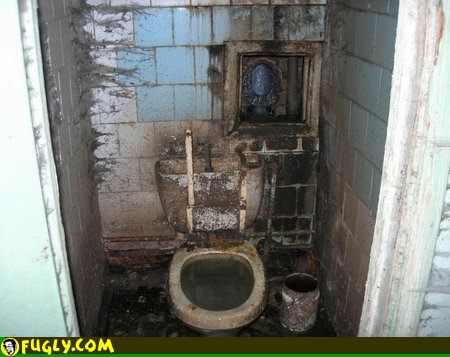
Poland: ‘We want to live in a country that doesn’t stink’

Poland’s soccer team may suck, but the co-host of the 2012 UEFA Euro championships wants to make sure the toilets sparkle.

Arkadiusz Choczaj, leader of the so-called "Clean Patrol" campaign, told reporters in Warsaw,

"Our toilets are better prepared for these championships than our football players.”

"Clean Patrols", made up of volunteer inspectors dressed in white overalls, recently sniffed around 200 public toilets in six Polish cities slated as Euro 2012 venues or back-ups. The "Clean Patrol" project was co-sponsored by CWS-boco, a sanitary products supplier.

Public potties were rated on accessibility, hygiene, smell and whether toilet paper, soap and hand towels were available.

Just one toilet scored a perfect 100 points, while a three-quarters majority rated 65 points, the basic acceptable standard.

Loos in airports, hotels, restaurants and cafes were rated the highest by both the patrols and tourists surveyed by the independent TNS OBOP pollsters. Poland’s tourist-magnet southern city of Krakow received the highest ratings.

At the bottom of the rankings were a quarter of public restrooms — in train and bus stations, on trains and in camp grounds — rated as danger zones by the patrols and foreign tourists alike.

Jan Orgelbrand, head of Poland’s Chief Sanitary Inspectorate said,

"Regardless of the Euro finals, we have to improve standards because, let’s face it, we want to live in a country that doesn’t stink.”

"Not every football fan or tourist will get to the stadium, but all will visit our public lavatories and their standard speaks about Poland as a nation."
 

Fat Duck spared, chippy owner charged by local council after E. coli O157 illnesses

The Fat Duck sickened 529 customers with norovirus, adopted a ridiculous PR strategy, and continues to blame others even though employees were working sick. The local council decided not to prosecute.

The Llay Fish Bar, thought to be the source of an E. coli O157 outbreak that sickened four including a new mother left in a coma, will be prosecuted by the Wrexham Council.

It’s like television sports presenter and Fat Duck norovirus victim Jim Rosenthal said a couple of days ago:

“If it was a café at a lay-by doing what he did they would have been taken to court long ago.”

Boxing promoter Frank Warren, who is also still awaiting compensation, said,

"The whole way they have handled this has been a disaster from start to finish. To hear that the council isn’t going to take him on doesn’t surprise me – it’s just because of who he is rather than what he’s done or not done.”
 

Atypical scrapie in single NZ sheep

Contrary to what the New Zealand Herald reported tonight (this morning in NZ), the animal in question was born in NZ, not the UK, because NZ does not import sheep from the UK.

MAF Biosecurity New Zealand (MAFBNZ) and the New Zealand Food Safety Authority (NZFSA)
today confirmed that a series of New Zealand and European laboratory tests on a single New Zealand sheep brain have detected the condition atypical scrapie (also known as Nor 98).

Atypical scrapie/Nor 98 is a relatively recently discovered brain condition of sheep and goats that is quite different from the classical form of scrapie. 

Neither atypical scrapie/Nor 98 nor scrapie is known to pose any risk to human health or the safety of eating meat or animal products.

MAFBNZ Principal International Adviser Dr Stuart MacDiarmid says global knowledge about atypical scrapie/Nor 98 is evolving.  The widely accepted mainstream scientific view is that it occurs spontaneously or naturally in very small numbers of older sheep in all sheep populations around the world.

“This positive detection of atypical scrapie/Nor 98 in a sheep from New Zealand’s national flock reinforces that view.  Every country that has conducted sufficient surveillance for atypical scrapie/Nor 98 has found it in their flocks.  This includes most Scandinavian and EU countries, the UK, the USA and Canada,” he says.

The detection does not change New Zealand’s status as free from scrapie.

Dr MacDiarmid says because of this scrapie freedom status, New Zealand supplies sheep brains to the European Union for use in the development of tests for scrapie. 

“The affected brain was one of a consignment of 200 brains sent for this purpose.  EU-authorised tests carried out in New Zealand prior to shipment had not picked up anything unusual.  However further tests in Europe and re-testing in New Zealand on different parts of the brain from the area originally tested have now established a diagnosis of atypical scrapie/Nor 98.

There is no evidence that atypical scrapie/Nor 98 can be transmitted naturally to other animals or to people, or that it in any way affects people.


Automated hand sanitizer – Chicago, Illinois

The newly married  Gonzalo Erdozain, one half of the Erdozain news pulling siblings and a pre-vet student at Kansas State, writes in a state of marital bliss:

As I walked down an aisle in Chicago’s Navy Pier, I couldn’t help but notice a nice little automated hand sanitizer dispenser in the middle of the wall, which just happened to be right in between both exits of the restrooms.

I didn’t actually used the bathroom, but this fancy machine answered a longstanding question – more of a concern actually – I’ve always had: Washing my hands is pretty much useless if the guy that exits the bathroom before me doesn’t and goes and touches the door’s knob or handle. So, by having this on the other side, I feel a little better about having clean hands.