One of the reasons I don’t buy organic – besides being on a professor’s salary, which I have no complaints about but I’m certainly not going to waste it on organic – is that the so-called claims and rules are followed about as thoroughly as Peanut Corporation of America can pass an audit and end up having 4,000 products recalled because Salmonella makes people barf. Every time someone says, “Organic has strict rules for composting …” I chuckle and wonder about verification.
.jpg) The Washington Post reports this morning what many have been saying for over a decade – that the sham of organics would eventually be found out.
The Washington Post reports this morning what many have been saying for over a decade – that the sham of organics would eventually be found out.
Three years ago, U.S. Department of Agriculture employees determined that synthetic additives in organic baby formula violated federal standards and should be banned from a product carrying the federal organic label. Today the same additives, purported to boost brainpower and vision, can be found in 90 percent of organic baby formula.
Grated organic cheese, for example, contains wood starch to prevent clumping. Organic beer can be made from non-organic hops. Organic mock duck contains a synthetic ingredient that gives it an authentic, stringy texture.
Relaxation of the federal standards, and an explosion of consumer demand, have helped push the organics market into a $23 billion-a-year business, the fastest growing segment of the food industry. Half of the country’s adults say they buy organic food often or sometimes, according to a survey last year by the Harvard School of Public Health.
But the USDA program’s shortcomings mean that consumers, who at times must pay twice as much for organic products, are not always getting what they expect: foods without pesticides and other chemicals, produced in a way that is gentle to the environment.
(1)(1).jpg) The argument is not over whether the non-organics pose a health threat, but whether they weaken the integrity of the federal organic label.
The argument is not over whether the non-organics pose a health threat, but whether they weaken the integrity of the federal organic label.
Don’t care about a label. I’m more interested in food that doesn’t make people barf. As far as baby food, I don’t feed any of that organic crap to baby Sorenne, although making such a statement is essentially an invitation to family services to check out my terrible parenting techniques.
My colleague Katija Blaine covered this thoroughly back in 2003.
An episode of the popular U.S. television show, 20/20 in 2000, sparked a fierce debate over the microbial safety of organically grown fresh fruits and vegetables. Are organic foods safer than conventional foods? On the show, correspondent John Stossel concluded that organic produce was no safer than conventional produce and might in fact be more dangerous because of the heavy use of manure in organic farming (Ruterberg & Barringer, 2000). Such statements have been supported by several prominent food scientists (Tauxe, 1997; Forrer et al., 2000) while the organic industry has argued that their strict standards on manure usage reduces such risks (DiMatteo, 1997). The organic industry has refrained from making direct claims of improved microbial food safety. Katherine DiMatteo, president of the Organic Trade Association has stated publicly that "Organic is not a food safety claim" (Juday, 2000)
According to the most recent expert report from the Institute of Food Technologists (IFT, 2002) "the available scientific information is insufficient to ensure that food-borne pathogens are killed during composting and soil application."
Since organic growers already have a certification and inspection system, the CGSB organic standards could be expanded to better incorporate food safety concerns. Specific additions would include ensuring adequate facilities and training to ensure worker hygiene and recommendations for processing and processing water. The documentation, monitoring and regulation of high-risk inputs give organic growers a head start over conventional growers who may be trying to implement an on-farm food safety system from scratch. It is also the responsibility of food producers to use knowledge to aggressively reduce the risk of food and waterborne illness, whether conventional or organic or somewhere in between. And with both conventional and organic systems, verification through microbial testing is required to demonstrate that actions match words.
This is not about organic and conventional. Food safety goes far beyond ideology. As has been stated elsewhere, poor farming and processing practices are the product of poor farmers and processors.
As I said in 2007, the production of safe food is the responsibility of everyone in the farm-to-fork chain — conventional or organic — and food safety, especially with fresh produce, must begin on the farm.
References
Canadian General Standards Board (CGSB). 1999. Organic Agriculture. National Standard of Canada. CGSB. CAN/CGSB-32.310-99.
DiMatteo KT. 1997. Does Organic Gardening Foster Foodborne Pathogens? To the Editor. JAMA. 277(21):1679-80.
Juday D. 2000. Are organic foods really better for you? Natural grown killers in organic food make it no safer than produce grown in pesticides. BridgeNews Service (Knight Ridder) February, 14.
Ruterberd J and Barringer F. 2000. Apology highlights ABC reporter’s contrarian image. The New York Times August 14. C1.
Tauxe RV. 1997. Does Organic Gardening Foster Foodborne Pathogens? In Reply. JAMA. 277(21):1679-80.

 My friend John the carpenter who fought in WW II (last name Kierkegaard, like the philosopher, Soren, baby Sorenne, get it?) would also have his morning, noon and afternoon beers in Ontario, but would at least admit, “The work, after some beers, it’s not so great when looked at the next day.”
.jpg) I don’t want to be on video. But if that’s what it takes to get the message out about how to safely grill burgers this holiday weekend, then why not.
I don’t want to be on video. But if that’s what it takes to get the message out about how to safely grill burgers this holiday weekend, then why not..jpg)
 A recent spike in Salmonella cases in the Vancouver, B.C. area has lead the B.C. Centre for Disease Control to release the following,
  So says Dave Barker, who works for the Knights of Columbus in Grand Falls-Windsor, Newfoundland.
 "It depends on how much moose is actually destroyed in the accident, but normally you get at least two moose burger sales out of one moose, so you’re looking at anywhere from $2,500 to $3,000," said Shane Budgell, president of the Lions Club in Grand Falls-Windsor.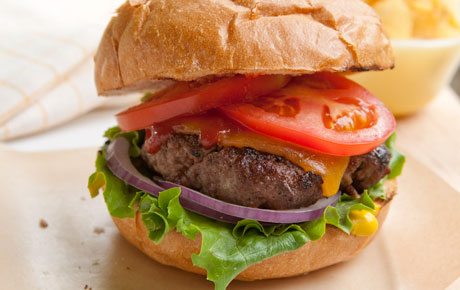

(1).jpg) The
The  * The name of the agricultural product.
.jpg) I’m a self-proclaimed
I’m a self-proclaimed  The sad part was, I had visited the same theater two weekends before to see Angels and Demons. While chatting in the lobby after the movie, my friends and I had seen a small mouse scurry across the floor between the two holes in the base of the concession stand. I considered reporting it to the management, but we had seen a 10pm showing, so the lobby was nearly deserted afterwards, with no management in sight. I brushed it off, but the second time I saw the mouse during my Transformers visit, that was the last straw for me. I reported the mouse to a senior manager, who didn’t seem too concerned, but assured me that he would look into the problem.