Air China passengers vomit, get diarrhea from expired food

On Oct. 5, 2013, passengers on flight Air China CA1268 to Beijing experienced severe diarrhea and vomiting after eating expired biscuits, Beijing Evening News reports.

One family, surnamed Zhang, had reportedly noticed that the biscuits had been expired for four days and reported them to a crew OLYMPUS DIGITAL CAMERAmember, who agreed to replace hers but not to alert the other passengers. About half an hour later, a bout of diarrhea and vomiting swept through the cabin, affecting at least 30 people, who formed massive queues in front of the lavatories. 

Second major outbreak this year; Foster Farms chicken sickens nearly 300 with Salmonella

Foster Farms raw chicken products made at three California sites may have sickened nearly 300 people in 18 states, according to a public health alert issued Monday by U.S. Department of Agriculture officials.

JoNel Aleccia of NBC News and Lynne Terry of The Oregonian report that at least 278 illnesses caused by salmonella Heidelberg linked to the chicken brand have been reported, mostly in California, according to the USDA’s Food Foster-Farms-Chicken-BreastSafety and Inspection Service. The products were distributed mainly to outlets in California, Oregon and Washington state. 

The notice follows an outbreak earlier this year traced to Foster Farms raw chicken in which 134 people in 13 states became ill, but it appears to be a separate, new incident, said Barbara Reynolds, a spokeswoman for the Centers for Disease Control and Prevention. That outbreak, which was declared over in July, sickened 40 people in Oregon and 57 in Washington state and sent 33 patients to the hospital.

Neither agency could provide many details about the latest outbreak because of limited staffing caused by a week-long government shutdown.

Illnesses were linked to the Foster Farm brand through epidemiologic, laboratory and trace-back methods, FSIS said. But health officials were unable to tie the illnesses to a specific product or a specific production period. They said that the products bear one of three establishment numbers inside a USDA mark of inspection or elsewhere on the package. The numbers are: P6137, P6137A and P7632.

The USDA allows producers to sell raw poultry with a nearly 10 percent incidence rate of salmonella. Foster Farms says it’s always met that standard. It is not issuing a recall.

Foster Farms officials said in a statement that the company has been collaborating with FSIS and CDC to eradicate salmonella Heidelberg at its sites and has retained national experts to “assess current practices and identify opportunities for further improvement.”

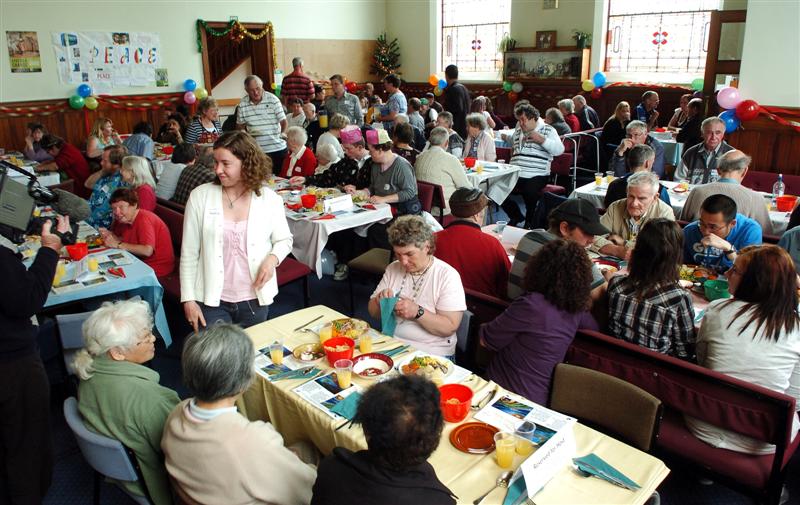
Church dinner volunteer diagnosed with hepatitis A; vaccination clinic organized for attendees

Community dinners, the fellowship-fostering events often organized by churches are a nostalgic link to the past when a congregation would financially support members’ activities through chili, pancakes or barbecue. They also, according to CDC’s Rob Tauxe, have created some of the easily traced foodborne illness outbreaks. Like this one in Alabama and this one in North Carolina.

The traditional foodborne outbreak scenario often follows a church supper, family picnic, wedding reception, or other social event. This scenario involves an acute and highly local outbreak, with a high inoculum dose and a high attack rate. The outbreak is typically immediately apparent to those in the local group, who promptly involve medical and public health authorities. The investigation identifies a food-handling error in a small kitchen that occurs shortly before consumption. The solution is also local.plenty_of_cheer_at_church_dinner_2082983728

Community dinners can be great fundraisers but are often held at temporary sites and staffed by volunteers unfamiliar with safe food handling practices for large meals.

And sometimes those volunteers are diagnosed with hepatitis A.

According to Paul Merrill at WMTW,  Maine Center for Disease Control and Prevention is holding a hepatitis A vaccination clinic for an estimated 100 attendees of a church supper in Durham, Maine.

The Maine CDC said it was investigating a case of hepatitis A and found a person infected with the virus had prepared and served food at the Durham Friends Meetinghouse on Saturday, Sept. 28.

Health officials said that person was also part of a women’s group luncheon affiliated with the meeting house.

The Maine CDC said infected person was also associated with a preschool in Cumberland County, but the exposure happened outside the window where vaccination would be effective (now parents of the kids and other preschool folks wait and see if anyone exposed develops symptoms -ben).

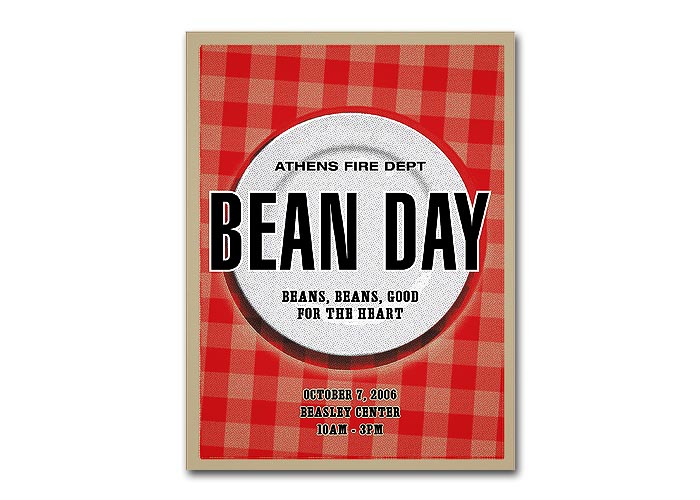
6 confirmed sick with Salmonella linked to bean fundraiser in Alabama, dozens ill

At least six cases of Salmonella have been confirmed in Limestone County, Alabama, and officials believe those who fell ill may have contracted it at an annual bean dinner fundraiser held Friday in Athens.

Kelli Powers, chief executive officer of Athens-Limestone Hospital said, athens.alabama.salm.bean.oct.13“We have seen dozens of people Saturday, Sunday and today with mainly diarrhea but also vomiting and nausea,” Powers said. “There are about 24 people in our waiting room right now who have been waiting about an hour with symptoms.” 

See me smell me taste me; faith-based food safety in Malaysia

In the wake of four Salmonella deaths and multiple illnesses at a wedding, 36 sick kids at one school from canteen food and 25 at another, a prominent physician told Malaysia’s New Straits Times consumers could protect themselves against food poisoning by sight, smell and taste.

Malaysian Public Health Physicians’ Association (PPPKAM) vice-president Dr Othman Warijo said the three steps were part of a imagescampaign by the Health Ministry and were crucial to avoid food poisoning.

“Despite appearing simple, the steps are worth doing to avoid food poisoning, which can result in death,” he said on Friday.

He said victims of food poisoning often blamed food handlers when they themselves ignored safety procedures before eating.

“Look at the physical appearance of the food to find out if the gravy has become sticky. Sniff the food to determine if it is rotten. Taste the food. If one is confident that the food is edible, then one can proceed. Otherwise, leave it.”

He added food handlers must ensure adequate storage and cooking facilities to ensure that raw materials were not contaminated and have basic knowledge in food preparation, be properly attired with their head and mouth covered, use aprons and gloves, and undergo compulsory typhoid injections.

In the Salmonella deaths, Kedah Health Department director Dr Ismail Abu Taat confirmed that the chicken used for the ‘ayam masak merah’ dish was delivered to the host in Kampung Huma a day before the wedding reception was held. “The chicken stock was sent to the house on Friday evening but the meat was only cooked at 4pm the next day, which allowed to bacteria to breed,” he said.

Raw is risky: unpasteurized apple cider glorified

From the we’ve-always-done-it-this-way-and-no-one-has-gotten-sick files, 78-year-old Doris Van Duyne Heddy Cooke of Montville, NJ, the co-owner of an apple farm and cider press that has powell.kids.ge.sweet.corn.cider.00operated since 1896, told the Times, “Some people come here specifically because it’s not pasteurized. … We have our regulars who come every year, very nice people who keep coming back. They love that our cider is made like it always was.”

A table of fresh juice related outbreaks is available at http://bites.ksu.edu/fresh-juice-outbreaks.

Handwashing is never enough: a parent’s story about sickness at state fairs

Arinn Dixon Widmayer of Raleigh, North Carolina, writes in the Charlotte Observer:

As I sat in a darkened room in the middle of the night watching a nurse hook up a dialysis machine to my pale and shivering 7-year-old son, I wondered how in the world we ended up here.

It was October 2011, and my husband and I had been watching our son’s health all week. He stood motionless on the soccer field on Tuesday night, white handwash.UK.petting.zoo.09as a sheet, as the ball rolled by. By Thursday, he was nauseated and feverish. Our pediatrician told us to keep him hydrated, reduce the fever, that it was a bug and he’d get past it. By the weekend, he was eating little, sleeping most of the day.

This is a tale any parent can tell. We see it all the time – children with a virus, a cold, the flu. Parents worry, give them medicine, juice and too much TV, and in a few days they perk up and get back to their normal selves.

Except when they don’t.

During that weekend, the pediatrician thought maybe our son had eaten something that made him sick. She treated his symptoms and started running some tests for infection. It was at that visit I first heard a suggestion of salmonella, of listeria, of E. coli.

By Monday, he was in bad shape. I helped him to the bathroom that morning and hugged him while he sat there crying that his tummy hurt. Once I got him standing back up, I turned to flush the toilet and froze. It was full of blood. Only blood. Within three hours, an ER doctor was explaining test results. It was E. coli.

I closed my eyes, just relieved to have a name for this suffering, so I wasn’t looking at the doctor’s face when she uttered the words “double kidney failure.” handwashing.ekka.jpgAnd then I was in that dark room with the doctors and nurses and the dialysis machine. How did we get here?

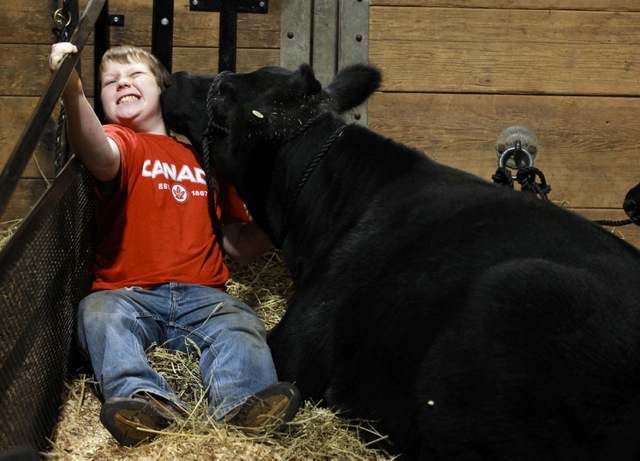
Our son was infected with E. coli at the N.C. State Fair. Public health officials narrowed the site of his infection to the Kelley Building, one of the animal exhibit areas. It was a no-contact exhibit where the animals were fenced in. My family walked up and down the rows of pigs, sheep and goats. Our kids pointed and giggled at the jumping goats and fuzzy sheep. When we left the building, we stopped at the hand-washing station at the door and cleaned up. We did everything right. We avoided the petting zoo. We didn’t eat near the animals. We used the hand-washing stations when we left the exhibit and before we ate. None of us ever touched an animal. And our son still ended up enduring six dialysis treatments, four blood transfusions, 15 days in the hospital and a brush with death because of our decision to walk into that building.

Our son was just one of 27 people infected with E. coli at the State Fair in 2011. Add that to 108 people infected at the fair in 2004 and another three in 2006, and we end up with a serious public health issue. State health officials have recently made changes to the fair to reduce the risk of infection. They changed traffic patterns in the animal exhibits, increased the number of hand-washing stations, added signage warning fairgoers against touching animals and other measures.

Those are great steps toward protecting the public, but are they enough to protect fairgoers this year? I’m not advocating keeping animals and fairgoers separated by a glass wall, and I don’t pretend to know what else the fair can do to eliminate the risk of infection. But I do have to wonder whether large crowds and animals that carry deadly bacteria can coexist without the risk of E. coli? And at what point do those risks outweigh the benefits?

Handwashing is never enough. While some studies suggest inadequate handwashing facilities may have contributed to enteric disease outbreaks or washing hands was protective against illness, others suggest relevant infectious royal.petting.zooagents may be aerosolized and inhaled. Handwashing tool selection may also contribute to the success of hand hygiene as a preventive measure, as some outbreak investigations have reported alcohol-based hand sanitizer was not protective against illness, especially when hands are soiled.

All the refs can be found in our 2012 paper, a sorta secret petting zoo shopper, Observation of public health risk behaviors, risk communication and hand hygiene at Kansas and Missouri petting zoos – 2010-2011.

I’m fine with animal interactions; but people, and organizers, should be a lot more careful than they thought. That’s what I told my 3-year-old’s daycare as they prepared for a chicken coop. I’m not sure people like that message.

Further, sanitizers have limited effectiveness, and in a petting zoo situation, so does handwashing; it’s only one component of an overall strategy to reduce risk. But it’s easy to say handwashing because that blames the patrons, not something else.

A table of petting zoo outbreaks is available at http://bites.ksu.edu/petting-zoos-outbreaks.

Erdozain G, Kukanich K, Chapman B, Powell D. 2012. Observation of public health risk behaviours, risk communication and hand hygiene at Kansas and Missouri petting zoos – 2010-2011. Zoonoses Public Health. 2012 Jul 30. doi: 10.1111/j.1863-2378.2012.01531.x. [Epub ahead of print]

Abstract below:

Observation of public health risk behaviors, risk communication and hand hygiene at Kansas and Missouri petting zoos – 2010-2011Outbreaks of human illness have been linked to visiting settings with animal contact throughout developed countries. This paper details an observational study of hand hygiene tool availability and recommendations; frequency of risky behavior; and, handwashing attempts by visitors in Kansas (9) and Missouri (4), U.S., petting zoos. Handwashing signs and hand hygiene stations were available at the exit of animal-contact areas in 10/13 and 8/13 petting zoos respectively. Risky behaviors were observed being performed at all petting zoos by at least one visitor. Frequently observed behaviors were: children (10/13 petting zoos) and adults (9/13 petting zoos) touching hands to face within animal-contact areas; animals licking children’s and adults’ hands (7/13 and 4/13 petting zoos, respectively); and children and adults drinking within animal-contact areas (5/13 petting zoos each). Of 574 visitors observed for hand hygiene when exiting animal-contact areas, 37% (n=214) of individuals attempted some type of hand hygiene, with male adults, female adults, and children attempting at similar rates (32%, 40%, and 37% respectively). Visitors were 4.8x more likely to wash their hands when a staff member was present within or at the exit to the animal-contact area (136/231, 59%) than when no staff member was present (78/343, 23%; p<0.001, OR=4.863, 95% C.I.=3.380-6.998). Visitors at zoos with a fence as a partial barrier to human-animal contact were 2.3x more likely to wash their hands (188/460, 40.9%) than visitors allowed to enter the animals’ yard for contact (26/114, 22.8%; p<0.001, OR= 2.339, 95% CI= 1.454-3.763). Inconsistencies existed in tool availability, signage, and supervision of animal-contact. Risk communication was poor, with few petting zoos outlining risks associated with animal-contact, or providing recommendations for precautions to be taken to reduce these risks.

Slipped my mind: 2,000 bottles of potentially tainted water found in Toronto food venues long after closure order

More than 2,000 bottles of water from a Caledon producer shut down in July because of its bacteria-tainted product have been found in Toronto restaurants, hotels and a health food store in recent weeks, according to Rob Cribb of the Toronto Star.

While Blue Glass Water Co. Ltd. was under a provincial health order to stop producing and shipping its product as of July 18, Toronto health officials say blue_glass_water.jpg.size.xxlarge.promopotentially tainted water was still entering food establishments here as recently as Sept. 27.

In an exclusive interview with the Star, Toronto’s medical officer of health, Dr. David McKeown, said Friday it is impossible to know whether there could be more of the banned product still out there. “We don’t have a complete and accurate distribution list (because) it has not been provided by the operator,” he said. “So, in terms of the challenges of responding, it’s more complex than other such cases.”

Marshall Kazman, the only listed director of Blue Glass Water Co. Ltd. in Ontario corporate filings, has dismissed the allegations in interviews with the Star, calling his water safe and naturally infused with cancer-fighting properties. The disbarred lawyer, who is currently facing criminal fraud charges, called the ordered shutdown of his facility “a witch hunt” and “much ado about nothing.” He said he has not shipped his product since being ordered closed in July. “If there was a real danger would you not think a recall would have been ordered months ago?” he said in a statement Saturday.

The Canadian Food Inspection Agency, which originally tested the water along with Peel Region in late July, found “elevated levels of aerobic colony counts” in some samples, it said in a statement to the Star. The tests did not show pathogens such as E. coli or parasites, it says. “Based on the absence of an identified hazard and the contained exposure . . . the CFIA determined that a risk assessment was not needed and as such, no recall action was requested.” The level of concern about the water is much higher among provincial and local health officials. Officials at both levels have told the Star that testing of the Caledon Clear Watercompany’s water revealed it was “heavily contaminated” and “unfit to drink.” The “overgrowth of bacteria” in the water “masked” identification of specific pathogens such as E. coli and coliform, said the province’s chief medical officer of health, Dr. Arlene King.

The Star first reported health concerns about serious contamination in Blue Glass Water on Thursday, a threat nearly three months old that had not been made public. That lack of public notification meant the water continued to be served to unwitting customers across southern Ontario even as health officials were quietly looking for the water in food establishments for confiscation.

Following the Star’s questions to the province, the ministry issued a strongly worded statement warning the public not to consume Blue Glass Water because of the “potential health threat posed by these products.” Since the Star’s story, Toronto Public Health received several complaints from people who say they were made ill after drinking it. Inspectors are now investigating those cases.

So far, Toronto inspectors have found Blue Glass Water in 20 food establishments, ranging from high-end restaurants to a hotel and a health food store. The city is not identifying the establishments since they no longer serve the water and “they did nothing wrong,” said McKeown.

2 sick; oyster farmers back in business

Katama Bay oyster beds in Massachusetts have been reopened a month after closing because of links to at least two Vibrio illnesses.

Katama oysters should be back in the restaurants by Columbus Day. “I’m really happy for all the farmers and I’m certainly SUN0705N-Oyster7relieved,” said Jack Blake, owner of Sweet Neck Farm, in a telephone call with the Times Friday evening, as his wife Susan cheered in the background.

“We haven’t stopped working; I’ve watched the sun rise every day. We’ve been getting our market size oysters ready to go. We have to empty some cages because we need the room, the seed is growing fast.” Mr. Blake said the Offshore Ale Company and The Lookout Tavern could be serving his oysters as early as tomorrow. “

People sick from Salmonella in salami in Italy

An increase in abnormal cases of salmonellosis throughout the Italian province of Piacenza has led the Health Services Veterinary Service to conclude the culprit was Val d’Ongina brand salami and advise consumers to return any product.

The owner of the delicatessen Val D’Ongina, Furio Burgazzi sought to reassure consumers: “We have already taken steps to withdraw Val d'Ongina brand salamithe product from all the restaurants and supermarkets with which we work. We agree with the local health authorities to ask, as a precaution, to return the salami they may have suffered contamination. Every week we sell 4,000 salami – he pointed out – and to this day had never happened. Thanks to our control systems and high-level cleaning our products have always been a guarantee of quality.”

Note: some things may have been lost in translation.