Is Blue Bell or Chipotle the food industry’s Volkswagen. Or both

My latest for Texas A&M University. Visit them at http://cfs.tamu.edu/2016/01/21/is-blue-bell-or-chipotle-the-food-industrys-volkswagen-or-both/
alices-restaurant-2-croppedVolkswagen’s top executive apologized earlier this month for his company’s role in its ongoing emissions cheating. CEO Matthias Mueller spoke at a Detroit restaurant on the eve of the city’s annual auto show, and said, I’m sorry.

Not much else.

I’ve been to that auto show, covering it as a journalist for a computer magazine 25 years ago, and it was deeply weird.

Scantily-clad women, sales-thingies hawking their new toys, a lot of back-slapping and back-stabbing.

As they say in Kansas, always smile when you twist the knife (because a straight stab usually isn’t enough to kill).

Blue Bell Creameries says that new findings of Listeria in one of its ice cream manufacturing plants are media misstatements.

And they’re still sorry.

When your product kills three people and your food safety strategy is shown to be woefully insufficient, that’s a bad soundbite.

Instead, share Listeria test results with the public, through a website or QR codes. How much does Blue Bell have left to lose?

Probably less than Chipotle.

The diarrhea burrito is not healthy eating, but Chipotle is still getting a free pass – not so for Chipotle shareholders, who have seen their investments decline by 47 percent in the past six months.

They’re really sorry too.

For whatever reason – money – Chipotle investors and apologists are willing to look beyond the company’s many failings.

If Chipotle really wanted to be a leader, they would have embraced microbiologically safe food and internal verification long before the 2015 outbreaks.

If Chipotle really wanted to be a leader they’d stop playing to consumer fears with their advertising.

If Chipotle really wanted to be a leader, they would embrace genetically engineered foods that require fewer and far less harmful pesticides.

Chipotle is a follower, sucking up dollars wherever it can.

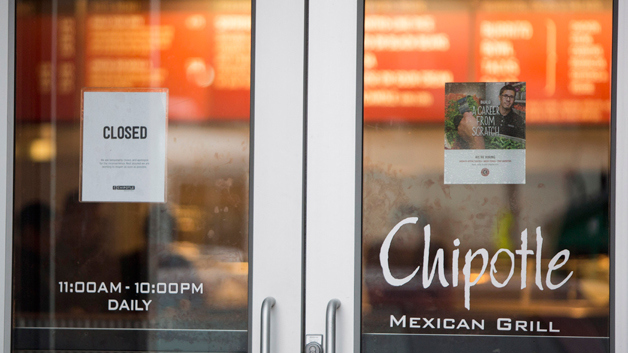
In its latest PR rah-rah stunt, Chipotle is going to close all of its 1,900 outlets on Feb. 8 for a few hours “for company executives to be transparent about the status of the E. coli outbreak, and what Chipotle is doing to prevent it from happening again.”

“Chipotle emphasizes fresh, locally sourced ingredients. It was the first major chain to reject genetically modified food. Chipotle has embodied the notion of doing well by doing good.”

That’s not doing anyone any good.

It’s marketing BS.

Consumers aren’t so dumb or confused. Chipotle said same-store sales dropped a greater-than-expected 14.6 percent in the last quarter, and analysts have been scrambling to downgrade their ratings.

They’re going to wait until Feb. 8 to close all its restaurants so employees can learn about the gravity of its foodborne illness outbreak.

E-mail works.

Last week, company executives appeared at an investor conference in Florida in a bid to soothe unnerved shareholders, if not customers, and acknowledged 2016 would be a “messy” year for earnings. As reported in Wired, it helped. Shares in the company, once a darling of Wall Street, rebounded more than 12 percent and appear to be holding steady.

People can be dumb.

But food safety is nothing compared to the weight of investor portfolios, so of course, Chipotle had an investor smile and shake before it had a food safety meeting.

Anything to make a buck.

“During that whole time, all of our food safety and food handling practices were within industry standards,” Chris Arnold, a Chipotle spokesman, says. “These incidents have shown us what we need to do better in that area, and that is exactly what we are doing.”

The Pinto defense – that car that had a tendency to blow up when hit from behind — should not inspire investors.

And more testing won’t stop Norovirus.

“This plan should reduce the risk of similar risks to a level as near zero as is possible,” Arnold says.

There is no such thing as zero risk, no matter, how much testing, a topic I covered almost 20 years ago in my co-authored book, Mad Cows and Mother’s Milk.

That Chipotle is just discovering this concept is an embarrassment for all the investors who have lost money.

And a blight on microbial food safety.

Stop apologizing for Chipotle just because it may be hipster.

It isn’t.

Neither is Volkswagon.
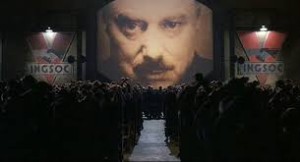
Same as it ever was, safe as it ever was: terrible soundbites in Chipotle’s food safety mess

In 2006, then U.S. food safety czar, David Acheson, proclaimed on CNN – that was back when people watched CNN – that spinach after the 2006 outbreak that killed four and sickened about 200 would, when it back on sale, be as safe as it was before the outbreak.

orwell.1984It was Orwellian speak.

Ten years later, Chipotle says the recent outbreaks will end up costing between $14 million and $16 million, with  CEO Steve Ells saying with a straight face, “We know that Chipotle is as safe as it’s ever been before.


Balding head glare on TV: Chipotle edition

Chipotle is going to close their doors for a day to talk food safety. I’m skeptical that will change the food safety culture – but investors seem to be convinced.

I talked to CBS about it today.

Diarrhea burrito is not healthy eating: Chipotle gets a free pass

For whatever reason – money – Chipotle investors and apologists are willing to look beyond the company’s many failings.

diarrhea burrito’If Chipotle really wanted to be a leader, they would have embraced microbiologically safe food and internal verification long before the 2015 outbreaks.

If Chipotle really wanted to be a leader they’d stop playing to consumer fears with their advertising.

If Chipotle really wanted to be a leader, they would embrace genetically engineered foods that require fewer and far less harmful pesticides.

Chipotle is a follower, sucking up dollars wherever it can.

In its latest PR rah-rah stunt, Chipotle is going to close all of its 1,900 outlets on Feb. 8 for a few hours “for company executives to be transparent about the status of the E. coli outbreak, and what Chipotle is doing to prevent it from happening again.”

Chipotle’s stock price sits is currently down around 40% off its 52-week high, as the outbreak news hurt sales more than had been expected. The company has advised investors that it could be a few rocky quarters before Chipotle sees a definitive, positive improvement.

In an effort to bring back some of the customers it’s lost, Chipotle co-CEO Monty Moran said Wednesday it will be doubling the amount of free food restaurants can give away to its customers, reports CNBC.com.

The New York Times says, with a straight face, Chipotle’s new mantra is “Safe food, not just fresh” while gushing that, “From its start in 1993 as a burrito stand in Denver opened by a young Culinary Institute of America-trained chef who borrowed money from his parents, Chipotle now has more than 2,000 locations. Its stock nearly doubled over the last five years, and in August the company reached a market value of $23 billion.

south.park.diarrhea“Chipotle emphasizes fresh, locally sourced ingredients. It was the first major chain to reject genetically modified food. Chipotle has embodied the notion of doing well by doing good.”

That’s not doing anyone any good.

It’s marketing BS.

Consumers aren’t so dumb or confused. Chipotle said same-store sales dropped a greater-than-expected 14.6 percent in the last quarter, and analysts have been scrambling to downgrade their ratings. On Tuesday, Chipotle shares dipped below $400 and were down 47 percent from the August high.

Two of the incidents, the one in Simi Valley, Calif., in August that sickened 234 people, and another in Boston in December, which affected at least 136 customers, were linked to a norovirus, a highly contagious virus that causes gastroenteritis. It is spread through contact with an infected person, a surface bearing the virus, or by contaminated food.

Chipotle has said both outbreaks were caused by sick employees who ignored strict policies prohibiting them from coming to work and, without elaborating, said that disciplinary measures were meted out to those responsible.

Anyone can say they have strict policies (Heston-norovirus-isn’t-my-fault Blumenthal comes to mind) but verification, that takes effort.

In August, 64 people were treated for salmonella after eating at a Chipotle in Minnesota. Fresh tomatoes were identified as the culprit.

Chipotle shares have jumped nearly 14 percent over the last two days after company executives gave an upbeat presentation to investors, bankers and analysts at the ICR investor conference in Orlando, Fla., where they predicted the brand would regain its luster and reiterated an aggressive expansion and growth plan.

Follow the money.

‘Bacteria, viruses don’t care if food is GMO-free or natural’ and ‘safety of our guests is always our highest priority’ Chipotle still struggles with food safety

It’s difficult to fathom Chapman as an expert of anything, except garbage goals in hockey and bailing his PhD supervisor out of jail (as all graduate students should do).

family.guy.diarrheaI also hate being called an expert, but I know some stuff.

Dr. Chapman told Technician Online that, “Practicing good hygiene and having systems in place to verify that foods are cooked go a long way in preventing these sort of outbreaks. On the supplier’s side, systems are needed to make sure that suppliers are managing food safety on farms and the processing companies.”

On the individual’s side, Chapman said there is not much a customer can do to ensure that the food they get from a retailer is safe. Sanitation scores can be checked as a precaution but mostly it just comes down to trust in the retailer.

“The safety and well-being of our guests are always our highest priority,” said an official statement from Chipotle and Customer Service Consultant Olivia Beltran.

Stephanie K. Baer of The Pasadena Star-News wrote a few days ago that Chipotle’s food safety problems are about much more than where the Denver-based food company gets its ingredients, according to inspection data and experts.

Food safety experts say the fact there have been so many foodborne illness outbreaks in such a short period of time — six different outbreaks of E. coli, norovirus and salmonella in six months — it is indicative of a lack of training and oversight of the fast-food chain’s employees.

While there have been no confirmed reports of customers getting sick at Chipotle locations in Los Angeles County, major health hazards that cause foodborne illness are common at the food chain’s locations in the area.

Outbreaks at restaurants are commonly caused by ill employees and unsafe cooking or holding temperatures of perishable food, among other factors. And at Chipotle, where burritos are constructed with precooked and prepared food at a steam table, maintaining safe food temperatures is a recurring problem, according to inspection data and reports.

“There will always be foodborne illnesses, complaints and deficiencies, but what we see here appears to be repeated incidents that are similar in nature and that would suggest a systemic problem within the company that requires further investigation,” said Angelo Bellomo, deputy director for health protection at the Los Angeles County Department of Public Health.

According to Los Angeles County Department of Public Health inspection data, health inspectors observed 126 violations for unsafe hot and cold holding temperatures at Chipotle restaurants — the most common health hazard observed across 84 locations in Los Angeles County — between July 1, 2013, and June 30, 2015.

kenny.diarrheaAt the Simi Valley Chipotle, a health inspector who visited the location after the August outbreak found a container of beef held at 118 degrees — more than 15 degrees colder than required hot holding temperatures — according to Ventura County Environmental Health Division documents.

Similar food temperature violations were observed at the Boston restaurant where more than 130 people were sickened by norovirus and in Seattle and Portland area restaurants where the largest numbers of E. coli cases have been confirmed, online inspection reports show.

“It’s ridiculous that they can get that wrong so often,” said Doug Powell, a retired food safety professor and the publisher of barfblog.com.

While cooking food to the proper temperatures kills bacteria that is commonly found on raw meat, keeping food at the proper hot or cold temperatures is important to minimize the growth of pathogenic bacteria, like E. coli and salmonella, that may be in the food.

It’s a problem, Powell noted, that restaurants deal with industrywide — inspection data shows unsafe holding temperatures is the most common public health threat in Los Angeles County restaurants — but other prominent food chains seem to have a better handle on the issue.

Los Angeles County health inspectors observed 146 violations for unsafe hot and cold holding temperatures across 350 McDonald’s facilities between July 1, 2013, and June 30, 2015 — 20 more than what was found at Chipotle facilities — according to inspection data. However, the problem was less common at McDonald’s, where facility and equipment maintenance were the most common health code violations.

 “To really get to the heart of this matter they really have to focus on the culture within individual stores and that’s hard with 1,900 outlets,” Powell said. “They have to focus on the things that really make people sick because bacteria don’t care or viruses don’t care if your food is GMO-free or natural.”

Yet despite these obvious flaws, people still go to Chipotle, much like my wife still professes in me.

The Washington Post reports that despite outbreaks of food-borne illness, die-hard Chipotle fans stand by their chain

For burrito brigade, it’s a matter of risk vs. reward

Anne and Jeff Owens love Chipotle. They love it so much that they went there on their wedding day four years ago— she, radiant in her strapless wedding gown and a veiled fascinator in her hair, and he, in his tuxedo and teal vest — to order burritos and pose for photos. They love it so much that the Blacksburg, Va., couple goes back each Aug. 13, their anniversary, to re-create those photos, with their now 3-year-old daughter in tow. They love it so much that even now — even with Chipotle Mexican Grill linked to hundreds of cases of illness because of E. coli, salmonella and norovirus — they still go at least once a week.

“We’re totally willing to throw up a little for tradition,” Anne says. She laughs, then pauses. “That’s probably gross,” she says. “That’s so gross!” But even if their anniversary had come during the height of the outbreak, she adds, “we totally would have gone.”

“Sorry but I still love chipotle. And you have to take risks when it comes to love,” tweeted @calisalafia. “since I continue to eat chipotle knowing the risk i guess you could say i would die for chipotle,” @GNVZT tweeted.

“Sometimes, something gets some sort of odd cult following, and it builds upon itself,” says Anne Owens, who knows of other Chipotle devotees through blogs that round up pictures of fan photos. “We’re among this strange underbelly of Chipotle-obsessed weirdos, and we love our kind. I feel like that doesn’t happen for McDonald’s.”

Her friends have tried to get her to stop eating at the restaurant.

That won’t work. Provide information, let people decide for themselves.

And here’s another lost cause, Johnny Cash, who today in 1968, played a show, which was recorded for his forthcoming live album at Folsom Prison.

Going public with diarrhea burrito: Chipotle, Bowie and Buddy

nhl

JoNel Aleccia of The Seattle Times writes that a 27-year-old Seattle man is suing Chipotle restaurants after he was infected with E. coli in July during an undisclosed outbreak tied to the fast-food chain. Three months later, Chipotle closed dozens of sites in the Northwest because of potential illness.

ask_me_about_my_explosive_diarrhea_tshirt-p2354413693811905333sgf_400Timothy Kniffin, a cafe and bakery worker, said he fell ill starting July 25 after eating pork carnitas, white rice, salsa, peppers, guacamole and chips at a Chipotle restaurant at 1415 Broadway in Seattle. He was hospitalized from July 30 through Aug. 2 with an E. coli O157: H7 infection later tied to the restaurant, according to a complaint filed late last month in U.S. District Court in Western Washington.

Officials with Public Health — Seattle & King County confirmed the July E. coli outbreak, which sickened four other people and hospitalized two, including Kniffin. But health officials didn’t publicize the outbreak at the time.

“By the time we were able to make a connection to Chipotle, the outbreak was over,” James Apa, a health department spokesman, said in an email.

Not soon enough for Chipotle investors, who have seen their stock value plummet by 45%.

One investment firm says, long-term investors, noting the current volatility in Chipotle Mexican Grill stock, should try to see past CMG’s issues. The company still serves a quality product and strives to bring satisfaction to its customers. Value minded investors with a long-term mindset could be rewarded vastly; a recovery back to its 52 week high would represent a whopping 82% potential return. However, keep in mind this may take a couple of years to happen.

No, they don’t serve a quality product and are food safety morons.

But that won’t stop students or profs eating there, just like faculty meetings kept ordering Jimmy Johns despite numerous raw sprout outbreaks.

The best and the brightest.

Regardless of the E. coli outbreak, the Chipotle near the University of Florida on University Avenue is still thriving.

“I will still take the risk and eat there,” said Ana Ward, a UF plant science junior.

The 20-year-old said she is not worried about getting sick.

“I feel like the chance is really small, and you would take that risk with any restaurant,” she said.

Keith Schneider, a UF food science and human nutrition professor, said it would be rare to contract E. coli from the Chipotle near campus.

“The fact that we haven’t seen any foodborne illnesses in Florida, let alone the entire Southeast, probably would lead me to believe that there is no greater risk eating at a Chipotle in the Southeast than there is in any other fast food type restaurant,” Schneider said.

It is not unusual to find E. coli in low numbers when food is being produced organically, he said.

“The widespread nature of (Chipotle E. coli outbreaks), leads you to believe that it is some environmental source for the contamination,” Schneider said.

The contamination of Chipotle food is likely a result of improperly composted fertilizer or wild animals tracking the bacteria through the supplier’s fields, he said. 

There are hundreds of different strains of E. coli, some more severe than others, Schneider said. The most common strain heard about in the news is E. coli O157:H7.  

And for no particular reason, Buddy Holly’s Peggy Sue was released yesterday, in 1957.

He was an innovator.

David Bowie was OK in Zoolander

Chipotle served with grand jury subpoena in California norovirus outbreak

Things just got messier for Chipotle.

According to Reuters a criminal investigation linked to an August norovirus outbreak launched today. Weird that it starts with a noro outbreak.Chipotle_Brandon.jpeg

Chipotle Mexican Grill Inc said it was served with a grand jury subpoena in relation to a criminal investigation into a norovirus contamination at one of its restaurants in California in August.

The company said the subpoena required the company to produce a broad range of documents related to the norovirus incident at its restaurant in Simi Valley, California which affected nearly 100 people.

The criminal investigation is being conducted by the U.S. Attorney’s Office for the Central District of California and the U.S. Food and Drug Administration’s Office of Criminal Investigations, the company said on Wednesday.

‘No side effects or anything’ PR Chipotle doesn’t need and needs to stop ignoring

The Intertubes are full of conspiracy theories.

Harmless Harvest is the latest to go after me – because asking questions about a supposedly all-natural process that has prompted FDA concerns in terms of risk reduction is bullshit. Or the claims are.

chipotle.rest.inspect.bostonBut step right up, it’s all natural.

So is smallpox.

Chipotle has its own outliers.

There’s a story circulating that Chipotle’s E. coli O26 outbreak was planted by agribusiness upset that Chipotle wanted to go GMO-free;

John Geary of News Leader picks up on this theme, saying that the Bloomberg Business 4,000-word story about Chipotle and their current problems was little more than a desperate attempt at a smear campaign, likely driven by large corporate interests.

Geary says that an honest evaluation of Chipotle and the food poisoning concludes the current situation is hyped up and blown completely out of proportion. Chipotle sounds good to me.

Good luck with your diarrhea burrito.

And then the head of Boston’s restaurant inspection program, Commissioner William Christopher ate lunch with his chief of staff, Indira Alvarez, at the Cleveland Circle Chipotle location that got more than 100 people sick with norovirus earlier this month.

“They did a good job cleaning the place, and I want to let people know that I have confidence to go there and eat,” Christopher told the Boston Globe. “I just felt it was the right thing to do.”

“The food was wonderful,” he said. “There were no side effects or anything.”

Inspectors found that an employee had worked while sick and that meat was not heated adequately.


Chipotle’s processing changes: soundbite edition

I missed out on chatting with Jim-don’t-call-me-Louis-CK-Cramer but CNBC’s Closing Bell continues to cover the Chipotle outbreak anthology.

CNBC also has a decent breakdown of how outbreaks are investigated (good background for food company executives so they don’t say that CDC is picking on them).

Doctors and lab technicians are required to alert health authorities if a patient is diagnosed with any of a number of diseases, including many food borne illnesses. The reports made to state health departments help to collect data and determine disease trends.

The state health departments use techniques such as serotyping, which identifies more particular types of a given bacteria, like Salmonella. They also do DNA “fingerprinting,” which isolates variable elements in a string to be matched to other DNA found in a cluster.

They input their findings into a system called PulseNet.

One problem for the CDC in identifying fresh produce as the source of an outbreak is that by the time investigators find the food, the infected produce could be spoiled and no longer available for testing. Between physicians, state health authorities and CDC lab testing, the whole process can take weeks.

That means it’s likely that once you read about people taken ill in the news, they were infected a while ago. The illnesses that were reported the week of Dec. 21 started between Nov. 18 and 26, for example.

Norovirus-linked Chipotle reopens in Boston; manager and employee fired

Following an all-clear (which means, you’re meeting the basic food code requirements) from health officials, the Chipotle location linked to over 140 norovirus illnesses is all set to open. Minus at least two employees – the manager and ill employee have, according to WCVB, both been fired.

Chipotle is expected to be cleared to reopen its Cleveland Circle location Wednesday after more than 100 customers got sick with norovirus earlier this month.chipotle21

Boston Inspectional Services said the restaurant has been disinfected and a second round of samples tested negative for norovirus. All employees also tested negative for the virus.

City inspectors were at the restaurant for a final rundown Wednesday.

One hundred and forty people, most of them Boston College students, got norovirus after eating at the restaurant.

Health officials said a sick employee was the source. The company said that employee and the manager on duty at the time have been fired.

There was some organizational/food safety culture issue at work in this outbreak. The chain offers paid sick leave to its employees – so why was there an ill food handler working?

That’s a values/not understanding risk issue and a management fail.