
Herbs are about the only thing I can grow that aren’t eaten by birds, possums and skinks.
 Except when the cats decide to self-bathe in the wonderful aroma of my herbs, when someone lets them out onto the piece of concrete substituting for a back yard.
Seven of the 12 dried oregano samples sampled by Choice Australia contained other ingredients, including olive and sumac leaves.
Last year a study reported that 25% of dried oregano samples in the UK were adulterated. Concerned that Australian consumers might be affected by the same issue, CHOICE decided to carry out a spot check on the authenticity of oregano being sold here. We bought a selection of dried oregano products from supermarkets, grocers and delis in Sydney, Melbourne and Perth – 12 different brands in total – and had a single sample of each product analysed.
Shockingly, the results of a unique screening test for oregano adulteration showed that of the 12 samples, only five were 100% oregano. The other seven – from brands Master of Spices, Hoyt’s, Stonemill (Aldi), Spice & Co, Menora, Spencers and G Fresh – contained ingredients other than oregano, including olive leaves (in all seven samples) and sumac leaves (in two samples). Ingredients other than oregano made up between 50% and 90% of the adulterated samples.
It’s important to note that we tested just one sample of a single batch from each brand, so the results aren’t necessarily representative of each of those individual brands and companies’ whole range of oregano products.

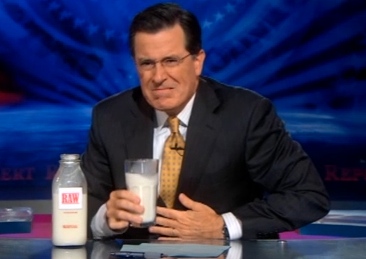
.jpg) people want to know where their food comes from.
people want to know where their food comes from..jpg) around, such as Dickson’s Farmstand and Pat LaFrieda.
around, such as Dickson’s Farmstand and Pat LaFrieda. rushed by helicopter to The Children’s Hospital, her little kidneys shutting down.
 known as the Colorado Avalanche), I’m enjoying a bowl of poon choi, a traditional type of food originated from Hakka cuisine.
.jpg) Faith-based food safety systems are prevalent from the farmer’s market to the supermarket, especially in the produce section. And almost anything can, and is, claimed on food labels – except microbial food safety.
Faith-based food safety systems are prevalent from the farmer’s market to the supermarket, especially in the produce section. And almost anything can, and is, claimed on food labels – except microbial food safety..jpg) Maple Leaf Foods, whose listeria-laden cold-cuts killed 22 Canadians last year, is continuing on its bad
Maple Leaf Foods, whose listeria-laden cold-cuts killed 22 Canadians last year, is continuing on its bad .jpeg)
 The trial of Ontario raw milk farmer Michael Schmidt has garnered media coverage far beyond its importance.
 Whether that little manoeuvre exempts him from the law is up to the courts to decide. But it seems unlikely. After all, bar owners tried this technique to sidestep anti-smoking laws, selling "shares" in their establishment and arguing that patrons were smoking in a private club. Judges saw through the subterfuge. …