While making a recent pilgrimage from Raleigh to Southern Ontario (and back) via minivan I saw a bunch of dirty restrooms. One was so bad (right, exactly as shown) that Dani made us go to the next exit; things almost got messy in the car.
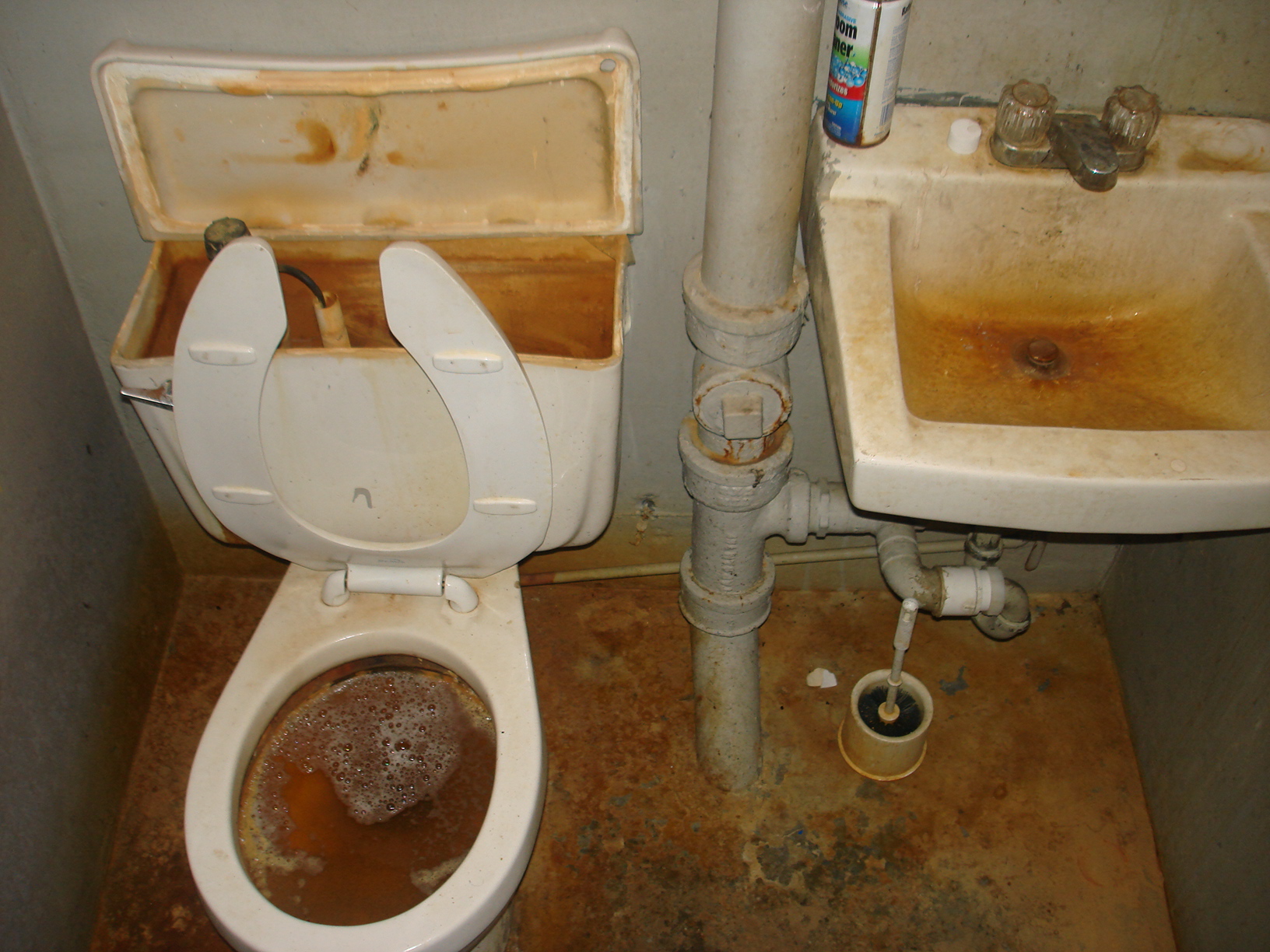 A dirty restroom is gross, and might be a good source of a pathogen like norovirus from a previous, uh, user, but do dirty bathrooms say anything about the food handling practices in the kitchen? Or does a clean bathroom mean that the cooks know their stuff and are reducing cross-contamination? Some argue that a dirty restroom is an indicator of poor sanitation throughout the system (maybe), but analysis of inspection results seem to disagree that dirty bathrooms are correlated with outbreaks. We talked about this a bit in a paper published earlier this year (D.A. Powell, S. Erdozain, C. Dodd, R. Costa, K. Morley, B.J. Chapman. 2013. Audits and inspections are never enough: A critique to enhance food safety. Food Control).
Some good stuff that friend of barfblog Ruth Petran published last year also showed that for certain pathogens there was little correlation between inspection factors related to sanitation and outbreaks. Sanitation of facilities and non-food contact surfaces only came up in noro outbreaks with a relative risk of less than the lack of single use/service articles and weirdly proper cooling and date marking. Dirty facilities wasn’t seen as a risk factor popping up in Salmonella or C. perfringens outbreaks at all. What matters are things like keeping ill employees out of the kitchen and controlling temperatures.
Evidence often isn’t enough to sway public opinion though. UPI reports that in a survey funded by restroom hygiene equipment that cleanliness matters to patrons.
Almost 30 percent of U.S.adults say they will never return to a restaurant with a dirty bathroom, a survey indicates.
Elliott Greenberg, owner of www.TouchFreeConcepts.com said a recent survey conducted by Harris Interactive for SCA Tissue North America found 50 percent of restaurant patrons who have a negative experience with the restroom — bad odors, grimy soap dispensers, dirty toilets and other cleanliness problems — will discuss it to friends and family.”
“We live in a world that is consumed with hand sanitizers and green living. The consumer is acutely aware of those things that cause the spread of germs and bacteria,” said Donna Santoro, senior product manager of the washroom solutions global business team for Rubbermaid Commercial Products. “And it is all about touching.”
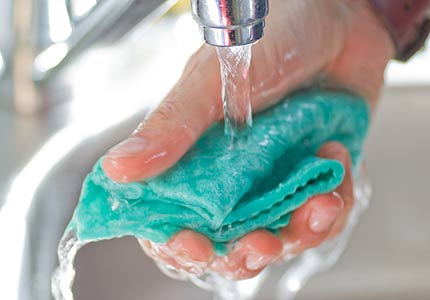 kitchenly chores, and that "90 per cent of food-related illness in the home could be prevented by using paper towels when preparing foods, especially meats."
 dishwasher about every third day. When dealing with raw meat, the sponges or clothes are swapped out immediately.
  mice that then leave their droppings and disease and make people barf.
 lemon wedges or iced tea dispensers and yes, there are bacteria present, but where are the bodies? Where are the sick people from these practices?
 people should eat dirt in order to stimulate their immune system. Brody says that immune system disorders such as asthma and allergies have risen significantly in the United States.