Lower campy limits: NZ govt insists poultry safety system is robust

Public health researcher Michael Baker said the illness was an epidemic here but it would be easy to fix.

roast.chicken.june.10The University of Otago professor wants to see a lower allowable limit for Campylobacter contamination on poultry. He also wants data to be published showing which companies have the best and worst rates of contamination and better warning labels on packaging.

Prof Baker said that would lower the high rates of infection in New Zealand.

But a government spokesman claimed the current food safety system was robust, and did protect people from hazards like campylobacter.

Ministry for Primary Industries (MPI) deputy director-general Scott Gallagher said the ministry was not considering any further measures.

Last year about 6,800 people got sick with campylobacter, with poultry to blame in half those cases, official figures showed.

But Prof Baker believed the number was much higher. More than 30,000 people each year get ill from eating chicken, he said.

“Our current campylobacter epidemic from fresh poultry is the biggest food safety problem in New Zealand.”

The Poultry Industry Association is backing Prof Baker’s calls for changes to the way chicken is prepared for sale, and a spokesman said the industry was working hard to lower the rates of contamination and infection.

Lowering the regulatory limit for campylobacter on fresh poultry was a good idea, the association’s executive director Michael Brooks said, and the association has proposed a new limit to MPI.

barfblog.Stick It InHowever, Mr Brooks said he did not support Prof Baker’s call for naming companies that have the best and worst rates of contamination.

But Mr Brooks said those measures only worked if there were also good food safety practices in people’s homes, such as careful preparation and proper cooking.

Caterer and chef Ruth Pretty recommended using a thermometer to guage the correct cooking temperature of the poultry.

“People worry, they don’t want to overcook it but they… (worry they’ve undercooked it) and they do that thing, you take it out of the oven or off the BBQ and you think, ‘is it cooked, isn’t it cooked, are the juices running clear’ and all that,” Ms Pretty said.

“But if you have a thermometer – you don’t have to have a fancy thermometer, it (can be) any thermometer – that you can insert into the cooked product.”

“Once you get (into) a system like that – which is how all chefs actually work – you’ll be fine, you’re always going to have your chicken cooked.”
NZ Church of Flying Spaghetti Monster approved to perform marriages

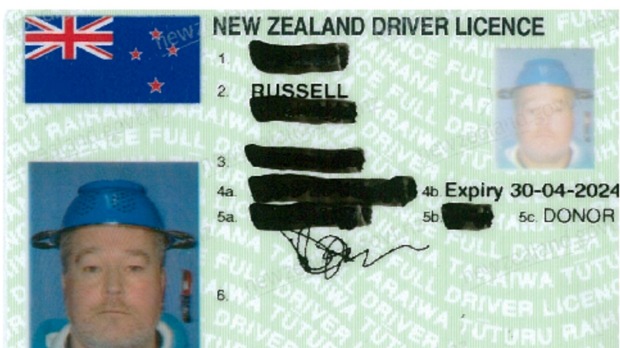
There was this one time, in university, I rode on the back of a motorcycle with a colander on my head instead of a helmet.

Church of the Flying Spaghetti MonsterAnd then, when Amy and I were going to get married nine years ago, we checked out all the on-line religions so people could be ordained ministers.

We went to City Hall.

Now, there’s a New Zealand religion where I can combine both.

Adherents of the Church of the Flying Spaghetti Monster have been approved to perform marriage ceremonies in NZ.

The application from the church was approved by the registrar-general of births, deaths and marriages and listed in the New Zealand Gazette.

“Ahoy Pastafarians! The Church of the Flying Spaghetti Monster was Gazetted on 10 December 2015 – you can search for NZ Gazette and the keyword Spaghetti and see fer yerself! We Be Official! R’Amen!”

Fifth case of hep A from imported frozen berries in NZ

A fifth New Zealander is believed to have contracted hepatitis A after eating contaminated frozen berries in October.

berries.boozeThe case was confirmed by the New Zealand Ministry of Primary Industries on Wednesday, which says it is likely the person was infected after eating Fruzio Mixed Berries in late October.

Consumers have since been instructed to return or throw out the Fruzio brand of mixed berries (strawberries and blackberries), strawberries, blackberries, and three berry mix (blackberries, strawberries and blueberries) while the company has been forced to withdraw its product from shelves.

Ministry of Primary Industries director of plant food and environment Peter Thomson says the agency was alerted to the case on Tuesday.

“The person ate the berries in late October and reported symptoms at the beginning of this month. The person was briefly hospitalised for observation, but released the same day,” he said.

“The next step is to have the virus tested to see if it is the same strain as that in the four other hepatitis A cases.”


Going public: Lettuce, chicken and now berries, it’s time for NZ food authorities to be honest with the public

Pip Keane of New Zealand’s Sunday Star Times writes in this opinion piece that over the past year, we’ve had three major food safety scares in New Zealand: First it was Yersinia that made dozens of people very very ill. There was a lot of fuss about lettuces.  But was it lettuces or was it carrots? Or something else?  Why did MPI wait weeks to tell us about the initial outbreak and why haven’t they told us what caused it? If I’d contracted Yersinia I’d want to know. What precautions have been taken to ensure it doesn’t happen again?

communicationEven worse, in the past  few weeks the Sunday Star-Times has revealed a strain of antibiotic-resistant campylobacter spreading through our poultry flocks – but again, which poultry flocks? Three out of four of our chicken producers have tested positive. So why won’t MPI tell us which chickens to steer clear of? Why aren’t chickens being recalled until we know? As a mother and a consumer I have a right to know and a right to choose which products to spend my money on.

And now we have a hepatitis A berry scare. At least Mike Glover from Fruzio is front-footing it. That’s refreshing.  Our poultry companies could take a leaf from his book and do the same. I want to know what I’m eating. Nobody deserves to get sick through no fault of their own. We all have a right to know what’s in our food.

Since the Ministry of Primary Industries took charge of food safety, it’s become apparent they have an enormous conflict of interest. The ministry’s first priority is not protecting consumers – it’s protecting our food producers.

This endangers the very primary producers that MPI is trying to help. Sweeping problems under the carpet helps no one.

The government should wrest responsibility for food safety investigations away from MPI and return it to the health authorities, whose sole focus is public health.

Greater openness and accountability about bugs in our food will help strengthen the integrity of the New Zealand food brand in global markets – and keep us all safe.

Restaurateur calls NZ council ‘racist and crazy’ after bad inspection

Mountain Scene reports a war of words has erupted between one of Queenstown’s worst-rated eateries and the local council.

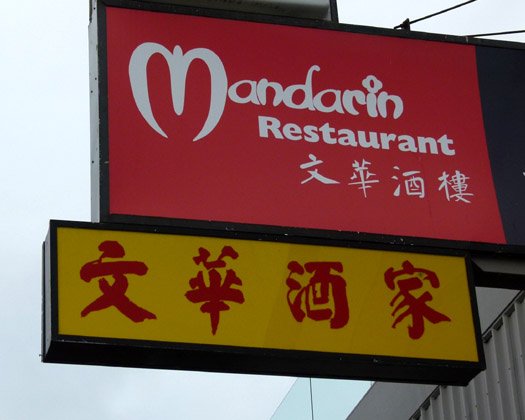
mandarin.1.nzMandarin manager Anna Chan accuses the council of being “racist and crazy” over a recent complaint – and subsequent inspection – against the D-graded, Beach Street restaurant.

But the council bites back, saying food safety is color blind.

Mandarin diners complained of an insect in rice and part of a chicken foot in their honey chicken, according to a council report.

They also raised concerns of smelly seafood rice and dirty fish tanks.

Speaking to Mountain Scene through a translator, manager Anna Chan says she thinks council is “racist and crazy.”

She also reckons the report isn’t accurate.

“We don’t use chicken feet in the restaurant at all so I don’t know where the chicken foot came from.

“We also wash the rice three or four times before we cook it, so I don’t know what kind of insect it was – or where that would come from.”

mandarin.2.nzCouncil regulatory boss Lee Webster isn’t happy with the slur; food safety is color blind as are we, he says.

He stresses all issues relate to food safety and hygiene deficiencies.

Council staffer Rachel Rose’s report shows prepared foods in the chiller with no dates, boxes of squid and beef fillet left to defrost at room temperature, fridge temperatures not monitored for over a week and open bags of ingredients in the dry store.

The report stresses bosses need to take complaints seriously, but notes the premises was generally in a reasonable standard of cleanliness.

Chan disagrees with the overall assessment.

Explaining the lack of labels, she says veg cut in the morning are all used daily. On defrosting meat, it doesn’t exceed time limit guidelines when defrosting at room temperature. As for the lack of fridge temperature records, Chan reckons the council made an error when looking at the clipboard.

Chan firmly believes council doesn’t like them – and that is the reason for a D grade.

All bets are off with sick kids: Hep A in berries edition

I’m an emotional dude and I’ve become more sensitive as a parent. I know my emotions aren’t unique, but sappy movies, especially those focused on parent/kid relationships, make me cry. I’m a nervous flyer (I wasn’t before) irrationally thinking the plane is going down with every bump (leaving my kids fatherless).

I’m empathetic of folks who have kids affected by foodborne illness; when they are young, all their risk protection comes from caregivers.Unknown-7

As NZ health authorities finger Fruzio Mixed Berries as a likely source of four hepatitis A illnesses in the country, the New Zealand Herald highlights how trust in food is impacted during outbreaks.

Some Kiwis who bought the berries quickly contacted the Herald this evening to share their concerns.

Stevie Sanders from Hamilton said she was very worried after giving her 7-month-old daughter the berries. “Oh my God. I’ve just been freaking out. She’s seven months … and I feel so guilty.” Mrs Sanders said she used to mash the berries in with her daughter’s organic yoghurt. She said it was important the Government told people which products were linked to the health scare.

Chloe Rarity from Blenheim said her family was “really shocked” about the berries and found out she’d been eating the Fruzio berries over the past week. She’d made “a huge batch” of berry sorbet for her new neighbours and four families ate it at a barbecue.

Justin Robbins said as a father, he was worried for his family after hearing of the Hepatitis A cases. “When you realise that you are totally and utterly in control of someone else’s life, the feeling that you could’ve given them something that would make them sick – that’s not a nice place to be. “To say it’s unnerving is probably a massive understatement,” he said this evening.

Yep.

Damn frozen berries: 4 sick from hep A in NZ

I love the frozen berries. And fresh. I’m a berry monster. The neighbors ask what to plant by the curb, and my suggestion is always the same: berries.

Frankenface__10753.1400688271.1280.1280However the frozen kind have taken a hit over the past couple of years as over 10,000 have been sickened worldwide with hepatitis A.

The protocol in my house has been to microwave any frozen berries so they are boiling for over 2 minutes and then refrigerate so they’re ready in the morning.

I still don’t know if this is a sufficient risk reduction strategy, but I’m sure someone with a microbiological lab will figure it out, because not everyone lives in sub-tropical Brisbane and has year-round access to fresh berries.

The New Zealand Ministry for Primary Industries (MPI) Director General has issued a statement warning of a potential risk associated with imported frozen berries following four human cases of Hepatitis A thought to be linked to packaged imported frozen berries.

The Ministry has instituted a surveillance programme, including additional testing, focused on imported frozen berries.

The Ministry’s Director of Plants, Food and Environment, Peter Thomson says the safety of consumers is MPI’s number one priority in taking the new measures.

“Our investigations to date have not revealed a specific cause, but there is an association with consuming imported frozen berries. Recent outbreaks in other countries also suggest this link.

“We are giving a very high priority to instigating a testing programme that will provide increased surveillance of imported frozen berries. This will include previously imported stocks held by food companies here.

“In the meantime the general advice about food safety applies. People should wash their hands before eating and preparing food. Anyone who is concerned should briefly boil any frozen berries before eating them, or ensure cooking exceeds 85 degrees Celsius for one minute. 

“Elderly persons and those with chronic liver damage should avoid frozen berries that have not been heat treated.

“If you are concerned about a potential risk to your health, or the health of others, you should seek advice from your medical practitioner, or call the Ministry of Health’s Healthline (0800 611 116).

Farmers targeting toxo-carrying feral cats in NZ

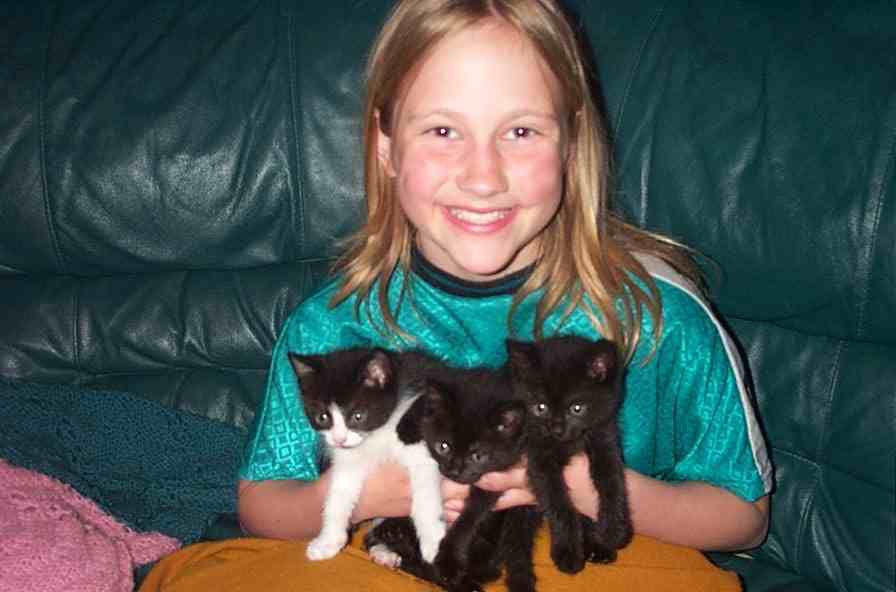
An Ontario friend arranged for three kittens for me and my daughters about 12 years ago from their local shelter.

feral.cat.nov15He was a dairy farmer and used to horrify the kids with how he shot stray kitties.

People would randomly abandon cats on his dairy farm, believing cartoons about cats and milk.

He wasn’t going to lose his livelihood to some unwanted cat.

Farmers in New Zealand are doing the same thing.

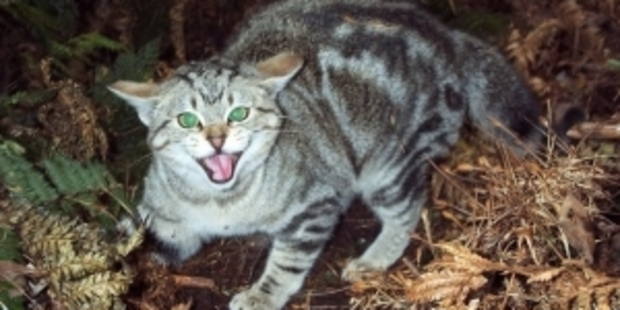
Feral cats carrying toxoplasmosis are the target of a predator programme that could save Hawke’s Bay farmers in excess of $4.5 million dollars a year.

A monitoring programme testing ewes on six farms, as part of the Cape to City predator programme, has found that up to 30 per cent of sheep carry the disease, which causes a high abortion rate in pregnant ewes.

Three “experimental” farms within the 26,000-hectare Cape to City footprint tested feral cats and mice for toxoplasmosis while three control farms outside of the footprint tested mice only.

Sixty sheep on each farm have also been sample tested to form a baseline across the farms that have been matched in size, stocking density and habitat.

Hawke’s Bay Regional Council Biosecurity adviser Rod Dickson said the baseline was high but “that was expected” and by reducing feral cats, it is hoped abortion rates will decrease.

braunwynn.kittens.03“Feral cats are one of the main carriers of toxoplasmosis and if we can reduce the numbers of feral cats, we have a good chance of reducing the high abortion rate in ewes.

“This could provide a significant economic benefit for farmers,” he said.

Mr Dickson said toxoplasma is highly prevalent in New Zealand sheep flocks with a recent survey testing 198 ewe flocks revealed 85 per cent of sheep had been exposed to the disease.

Sheep become infected from eating contaminated food such as pasture, concentrate feeds and hay.

Once ingested, the disease spreads to the sheep’s muscles and brain ” and also to the placenta. Shielded from the ewe’s defence system the parasite multiplies rapidly, killing cells as infection spreads.

And my cats? Lucky wasn’t so lucky and didn’t make it out of Guelph. The two black ones had a long life roaming the forest in our Kansas backyard and, brought us gifts every morning.

Arrest in NZ infant formula poison threat

A 60-year-old New Zealand businessman has been arrested over threats to contaminate infant formula with 1080 poison.

fonterrababyfeature-300x204The Auckland man has been charged with two counts of blackmail, NZ Police Commissioner Mike Bush told a media conference.

He will appear in Manukau District Court on Tuesday afternoon.

The arrest comes after police executed five search warrants in Auckland and the Rangitikei district on Tuesday morning.

Anonymous letters were sent to Fonterra and Federated Farmers in November last year along with small packages of milk powder laced with a concentrated form of 1080.

They contained threats to contaminate infant and other formula with the poison unless New Zealand stopped using 1080 for pest control by the end of March.

More than 50,000 tests failed to reveal any contamination.

NZ hospital food safety manager rightly sacked

A food safety manager in an Auckland hospital who was fired after unsafe work practices was not unjustifiably dismissed as she claims.

simpsons.lunch.lady.09Former food service manager at North Shore Hospital Padmini Singh was employed by Compass Group from August 2009 until January 2015.

Her employment ended after she was found to have been lacking in a number of areas in food safety and a decision on a demotion for her couldn’t be reached.

Compass Group had already been warned about food safety prior to audits of Singh’s work coming up short.

An outbreak of norovirus at North Shore Hospital in 2012 was found to have most likely originated in the hospital kitchen – though this was never confirmed nor linked to Singh.

During the outbreak there were 59 cases of gastroenteritis with each patient having had the same food.

The Ministry for Primary Industries conducted an investigation and there were indications the culprit may have been a chicken and barley soup served at lunch.

Ultimately, the source of the norovirus was not determined and MPI issued a formal warning to Compass Group that it was at risk of legal action.

Operations manager Raymond Hall said this warning was related to hand hygiene practices, training and food safety documentation.