Florida Vibrio vulnificus cases reach 30, Canadian growers upset with ban

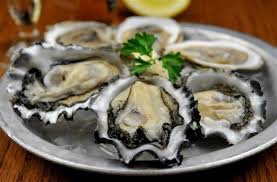
As the number of Vibrio cases in Florida hit 30, and 81 in western Canada in a separate outbreak, producers of shellfish in B.C. say they cutting jobs because of a month-long raw oyster ban in Vancouver.

BC.oystersRoberta Stevenson, executive director of the B.C. Shellfish Growers Association says producers are testing the oysters and they meet health requirements, so the ban should be lifted.

“They are tested five times more than they used to be with the new Health Canada guidelines that are more stringent. So we are 100 per cent confident that before those oysters leave that processing plant they are completely safe to eat,” she said.

Local oysters are being sold to customers in the rest of Canada and to the U.S., Stevenson said, so she doesn’t understand why Vancouver Coastal Health isn’t lifting the ban.

If you’re so confident in your data, make it pubic and market food safety at retail.

“We will lift the order when public health officials in B.C. are satisfied that oyster conditions in coastal waters are not at a level to be a food safety concern,” said Vancouver Coastal Health in a statement.

Hangi? NZ food act will see unlicensed online sellers fined

I have no idea what hangi is, but because of the Intertubes, I looked it up (and wiki is never wrong):

Maori-HangiHāngi (Māori pronunciation: [ˈhaːŋi]) is a traditional New Zealand Māori method of cooking food using heated rocks buried in a pit oven still used for special occasions.

To “lay a hāngi” or “put down a hāngi” involves digging a pit in the ground, heating stones in the pit with a large fire, placing baskets of food on top of the stones, and covering everything with earth for several hours before uncovering (or lifting) the hāngi.[1]

According to New Zealand regs, selling homemade hangi without a licence could soon land people with a $450 fine.

The online sale of hangi and other food items has caused an influx of complaints to the New Plymouth District Council recently.

The council’s manager of regulatory services Mary-Anne Priest said phone calls about Facebook pages being used to sell homemade food, and in particular hangi, were growing.

“The staff here have said they’ve handled more complaints about food recently than ever before. People are seeing food for sale on websites and ringing the council to see if it’s ok,” Priest said.

“When we contact the sellers a lot of them seem a little bit unaware that they are required to be licensed. Once we have spoken to them a lot of them have stopped selling.”

She said one-off sales for fundraising events were exempt and the council was not concerned about those.

“But we will go and investigate if people are selling for personal gain.”

Priest said if the online sale of food from unlicensed sellers and unregistered kitchens continued after the Food Act 2014 came into effect in March, then sellers could be hit with a $450 fine for operating without a licence.

She said there would be significant changes happening under the new act and the regulations were due to be released by central government in the next two weeks.

No public warning, epi pushed aside: 26 sick from Salmonella linked to NZ bakery

A major outbreak of food poisoning affecting 26 people throughout the North Island has been traced back to a Northland bakery.

barf.o.meterMinistry for Primary Industries manager of compliance operations Gary Orr said the outbreak started on January 1 and went through to February 10. Of the 26 people who had food poisoning, 16 had eaten at the bakery.

While investigators visited the bakery the day after notification to carry out a review of food handling practices, they were unable to identify the source of the outbreak, he said. As a result MPI declined to name the bakery involved.

“The investigation did not find the definitive source of the Salmonella, so there was no proof that the bakery had done anything wrong,” he said.

Because the investigation did not find the source of the outbreak there was no public warning as there was no way to tell people how to prevent themselves from becoming ill, Mr Orr said. “A number of areas for improvement were identified and follow-up visits by MPI to the bakery confirmed that these improvements had been implemented.”

Once again, epidemiology gets put aside for definitive proof.

Food safety should apply everywhere: Community food, fundraisers and markets in NZ

I’ve listened to about all I can stand from the parents at the kid’s tuck shop and their food porn views of safety.

hank.hill.bbqI’ve said, I will help with any food safety issues, but otherwise I’m out.

It’s like coaching hockey: data is never going to convince any parent of their evangelical role, so I choose to avoid it and focus on the kids.

New Zealand has a new food act, that is apparently ruffling feathers among well-meaning parents.

So the ministry decided it had to say something.

What they didn’t say is that food safety is our first and foremost priority.

Pandering.

The Act provides a clear exemption to allow Kiwi traditions like sausage sizzles, home baking at school fairs, raffles and charity fundraisers to take place. 

People selling food once a year, for example, at an annual cultural festival, are also exempt from operating under a Food Control Plan or a National Programme.

There is another exemption that applies to clubs, organisations and societies that would mean for example, members of a cricket club selling food for a match tea, would not have to operate under a Food Control Plan or a National Programme.

The Act allows a person who trades in food solely for fundraisers or to support a charity or cultural or community events to do so up to 20 times in a calendar year without the need to be registered or undergo checks, but people will need to ensure  that the food is safe and suitable to eat.

Campylobacter testing in NZ

The New Zealand Ministry of Primary Industries said since performance targets for Campylobacter were introduced in 2008, setting contamination limits for poultry processors, the number of notified cases of people infected with campylobacter had halved.

chicken.campy.vaccineThere had also been a significant reduction in birds testing positive for the bacteria.

Two years ago, the Ministry introduced a campylobacter detection limit and it was now reviewing the effectiveness of that and seeking feed-back on options, which included tightening up limits.

Poultry Industry Association executive director Michael Brooks said it had worked with the Ministry for years on this and the review was part of ongoing efforts to lower the infection rate.

New Zealand closes online fish market

Bored suburbanites like to dabble in risk, and I never understood the term black market, other than it was offensive.

UnknownMinistry for Primary Industries (MPI) compliance officers today terminated an operation against four groups in Auckland who were selling seafood.

MPI compliance officers supported, by the NZ Police, executed search warrants on five South Auckland properties that were identified, from a Facebook page, selling seafood to the public.

MPI compliance officers are talking to ten people in relation to the operation. Investigations are continuing with a view to laying charges under the Fisheries Act.

MPI Compliance Director Dean Baigent says compliance officers learned that a Facebook page was being used for one-off sales of seafood in Auckland and that the page had more than 400 followers.

MPI has been monitoring these groups and has received numerous reports from the public of this illegal activity.

Possum pesticide: Blackmailers threaten to poison New Zealand infant milk formula

A blackmail threat to poison baby formula is a form of “eco-terrorism” says New Zealand’s prime minister John Key.

possum.baby.nov.11New Zealand police are currently investigating blackmail threats made against dairy processor Fonterra.

The threats were made as part of a campaign to stop the use of agricultural pesticide 1080 in New Zealand.

New Zealand police said that anonymous letters were received by Federated Farmers and Fonterra in November 2014, accompanied by small packages of milk powder, which subsequently tested positive for the presence of a concentrated form of 1080.

The letters threatened to contaminate infant and other formula with 1080 (sodium monoflouroacetate) unless New Zealand stopped using it for pest control by the end of March 2015.

“We have tested just over 40,000 raw milk and product samples and we have had no 1080 detections,” said a statement from the NZ Ministry for Primary Industries.

Asked how he would characterise the threat, Mr Key replied: “It’s a form of eco-terrorism without doubt.

Authorities warned parents to examine packaging for signs of tampering and supermarkets removed formula cans from shelves to storerooms so shoppers could not access them directly.
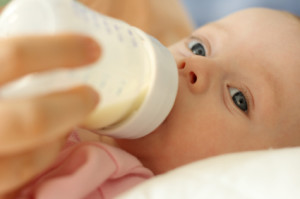
baby_formulaDeputy Commissioner of National Operations with NZ Police, Mike Clement, said the threat may be a hoax, but must be treated seriously.

He said no further letters had been received after the initial batch and the matter was being treated as blackmail rather than terrorism.

President of New Zealand’s peak farming body, Federated Farmers of New Zealand (FFNZ), William Rolleston, said he was confident security measures at the country’s milk processing plants were rigorous.

“I would say that it would probably be easier to break out of prison, than to break into one of these factories and do anything, the security is pretty tight.” Dr Rolleston said.

He said he believed his organisation was targeted by the anonymous letter writer due to their support for the use of 1080 to control possum populations.

“Unlike you guys in Australia who protect your possums, they are not a welcome visitor here I’m afraid.

“We do endorse the use of 1080, it’s a highly effective and safe product when used properly and it’s biodegradable, so it breaks down in the environment very quickly, it doesn’t have an impact on our native species, so it’s a very good toxin to use for dealing with what is a major issue for New Zealand.”

The New Zealand government has additional information at http://www.foodprotection.govt.nz/

NZ woman fined $1125 over home-kill meat

A Whangarei bakery manager has been fined after being convicted of buying unregulated home-kill meat she intended to use in produce sold across the counter.

meatIn Whangarei District Court on Monday Sok Heng Chhiv, 30, pleaded guilty to a charge of buying unregulated meat, which had not been processed in accordance with the Animal Products Act. The charge was laid by the Ministry for Primary Industries and Chhiv was fined $1125 and the unregulated meat was forfeited.

She had bought the meat from Whangarei homekill operator Arron Ogle, 40, director of Homekill Services, who was last month convicted of selling 71.7kg of unregulated meat and fined $2250.

The court heard on Monday that May 21, last year, an MPI animal products officer inspected Whau Valley Hot Bread Shop in Whangarei, then jointly owned and managed by Chhiv and her husband.

The officer found 71.7kg of beef that Chhiv had no receipts for. Meat for human consumption must be documented throughout the food chain so it can be traced back to its farm of origin should there be a health or hygiene issue.

Chhiv said she had bought 60kg of diced beef and 11.7kg of beef fillet and rump steak for $500 from “Aaron” the previous day. She said she had not bought meat from “Aaron” before, but did so because it was cheaper than the butcher and good quality. She said “Aaron” was a home-kill operator, but did not know it was illegal to buy meat from this source.

NZ restaurant gets an E grade following inspection

I’ve seen A and B restaurant grades, and the occasional C. I know what R-rated is, but I’ve not seen an E-rating for a food business until now.

According to the New Zealand Herald, Kiwi Country Fried Chicken and Fish, an Auckland restaurant received the unsatisfactory E grade after a really, really bad inspection resulting in 11 charges.deceptive-restaurant-sign

The charges all relate to basic restaurant hygiene, including failing to keep utensils, surfaces and appliances clean; failing to ensure food is kept clean and free from contamination and is protected from damp and foul odours, and against birds, vermin, bees and insects; failing to ensure premises are cleaned sufficiently and regularly, and failing to cook food to appropriate temperatures. The inner-city venue was also charged with failing to train staff in food hygiene processes, failing to comply with regulations, operating without being registered with the council and without a valid certificate, and failing to ensure its food grade was prominently displayed.

That’s a lot of problems.

When NZME. News Service visited Kiwi Country Fast Food yesterday, its food grade was not immediately visible around the entrance, on the stairs leading down to the underground restaurant or on its food display.


New Zealand dairy farmers use glass bottles and vending machines to sell raw milk from the farm

While Victorian regulators want to ban the sale of raw milk, in New Zealand it’s sold in on-farm vending machines.

village.milkDairy company Village Milk in Golden Bay, on New Zealand’s South Island, is selling up to 300-litres of raw milk a day from their on-farm vending machines.

Village Milk owner, Mark Houston, said the focus on safety was rigorous.

He said they had not had a health scare in their four years of operating.

“Our whole farm is totally geared for raw milk sales, so under our rules we’re allowed to do that but people have to come to the farm to buy it,” he said.

“The milk is prepared for drinking without processing and it’s incredibly clean and it’s incredibly high quality and it’s extensively tested.”

Dairy farmers in New Zealand are allowed to sell raw milk under a 50 year-old law allowing customers who live in remote areas to buy milk from their local farmer.

Raw milk producers have used the rule to increase farm sales.

Mr Houston said farmers are subject to Ministry for Primary Industries safety regulations.

“The risk management program covers everything,” he said.

“There are inspections of the stock, shed inspections, there’s a testing regime, there’s verification of the record keeping.

“It’s quite intense.”

In New Zealand individuals are allowed to purchase up to five litres of raw milk a day at a cost of $NZ2.50 per litre.

Once the milk enters the vending machine, it has 24 hours to be sold before it is replaced with a new batch the next day.

Dairy Safety Victoria is one organisation that wants to ban the sale of raw milk.

“A wide variety of organisms that can cause illness can be found in raw cow’s milk,” Dairy Safety Victoria said in a statement.

“No matter how carefully it has been produced, raw milk may be unsafe because it can contain these organisms that cause illness.”