Aus/NZ health types stand strong for safe milk

A campaign to legalize raw cow’s milk has found Far North Queensland support but health authorities have warned it is unfit for human consumption.

colbert.raw.milkTablelands dairy farmers have been drinking milk straight from the vat all their lives and believe the unpasteurised product could be safely sold to the public if regulated properly.

Chief Health Officer Dr Jeannette Young has warned raw milk isn’t fit for human consumption.

“People who consume ­unpasteurized milk are at ­increased risk of infection due to dangerous bacteria such as salmonella, E. coli and listeria, which are capable of causing severe illness and potentially death,” she said.

“All unpasteurised milk products in Australia are ­required to be labelled with a statement to the effect that the product has not been pasteurized and is not for human ­consumption.”

Raw milk is sold as bath milk at health stores such as The Healthy Hub in Cairns, where a two-litre bottle fetches $11.50.

Meanwhile, New Zealand food safety minister Jo Goodhew is making no apologies for tough new regulations for raw milk producers.

Mrs. Goodhew said new rules simply brought the milk into line with other products being sold to the public for consumption, and aimed to keep people safe.

“It does only put these producers on a par with other food producers who sell high-risk products such as, for instance, shellfish.”

Love of goats is the secret to award winning cheese, NZ farmers say

Australians make fun of New Zealanders and their sheep.

goat.cheese.nzGoat love provides a whole new canvas.

Love is the secret ingredient for John and Jeanne van Kuyk​, who own Aroha Organic Goat Cheese and took home the Milk Test NZ champion cheesemaker award at the New Zealand Champions of Cheese Awards on March 1.

They also took home the 180 degrees champion goat cheese award for the second year in a row for their Aroha Raw Milk Jubilee which achieved a rare score of 100.

“We care so much about the girls and what we do. We know every single one,” Jeanne van Kuyk said.

“We’ve always loved goats. The love for goats has brought it all on.”

It’s the girls that make the cheese so good, she said.

Raw still risky: Sick people from E. coli O157 in raw milk in NZ

While the raw milk dairy disciples of the Australian state of Victoria continue to press ahead with claims of unfairness after a government crackdown – because a kid died and others were injured – and Internet quacks spout nutrition horse manure, a raw milk dairy farmer in New Zealand was asked to stop sales after two outbreaks of illness linked to his product.

wholy.moo.nzThe regulators couldn’t be more Canadian unless they said pretty please.

NZ Ministry for Primary Industries director-general Martyn Dunn says Wholy Moo owner, Chris Lethbridge, was asked to stop sales after he was the focus of two compliance investigations in the past six months following two outbreaks of foodborne illness in the Auckland and Northland regions.

“Both outbreaks involved children as well as adults.”

Numbers?

Mr. Wholy Moo told the Advocate last week that he was closing down over compliance costs that were expensive and prohibitive.

“In both cases, the patients reported regularly drinking Wholy Moo raw milk, and MPI investigated.

colbert.raw_.milk_“The more recent outbreak involved patients getting sick from STEC E. coli O157:H7, a strain of bacteria that, in severe cases, can lead to death.”

MPI and the local district health board were able to test Wholy Moo milk for pathogens and test results have showed that the milk contained STEC E. coli O157:H7.

Since the investigation, Mr Lethbridge has advised MPI that he has chosen to stop his operations.

However, Mr Lethbridge denies that the illnesses have been proven to be linked with his milk product.

“We all get sick but just because they were drinking raw milk means they [raw milk suppliers] get picked on. MPI think they have proven [a link between the illnesses and his product] but I can’t see how they have.”

Mr Lethbridge said he is 99.9 per cent the E. coli was not in his milk when he sold it.

With such statistical prowess, Mr Lethbridge should enter the lottery.

He’d be rich.

‘Where’s the rest of the rat’ NZ woman finds foot in toddler’s sausage

Aussies and Kiwis love their sausages and the ubiquitous sausage sizzle.

I’ve consciously stopped buying sausage because that’s what’s available at any school or sporting function.

rat.sausage.nz.mar.16Candace Mosen, Whanganui in New Zealand, said her son Lucas put a piece of saveloy in his mouth before spitting it back out while he was having lunch on Tuesday.

“I swore,” Ms. Mosen told the Wanganui Chronicle.

“It obviously went through a food processor, because it’s processed meat. It makes me sick to think about that.”

The rest of the family had already eaten from the same packet of Top Hat saveloys the previous night and were sickened by the sight of the tiny foot.

Ms. Mosen said the packet of saveloys was bought at a local supermarket earlier this month and had been in the freezer.

“Obviously, if there’s a foot, where’s the rest of the rat? I don’t want to see other babies getting sick,” she said.

Lucas was taken to hospital for a check-up but doctors said any ill-effects could take up to two days to present.

The supermarket has responded to Ms. Mosen’s complaint, saying its head office had been notified, as well as Tegel, who is the supplier. The Ministry of Health was also notified and collected the foot for testing on Wednesday.

“We followed all correct procedures and informed the supplier as well. They’re all aware of the situation,” a spokesperson told the publication.

 doug.sausage.mar.12The supermarket said the foot could not have come from their premises as it was found inside the packaging, but it had offered the customer a full refund.

Ms. Mosen said she was not offered a refund. She contacted Tegel, the supplier of the sausages, who told her the foot likely came from a chicken.

“They were telling me it was a chicken foot,” she said.

“I told them I would be hanging on to it, because I wanted to get it tested.”

Ms. Mosen told TVNZ she was not interested in compensation but wanted the company to take the complaint seriously.

“I would like to know where the rest of the rat is,” she said.

From the duh files: Don’t hide produce on your yacht when visiting NZ

The New Zealand Ministry for Primary Industries says a visiting yacht skipper hid fruit, vegetables and meat all over her vessel instead of declaring them to a quarantine officer in Opua, Bay of Islands, in November 2014.

duhDianne Margaret Joy Young, 64, resident of Australia, pleaded guilty to possessing unauthorised goods and providing a false statement to a quarantine officer in Kaikohe District. Judge de Ridder fined her $1500 on each charge – $3,000 in total.

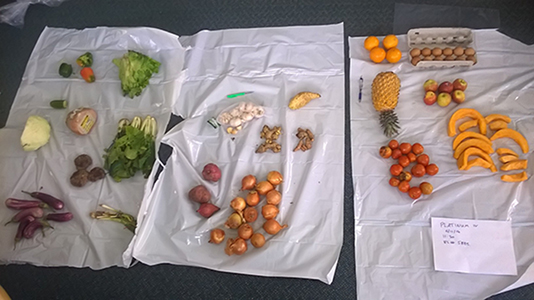
During a search of the vessel, that had just arrived from Fiji, a Ministry for Primary Industries (MPI) quarantine officer found an assortment of fresh items hidden in different compartments – eggs, oranges, apples, tomatoes, pumpkin, pineapple, onions, kumara, ginger, garlic, spring onions, meat patties, ham, eggplant, bok choy, cabbage, cucumber, capsicum and lettuce.

All are considered ‘risk goods’ and could harbour pests such as Queensland Fruit Fly that could damage New Zealand crops and export opportunities.

As the ‘risk goods’ were being uncovered, Ms Young initially maintained there was nothing further on board. She later showed the quarantine officer further risk goods, saying that she had intended to eat it all on board and didn’t want to waste it.

MPI Northern Investigations Manager David Blake says the conviction and fine sends a message that visiting yachties will face harsh consequences if they don’t take our biosecurity rules seriously.

“Ms Young’s actions endangered both New Zealand’s natural environment and the livelihood of New Zealand’s farming community.

“The interception of the risk items shows New Zealand’s biosecurity system is working. It also justifies MPI’s increased biosecurity focus on arriving yachts over the last two seasons.”

A French skipper was convicted and fined $3,000 last year for similar offences after deliberately hiding ‘risk goods’ when her vessel was inspected in Opua after arriving from New Caledonia in November 2014.

food.yacht.mpi

New food safety law in effect for New Zealand

The Food Act 2014 comes into effect today and places a greater emphasis on operators taking responsibility for managing food safety.

doug.powell.mussels.nz.08
The main changes focus on food production rather than where the food is made, control plans for higher risk operators and a national program for those who are lower risk, and improving enforcement of the new laws.

Businesses with poor safety records will be targeted more and the change means those who already have a good rating won’t come under as much scrutiny as those who don’t.

Ministry for Primary Industries (MPI) food and beverage manager Sally Johnston says some businesses will have to put in more of an effort.

The laws include all businesses that sell food – from restaurants, to corner dairies, market stalls, or internet cake sellers.

It offers businesses greater flexibility and people can sell food they have made at home as long as it meets the same food safety standards as other businesses.

Vomiting outbreak at New Zealand high school’s swim day

A public pool is Hastings has been closed while authorities investigate a vomiting outbreak among students attending a school swimming sports day.

yammy-in-the-pool-1About 20 Taradale High School students suddenly became sick at the Frimley Pool on Wednesday morning during championship races being held as part of the sports day.

School principal Stephen Hensman said a similar number of students reported feeling nauseous, although they were not physically ill.

All appeared to be recovering by Wednesday afternoon and testing of the pool water had not shed any light on what might have caused the students to be sick.

Supermarket risks: NZ to get tough on children riding in trolleys after hundreds injured

Hundreds of supermarkets are considering getting tougher on children riding in shopping trolleys after 401 kids were injured by trolley falls in 2015 – the highest number in five years.

shopping.carts.nz.jan.16Figures from the Accident Compensation Corporation (ACC) show the resulting claims cost taxpayers more than $37,223. Injuries included soft tissue damage, cuts, dental injuries and concussions.

Pak ‘n Save Petone, in Lower Hutt, recently placed a large sign near its entrance asking all customers to restrain their children because of recent “horrific” injuries.

Owner Leo O’Sullivan said a toddler fell out of a trolley about a fortnight ago and was badly hurt.

“They weren’t restrained and they banged their head. Plus their teeth went through their lip. They were covered in blood.”

Foodstuffs New Zealand said it was considering displaying additional safety posters in trolley bay areas at its stable of 475 supermarkets nationwide, which included all Pak ‘n Saves, New Worlds, and Four Squares.

Chipotle, listening? NZ company admits 4 faults too much

Tank Juice is conducting a full internal process review after multiple instances of foreign items in their food came to light this week.

tank.juice“We’re working closely with suppliers, management and staff alike in a full review,” a Tank Juice spokeswoman said.

On Tuesday Josh Bargrove, 26, chipped his tooth on a rock hiding in his Tank salad, purchased from Botany Town Centre, Auckland.

Val Thomas, 47, bit down on a bolt in her salad, purchased from Tank on Victoria St, Auckland, in mid-December.

A couple of months earlier, David Morris, 47, almost swallowed a shredded chicken bone in the salad he purchased from Tank in Newmarket, Auckland.

In Rotorua, Fraser Newman, 30,  found a large piece of bark in his lemon and herb chicken salad, from the Central Mall Tank store.

In a statement, Tank said it had always maintained a high level of quality checks, but “four incidents is four incidents too many.

“Each of the four incidents listed were investigated and internal audits initiated immediately,” she said.


Food safety BS from NZ

“Food poisoning is quite common, but it is also completely avoidable.”

y a t il un pilote dans l'avion ? airplane flying high 1980 rŽal : Jim Abrahams David et Jerry Zucker Leslie Nielsen Collection Christophel Collection Christophel

So says Pacific Trust Canterbury, the largest provider of Pacific health and social services in New Zealand’s South Island.

Bullshit.

According to the Ministry of Primary Industries, illness strikes about 200,000 New Zealanders every year. Nearly half of these (at least 40%) are attributed to food handling, preparation or storage in the home – that’s 80,000 people getting sick from a foodborne illness they caused, or one caused by someone they know.

More bullshit.

If a consumer ate bagged spinach in fall 2006 at home in the U.S., would that mean they possibly got sick at home, or that the contamination originated on the farm and there was little consumers could do?

Casey Jacob and I attempted to tackle this question in the journal, Foodborne Pathogens and Disease, and concluded,

 “Rather than focusing on the location of consumption—and blaming consumers and others—analysis of the steps leading to foodborne illness should center on the causes of contamination in a complex farm-to-fork food safety system.”

Supposed health care types shouldn’t spread fairytales.