
The first case of food-related botulism recorded in the medical literature occurred in Germany in 1735 and was traced to uncooked fermented blood sausage. Food safety history guru (and pretty decent margarita recipe developer) Carl Custer pointed out in an IAFP workshop that botulism concerns (and regulatory responses) go back further than that. 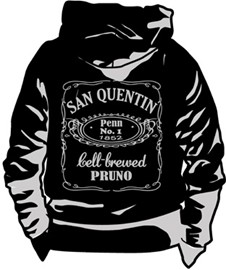 In the 10th century, Emperor Leo VI of Byzantium prohibited the manufacture of blood sausage because of repeated illnesses leaving folks paralyzed and dying not too long after exposure. Botulism (derived from botulus, the latin word for sausage) is a pretty nasty old-world illness. Clostridium botulinum spores are fairly common in soil and can germinate and outgrow into vegetative cells in anaerobic, low acid conditions. A byproduct of the cells’ multiplication is the toxin.
Mrs. Kalisz, my family studies teacher warned of the dangers of botulism by showing a bulging can of beans. She didn’t mention anything about partially-fermented sausages, under processed home-canned food, packaged seafood, foil-wrapped baked potatoes – or a homemade prison alcohol called pruno.
To make pruno, a sugar source (like fruit acquired from a prison lunch) is put into in a bottle or bag, the naturally occurring yeast should convert the carbs into alcohol – creating some low-cost wine. If the sugar source is acidic fruit the low pH will suppress the germination of C. bot spores. If a potato (also full of carbs) is added by the amateur microbiologist it can raise the pH enough to allow for outgrowth. According to a paper published by Williams and colleagues in the Annals of Emergency Medicine, this is likely what happened in a 2011 botulism outbreak traced to a Utah prison.
Twelve prisoners consumed pruno, a homemade alcoholic beverage made from a mixture of ingredients in prison environments. Four drank pruno made without potato and did not  develop botulism. Eight drank pruno made with potato, became symptomatic, and were hospitalized. The prune recipe involved in this outbreak (see right) was provided by patient 4, who reportedly had cooked this recipe approximately 20 times previously without a potato. The prisoner’s rationale behind using a potato was that he thought it would “accelerate fermentation,” and he was “experimenting.”

.jpg) ill with diarrhea (i.e., swimming while ill with diarrhea can lead to gross contamination of recreational water). Before the 2008 summer swimming season, Utah public health agencies launched a multimedia healthy swimming campaign. To assess knowledge of healthy swimming, a survey of Utah residents was conducted during July–September 2008. The results of that survey found that 96.1% of respondents correctly indicated that "it is not OK to swim if you have diarrhea."
ill with diarrhea (i.e., swimming while ill with diarrhea can lead to gross contamination of recreational water). Before the 2008 summer swimming season, Utah public health agencies launched a multimedia healthy swimming campaign. To assess knowledge of healthy swimming, a survey of Utah residents was conducted during July–September 2008. The results of that survey found that 96.1% of respondents correctly indicated that "it is not OK to swim if you have diarrhea." .jpg) television advertisements, public service radio announcements, and posters at pools (e.g., "A Swimming Pool is Like a Community Bathtub"). In addition, targeted messages were disseminated to schools, competitive water sports teams, and licensed childcare facilities. SLVHD also conducted a press conference during Recreational Water Illness and Injury Prevention Week, which is held each year the week before the Memorial Day holiday.
television advertisements, public service radio announcements, and posters at pools (e.g., "A Swimming Pool is Like a Community Bathtub"). In addition, targeted messages were disseminated to schools, competitive water sports teams, and licensed childcare facilities. SLVHD also conducted a press conference during Recreational Water Illness and Injury Prevention Week, which is held each year the week before the Memorial Day holiday..jpg) a Salt Lake City restaurant/deli.
a Salt Lake City restaurant/deli..jpg) misdemeanor in April after authorities viewed the video.
misdemeanor in April after authorities viewed the video. regarding food vendors present and cattle used at the rodeos. Environmental samples were collected from rodeo grounds. Two-enzyme pulsed-field gel electrophoresis (PFGE) and multiple-locus variable-number tandem repeat analysis (MLVA) were performed on isolates.
 (IG) or hepatitis A vaccine as soon as possible.
 Deseret News reports
 triggered a boil order appears to be receding.
 15 lab confirmed cases of campylobacter.