
Norovirus buffet sickens 13 of 19

Beth Jones plays homegrown epidemiologist and writes with certainty for wbur.org in Boston:

Missy is cute, blond, sweet, and four-years-old. She doesn’t look like a vector. But she initiated such a path of norovirus destruction at our Christmas party that it will forever be remembered as: The Party Where (Almost) Everyone Got Sick.

Really, really, sick.

We had friends, a delicious buffet, mulled cider and spiced eggnog. Children ran through the house in dress-up costumes. The tree twinkled, conversations hummed. It was the lovely party we’d hoped for.

At the end of the day, Missy sat on the bottom of our staircase and complained that her stomach hurt. It was no surprise; the kids had been playing for hours, eating on occasion. Picking up food, tasting it, putting it down. If I were to make a guess, my very unscientific norovirus research would lead me to that act of picking up and putting down. I’d wager that an infected half eaten snickerdoodle or a slice of smoked ham nibbled and abandoned by Missy was the cause of everything that followed.

The party was on Saturday. The norovirus has a 48-hour incubation period. By Monday, Missy was in Children’s Hospital Boston receiving intravenous fluids; she couldn’t even drink water without vomiting. Her mother could barely get out of bed. Two friends mistakenly thought they had food poisoning. Another guest thought the mulled cider had caused her to throw up. Like dominos, nearly everyone was slammed by the virus, knocked down and lying flat in bed or crawling to the bathroom. Thirteen of the 19 people at our party were sick within two days of the holiday festivities.

I’d like to see the food items on the menu. Any raw oysters?

 

Doggie dining Japan-style

As more towns in Florida embrace legalized doggie dining, Japan is grappling with a lack of registration and poor sanitation.

The Japanese version is not-so-much about owners bringing their pooches to dinner, it’s for career-minded 30-somethings who are too busy to care for a pet to have 30 minutes of animal interaction.

The Daily Yomiuri Online reports the trend began with so-called cat cafes, and there are now more than 120 establishments nationwide where people can enjoy the healing effects of being surrounded by animals such as dogs, birds, goats and rabbits.

However, some shops have not registered as required with local governments, and experts are warning them to be aware that some diseases can be transmitted from animals to people.

According to Norimasa Hanada, 39, who opened a cat cafe ahead of the boom in 2005 in Machida, western Tokyo, and runs a Web site "Zenkoku Neko Cafe Map," there are at least 120 cat cafes nationwide. Newer shops featuring dogs, goats and birds also have have opened recently, he said.

Besides offering cats to pet, some cafes have begun activities to help protect the animals. Ekoneko, a cat cafe that opened in Tokyo’s Nerima Ward in October, works with Little Cats, a nonprofit organization based in Kofu that works to find homes for stray cats.

According to the Tokyo metropolitan government’s animal care counseling center, animal cafes at which customers pay admission fees fall under the category of "exhibition" facilities, and are regulated by the Animal Protection Law like zoos and aquariums.

For this reason, such shops are required to register with prefectural governments as businesses that deal with animals and employ a regular staff member possessing an animal health technician license or other such qualification.

A cafe in Nerima Ward, which charges 200 yen per 30 minutes on top of a drink fee, touts on its Web site that customers can play with animals at the shop.

"I didn’t even know about the registration requirement. I don’t have time to obtain the qualification," the cafe’s female owner said.

A female manager of a cafe in Tokyo, who was patting an animal’s head over a fence, said: "We haven’t registered as we just keep the animals outside the cafe. These animals are not exhibited inside the premises."

She said the center staff who visited her cafe to confirm the situation had judged it was unnecessary for the establishment to register as it did not charge a separate fee to exhibit the animals.

Vacationing Brits sue after salmonella sickness in Turkey

A group of 107 angry travellers say they fell ill after eating under-cooked food and using a swimming pool contaminated by human waste at Sarigerme Holiday Village in Dalaman, Turkey in 2009.

The group is suing First Choice Holidays and Flights for compensation.

A High Court writ claims buffet food was lukewarm and items like chicken were not cooked properly.

Flies and wasps also allegedly infested food areas and a pool had human waste in it.

Last night a First Choice spokeswoman said their lawyers are in talks with a no-win no-fee legal firm to resolve the case.

"We closely audit all the resorts to which we operate, including the Holiday Village Turkey, to ensure that health, hygiene and comfort levels are maintained."
 

Ex-workers confirm date-changing on BC Superstore meat; required to use smell-test; feds say consumers are on their own

After an investigation revealed a B.C. grocery store changing the best-before date on fish, former Superstore employees have come forward to claim that it wasn’t the first time this happened.

CTV News reports that former Langley Superstore employee Sylvia Taylor claims that changing best-before dates isn’t something new for the grocery chain. She worked in the deli department during the 1990s.

"Part of our duties, as directed by our manager, was to check our meat packages in the display cases for their best-before dates. If they were expired, we were to pull the meats, open up the packages, smell them, and if they smelled okay, we re-wrapped them and put a new best-before date, extending usually by about five days. When we were told to change the best-before dates, I stopped buying any meat products from the Real Canadian Superstore."
Jason Paxton claims he had a similar experience when he worked in the seafood department at the Duncan Superstore.

"Every time the meat was re-packed, the best-before date was changed. The majority of it we could wash off, re-package it and get a couple of more days out of it."

Paxton says he has since told his friends not to shop at Superstore.

Ken Randa of the Canadian Food Inspection Agency says there are no laws against changing the best-before dates on packaged food, adding,

"If they change the best-before date, there may not be anything wrong with it, and maybe no legislative issue with us. Ultimately, they have to answer to you, the consumer.”

Superstore says employee are not allowed to change best-before dates and are required to sign a policy stating as much when they’re hired. The store says they’re also required to review and re-sign on a regular basis.

Uh-huh.
 

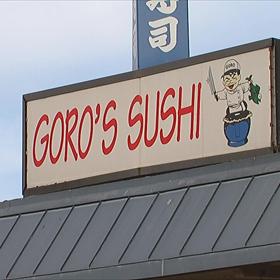
Rats and roaches at San Antonio sushi favorite

WOIA News 4 reports that Goro’s Sushi was served 25 demerits on its latest health inspection. 30 is considered a poor score by the health department. But rats and roaches are a big problem.

Goro’s owner, Mike Luna, did not want to be on camera. Trouble Shooter Mireya Villarreal tried to ask about the restaurant’s inspection report. But all the owner would say is, it wasn’t a good time and our crew needed to leave.
Goro’s later sent News 4 WOAI a statement saying they immediately called their pest control company and thoroughly cleaned the restaurant once they were notified of the problems.

An inspector recently followed up with the restaurant. While the report noted improvements, it also asked management to keep monitoring their rodent activity.
 

Football team orders handwashing crackdown before playoffs

KMBC.com reports that players with the Kansas City Chiefs football team have been ordered to wash their hands thoroughly with soap and hot water to keep anyone from getting sick.

Pro Bowl left guard Brian Waters missed a second straight practice Thursday as the Chiefs prepared to host Baltimore on Sunday in the first round of the AFC playoffs.

Pro Bowl wide receiver Dwayne Bowe was back after being out sick on Wednesday.

Coach Todd Haley said,

"We’ve had a re-emphasis lesson, kindergarten rules, wash your hands in warm water, two minutes. As always, we know we’re doing a good job in our building, trying the best we can to keep the germs out. Then you go home and it all gets thrown out the window in my case."

Jimmy John’s salmonella-in-sprouts sickens 112 not counting that other outbreak

The U.S. Centers for Disease Control updated the numbers on the Illinois-based salmonella-in-sprouts outbreak.

From November 1, 2010, through January 4, 2011, 112 individuals infected with the outbreak strain of Salmonella serotype I 4,[5],12:i:-, whose illnesses began since November 1, have been reported from 18 states and the District of Columbia. Results of the investigation indicate a link to eating Tiny Greens Alfalfa Sprouts at Jimmy John’s restaurant outlets.

Consumers should not eat recalled Tiny Greens Alfalfa Sprouts or Spicy Sprouts, and restaurant and food service operators should not serve them.

Advice to Consumers, Retailers and Others

• Consumers, retailers and others who have Tiny Greens Alfalfa Sprouts or Spicy Sprouts should dispose of them in a closed plastic bag placed in a sealed trash can. This will prevent people or animals from eating them.

• Persons who think they might have become ill from eating potentially contaminated products should consult their health care providers.

• Children, the elderly, pregnant women, and persons with weakened immune systems should avoid eating raw sprouts of any kind (including alfalfa, clover, radish, and mung bean sprouts).

• Cook sprouts thoroughly to reduce the risk of illness. Cooking thoroughly kills the harmful bacteria.

• Request that raw sprouts not be added to your food. If you purchase a sandwich or salad at a restaurant or delicatessen, check to make sure that raw sprouts have not been added.
 

Applebee’s, Ricky Bobby and cleanin up

Whether it’s the adverts in Talladega Nights, The Legend of Ricky Bobby, or the smooth voice of John Colbert, Applebee’s has a way with marketing.

In Phoenix, maybe they should focus on the cleanliness.

Ray Stern of Phoenix New Times writes that health inspection reports show that some Applebee’s facilities are clean, with well-trained employees, but Maricopa County restaurant inspection reports show that 10 of 22 Applebee’s in the Valley received a "no award" on their most recent inspection.

Ten more were rated only "silver," which really isn’t that great, either, (though we noticed a few of the silvers had recent gold ratings.) Only two Applebee’s received a "gold" rating on their most recent inspection: 13756 West Bell Road in Surprise and 2501 West Happy Valley Road in Phoenix. We’re guessing the district manager for Arizona lives in the north Valley area.

Scanning through the most poorly rated locations turns up more than a few of the type of violations we find vomit-inducing, such as mice poop, filthy drink-dispenser nozzles and the failure of employees to wash hands. Seems like a bit of company-wide training is needed.

Clostridium in holiday meal sickens 34 in Thunder Bay

The Slovak Legion in Thunder Bay, Ontario (that’s in Canada, and it’s cold) hosted a Christmas meal on Dec. 14, 2010; at least 34 diners ended up barfing.

Clostridium prefringens (that’s perfringens – dp) has been identified as the bacteria that caused the illnesses. It was found in the cooked turkey sample and stool samples that were submitted for testing.

The Thunder Bay District Health Unit notes almost all food-related outbreaks of C. perfringens are associated with inadequately cooled or reheated meals such as turkey dinners. Outbreaks are usually traced to large-scale food premises.

To prevent food-related illness:
• Educate food handlers on correct food safety practices
• Serve meat dishes hot, or as soon as they are cooked
• Do not partially cook meat and poultry one day and reheat the next
• Divide large amounts of food into smaller containers to allow rapid cooling

Try out our holiday meal food safety infosheet at foodsafetyinfosheet.com.


UK restaurant owner fined for lack of food safety plan, infractions

Abdul Roshik, who runs the Little India restaurant in Tudor Square, Tenby, (that’s in the U.K.) was fined £3,500 by Haverfordwest Magistrates on December 20th following a 2009 E. coli O157 outbreak that sickened five.

However, as reported in the Western Telegraph, no evidence was found to suggest that the restaurant was the cause of the outbreak.

During the inspections it became apparent to officers that the business had no documented Food Safety Management System. This is a legal requirement to assist food businesses manage food safety risks.

Other transgressions included: ready to eat foods placed next to raw meat in the refrigerator; no soap or towel provided at the wash hand basin; large quantities of cooked chicken and cooked rice; left out at room temperatures for prolonged periods.

The court was told that the association of the premises with the cases of E. coli and the offences discovered, resulted in Roshik voluntarily closing the restaurant for a time to address the unsatisfactory matters.

As well as the fine of £3,500, he was ordered to pay Pembrokeshire County Council £1,250 – half of its investigative costs. He was also ordered to pay a victim surcharge of £15.